
Ever wonder why restaurant scrambles are packed with perfectly cooked vegetables and fluffy eggs while yours turns into a mushy mess? I used to think making a perfect asparagus potato scramble required some kind of professional cooking secret until my brunch-loving neighbor showed me her foolproof technique. Now I’m making this colorful, veggie-packed beauty every weekend, and my family thinks I suddenly became a breakfast chef (if only they knew about the six batches that turned into rubbery egg soup before I figured out the crispy-potatoes-first, gentle-eggs-last trick).
Here’s the Thing About This Recipe
What makes this asparagus potato scramble work is the layered cooking technique where each ingredient gets added at the right time so nothing is overcooked or undercooked. I learned the hard way that dumping everything in at once gives you soggy potatoes, mushy asparagus, and rubbery eggs—not appetizing. The key is starting with the potatoes to get them crispy and golden, then adding faster-cooking vegetables, and finishing with gently scrambled eggs. The asparagus adds a spring-fresh flavor and gorgeous green color, while the Parmesan brings savory depth that makes this taste sophisticated. It’s honestly that simple once you know the sequence—crispy potatoes first, tender-crisp asparagus next, creamy eggs last.
What You’ll Need (And My Shopping Tips)
Good fresh asparagus is essential here—look for firm spears with tight, compact tips that aren’t mushy or slimy. The thinner asparagus cooks faster and is more tender, but medium-sized spears work great too (happens more than I’d like to admit when I grab the thick woody asparagus that takes forever to cook). Don’t cheap out on the potatoes; Yukon golds have the best creamy texture and buttery flavor, but russets work if you want them extra crispy.
The onion should be fresh and firm, not soft or sprouting, and fresh garlic makes such a difference compared to jarred minced garlic that tastes like garlic-flavored water. Fresh eggs with bright orange yolks make the fluffiest, richest scramble—pale yellow yolks mean old eggs that won’t taste as good. Good Parmesan cheese that you grate yourself is way better than the pre-grated stuff in the green can which tastes like sawdust. Learn more about selecting fresh asparagus for the best tender-crisp texture and sweet flavor. I always grab extra asparagus because someone inevitably snacks on the trimmed ends while I’m cooking.
Here’s How We Do This
Start by prepping all your ingredients—trim the woody ends off the asparagus (just bend each spear and it’ll naturally snap where it gets tender), chop into 1-inch pieces, dice the potatoes into about 1/2-inch cubes for even cooking, dice the onion, and mince the garlic. Having everything ready before you start is crucial because this moves fast once you get going.
Heat your olive oil in a large skillet over medium heat until it shimmers. Add the diced potatoes in a fairly even layer—don’t overcrowd them or they’ll steam instead of getting crispy. Here’s my secret: resist the urge to stir them constantly. Let them sit undisturbed for 3-4 minutes to develop a golden crust on the bottom, then stir and let another side get golden. This takes about 8-10 minutes total, and patience here is what gives you crispy, delicious potatoes instead of soggy ones.
When the potatoes are golden and tender (you should be able to easily pierce them with a fork), add the diced onion and minced garlic. Stir everything together and cook for 2-3 minutes until the onion is translucent and softened and the garlic is fragrant. Don’t let the garlic burn or it’ll taste bitter.
Add the chopped asparagus to the skillet and stir to combine with the potatoes and onions. Cook for 3-4 minutes, stirring occasionally, until the asparagus is tender-crisp—it should still have some bite and be bright green, not olive-drab and mushy. Here’s where I used to mess up: overcooking the asparagus turns it gray and slimy. You want it just tender with a slight snap.
In a bowl, whisk together the eggs, milk, salt, and black pepper until well combined and slightly frothy. Pour this egg mixture over the vegetables in the skillet and immediately reduce the heat to medium-low. Here’s the crucial part: don’t scramble them aggressively like you’re making regular scrambled eggs. Use a spatula to gently push and fold the eggs, allowing the uncooked egg to flow to the bottom of the pan. Cook slowly and gently for 5-6 minutes until the eggs are just set but still creamy and soft, not dry and rubbery.
Sprinkle the grated Parmesan cheese over the top and let it melt slightly into the warm eggs—it’ll get all melty and delicious. Remove the skillet from heat (the residual heat will finish cooking the eggs perfectly), garnish with chopped fresh parsley for color and freshness, and serve immediately while everything’s hot and the eggs are at their creamiest.
If you’re looking for more veggie-packed breakfast inspiration, try this Easy Vegetable Frittata that uses similar techniques.
If This Happens, Don’t Panic
Scramble turned out with rubbery eggs and soggy vegetables? You cooked the eggs too fast and too hot, or you didn’t cook the vegetables enough before adding the eggs. Don’t stress about this part—this asparagus potato scramble should have fluffy, creamy eggs and vegetables with some texture. Next time, cook those potatoes until they’re actually crispy, and keep the heat low when you add the eggs.
Got watery, wet eggs instead of fluffy scrambled texture? The vegetables released too much moisture, or you added too much milk. Make sure your vegetables are cooked properly to remove excess water before adding the eggs. Asparagus especially can release moisture if it’s not fresh. If this happens (and it will at least once), just keep cooking gently until the excess liquid evaporates.
Asparagus turned gray and mushy instead of bright green and tender-crisp? You cooked it too long. Asparagus goes from perfect to overcooked quickly—it should only take 3-4 minutes once you add it to the skillet. The bright green color is your visual cue that it’s still fresh and properly cooked. I always check early now because overcooked asparagus is sad and slimy.
When I’m Feeling Creative
When I’m feeling fancy, I’ll make a Smoked Salmon Asparagus Scramble by adding flaked smoked salmon with the eggs and using fresh dill instead of parsley—tastes like an expensive brunch restaurant. Around spring when vegetables are amazing, I’ll throw in some halved cherry tomatoes with the asparagus for a Spring Vegetable Scramble that’s colorful and fresh. My family loves the Bacon Asparagus Potato Scramble where I cook crispy bacon first, use the bacon fat instead of olive oil, and crumble the bacon on top. For a Mediterranean Scramble, I’ll add sun-dried tomatoes, feta cheese instead of Parmesan, and finish with fresh basil.
What Makes This Recipe Special
This asparagus potato scramble works so well because it uses the professional cooking technique of adding ingredients in order of cooking time—longest-cooking items first (potatoes), medium items next (asparagus), and quickest items last (eggs). What sets this apart from basic scrambled eggs is the combination of textures and flavors—crispy golden potatoes, tender-crisp asparagus, creamy eggs, and nutty Parmesan all work together. Scrambles originated as a way to use up leftover vegetables and make eggs more substantial, proving that the best recipes often come from resourceful home cooks. I’ve learned that the key is patience with the potatoes, gentle cooking with the eggs, and not overcooking the asparagus. The fresh parsley at the end isn’t just for looks—it adds a bright, fresh note that pulls everything together.
Things People Ask Me About This Recipe
Can I make this asparagus potato scramble ahead of time?
Scrambles are really best made fresh because eggs don’t reheat well—they get rubbery and dry. You can prep all the vegetables ahead of time and keep them refrigerated, then cook everything fresh when you’re ready to eat. If you do have leftovers, store them in the fridge and reheat gently in a skillet with a splash of milk to help restore some moisture.
What if asparagus isn’t in season?
You can use other quick-cooking vegetables like zucchini, bell peppers, or broccoli florets. Just adjust the cooking time based on the vegetable—bell peppers need about the same time as asparagus, while zucchini cooks even faster.
Can I use sweet potatoes instead of regular potatoes?
Absolutely! Sweet potatoes work great and add a slightly sweet flavor that’s delicious with the savory eggs and Parmesan. They might take a few extra minutes to cook through, so give them the time they need to get tender and slightly caramelized.
How do I keep the eggs from getting rubbery?
Low and slow is the key. Once you add the eggs, reduce the heat to medium-low and cook them gently, stirring occasionally but not constantly. Remove the pan from heat when the eggs are still slightly wet—they’ll continue cooking from residual heat and stay creamy instead of dry.
Is this asparagus potato scramble good for meal prep?
It’s okay for meal prep but not ideal since eggs don’t reheat perfectly. If you’re meal prepping, cook the potato and vegetable mixture ahead, store it in containers, then add fresh scrambled eggs each morning. That way you get the convenience of prepped vegetables with the best texture for the eggs.
Can I make this dairy-free?
Yes! Skip the milk in the eggs or use a plant-based milk, and use nutritional yeast instead of Parmesan cheese for a cheesy flavor without dairy. The eggs will still turn out creamy and delicious with just a splash of water instead of milk.
Before You Head to the Kitchen
I couldn’t resist sharing this asparagus potato scramble because it’s become my answer to weekend mornings when I want something special but don’t want to spend an hour cooking. It looks impressive, tastes restaurant-quality, and uses vegetables in a way that even picky eaters enjoy. The best scramble mornings are when everyone’s fighting over the last crispy potato bits and asking when I’m making it again. You’ve got this!
Print
Asparagus Potato Scramble
Description
This colorful asparagus potato scramble combines crispy golden potatoes, tender-crisp asparagus, and creamy scrambled eggs with Parmesan—way better than boring breakfast.
Prep Time: 10 minutes | Cook Time: 20 minutes | Total Time: 30 minutes | Servings: 4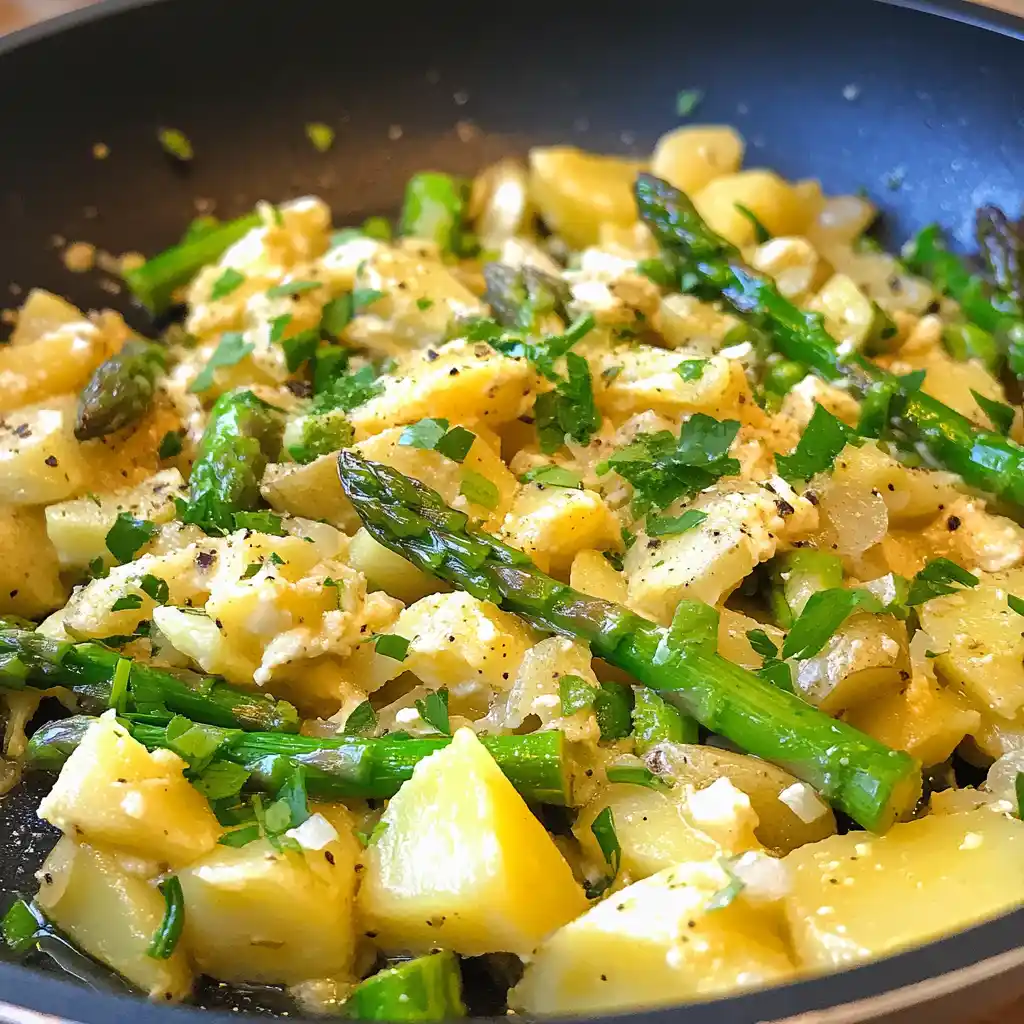
Ingredients
- 8 oz asparagus, trimmed and chopped into 1-inch pieces (firm spears with tight tips)
- 10 oz potatoes, diced into 1/2-inch cubes (Yukon gold or russet)
- 1 small onion, diced
- 2 cloves garlic, minced (fresh garlic, not jarred)
- 4 eggs (fresh with bright orange yolks)
- 1/4 cup milk (whole milk makes it creamier)
- 1/2 tsp salt
- 1/4 tsp black pepper
- 2 tbsp olive oil
- 1/4 cup grated Parmesan cheese (freshly grated, not the green can stuff)
- Fresh parsley, chopped (for garnish and freshness)
Instructions
- Prep all your ingredients first—trim asparagus and chop into 1-inch pieces, dice potatoes into 1/2-inch cubes, dice onion, and mince garlic. Have everything ready because this moves fast.
- Heat olive oil in a large skillet over medium heat until it shimmers. Add diced potatoes in a fairly even layer. Here’s the crucial part: resist stirring constantly. Let them sit undisturbed for 3-4 minutes to develop a golden crust, then stir and let another side get golden. Cook about 8-10 minutes total until golden and fork-tender.
- When potatoes are crispy and tender, add diced onion and minced garlic. Stir everything together and cook for 2-3 minutes until the onion is translucent and the garlic is fragrant. Don’t let the garlic burn.
- Add chopped asparagus to the skillet and stir to combine. Cook for 3-4 minutes, stirring occasionally, until asparagus is tender-crisp—still bright green with a slight snap, not olive-drab and mushy.
- In a bowl, whisk together eggs, milk, salt, and black pepper until well combined and slightly frothy.
- Pour the egg mixture over the vegetables and immediately reduce heat to medium-low. Here’s the key: don’t scramble aggressively. Use a spatula to gently push and fold the eggs, allowing uncooked egg to flow to the bottom. Cook slowly and gently for 5-6 minutes until eggs are just set but still creamy.
- Sprinkle grated Parmesan cheese over the top and let it melt slightly into the warm eggs.
- Remove from heat (residual heat will finish cooking the eggs perfectly), garnish with chopped fresh parsley, and serve immediately while everything’s hot and the eggs are creamy.
Nutrition Information (Per Serving):
- Calories: 245
- Carbohydrates: 20g
- Protein: 12g
- Fat: 13g
- Fiber: 3g
- Sodium: 420mg
- Vitamin A: 15% DV
- Vitamin C: 12% DV
- Calcium: 12% DV
This scramble packs quality protein from eggs and cheese, plus vitamins from the asparagus and potatoes—basically a complete breakfast that’s more nutritious than it tastes.
Notes:
- Seriously, let the potatoes develop a golden crust before stirring. Patience here gives you crispy, delicious potatoes instead of soggy ones.
- Don’t overcook the asparagus—it goes from perfect to mushy quickly. Bright green with a slight snap is what you want.
- Cook the eggs low and slow for creamy texture. High heat makes them rubbery and dry.
- Remove from heat when eggs are still slightly wet—they’ll continue cooking from residual heat and stay creamy.
- Fresh Parmesan that you grate yourself tastes way better than pre-grated stuff from the green can.
Storage Tips:
This asparagus potato scramble is best enjoyed fresh and hot when the eggs are at their creamiest and the potatoes are still crispy. If you have leftovers, store them in an airtight container in the fridge for up to 2 days. Reheat gently in a skillet over low heat with a splash of milk to help restore moisture to the eggs—don’t microwave or the eggs will turn rubbery. For meal prep, you can cook the potato and vegetable mixture ahead, refrigerate it, then add fresh scrambled eggs each morning for the best texture.
Serving Suggestions:
- Classic Breakfast: Serve with buttered toast and fresh fruit for a complete, satisfying morning meal
- Brunch Plate: Pair with crispy bacon or breakfast sausage and a side of roasted tomatoes for an impressive spread
- Light Dinner: Serve alongside a simple green salad for an easy breakfast-for-dinner night that feels special
- Weekend Brunch: Top with avocado slices and hot sauce for a California-style scramble that looks professional
Mix It Up (Recipe Variations):
Smoked Salmon Asparagus Scramble: Add 3oz flaked smoked salmon with the eggs and use fresh dill instead of parsley. Tastes like an expensive brunch restaurant for a fraction of the price.
Spring Vegetable Scramble: Add halved cherry tomatoes with the asparagus for extra color and fresh tomato flavor that’s perfect for spring mornings.
Bacon Asparagus Potato Scramble: Cook 4 strips of bacon first, use the bacon fat instead of olive oil, and crumble the bacon on top. Everything’s better with bacon.
Mediterranean Scramble: Add sun-dried tomatoes, use crumbled feta instead of Parmesan, and finish with fresh basil. Tastes like a Greek vacation for breakfast.
What Makes This Recipe Special:
This asparagus potato scramble uses professional cooking technique of adding ingredients in order of cooking time—longest-cooking items first (potatoes), medium items next (asparagus), and quickest items last (eggs). This layered approach ensures everything is cooked perfectly without anything being overcooked or undercooked. The combination of crispy golden potatoes, tender-crisp asparagus, creamy eggs, and nutty Parmesan creates layers of texture and flavor that make this way more interesting than basic scrambled eggs.
