
Have you ever been skeptical about combining fruit with plant-based proteins until one unexpected bite completely changed your perspective? I used to think seitan only belonged in Asian stir-fries or fake meat sandwiches until my vegan chef friend made this incredible peach combination at a summer dinner party. That unexpected Saturday evening introduction to baked seitan with peach completely transformed how I think about seasonal cooking and plant-based main dishes. Now this is my go-to when I want something impressive that showcases fresh summer fruit, and honestly, I’m pretty sure my omnivore dad thinks I’ve been secretly perfecting restaurant techniques (if only he knew the maple-soy glaze does all the heavy lifting while everything bakes together in one dish).
Here’s the Thing About This Recipe
What makes this baked seitan with peach work so well is how the sweet, juicy peaches caramelize alongside savory seitan, creating this incredible sweet-savory balance that tastes complex and restaurant-worthy. I learned the hard way that plant-based proteins can taste bland and boring, but seitan’s meaty texture soaks up the maple-soy glaze beautifully while the peaches add natural sweetness and gorgeous caramelization. The secret? The two-stage baking method—covered first to keep everything moist, then uncovered at higher heat to develop that gorgeous golden color and caramelized edges. Around here, we’ve figured out that this is one of those rare dishes that works equally well for impressing dinner guests or simple weeknight meals. It’s honestly that simple—no complicated vegan cooking techniques needed, just good ingredients and your oven doing the work.
What You’ll Need (And My Shopping Tips)
Good seitan is worth seeking out in the refrigerated section near tofu—look for plain seitan that’s firm and springy, not mushy or weird-textured. Don’t cheap out on questionable seitan that smells off or has a strange texture; I learned this after buying sad seitan once that tasted rubbery. Seitan should be dense and meat-like, made primarily from wheat gluten. Note: this is NOT gluten-free.
Fresh, ripe peaches are absolutely crucial—they should give slightly when pressed and smell sweet and fragrant. Don’t use rock-hard green peaches that have no aroma; I learned this after trying this recipe with underripe peaches that stayed hard and flavorless. Look for peaches with that gorgeous peachy smell and slight softness. If fresh peaches aren’t in season, frozen peach slices work in a pinch (thaw and drain first), though fresh are always better. I always grab an extra peach because someone inevitably eats one before I can cook (happens more than I’d like to admit).
Soy sauce adds that savory, umami depth—I use low-sodium so I can control the salt myself. Maple syrup provides natural sweetness that caramelizes beautifully—don’t use artificial pancake syrup or it’ll taste fake. Real maple syrup is worth the investment. Olive oil helps create the glaze and prevents sticking.
Garlic powder and onion powder build your savory base—make sure they’re fresh and aromatic, not clumpy and old. Fresh thyme for garnish adds an herbal note that ties everything together, though if you forget it (like I constantly do), the dish is still delicious. Salt and pepper are essential for proper seasoning.
Let’s Make This Together
Start by preheating your oven to 375°F and greasing a baking dish—something like a 9×13 inch pan works great. Make sure you grease it well because the maple syrup can make things sticky. Here’s where I used to mess up: if you don’t grease properly, the seitan will stick and tear when you try to serve it.
In a small bowl, whisk together your olive oil, soy sauce, maple syrup, garlic powder, onion powder, salt, and pepper until everything is well combined and emulsified. Taste this glaze—it should be balanced between sweet (maple), salty (soy sauce), and savory (garlic/onion). I learned this trick from my friend: the glaze should taste bold because some flavor will be absorbed by the seitan and peaches.
Arrange your seitan slices and peach slices in the prepared baking dish in a single layer if possible—a little overlap is fine, but you want most pieces exposed to the glaze and heat. Pour that gorgeous maple-soy glaze over everything, making sure to coat all the seitan and peaches evenly. Use a spoon or your hands to toss everything around so it’s all glossy and coated.
Cover the baking dish tightly with aluminum foil—this is important because it traps moisture and keeps everything from drying out during the first stage of cooking. Slide it into your preheated 375°F oven and bake for 20 minutes. Don’t peek or you’ll let out all that steam. Here’s my secret: this covered baking stage is what keeps the seitan tender and allows the peaches to soften without burning.
After 20 minutes, carefully remove the foil (watch out for hot steam!) and crank your oven temperature up to 425°F. This is the magic moment. Bake uncovered for an additional 10 minutes until the seitan develops golden edges and the peaches caramelize into gorgeous, jammy sweetness. The higher heat creates those caramelized bits that make this dish special. Don’t be me and walk away during this stage—I used to forget and come back to burnt peaches.
Once everything is golden and caramelized, remove from the oven and let it rest for a couple minutes. The glaze will thicken slightly as it cools. Garnish with fresh thyme leaves—just strip them off the stems and sprinkle over the top. Serve this baked seitan with peach hot over rice, quinoa, or with a simple green salad. The combination of savory, chewy seitan with sweet, caramelized peaches is absolutely perfect.
If This Happens, Don’t Panic
Seitan came out dry and rubbery? You probably overcooked it or didn’t use enough glaze. In reality, I’ve learned to check at 20 minutes with the foil on and add a splash of water if things look dry before the uncovered phase. If this happens, serve with extra sauce or glaze to add back moisture.
Peaches are mushy and falling apart? They were probably overripe or you baked too long. This is fixable for next time: use slightly firmer peaches or add them for just the last 15 minutes of baking instead of the full 30. If this happens (and it will with super ripe peaches), embrace the jammy texture—it’s still delicious. Glaze burnt on the bottom of the pan? Your oven runs hot or the maple syrup caramelized too much. Next time, use a bit less syrup or add a splash more liquid to the glaze.
Tastes too sweet? You went heavy-handed with maple syrup or your peaches were super sweet. Add more soy sauce or a squeeze of lemon juice to balance it out. I always taste the glaze now and adjust before baking. Not enough flavor despite the glaze? You under-seasoned or your seitan brand is really bland. Add more salt, garlic powder, or soy sauce next time.
When I’m Feeling Creative
Asian-Inspired Version: Add fresh grated ginger to the glaze and finish with sesame seeds and sliced green onions for more Asian flavors. When I’m feeling fancy, this version with ginger tastes incredible.
Balsamic Peach Seitan: Add a tablespoon of balsamic vinegar to the glaze for tangy depth that cuts through the sweetness. Around late summer, I’ll make this variation when I want something more sophisticated.
Spicy Version: Add a teaspoon of sriracha or red pepper flakes to the glaze for heat that balances the sweet peaches beautifully. I do this when I want something with more kick.
Nectarine or Plum Swap: Use nectarines or plums instead of peaches for slightly different flavor profiles that work equally well with the savory seitan.
What Makes This Recipe Special
This baked seitan with peach represents the evolution of plant-based cooking beyond simple meat substitutes into creative, seasonal dishes that celebrate produce. The technique of combining stone fruits with savory proteins is borrowed from classic pork-and-peach pairings, but using seitan makes it completely plant-based while maintaining that satisfying, meaty texture. What sets this apart from typical seitan dishes is how the sweet peaches transform from fresh fruit into caramelized, jammy goodness that perfectly complements the chewy, savory protein. The maple-soy glaze ties everything together with that addictive sweet-salty-umami combination. It’s proof that plant-based main dishes can be genuinely exciting and crave-worthy when you use seasonal ingredients and proper technique.
Things People Ask Me About This Recipe
Can I use a different plant-based protein instead of seitan?
You could try extra-firm tofu or tempeh, though the texture will be quite different. Seitan’s meaty chew is really what makes this special. If you use tofu, press it really well and maybe marinate it first. Tempeh works but has a nuttier, firmer texture that’s less meat-like.
What if peaches aren’t in season for this baked seitan recipe?
Use thawed frozen peach slices (drain well first), or substitute with nectarines, plums, or even fresh apricots when they’re in season. I’ve made this with different stone fruits and while peaches are my favorite, others work beautifully too.
Is this baked seitan with peach gluten-free?
No! Seitan is literally wheat gluten, so this is the opposite of gluten-free. If you need gluten-free, you’d have to use a completely different protein like tofu or tempeh, but then it’s really a different dish entirely.
Can I make this ahead for meal prep?
You can! Bake it up to 3 days ahead and store covered in the fridge. Reheat gently in a 350°F oven for about 10 minutes, adding a splash of water or vegetable broth if needed. The seitan texture holds up great, though the peaches may soften more.
What should I serve with baked seitan and peach?
This pairs beautifully with rice, quinoa, or couscous to soak up that delicious glaze. I usually serve it with a simple arugula salad or roasted vegetables on the side. It’s substantial enough to be a main dish, especially with a good grain alongside.
How do I know when the seitan is done?
The seitan should be golden brown on the edges and heated through—it’s already cooked when you buy it, so you’re really just heating it and developing flavor and color. The peaches should be soft and caramelized with some golden-brown edges.
One Last Thing
I couldn’t resist sharing this baked seitan with peach recipe because it’s one of those dishes that proves plant-based cooking can be genuinely exciting and beautiful without trying to imitate meat. The best dinners with this recipe are when omnivore friends take their first bite expecting something weird and their faces light up with surprise. Give yourself permission to adjust the sweetness and seasonings to your taste, don’t stress if your first batch isn’t perfectly caramelized, and remember that even slightly imperfect plant-based dinners beat boring tofu scrambles any day of the week.
Print
Baked Seitan with Peach
Description
This flavorful, impressive baked seitan with peach combines meaty plant-based protein with sweet caramelized peaches in maple-soy glaze—perfect for summer dinners, plant-based entertaining, or when you want something truly special and seasonal.
Prep Time: 10 minutes | Cook Time: 30 minutes | Total Time: 40 minutes | Servings: 4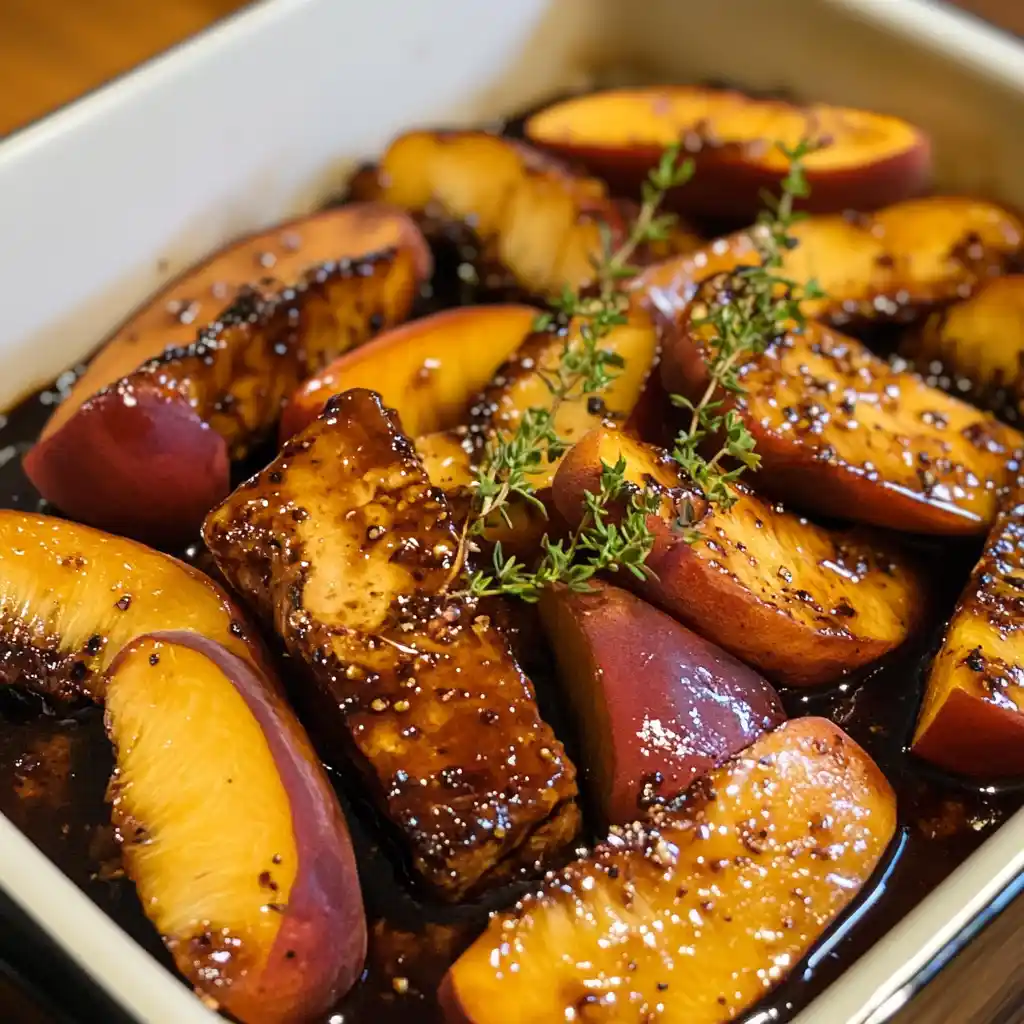
Ingredients
- 16 oz seitan, sliced into 1/4-inch thick pieces
- 2 ripe peaches, pitted and sliced into wedges
- 2 tbsp olive oil
- 2 tbsp soy sauce, preferably low-sodium
- 1 tbsp real maple syrup (not artificial pancake syrup)
- 1/2 tsp garlic powder
- 1/2 tsp onion powder
- Salt and pepper, to taste (start with 1/4 tsp each)
- Fresh thyme, for garnish (optional but pretty)
Instructions
- Preheat your oven to 375°F (190°C) and generously grease a 9×13 inch baking dish or similar size. Make sure you grease well because the maple syrup can make things sticky.
- In a small bowl, whisk together olive oil, soy sauce, maple syrup, garlic powder, onion powder, salt, and pepper until well combined and emulsified. Taste it—it should be balanced between sweet, salty, and savory.
- Arrange the seitan slices and peach slices in the prepared baking dish in a single layer if possible. A little overlap is fine, but you want most pieces exposed.
- Pour the maple-soy glaze over the seitan and peaches, making sure everything is coated evenly. Use a spoon or your hands to toss it all around so everything is glossy.
- Cover the baking dish tightly with aluminum foil and bake in the preheated oven for 20 minutes. Don’t peek or you’ll let out the steam.
- After 20 minutes, carefully remove the foil (watch out for hot steam!), increase the oven temperature to 425°F (220°C), and bake uncovered for an additional 10 minutes until the seitan is golden and the peaches are caramelized with some golden-brown edges.
- Remove from oven and let rest for a couple minutes. The glaze will thicken slightly as it cools.
- Garnish with fresh thyme leaves before serving. Serve hot over rice, quinoa, or with a simple side salad. Enjoy the sweet-savory magic!
Nutrition Information (Per Serving):
- Calories: 245
- Carbohydrates: 20g
- Protein: 24g
- Fat: 8g
- Fiber: 2g
- Sodium: 520mg
- Sugar: 12g
- Iron: 15% DV
This provides excellent plant-based protein from seitan with natural sweetness from peaches.
Notes:
- Seitan is wheat gluten—not gluten-free. Use tofu or tempeh for GF version.
- Ripe peaches are crucial—they should smell sweet and give slightly when pressed.
- Don’t skip the foil—it keeps everything moist during the first baking stage.
- Watch the second bake—don’t walk away or the maple syrup can burn.
- Fresh is best—frozen peaches work but drain them well first.
Storage Tips:
Store leftover baked seitan with peach covered in the fridge for up to 3 days. Reheat gently in a 350°F oven for about 10 minutes, adding a splash of water or vegetable broth if it looks dry. This doesn’t freeze well—the peaches get mushy and weird when thawed, and the texture suffers. This is best eaten fresh or within a few days of making.
Serving Suggestions:
- Over White or Brown Rice: Soaks up the delicious glaze perfectly
- With Quinoa: Adds more protein for a complete meal
- Alongside Arugula Salad: Peppery greens balance the sweetness
- With Roasted Vegetables: Makes a complete, colorful plate
Mix It Up (Recipe Variations):
Asian-Inspired Version: Add 1 tablespoon fresh grated ginger to the glaze and finish with sesame seeds and sliced green onions.
Balsamic Peach Seitan: Add 1 tablespoon balsamic vinegar to the glaze for tangy depth that cuts through sweetness.
Spicy Version: Add 1 teaspoon sriracha or red pepper flakes to the glaze for heat that balances the sweet peaches.
Nectarine or Plum Swap: Use nectarines or plums instead of peaches for slightly different but equally delicious flavor profiles.
What Makes This Recipe Special:
This baked seitan with peach showcases how plant-based cooking has evolved beyond simple meat substitutes into creative, seasonal dishes that celebrate produce. The technique of pairing stone fruits with savory proteins creates that irresistible sweet-savory combination while the two-stage baking method ensures everything stays moist before caramelizing. The maple-soy glaze provides that addictive sweet-salty-umami profile that makes this genuinely crave-worthy. It’s proof that plant-based main dishes can be exciting, beautiful, and satisfying when you use seasonal ingredients and proper technique.
