
Is there any dish more universally loved on a cold night than a big pot of homemade chili? I don’t think so. Beef and bean chili is the recipe I make when I need something that will feed a crowd, warm everyone up, and produce zero complaints from anyone at the table — including the pickiest eaters. My dad, who evaluates every chili against some perfect version from his memory, told me this one was “as good as any he’d had.” From him, that’s a standing ovation. I’ve been making this same pot ever since.
Here’s the Thing About This Recipe
What makes this beef and bean chili work where other homemade chili attempts taste thin or flat is the tomato paste. Most chili recipes use only diced tomatoes, but tomato paste adds concentrated, caramelized tomato depth that you can’t get from canned tomatoes alone — especially when you cook it briefly with the beef and vegetables before adding the liquid. Around here, we’ve figured out that the two-bean combination of kidney and black beans creates the right texture balance: kidney beans hold their shape and add bulk, while black beans are creamier and contribute body to the broth. The chili powder and cumin together are the flavor foundation, and both need to be fresh to do their work. It’s honestly that simple.
What You’ll Need (And My Shopping Tips)
Ground beef at 80/20 fat content is the right choice for beef and bean chili — the fat renders into the pot during browning and carries flavor throughout the braise. Leaner ground beef produces a drier, less flavorful chili that tastes like it’s missing something. Ground beef has been central to American chili since the dish developed in Texas in the 19th century, and the fat content is part of what gives traditional chili its characteristic richness. Drain off the majority of the rendered fat after browning, but leave a tablespoon or so in the pot — it carries the spice flavors into the rest of the dish.
For the chili powder, freshness is everything. Chili powder is a blend of dried chilies, cumin, oregano, and garlic, and it loses its pungency faster than most spices once opened. Smell it before using — it should smell warm, slightly smoky, and distinctly spiced. If it smells like nothing, buy a new jar. This single ingredient is the primary flavor of the whole pot, and old chili powder produces a flat, dull chili no matter what else you do right.
Tomato paste is the ingredient that elevates this from good to genuinely great — cook it directly in the pot with the beef and vegetables for 2 minutes before adding any liquid. This brief caramelizing removes the raw, slightly metallic edge of canned paste and deepens it into something richer and more complex.
Two cans of beans — kidney and black — give you more variety in texture and flavor than a single can would. Both should be drained and rinsed thoroughly to remove the starchy canning liquid, which would cloud the broth.
Let’s Make This Together
In a large pot over medium heat, add the ground beef and cook, breaking it into crumbles, until fully browned — about 6 to 8 minutes. Drain most of the excess fat but leave a tablespoon in the pot. Here’s where the flavor foundation starts: don’t rush the browning. Properly browned beef with some real color on it contributes more to the final chili than gray, steamed beef.
Add the chopped onion, minced garlic, and diced red bell pepper. Cook for 4 to 5 minutes until the vegetables are tender. Add the tomato paste and stir, cooking for 2 minutes — the paste will deepen in color and smell sweeter and more caramelized.
Stir in the kidney beans, black beans, diced tomatoes with their liquid, beef broth, chili powder, cumin, salt, and pepper. Bring to a simmer, then reduce heat to low. Cover and cook for 30 minutes, stirring occasionally. The 30-minute simmer is what allows the spices to fully integrate into the broth and the beans to absorb the surrounding flavors.
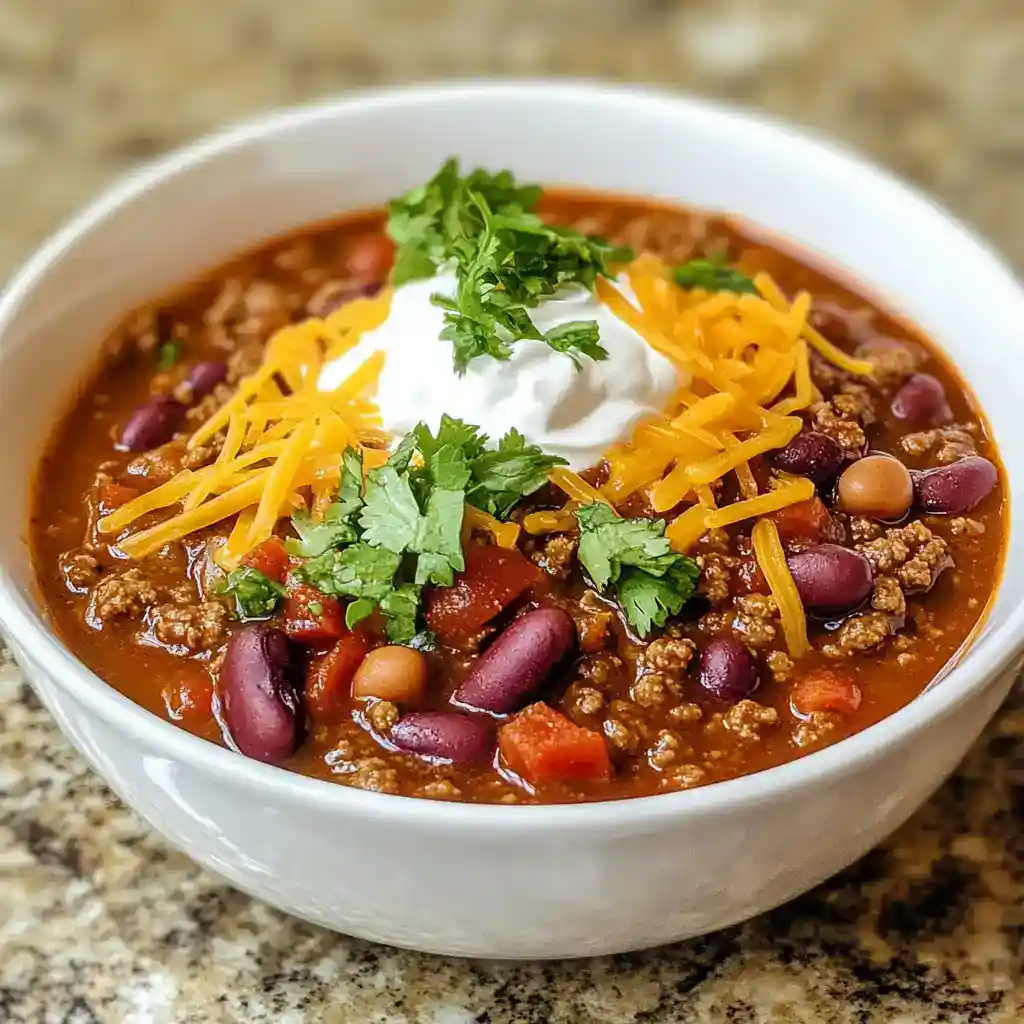
Taste and adjust seasoning before serving. Set out the toppings — shredded cheddar, sour cream, cilantro — and let everyone build their own bowl.
For another bold, satisfying beef chili variation that takes things in a completely different direction, check out this Beef Goulash from Station Recipes — a paprika-spiced Central European braise that satisfies the same craving for hearty, spiced beef in a rich sauce.
If This Happens, Don’t Panic
Chili tastes flat after simmering? Old spices or not enough acid. Add a small squeeze of lime juice — it brightens all the spice flavors immediately. A teaspoon of Worcestershire sauce also adds depth without a recognizable taste. And next time, replace the chili powder.
Broth is too thin? Mash a handful of black beans against the side of the pot and stir them back in — the starch thickens the broth quickly and naturally. Simmering uncovered for 10 additional minutes also reduces and concentrates.
Too spicy? Reduce to 1.5 teaspoons of chili powder next time and taste before adding the full 2 teaspoons. A generous dollop of sour cream stirred into an individual bowl tones down heat immediately without changing the flavor of the whole pot.
Ground beef is gray and bland-tasting? It was crowded in the pot and steamed instead of browning. Next time, cook in batches if needed — properly browned beef with real color makes a meaningful difference in the finished chili.
Ways to Mix It Up
Smoky Beef and Bean Chili: Add 1/2 teaspoon of smoked paprika and a chipotle pepper in adobo sauce, minced, with the other spices. The smokiness adds a depth that makes this taste like it spent hours over a wood fire.
Beer Chili: Replace 1 cup of the beef broth with a dark beer — a stout or porter. The malty bitterness rounds out the spice profile and adds a complexity that’s characteristic of great competition chili.
Three-Bean Chili: Add a drained can of pinto beans alongside the kidney and black beans. The pintos add a third texture and their creamier flesh slightly thickens the broth naturally.
Slow Cooker Beef and Bean Chili: Brown the beef and cook the vegetables on the stovetop, then transfer everything to a slow cooker and cook on low for 6 to 8 hours. The extended cooking deepens the flavor even further and makes this a perfect hands-off weekday dinner.
What Makes This Recipe Special
Chili as we know it today developed in San Antonio, Texas in the 19th century as a dish made by working-class communities — a simple combination of dried or fresh beef, chili peppers, and spices that became known internationally as “chili con carne.” The addition of beans was a later development that expanded the dish’s volume and nutritional content, and while purists debate the beans question passionately, most home cooks agree that beans make chili more satisfying and substantial. Learn more about the history of ground beef in American cooking and how it became the foundation for some of the most beloved dishes in the country. This beef and bean chili honors that tradition with a formula that’s been refined through years of cold-weather cooking.
Questions I Always Get
What’s the best chili powder for beef and bean chili?
Any quality chili powder blend that’s fresh — meaning recently opened or recently purchased. McCormick, Gebhardt, and Frontier Co-Op all make good chili powder blends. The most important thing is freshness, not brand. Smell it before using every time.
Can I make beef and bean chili in a slow cooker?
Yes — brown the beef and cook the vegetables first on the stovetop (this step matters for flavor even in slow cooker recipes), then combine everything in the slow cooker and cook on low for 6 to 8 hours. The flavor is excellent.
Is this beef and bean chili recipe beginner-friendly?
It’s one of the most approachable one-pot recipes — brown beef, cook vegetables, add everything, simmer. The most important nuances are browning the beef properly, cooking the tomato paste briefly, and using fresh spices. If you can do those three things, you’ll make great chili.
How do I store and reheat beef and bean chili?
Refrigerate in an airtight container for up to 4 days. Chili almost always tastes better the next day — the spices continue to meld overnight and the beans absorb more flavor from the broth. Reheat on the stovetop over medium heat, adding a splash of broth if it thickened too much.
Can I freeze beef and bean chili?
Yes — it’s one of the best dishes to freeze. Cool completely and freeze in portions for up to 3 months. Thaw overnight in the fridge and reheat on the stovetop. The flavor and texture hold up very well to freezing. Store toppings separately and add fresh at serving.
Why use two types of beans instead of one?
Kidney beans and black beans have different textures — kidney beans are firmer and hold their shape during the simmer, while black beans are creamier and contribute body to the broth. Using both creates a more interesting, varied texture in every spoonful than a single bean variety would.
One Last Thing
Beef and bean chili is the recipe I make when I want something guaranteed to satisfy — it’s familiar, deeply flavored, and customizable through the toppings in a way that lets everyone make their bowl exactly how they want it. Make a big pot and eat it for three days, each time a little better than the last. It’s the kind of recipe that earns its permanent spot in your rotation after the very first batch. You’ve got this.
Print
Beef and Bean Chili
Description
Bold, hearty beef and bean chili with ground beef, kidney beans, black beans, and a smoky spiced tomato-beef broth — a crowd-pleasing one-pot recipe ready in under an hour.
Prep Time: 10 minutes | Cook Time: 40 minutes | Total Time: 50 minutes | Servings: 6
Ingredients
- 1 lb ground beef (80/20)
- 1 onion, chopped
- 2 cloves garlic, minced
- 1 red bell pepper, diced
- 1 can (15 oz) kidney beans, drained and rinsed
- 1 can (15 oz) black beans, drained and rinsed
- 1 can (14.5 oz) diced tomatoes with liquid
- 2 tbsp tomato paste
- 2 cups beef broth
- 2 tsp chili powder (fresh)
- 1 tsp ground cumin
- Salt and pepper, to taste
Instructions
- In a large pot over medium heat, cook ground beef, breaking into crumbles, until fully browned — 6 to 8 minutes. Drain most of the fat, leaving about 1 tbsp.
- Add onion, garlic, and red bell pepper. Cook 4 to 5 minutes until vegetables are tender.
- Add tomato paste and cook for 2 minutes, stirring, until it deepens in color.
- Stir in kidney beans, black beans, diced tomatoes, beef broth, chili powder, cumin, salt, and pepper.
- Bring to a simmer, then reduce heat to low. Cover and cook for 30 minutes, stirring occasionally.
- Taste and adjust seasoning. Serve hot with desired toppings.
Nutrition Information (Per Serving, without toppings)
- Calories: 320
- Carbohydrates: 30g
- Protein: 24g
- Fat: 11g
- Fiber: 10g
- Sodium: 680mg
- Iron: 4.6mg (26% DV)
- Vitamin C: 28mg (31% DV)
Note: Nutrition estimates are based on 6 servings without toppings. Values will vary based on the beef fat content and broth brand used.
Notes
- Brown the beef until it has real color — gray, steamed beef contributes significantly less flavor.
- Cook the tomato paste for 2 full minutes before adding liquid — this caramelizes it and removes the raw edge.
- Fresh chili powder is the single most impactful quality variable in this recipe — smell yours first.
- The 30-minute simmer is essential for spice integration — don’t shorten it.
Storage Tips
- Refrigerator: Store in an airtight container for up to 4 days. Flavor improves overnight.
- Reheating: Warm on the stovetop over medium heat with a splash of broth if needed.
- Freezer: Freeze in portions for up to 3 months. Thaw overnight before reheating.
- Store toppings separately — never add them before storing.
Serving Suggestions
- In deep bowls with a full topping bar: shredded cheddar, sour cream, cilantro, sliced jalapeños
- Over white rice for a heartier meal
- With warm cornbread alongside for a complete comfort food dinner
- In a bread bowl for a casual gathering or game day
Mix It Up (Recipe Variations)
Smoky: Add smoked paprika and a minced chipotle pepper in adobo sauce.
Beer Chili: Replace 1 cup broth with a dark stout or porter for malty depth.
Three-Bean: Add a drained can of pinto beans for a third texture and additional body.
Slow Cooker: Brown beef and cook vegetables first; then slow cook on low 6 to 8 hours.
What Makes This Recipe Special
The tomato paste step — cooking it directly in the pot with the beef drippings for 2 minutes before adding any liquid — is what gives this beef and bean chili its restaurant-quality depth. Raw tomato paste from the can has a bright, slightly acidic flavor that’s one-dimensional. When that paste hits a hot pan coated in beef fat and caramelizes for 2 minutes, the Maillard reaction transforms its flavor into something deeper, slightly sweet, and more concentrated — it becomes a flavor amplifier rather than just a tomato element. Combined with properly browned beef and fresh chili powder, this single technique step is what separates a deeply satisfying chili from one that tastes like it came from a packet mix.
