
Ever wonder why homemade enchiladas never quite taste like the ones from your favorite Mexican restaurant? I used to think making authentic beef enchiladas required some secret family recipe passed down through generations until I discovered this foolproof method. Now I make these cheesy, saucy rolls at least twice a month for dinner, and honestly, my family has stopped asking for takeout because these are better (which feels pretty amazing considering the first time I tried, I forgot to soften the tortillas and they cracked into pieces when I tried to roll them, creating an enchilada casserole disaster that looked nothing like what I intended).
Here’s the Thing About This Recipe
What makes authentic Mexican enchiladas work so beautifully is the balance between seasoned meat, tangy sauce, and melted cheese all working together in harmony. I learned the hard way that you can’t just roll up any filling in tortillas and call them enchiladas—the tortillas need to be softened so they roll without breaking, the filling needs proper seasoning, and the sauce-to-filling ratio has to be right or they’re either dry or swimming in liquid. These classic Tex-Mex enchiladas use ground beef seasoned with warm spices and green chiles for just the right amount of flavor and heat. It’s honestly that simple once you understand the importance of softening those tortillas and not overfilling them, and no special equipment needed beyond a baking dish.
What You’ll Need (And My Shopping Tips)
Good ground beef is worth buying—I go for 85/15 lean-to-fat ratio because too lean makes dry filling, but too fatty makes greasy enchiladas. Don’t cheap out on the enchilada sauce either—grab a quality red enchilada sauce that actually tastes like something (happens more than I’d like to admit when I buy the bargain brand and wonder why my enchiladas taste bland). I like Las Palmas or Hatch brand, but whatever tastes good when you dip your finger in it works.
Corn tortillas are traditional and authentic for enchiladas—small street-taco size works best because they’re easier to roll and you get more portions. Fresh tortillas from a Mexican market are incredible if you can find them. Canned diced green chiles add mild heat and flavor without being overwhelming—they’re usually in the Mexican food aisle.
Shredded Mexican blend cheese (usually a mix of cheddar, Monterey Jack, and queso quesadilla) melts beautifully and has great flavor. Fresh cilantro for garnish isn’t just for looks—it adds a fresh, bright note that cuts through the richness. Cumin and chili powder are essential for that characteristic Mexican flavor—if your spices smell like nothing, replace them because old spices won’t give you proper flavor.
I always make extra because these reheat beautifully for easy weeknight dinners. Fresh garlic beats jarred for this savory filling. For more details on authentic enchilada techniques, check out this guide to Mexican enchiladas from Food Network.
Let’s Make This Together
Start by cranking your oven to 350°F—nice moderate heat that’ll melt the cheese without burning the edges. In a large skillet over medium heat, brown that ground beef, breaking it up with a wooden spoon as it cooks. Here’s where I used to mess up—I’d crank the heat too high and the outside would brown before the inside cooked. Take your time, let it cook evenly for about 7-8 minutes until no pink remains, then drain off the excess fat.
Add diced onion and minced garlic to the cooked beef, sautéing for about 3-4 minutes until the onion is translucent and everything smells amazing. Stir in half of the enchilada sauce (save the other half for topping), the diced green chiles, cumin, chili powder, salt, and pepper. Let this simmer for about 5 minutes so the flavors can meld and any liquid reduces slightly. The mixture should be moist but not soupy. Taste it and adjust seasoning—it should be flavorful on its own.
Here’s my secret: spread a thin layer of the remaining enchilada sauce on the bottom of a 9×13-inch baking dish. This prevents sticking and adds flavor to the bottom of the enchiladas. Don’t skip this step—I learned this trick from Mexican cooks who insist it makes a difference.
Now for the slightly tricky part—rolling the enchiladas. Corn tortillas need to be softened or they’ll crack when you try to roll them. You have options: wrap them in damp paper towels and microwave for 30 seconds, or heat them one at a time in a dry skillet for about 10 seconds per side, or dip each one briefly in the warm enchilada sauce before filling. I usually go with the microwave method because it’s fastest. Don’t be me—I used to skip this and wonder why my tortillas kept breaking.
Place a heaping spoonful (about 2-3 tablespoons) of the beef mixture down the center of each softened tortilla. Don’t overfill or you won’t be able to roll them. Roll the tortilla tightly around the filling and place it seam side down in the prepared baking dish. Repeat with remaining tortillas, fitting them snugly next to each other in the dish.
Pour the rest of the enchilada sauce over the top of all the rolled enchiladas, making sure to cover them evenly. Sprinkle the shredded cheese generously over everything. Cover the dish tightly with aluminum foil and slide into the oven.
Bake covered for 20 minutes—this heats everything through and lets the flavors meld. Remove the foil and bake for another 5-10 minutes uncovered until the cheese is melted, bubbly, and starting to turn golden in spots. Let them cool for about 5 minutes before serving (if you can wait), then garnish with fresh chopped cilantro. For another crowd-pleasing Mexican dish, try this Chicken Fajitas Recipe that pairs perfectly with enchiladas for a complete fiesta.
When Things Go Sideways (And They Will)
Tortillas cracked and fell apart? You didn’t soften them enough before rolling, or you overfilled them. In reality, I’ve learned to really warm those tortillas so they’re pliable, and use just 2-3 tablespoons of filling per tortilla. This is totally fixable next time—if they crack, just call it an enchilada casserole and nobody will know the difference.
Enchiladas swimming in liquid? Don’t panic—your beef mixture was too wet, or you used too much sauce. If this happens (and it might), let them sit for 10 minutes after baking so excess liquid gets absorbed. Next time, simmer the filling longer to reduce liquid.
Beef turned out bland and boring? You didn’t season it enough, or your spices were old and weak. Always taste the filling before rolling and adjust seasoning. Don’t be shy with the cumin and chili powder—that’s where the flavor comes from.
Cheese didn’t melt evenly? You used pre-shredded cheese with too many additives, or your oven temperature was off. Freshly shredded cheese melts better, though I still use pre-shredded for convenience sometimes.
When I’m Feeling Creative
Cheese Enchiladas: When I’m feeling vegetarian, I skip the beef entirely and use extra cheese, black beans, and sautéed vegetables. My meatless friends request these every time.
Red and Green Sauce: Use half red enchilada sauce and half green (salsa verde) for what Mexicans call “enchiladas divorciadas” or divorced enchiladas. Around the holidays, the red and green looks festive.
Breakfast Enchiladas: Fill with scrambled eggs, cheese, and breakfast sausage for morning versions. I make these for brunch gatherings and they’re always a hit.
Extra Spicy: Add sliced jalapeños to the filling and use spicy enchilada sauce for heat lovers. My husband requests this version because he lives for spicy food.
Why This Works So Well
These beef enchiladas capture the essence of authentic Mexican enchiladas that have been a staple of Mexican cuisine for centuries, though the versions we know today evolved significantly with Tex-Mex cooking. While enchiladas date back to Mayan times when people rolled tortillas around small fish, the cheese-covered, baked versions became popular in Mexican-American communities. What sets homemade enchiladas apart from frozen or restaurant versions is the control over seasoning, freshness of ingredients, and ability to customize heat levels. The technique of softening tortillas before rolling is crucial—without it, corn tortillas crack and refuse to cooperate. The cultural history of enchiladas shows how these rolled, sauce-covered tortillas became beloved across Mexico and the American Southwest, with each region developing distinct styles and fillings.
Things People Ask Me About This Recipe
Can I make these beef enchiladas ahead of time?
Absolutely! Assemble them completely (through step 6), cover tightly with foil, and refrigerate for up to 24 hours before baking. Just add 5-10 minutes to the covered baking time since they’re starting cold. I do this all the time for easy weeknight dinners or when having guests.
What if I can’t find corn tortillas?
Use flour tortillas as a substitute, though they’re less traditional. Flour tortillas are softer and easier to roll, so you might not need to warm them first. The texture and flavor will be different but still delicious.
Can I use a different meat?
Yes! Ground turkey or chicken work great with the same seasonings. Shredded rotisserie chicken is an easy shortcut. You could also use leftover cooked beef or even keep them vegetarian with beans.
Is this recipe beginner-friendly?
Totally. The most challenging part is rolling the tortillas without them breaking, but even if they crack, the enchiladas still taste amazing. By your third or fourth one, you’ll have the technique down. My teenage son makes these regularly.
Can I freeze beef enchiladas?
Yes! Assemble completely, wrap tightly in plastic wrap and foil, and freeze for up to 3 months. Bake from frozen, covered, at 350°F for about 45 minutes, then uncover and bake until bubbly. Or thaw overnight in the fridge first.
What’s the best way to reheat leftovers?
Cover with foil and reheat in a 350°F oven for about 15 minutes until hot throughout. Microwave works but the tortillas can get a bit tough. Add a splash of extra sauce before reheating to keep them moist.
Why I Had to Share This
I couldn’t resist sharing this because beef enchiladas are one of those comfort foods that brings people together around the table, and homemade versions are so much better than restaurant ones when you get the technique right. The best enchilada nights are when you pull that bubbling dish from the oven, the cheese is perfectly melted, and everyone’s already reaching for their serving before you even set it down. You’ve totally got this.
Print
Beef Enchiladas
Description
Savory ground beef rolled in corn tortillas, smothered in red enchilada sauce and melted cheese—these authentic beef enchiladas taste like your favorite Mexican restaurant but are easy enough for weeknight dinners.
Prep Time: 20 minutes | Cook Time: 35 minutes | Total Time: 55 minutes | Servings: 8 enchiladas (4 servings)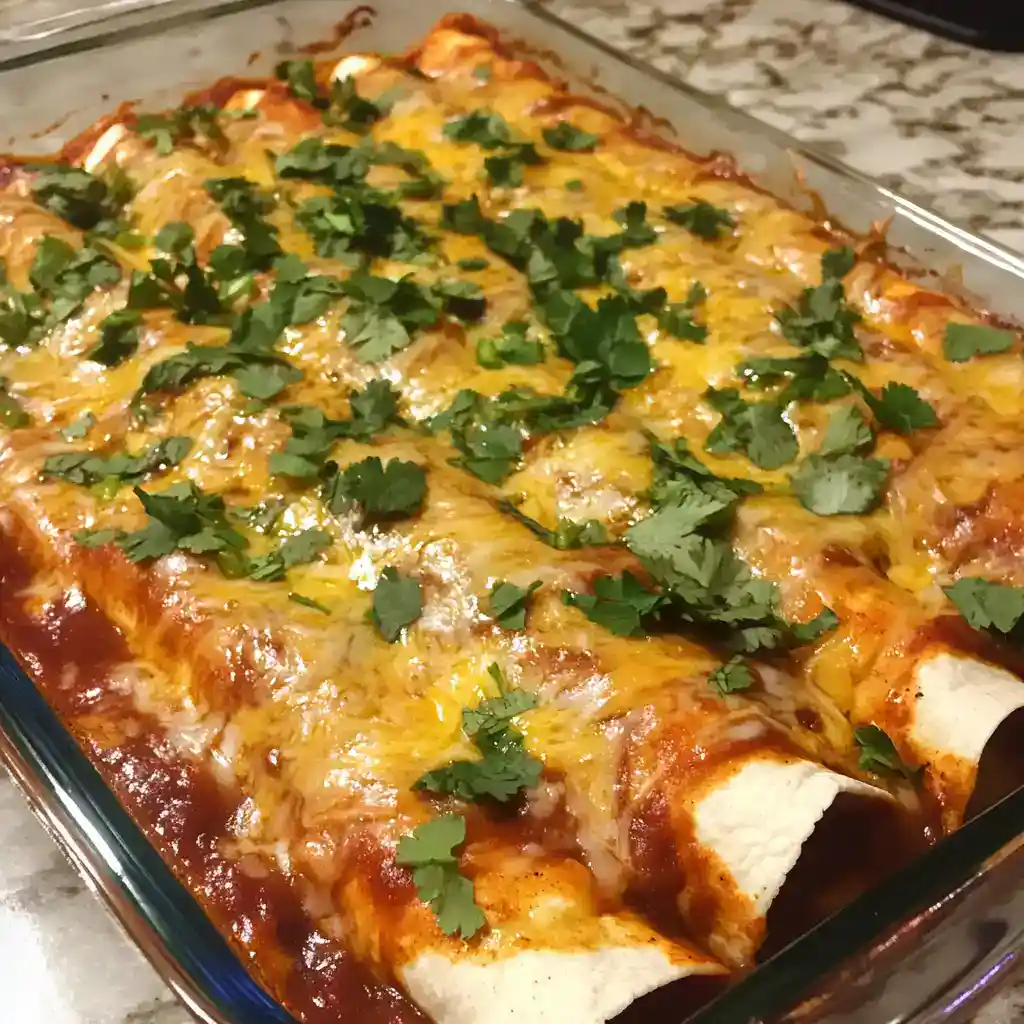
Ingredients
- 1 lb ground beef (85/15 lean-to-fat ratio)
- 1 small onion, diced
- 2 cloves garlic, minced
- 1 can (10 oz) red enchilada sauce (divided)
- 1 can (4 oz) diced green chiles
- 1 teaspoon ground cumin
- 1/2 teaspoon chili powder
- Salt and pepper to taste (start with 1/2 tsp salt)
- 8 small corn tortillas (street taco size)
- 1 cup shredded Mexican blend cheese
- Fresh cilantro, chopped for garnish
Instructions
- Crank your oven to 350°F and grab a 9×13-inch baking dish.
- In a large skillet over medium heat, cook the ground beef for 7-8 minutes, breaking it up with a wooden spoon as it cooks, until browned with no pink remaining. Drain off excess fat.
- Add diced onion and minced garlic to the beef, sautéing for 3-4 minutes until the onion is translucent and everything smells amazing.
- Stir in half of the enchilada sauce (save the rest for later), diced green chiles, cumin, chili powder, salt, and pepper. Let it simmer for about 5 minutes, stirring occasionally. The mixture should be moist but not soupy. Taste and adjust seasoning.
- Spread a thin layer of the remaining enchilada sauce on the bottom of your baking dish—this prevents sticking and adds flavor.
- Soften the corn tortillas so they don’t crack: wrap them in damp paper towels and microwave for 30 seconds, or heat each one in a dry skillet for 10 seconds per side. This step is crucial.
- Place a heaping 2-3 tablespoons of the beef mixture down the center of each softened tortilla. Don’t overfill or you won’t be able to roll them.
- Roll each tortilla tightly around the filling and place seam side down in the prepared baking dish. Fit them snugly next to each other.
- Pour the remaining enchilada sauce over the top of all the rolled enchiladas, making sure to cover them evenly. Sprinkle the shredded cheese generously over everything.
- Cover the dish tightly with aluminum foil and bake for 20 minutes.
- Remove the foil and bake for an additional 5-10 minutes until the cheese is melted, bubbly, and starting to turn golden in spots.
- Let cool for about 5 minutes, then garnish with fresh chopped cilantro. Serve hot with your favorite toppings like sour cream, avocado, or extra salsa.
Nutrition Information (Per Serving, 2 enchiladas):
- Calories: 485
- Carbohydrates: 32g
- Protein: 32g
- Fat: 24g
- Fiber: 5g
- Sodium: 880mg
- Iron: 20% DV
- Calcium: 20% DV
- Vitamin C: 15% DV
These beef enchiladas provide substantial protein and iron while the corn tortillas offer whole grain nutrition. Pair with vegetables for a balanced meal.
Notes:
- CRUCIAL: Soften corn tortillas before rolling or they’ll crack. Don’t skip this step.
- Don’t overfill the tortillas—2-3 tablespoons of filling is plenty per tortilla.
- Spread sauce on the bottom of the dish to prevent sticking.
- Taste the beef mixture and adjust seasoning before rolling—it should be flavorful.
- Room temperature filling is easier to work with than hot filling.
- Every oven runs differently, so watch the cheese during the final uncovered baking.
Storage Tips:
Store leftover enchiladas covered in the refrigerator for up to 4 days. Reheat covered with foil in a 350°F oven for about 15 minutes, or microwave individual portions. Freeze assembled enchiladas (before or after baking) wrapped tightly for up to 3 months. Bake frozen enchiladas covered at 350°F for about 45 minutes, then uncover until bubbly.
Serving Suggestions:
- Classic Style: Serve with Mexican rice and refried beans
- Fresh Toppings: Add sour cream, diced avocado, chopped cilantro, and lime wedges
- Salad Side: Pair with a simple lettuce and tomato salad with lime vinaigrette
- Complete Meal: Serve with chips and guacamole for a full Mexican feast
Mix It Up (Recipe Variations):
- Cheese Enchiladas: Skip the beef and use extra cheese with black beans and sautéed vegetables
- Green Sauce: Use salsa verde instead of red enchilada sauce for tangy green enchiladas
- Breakfast Version: Fill with scrambled eggs, cheese, and breakfast sausage
- Extra Spicy: Add sliced jalapeños to filling and use spicy enchilada sauce
What Makes This Recipe Special:
These beef enchiladas use the authentic technique of softening corn tortillas before rolling to prevent cracking, while the method of saucing both the bottom of the pan and the top of the enchiladas ensures every bite is flavorful and moist. The seasoned beef filling balanced with just the right amount of cheese and sauce creates that perfect enchilada experience—not too dry, not too soupy, just right.
