
Ever wonder why restaurant fajitas arrive sizzling and perfectly seasoned while homemade versions are tough and bland? I used to think fajitas required some secret marinade or special equipment until I discovered this foolproof beef fajitas recipe. Now my Tex-Mex nights feature tender, flavorful steak with caramelized peppers and onions that my family requests constantly, and honestly, the dramatic sizzle when they hit the table makes me feel like a restaurant chef even though it takes less than an hour.
Here’s the Thing About These Fajitas
What makes this beef fajita recipe work is the way simple spices penetrate the thinly sliced flank steak while high heat caramelizes the vegetables and creates that signature char. Here’s what I’ve learned: most people either use the wrong cut of beef (which stays tough no matter what), or they overcrowd the pan so everything steams instead of sears. But when you slice flank steak thinly against the grain and cook in a hot skillet with room to breathe, you’re creating actual restaurant-quality results with incredible texture and flavor. It’s honestly that simple—right cut, high heat, proper slicing. No special equipment or secret ingredients needed.
What You’ll Need (And My Shopping Tips)
Good flank steak is your foundation here—don’t substitute with sirloin or round steak or you’ll end up with chewy, disappointing fajitas. I learned this after buying whatever beef was on sale three times and wondering why my fajitas were always tough. Look for flank steak with good marbling and bright red color, not gray or brown. Ask the butcher if you can’t find it—sometimes it’s labeled “London broil.” According to Serious Eats’ guide to steak cuts, flank steak has long muscle fibers that become tender when sliced thinly against the grain.
Bell peppers should be firm and glossy—I use one red and one green for color contrast, but any combination works. The onion should be large and fresh, not sprouting. Fresh garlic is essential—jarred minced garlic tastes sharp and chemical. The spices—chili powder, cumin, and paprika—should smell aromatic when you open them. Old spices taste like dust.
Olive oil should have a high enough smoke point for high-heat cooking—regular olive oil works better than extra virgin here. Flour tortillas should be soft and pliable, not stiff. Store them in the fridge and warm before serving. Your optional toppings make the meal—don’t skip the cheese, sour cream, guacamole, or salsa.
Let’s Make This Together
Start by slicing your flank steak: this is the most crucial step for tender fajitas. Place the steak on a cutting board and identify which direction the muscle fibers run—they’ll look like lines across the meat. Slice against these lines (perpendicular to the grain) into thin strips about 1/4 inch thick. Here’s where I used to mess up: I’d slice with the grain thinking it didn’t matter, and end up with chewy, stringy meat. Slicing against the grain shortens those muscle fibers and makes every bite tender.
In a medium bowl, combine your sliced steak with 2 cloves of minced garlic, 1 teaspoon chili powder, 1 teaspoon cumin, 1/2 teaspoon paprika, and generous amounts of salt and pepper (about 1/2 teaspoon salt, 1/4 teaspoon pepper). Use your hands to massage the spices into every piece of meat. Let this marinate for at least 30 minutes at room temperature, or up to 4 hours in the fridge. If you refrigerate it, bring it back to room temperature for 15 minutes before cooking—cold meat doesn’t sear properly.
While the meat marinates, slice your bell peppers and onion into strips about 1/4 inch thick. Try to keep them roughly the same size so they cook evenly. Heat 2 tablespoons of olive oil in a large skillet (cast iron works beautifully) over medium-high heat until the oil is shimmering and almost smoking. This is important—you need HIGH heat for proper searing.
Now for the fun part: add the marinated steak to the hot skillet in a single layer. Don’t crowd the pan—if your skillet isn’t big enough, cook the meat in two batches. Let it sit undisturbed for 2-3 minutes to develop that gorgeous brown crust, then stir and cook another 2-3 minutes total until browned but not overcooked. Flank steak cooks fast, so watch it carefully. Remove the steak to a plate.
In the same skillet with all those flavorful browned bits, add your sliced bell peppers and onions. Cook for 5-7 minutes, stirring occasionally, until they’re tender-crisp with some charred edges. They should still have a bit of bite—not mushy. Return the cooked steak to the pan and toss everything together for about 1 minute to heat through and let the flavors meld.
Warm your tortillas in a dry skillet for 30 seconds per side or wrap them in a damp paper towel and microwave for 30 seconds. Serve the sizzling beef and vegetables immediately with warm tortillas and all your favorite toppings. Let everyone build their own fajitas exactly how they like them.
This whole thing takes about 45 minutes including marinating time, which means impressive weeknight dinner without stress. Check out my Chicken Fajita Bowl for another Tex-Mex favorite that uses similar flavors.
When Things Go Sideways (And They Will)
Steak is tough and chewy? You sliced with the grain instead of against it, or overcooked it. In reality, I’ve learned that flank steak should be cooked to medium at most—any more and it gets tough. If it’s already chewy, slice it even thinner and serve with extra toppings to add moisture. This is totally fixable next time by paying attention to the grain.
Vegetables are mushy? You cooked them too long or your heat was too low so they steamed. Don’t panic—mushy fajita vegetables still taste good, just not as texturally interesting. Every vegetable cooks at different rates, so start checking at 5 minutes.
Everything tastes bland? You underseasoned or didn’t marinate long enough. This goes from boring to delicious fast with proper seasoning and marinating time. Taste the meat after cooking and add more salt if needed—flank steak needs generous seasoning.
Meat and vegetables are watery? You crowded the pan so everything steamed instead of seared, releasing too much moisture. Next time, cook in batches if needed and make sure your pan is screaming hot before adding ingredients.
When I’m Feeling Creative
Spicy Chipotle Beef Fajitas: Add 1-2 teaspoons chipotle chili powder to the marinade and serve with chipotle crema. Around summer cookouts, this smoky, spicy version is my go-to.
Citrus Beef Fajitas: Add juice and zest of 1 lime to the marinade for bright, tangy flavor that tenderizes the meat. When I’m feeling fancy, the citrus really elevates the whole dish.
Loaded Steak Fajitas: Add sliced mushrooms and jalapeños with the peppers for more vegetables and heat. This has been a total game-changer for stretching the meal when feeding a crowd.
Fajita Bowl: Skip the tortillas and serve over cilantro-lime rice with black beans for a bowl version. Fair warning: this is way more filling and better for meal prep.
What Makes This Recipe Special
Fajitas originated in the ranch lands of West Texas and northern Mexico in the 1930s and 1940s, where cowboys would grill the less desirable cuts of beef like skirt and flank steak over open fires. According to Wikipedia’s guide to fajitas, the word “fajita” comes from “faja,” meaning belt or sash, referring to the cut of meat. The technique of slicing tough cuts thinly against the grain and cooking at high heat transforms an inexpensive cut into tender, flavorful meat. What sets this beef fajitas recipe apart is its simplicity and authenticity—using basic spices and proper technique rather than bottled marinades full of sugar and preservatives, you get clean, bold flavors that let the beef and vegetables shine, proving that traditional Tex-Mex cooking doesn’t require complicated ingredient lists or special equipment.
Questions I Always Get
Can I make these beef fajitas with a different cut of meat?
Flank steak is traditional and ideal, but skirt steak works perfectly too—it’s actually what some consider more authentic. Sirloin can work in a pinch but won’t be as flavorful. Avoid tough cuts like round steak or chuck. Every cut has different tenderness, so stick with flank or skirt for best results.
How do I know which way the grain runs?
Look at the raw meat—you’ll see lines running across it like wood grain. Those are muscle fibers. Slice perpendicular to those lines (across them) for tender meat. If you’re not sure, slice one piece and if it’s tough and stringy, you went the wrong direction.
Can I marinate the beef overnight?
You can marinate up to 12 hours, but the acid-free marinade in this recipe means it won’t break down the meat too much. For overnight marinating, I’d add juice of 1 lime for better penetration. Around here, we’ve discovered 2-4 hours is the sweet spot for maximum flavor.
What’s the best way to reheat leftover fajitas?
Reheat the meat and vegetables separately from tortillas in a hot skillet for 2-3 minutes. Don’t microwave or everything gets rubbery. Tortillas should be warmed fresh right before serving. Honestly, leftover fajita meat is amazing in quesadillas, salads, or scrambled eggs.
Can I grill these instead of using a skillet?
Absolutely! Grill the marinated steak over high direct heat for 4-5 minutes per side, then slice. Grill the vegetables in a grill basket or on skewers. The char from the grill adds extra flavor that’s delicious. I do this all the time in summer.
Why do restaurant fajitas sizzle when they arrive?
Restaurants serve them on super-hot cast iron platters that make everything sizzle dramatically. You can replicate this at home by heating a cast iron skillet in a 500°F oven for 10 minutes, then carefully transferring hot fajitas to it right before serving. Just warn everyone it’s extremely hot!
Before You Head to the Kitchen
I couldn’t resist sharing this because fajitas shouldn’t be restaurant-only food, and these beef fajitas prove you can make sizzling, flavorful Tex-Mex at home with simple ingredients and proper technique. The best taco nights are when everyone’s building their own perfect fajitas exactly how they like them. You’ve got this—it’s just steak, vegetables, and confidence!
Print
Beef Fajitas
Description
These sizzling beef fajitas feature tender marinated flank steak with caramelized peppers and onions in warm flour tortillas for an authentic Tex-Mex dinner that’s ready in 45 minutes and better than any restaurant version.
Prep Time: 35 minutes (includes marinating) | Cook Time: 12 minutes | Total Time: 47 minutes | Servings: 4 (2 fajitas per person)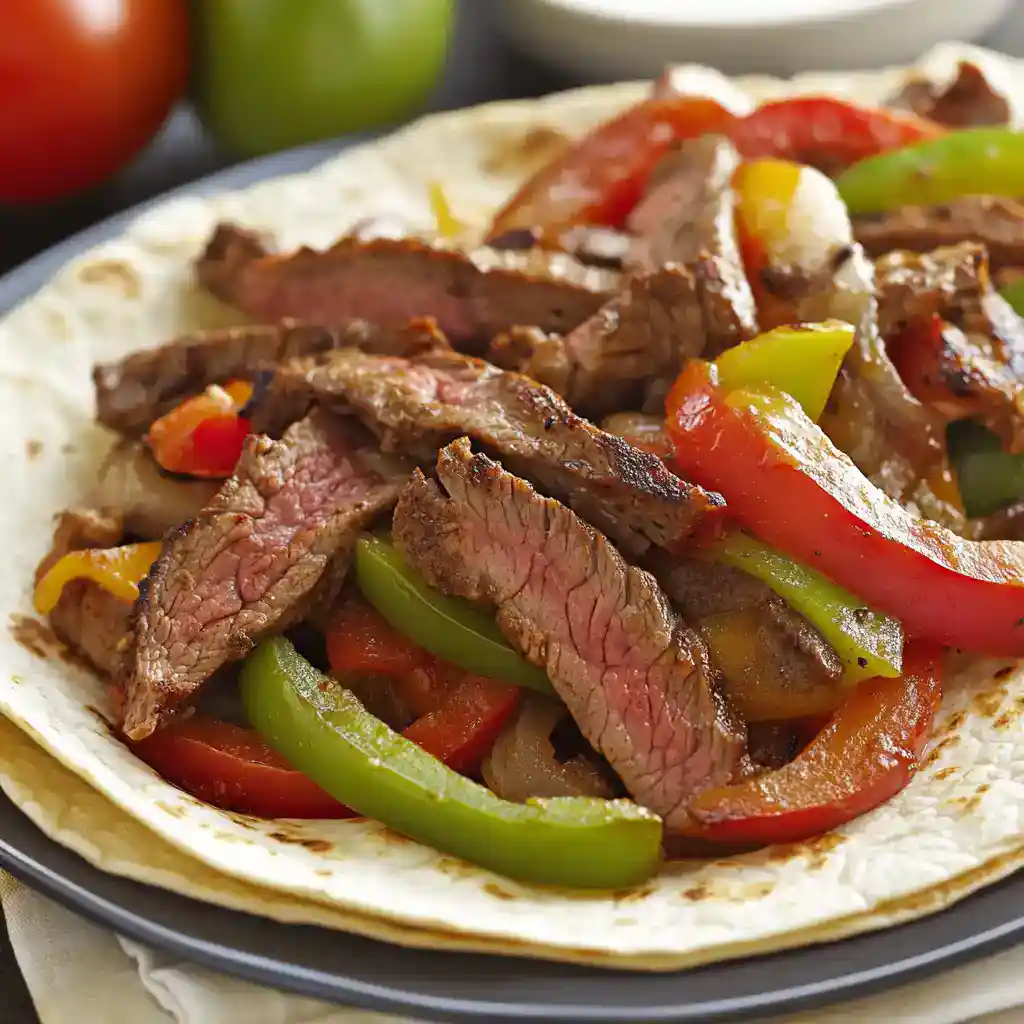
Ingredients
For the Beef:
- 1 lb flank steak, thinly sliced against the grain (about 1/4 inch thick)
- 2 cloves garlic, minced (fresh, not jarred)
- 1 teaspoon chili powder
- 1 teaspoon ground cumin
- 1/2 teaspoon paprika
- Salt and pepper to taste (about 1/2 tsp salt, 1/4 tsp pepper)
- 2 tablespoons olive oil (for cooking)
For the Vegetables:
- 1 red bell pepper, sliced into 1/4-inch strips
- 1 green bell pepper, sliced into 1/4-inch strips
- 1 large onion, sliced into 1/4-inch strips
For Serving:
- 8 small flour tortillas (6-inch size)
- Optional toppings: shredded cheese, sour cream, guacamole, salsa, lime wedges
Instructions
- Slice the flank steak: Identify which direction the muscle fibers run (they look like lines across the meat). Slice perpendicular to these lines (against the grain) into thin strips about 1/4 inch thick. This is crucial for tender fajitas.
- In a medium bowl, combine the sliced steak with minced garlic, chili powder, cumin, paprika, salt, and pepper. Use your hands to massage the spices into every piece of meat until well coated.
- Cover and let marinate for at least 30 minutes at room temperature, or up to 4 hours in the refrigerator. If refrigerating, bring back to room temperature for 15 minutes before cooking.
- While the meat marinates, slice the bell peppers and onion into strips about 1/4 inch thick. Try to keep them uniform so they cook evenly.
- Heat 2 tablespoons of olive oil in a large skillet (cast iron works great) over medium-high heat until the oil is shimmering and almost smoking. You need HIGH heat for proper searing.
- Add the marinated steak to the hot skillet in a single layer—don’t crowd the pan. If your skillet isn’t big enough, cook in two batches. Let sit undisturbed for 2-3 minutes to develop a brown crust.
- Stir and continue cooking for another 2-3 minutes total (4-5 minutes total cooking time) until the steak is browned but still slightly pink in the center. Don’t overcook—flank steak gets tough when overcooked. Remove to a plate.
- In the same skillet with all those flavorful browned bits, add the sliced bell peppers and onions. Cook for 5-7 minutes, stirring occasionally, until they’re tender-crisp with some charred edges. They should still have a slight bite.
- Return the cooked steak to the pan with the vegetables and toss everything together for about 1 minute to heat through and combine flavors.
- While everything finishes cooking, warm the tortillas in a dry skillet for 30 seconds per side, or wrap in a damp paper towel and microwave for 30 seconds until soft and pliable.
- Serve the sizzling beef and vegetable mixture immediately with warm tortillas and all your favorite toppings. Let everyone build their own fajitas.
- To assemble: Place some beef and vegetables on a warm tortilla, add desired toppings, roll up, and enjoy immediately!
Nutrition Information (Per Serving – 2 fajitas with tortillas, no toppings):
- Calories: 425
- Carbohydrates: 36g
- Protein: 32g
- Fat: 16g
- Fiber: 4g
- Sodium: 520mg
- Iron: 4.2mg (23% DV)
- Vitamin C: 95mg (106% DV)
- Vitamin A: 1,850 IU (37% DV)
These beef fajitas provide excellent protein from steak, significant vitamin C from peppers, plus iron for energy—all while being a complete, satisfying meal.
Notes:
- Slicing against the grain is crucial. This is the #1 factor for tender fajitas. Look at the muscle fibers and cut perpendicular to them.
- High heat is essential. You need a hot pan for proper searing, not steaming. Don’t be afraid of high heat.
- Don’t overcrowd the pan. Cook in batches if needed. Crowded meat steams instead of sears.
- Every cut of flank steak cooks slightly differently depending on thickness. Watch it carefully—it cooks fast.
- Warm tortillas make a huge difference. Cold tortillas crack when you roll them.
Storage Tips:
Store leftover cooked beef and vegetables in an airtight container in the fridge for up to 3 days. Keep separate from tortillas and toppings. Reheat in a hot skillet for 2-3 minutes until warmed through—don’t microwave or the meat gets rubbery. Warm fresh tortillas right before serving rather than reheating old ones. You can freeze cooked fajita meat for up to 2 months—thaw in the fridge overnight and reheat in a skillet. The texture won’t be quite as good as fresh but still delicious.
Serving Suggestions:
- Classic Tex-Mex Dinner: Serve with Mexican rice, refried beans, and chips with salsa
- Fajita Bar: Set out all toppings buffet-style and let everyone customize their own
- Light Meal: Serve with just a simple side salad and skip the heavy sides
- Party Food: Double or triple the recipe for easy crowd-pleasing dinner
Mix It Up (Recipe Variations):
Spicy Chipotle Beef Fajitas: Add 1-2 teaspoons chipotle chili powder to the marinade and top with chipotle crema for smoky heat.
Citrus Beef Fajitas: Add juice and zest of 1 lime to the marinade for bright, tangy flavor that also helps tenderize the meat.
Loaded Steak Fajitas: Add sliced mushrooms and jalapeños with the peppers and onions for more vegetables and spicy kick.
Fajita Bowl: Skip tortillas and serve over cilantro-lime rice with black beans, corn, and all the toppings for a bowl version that’s great for meal prep.
What Makes This Recipe Special:
These beef fajitas honor the cowboy origins of this iconic Tex-Mex dish, created by ranch workers who transformed inexpensive cuts of beef into flavorful meals through simple seasoning and high-heat cooking. By slicing tough flank steak thinly against the grain and searing at high heat, you’re using the same technique that’s been passed down for generations. The simplicity of the spice blend lets the natural beef flavor shine while caramelized peppers and onions add sweetness and char—proving that authentic Tex-Mex cooking doesn’t require complicated marinades or processed ingredients, just quality meat, fresh vegetables, and proper technique.
