
Ever wonder why some smoothies taste like watered-down disappointment while others make you feel like you’re sipping paradise? I used to think making a truly delicious blueberry mango smoothie required exotic ingredients or some blender wizardry until my health-obsessed neighbor shared her dead-simple secret. Now I’m blending this gorgeous purple-golden creation year-round, and my kids fight over who gets the last sip (yes, really—it’s that good and they have no idea it’s basically just fruit, yogurt, and a powerful blender doing all the work).
Here’s the Thing About This Smoothie
What makes this blueberry mango smoothie work is the unexpected but perfect pairing of sweet mango with tart blueberries that creates complex flavor instead of one-note fruitiness. I learned the hard way that using frozen fruit instead of fresh makes it thick and frosty like a smoothie shop creation, while fresh fruit with no ice makes it thin and room temperature. The Greek yogurt adds protein and creamy tang that balances all that fruit sweetness, the banana provides body and natural sweetness, and the vanilla extract adds a subtle depth most people can’t quite identify but love. It’s honestly that simple—frozen fruit, good yogurt, blend until smooth, and taste summer paradise.
What You’ll Need (And My Shopping Tips)
Good frozen blueberries and mango are worth hunting down—look for fruit that’s individually frozen, not clumped into a solid brick you need a pickaxe to break apart. I always grab frozen berries instead of fresh because they’re picked at peak ripeness and keep your smoothie thick without needing tons of ice (happens more than I’d like to admit when I use fresh berries and the smoothie turns out thin and watery). Don’t cheap out on the Greek yogurt; full-fat or 2% makes this incredibly creamy, while fat-free is thin and less satisfying.
The banana should be ripe with brown spots if you’re using fresh, or use frozen banana chunks for the best thick texture. Almond milk keeps this lighter than dairy milk, but any milk works including regular, oat, or coconut—use what you love. Good honey adds natural sweetness that complements fruit perfectly, and pure vanilla extract (not imitation) adds depth that makes this taste sophisticated. Learn more about blueberries and mangoes and why they’re nutritional powerhouses in smoothies. I always keep extra frozen fruit stocked because someone inevitably wants seconds, or I make a double batch because this goes so fast.
Let’s Make This Together
Start by gathering your ingredients—if you’re using fresh fruit, you’ll want to freeze the blueberries and mango chunks ahead of time for the best texture, or just use a cup of ice. If using frozen fruit straight from the bag, you’re already set. Toss the blueberries (frozen is best), chopped mango (frozen if possible), banana, Greek yogurt, almond milk, honey, and vanilla extract into your blender.
Here’s my secret: add the frozen fruit first, then the banana and yogurt, then pour the liquids on top. This helps everything blend more smoothly without the fruit getting stuck under the blades and your blender just spinning the top layer uselessly. Blend on high speed for 45-60 seconds until completely smooth and creamy. The mixture should look gorgeously purple with golden swirls and move like thick smoothie when you tilt the blender.
If your blender sounds like it’s struggling with all that frozen fruit (mine always does), stop and scrape down the sides with a spatula, give everything a good stir to redistribute, then blend again. Some blenders have a tamper—use it to push the fruit toward the blades. The goal is silky smooth with no chunks—you should hear the sound of the blender change from laboring to running smoothly when everything’s blended.
Check the consistency before pouring—too thick and it won’t pour? Add a splash more almond milk and blend briefly. Too thin and watery? Add more frozen fruit or a frozen banana and blend until it thickens up. Taste and adjust sweetness—every batch of fruit is different in natural sweetness. Sometimes I need an extra drizzle of honey, sometimes it’s perfectly sweet as is.
Pour into glasses and drink immediately while it’s frosty and the gorgeous color is at its peak. Trust me on this one—smoothies are always best right after blending before they start separating.
If you’re looking for more berry smoothie inspiration, try this Easy Mixed Berry Smoothie that uses similar techniques with different fruit combinations.
When Things Go Sideways (And They Will)
Smoothie turned out too thick and won’t pour out of the blender? You used too much frozen fruit or not enough liquid. Don’t panic—add almond milk a couple tablespoons at a time and blend again until it reaches that perfect pourable consistency. If it’s so thick you could eat it with a spoon, that’s actually great for a smoothie bowl—just scrape it into a bowl and top with granola.
Got a thin, watery smoothie instead of thick and frosty? You added too much liquid or didn’t use frozen fruit. Toss in more frozen blueberries, mango, or banana and blend until it thickens up. This blueberry mango smoothie should be thick enough that it slowly slides down the side of the glass, not pour out like juice.
Can’t taste the mango or blueberries individually? That’s actually perfect—this smoothie is about the blend of flavors creating something new, not tasting individual fruits. But if you want more mango flavor, use more mango and less blueberries. If you want more berry flavor, flip the ratio. I like them equal because the purple-gold swirl color is so pretty.
Ways to Mix It Up
When I’m feeling fancy, I’ll make a Green Blueberry Mango Smoothie by adding a big handful of spinach—you can’t taste it at all, and the blueberries hide the green color, making it look deep purple instead. Around summer when peaches are in season, I’ll throw in some frozen peaches for a Triple Fruit Smoothie that’s even more complex. My kids love the Blueberry Mango Protein Smoothie where I add a scoop of vanilla protein powder for extra staying power. For a Tropical Blueberry Smoothie, add coconut milk instead of almond milk and a splash of pineapple juice—tastes like vacation.
What Makes This Smoothie Special
This blueberry mango smoothie works so well because it combines antioxidant-rich blueberries with vitamin C-packed mango in perfect proportions where neither fruit overpowers the other. The blueberries add deep berry flavor and gorgeous color, while the mango brings tropical sweetness and lush creaminess. Blueberries and mangoes are both nutritional powerhouses loaded with vitamins, antioxidants, and natural sugars that make smoothies taste amazing without needing tons of added sweetener. What sets this apart from coffee shop smoothies is that you’re tasting actual fruit, not juice concentrate, artificial flavoring, or added sugar beyond a touch of honey. The Greek yogurt and banana add protein and creaminess that make this substantial enough to be a meal, not just a drink. I’ve learned that the best smoothies are simple—just quality frozen fruit and good liquids blended together, nothing fancy needed.
Things People Ask Me About This Recipe
Can I make this blueberry mango smoothie ahead of time?
Smoothies are really best enjoyed fresh because they separate and the gorgeous color can fade if they sit. But I’ve prepped smoothie bags before—portion your frozen fruit into freezer bags, then when you’re ready, dump everything into the blender with yogurt, milk, honey, and vanilla. Takes the same 2 minutes but feels faster when you’re half asleep in the morning.
What if I can’t find frozen mango?
Fresh mango works if you add extra ice or frozen banana to keep it cold and thick, but frozen is really better because it’s picked at peak ripeness and doesn’t dilute the flavor. If you can only find fresh, cut it into chunks and freeze it yourself overnight in a single layer on a baking sheet.
Can I use regular yogurt instead of Greek yogurt?
You can, but Greek yogurt is thicker and higher in protein, making the smoothie creamier and more filling. Regular yogurt works fine—just know your smoothie might be slightly thinner. You could also use vanilla yogurt if that’s what you have, but reduce or skip the honey since it’s already sweetened.
Is this blueberry mango smoothie kid-friendly?
Absolutely! My kids slurp this down because it tastes like a purple-gold treat, not like I’m trying to make them eat healthy. The natural sweetness from ripe fruit and a touch of honey means minimal added sugar, and the gorgeous swirled color makes it look fun and special.
How do I make this dairy-free?
Easy—use coconut yogurt or any plant-based yogurt instead of Greek yogurt, and you’re already using almond milk which is dairy-free. Still just as creamy and delicious. The fruit is what makes this special, not the dairy.
Can I add protein powder?
You can, but I’d start with half a scoop because protein powder can make smoothies taste chalky and change the texture. If you want more protein without powder, use more Greek yogurt or add a tablespoon of nut butter—tastes way better and keeps the fruity vibe going strong.
Why I Had to Share This
I couldn’t resist sharing this blueberry mango smoothie because it’s become my answer to mornings when I need something healthy but also want to feel like I’m treating myself. It takes literally 5 minutes, tastes like a tropical berry vacation, and actually fills you up until lunch without feeling heavy. The best smoothie mornings are when everyone’s sipping their purple-gold drinks and commenting on how it tastes like summer and sunshine mixed together, and I’m already thinking about making it again tomorrow. You’ve got this!
Print
Blueberry Mango Smoothie
Description
This gorgeous blueberry mango smoothie tastes like tropical berry paradise—creamy, naturally sweet, and swirled with purple and gold that makes you feel like you’re on vacation.
Prep Time: 5 minutes | Cook Time: 0 minutes | Total Time: 5 minutes | Servings: 2 large or 3 small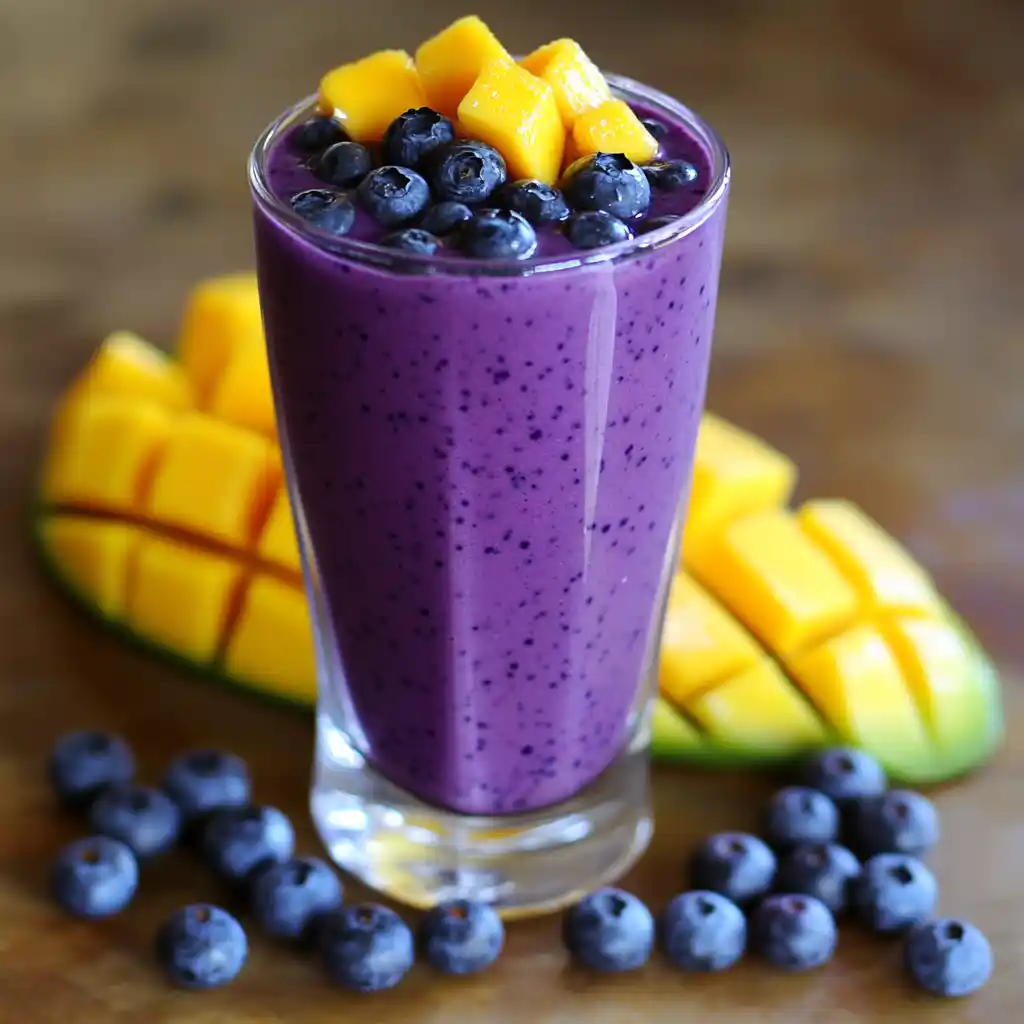
Ingredients
- 1 cup blueberries, frozen (fresh works but frozen makes it thicker)
- 1 cup chopped mango, frozen (frozen is best for thick, frosty texture)
- 1 banana (ripe with brown spots, or use frozen chunks)
- 1/2 cup plain Greek yogurt (full-fat or 2% for creamiest results)
- 1/2 cup almond milk (or any milk you prefer)
- 1 tablespoon honey (adjust to taste based on fruit sweetness)
- 1/2 teaspoon vanilla extract (pure, not imitation)
Instructions
- Toss frozen blueberries, frozen chopped mango, banana, and Greek yogurt into your blender. Add fruit first for best blending results.
- Pour in the almond milk, honey, and vanilla extract. Liquids go on top to help everything blend smoothly.
- Blend on high speed for 45-60 seconds until completely smooth and creamy. The mixture should look gorgeously purple with golden swirls and move like thick smoothie.
- If your blender’s struggling with the frozen fruit (mine always does), stop and scrape down the sides with a spatula, stir to redistribute, then blend again. Use the tamper if you have one to push fruit toward the blades.
- Check the consistency—too thick? Add a splash more almond milk. Too thin? Add more frozen fruit and blend until it thickens.
- Taste and adjust sweetness—every batch of fruit is different. Sometimes you need more honey, sometimes it’s perfect as is.
- Pour into glasses and drink immediately while it’s frosty and the color is gorgeous. Smoothies are always best right after blending.
Nutrition Information (Per Serving – 1 large smoothie):
- Calories: 230
- Carbohydrates: 48g
- Protein: 9g
- Fat: 3g
- Fiber: 5g
- Sodium: 45mg
- Vitamin C: 90% DV
- Vitamin A: 15% DV
- Calcium: 12% DV
This smoothie packs serious vitamin C from the mango and antioxidants from the blueberries, plus protein from the yogurt—basically a nutritious meal that tastes like dessert.
Notes:
- Seriously, use frozen fruit for the best thick, frosty texture. Fresh fruit with ice doesn’t give you the same smoothie shop consistency.
- Greek yogurt makes this creamier and adds protein that keeps you full longer than regular yogurt.
- Every blender has its own personality. If yours isn’t super powerful, cut fruit into smaller chunks before freezing or let frozen fruit sit for 5 minutes before blending.
- Taste before serving because fruit sweetness varies wildly. Sometimes you need extra honey, sometimes it’s perfectly sweet as is.
- The gorgeous purple-gold swirl color is at its best right after blending—it can oxidize and look duller if it sits too long.
Storage Tips:
This blueberry mango smoothie is best enjoyed fresh—like, immediately after blending. It starts separating after about 20 minutes and the gorgeous color can fade if it sits. Don’t try to make it ahead or save leftovers; smoothies are a now food. Instead, you can prep smoothie bags with portioned frozen fruit, then when you’re ready, dump everything into the blender with yogurt, milk, honey, and vanilla. The fruit prep bags keep for months in the freezer and make morning smoothies even faster.
Serving Suggestions:
- Smoothie Bowl: Pour into a bowl and top with granola, fresh fruit slices, coconut flakes, and chia seeds for a breakfast you eat with a spoon
- Post-Workout Refresher: Drink this after a morning workout—the natural sugars and protein help with recovery without tasting like a protein shake
- Weekend Brunch: Serve in fancy glasses with fresh berries on top and colorful straws—feels like you’re at a tropical smoothie bar
- Kid-Friendly Breakfast: Pour into fun cups and call it “purple sunshine smoothie”—they’ll never realize they’re getting fruit and nutrients
Mix It Up (Recipe Variations):
Green Blueberry Mango Smoothie: Add a big handful of fresh spinach—you won’t taste it at all, and the blueberries hide the green color completely. Sneaky way to get vegetables into breakfast.
Triple Fruit Smoothie: Add 1/2 cup frozen peaches for even more complex flavor that tastes like summer in every sip. The peaches add extra sweetness and creaminess.
Blueberry Mango Protein Smoothie: Add a scoop of vanilla protein powder for extra staying power that keeps you full longer. Makes it more substantial without changing the fruity vibe.
Tropical Blueberry Smoothie: Use coconut milk instead of almond milk and add a splash of pineapple juice. Tastes like vacation on a tropical island—ridiculously good.
What Makes This Recipe Special:
This blueberry mango smoothie combines antioxidant-rich blueberries with vitamin C-packed mango in perfect proportions where neither fruit overpowers the other. Blueberries add deep berry flavor and gorgeous color, while mango brings tropical sweetness and lush creaminess. Both fruits are nutritional powerhouses loaded with vitamins, antioxidants, and natural sugars that make smoothies taste amazing without tons of added sweetener. What sets this apart from coffee shop smoothies is actual fruit flavor, not juice concentrate or artificial flavoring. The Greek yogurt and banana add protein and creaminess that make this substantial enough to be a meal.
