
Ever wonder why restaurant French toast tastes so rich and custardy while yours turns out soggy or dry? I used to think making perfect breakfast brioche required some kind of chef’s secret until my French neighbor showed me her foolproof technique. Now I’m making this buttery, golden beauty every weekend using actual brioche bread, and my family thinks I’ve opened a secret brunch cafe in our kitchen (if only they knew it’s literally just egg-soaked bread cooked in butter, elevated by using the right bread and not rushing the cooking).
Here’s the Thing About This Recipe
What makes this breakfast brioche work is using actual brioche bread instead of regular sandwich bread—brioche is already buttery, eggy, and slightly sweet, so when you soak it in custard and cook it in butter, you get layers of richness that regular bread can’t match. I learned the hard way that using fresh, soft brioche makes it too soggy and it falls apart, while day-old brioche that’s slightly stale soaks up the custard perfectly without turning to mush. The key is getting the custard ratio right and cooking it slowly over medium heat so the inside gets custardy and the outside gets golden and caramelized. It’s honestly that simple—good bread, proper custard soak, patient cooking, and real butter. Those things separate restaurant-quality French toast from disappointing breakfast.
What You’ll Need (And My Shopping Tips)
Good brioche bread is essential here—look for a real brioche loaf from a bakery, not the packaged hamburger buns labeled “brioche style” that are basically just regular bread with yellow food coloring (happens more than I’d like to admit when I grab the wrong thing in a hurry). Day-old brioche that’s slightly stale is actually better than fresh because it absorbs the custard without falling apart. Don’t cheap out on the eggs; fresh eggs with bright orange yolks make the richest, most flavorful custard.
Whole milk makes the custard creamier than skim, and good vanilla extract adds depth—the imitation stuff tastes chemical and weird. Real butter is non-negotiable for cooking; margarine or oil won’t give you that rich, golden crust. Fresh berries for topping are beautiful and add freshness that cuts through the richness, and real maple syrup (not pancake syrup which is corn syrup with maple flavoring) is worth the splurge. Learn more about brioche bread and why it’s perfect for French toast-style preparations. I always grab extra brioche because someone inevitably wants seconds, or I snack on slices while I’m cooking.
Let’s Make This Together
Start by slicing your brioche if it’s not pre-sliced—you want thick slices, about 3/4 to 1 inch thick. Thin slices get soggy and fall apart; thick slices stay custardy in the middle while getting golden on the outside. If your brioche is fresh and soft, let the slices sit out for 30 minutes to dry out slightly, or toast them very lightly. Day-old brioche is perfect as is.
In a shallow dish (I use a pie plate), whisk together the eggs, milk, vanilla extract, cinnamon, and salt until well combined and slightly frothy. The mixture should be smooth and uniform with no streaks of egg white. Here’s my secret: whisk really well for about 30 seconds to incorporate air, which makes the custard lighter.
Heat your skillet over medium heat—not medium-high, just medium. This is crucial for getting the inside cooked through without burning the outside. Melt 1 tablespoon of butter and swirl it around to coat the bottom of the skillet. The butter should foam but not brown immediately.
Dip one slice of brioche into the egg mixture, making sure both sides are well coated. Let it soak for about 5-10 seconds per side—you want it saturated but not falling apart. Here’s where I used to mess up: don’t leave it soaking too long or it’ll be mushy and fall apart when you try to pick it up. Lift it carefully and let excess custard drip back into the dish.
Place the coated brioche in the skillet and resist the urge to touch it. Let it cook undisturbed for 2-3 minutes until the bottom is deeply golden brown—peek underneath with a spatula to check. The key is patience; if you flip too early, the custard won’t be set and it’ll fall apart. When the bottom is golden and the edges look set, carefully flip and cook the other side for another 2-3 minutes until equally golden.
Transfer to a plate and repeat with the remaining slices, adding more butter to the skillet as needed between batches. The butter is what gives you that gorgeous golden crust and rich flavor, so don’t skimp.
Serve immediately while hot with a generous drizzle of real maple syrup and fresh berries on top. The contrast of warm, buttery brioche with cool, tart berries is perfection.
If you’re looking for more elevated breakfast ideas, try this Classic Cinnamon French Toast that uses similar techniques.
If This Happens, Don’t Panic
Brioche turned out soggy and fell apart? You soaked it too long in the custard, or your bread was too fresh and soft. Don’t stress about this part—this breakfast brioche should be custardy inside but hold its shape, not fall apart into eggy mush. Next time, use day-old brioche and soak for just 5-10 seconds per side.
Got burnt outside but raw, eggy inside? Your heat was too high. Medium heat is key—the brioche needs time to cook through without the outside burning. If this happens (and it will at least once), lower your heat and give it more time. The outside should be deeply golden, and when you press the middle gently, it should feel set, not liquidy.
Custard didn’t stick and the brioche tastes dry? You didn’t soak it long enough, or you used brioche that was too stale and dried out. The bread should be noticeably heavier and slightly soggy when you lift it from the custard. If your brioche is very stale, let it soak a bit longer, maybe 15-20 seconds per side. This breakfast brioche should be rich and custardy, not dry like regular toast.
When I’m Feeling Creative
When I’m feeling fancy, I’ll make Stuffed Breakfast Brioche by spreading Nutella or cream cheese between two slices before dipping and cooking—tastes like a decadent filled pastry. Around the holidays, I’ll add 1/4 teaspoon of nutmeg and a splash of rum extract to the custard for Eggnog Breakfast Brioche that feels festive. My family loves Berry Stuffed Brioche where I sandwich fresh berries and a bit of sugar between slices before soaking. For Caramelized Banana Brioche, I’ll cook sliced bananas in butter and brown sugar, then top the finished brioche with the caramelized bananas and whipped cream.
What Makes This Recipe Special
This breakfast brioche works so well because it uses bread that’s already enriched with butter and eggs, so when you add the egg custard, you’re building layers of richness instead of trying to make plain bread taste special. Brioche originated in France as a rich, tender bread made with lots of butter and eggs—basically the ultimate bread for French toast preparations. What sets this apart from regular French toast is the bread quality and the gentle cooking technique that creates custard-like texture inside with a caramelized, buttery crust outside. I’ve learned that the key is using day-old brioche, not over-soaking, and cooking patiently over medium heat—get those three things right, and you’ll have restaurant-quality results that taste like you’re eating at a fancy brunch spot.
Things People Ask Me About This Recipe
Can I make this breakfast brioche ahead of time?
French toast is really best made fresh and served immediately while it’s hot and the outside is still crispy. You can prep the custard mixture the night before and keep it refrigerated, then soak and cook the brioche fresh in the morning. If you do make it ahead, reheat in a 350°F oven for about 5 minutes to crisp it back up—don’t microwave or it’ll turn soggy.
What if I can’t find brioche bread?
Challah is the best substitute—it’s also egg-enriched and slightly sweet. Thick-cut white bread or Texas toast can work in a pinch, but you won’t get that same rich, buttery flavor. Regular sandwich bread is too thin and plain to really do this recipe justice.
Can I use egg substitute for the custard?
You can use liquid egg substitute, but the flavor and richness won’t be quite the same. The eggs are what create that custardy texture, so real eggs are really worth using here. If you’re vegan, there are plant-based egg alternatives specifically for French toast that work okay.
How do I know when it’s perfectly done?
The outside should be deeply golden brown and slightly crispy, not pale blonde. When you press the middle gently with your finger, it should feel set and springy, not wet and squishy. If you cut into it, the inside should look like soft custard, not raw egg.
Can I freeze this breakfast brioche?
You can freeze cooked brioche French toast for up to 2 months. Let it cool completely, then freeze in a single layer on a baking sheet, then transfer to a freezer bag. Reheat in a toaster or 350°F oven—don’t microwave or it’ll be soggy. The texture won’t be quite as perfect as fresh, but it’s still really good.
Why is my brioche French toast not as rich as restaurant versions?
Restaurants often use even thicker brioche slices, more butter for cooking, and sometimes add cream to the custard mixture. They also tend to cook it lower and slower than most home cooks have patience for. Try using thicker slices, more butter, and being really patient with the cooking.
Before You Head to the Kitchen
I couldn’t resist sharing this breakfast brioche because it’s become my answer to special weekend mornings when I want to feel like we’re eating at a fancy brunch restaurant. It looks impressive, tastes incredibly rich and indulgent, and makes your whole house smell like a French bakery. The best brioche mornings are when everyone’s fighting over the last slice with the most caramelized edges, and I’m already planning which berries to use next time. You’ve got this!
Print
Breakfast Brioche
Description
This indulgent breakfast brioche is like French toast elevated—rich, buttery brioche soaked in vanilla custard and cooked golden, topped with maple syrup and fresh berries.
Prep Time: 10 minutes | Cook Time: 15 minutes | Total Time: 25 minutes | Servings: 3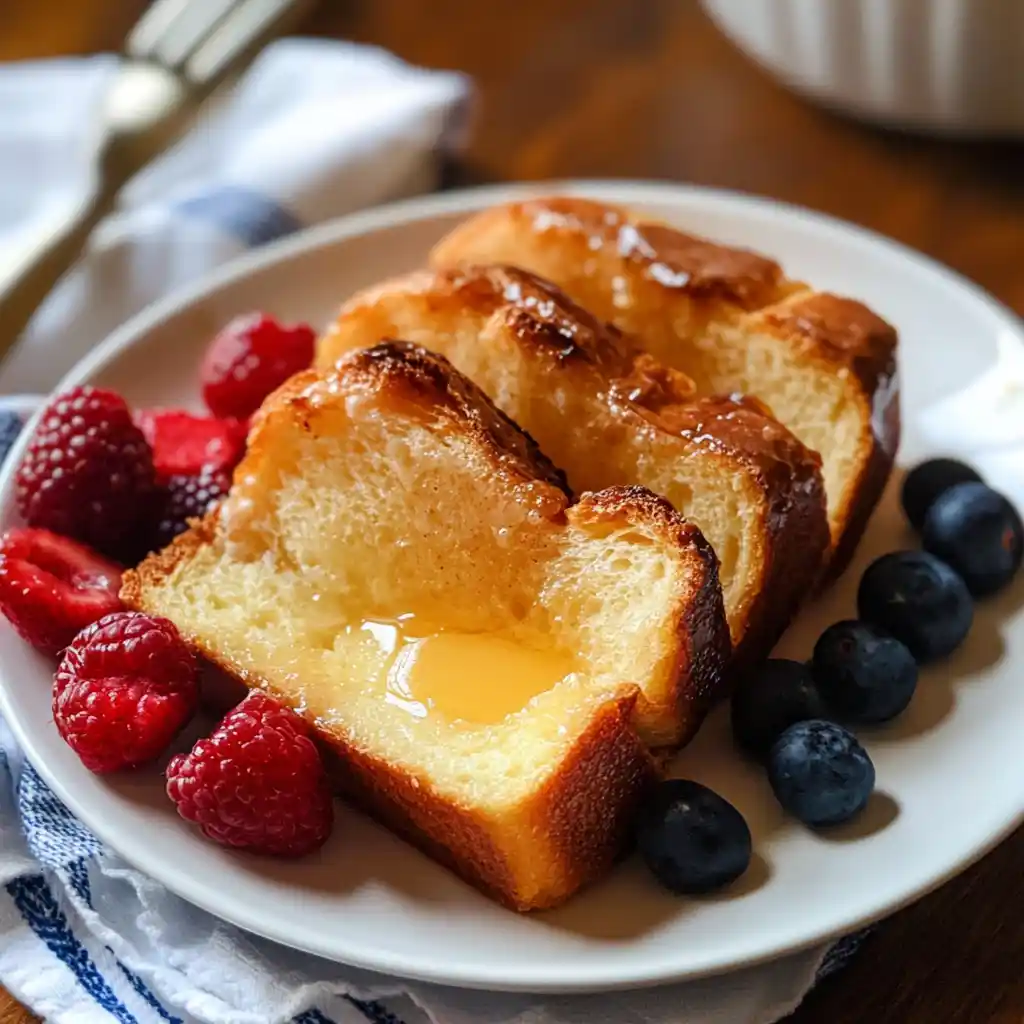
Ingredients
- 6 oz brioche loaf, sliced into 3/4 to 1-inch thick slices (day-old is perfect)
- 2 large eggs (fresh with bright orange yolks)
- 1/3 cup milk (whole milk makes it creamier)
- 1 tsp vanilla extract (pure, not imitation)
- 1/4 tsp ground cinnamon
- 1/8 tsp salt
- 2 tbsp unsalted butter (real butter, not margarine—divided for cooking)
- Maple syrup, for serving (real maple syrup, not pancake syrup)
- Fresh berries, for topping (strawberries, blueberries, raspberries—whatever looks good)
Instructions
- Slice your brioche if not pre-sliced—you want thick slices, about 3/4 to 1 inch. If your brioche is very fresh and soft, let the slices sit out for 30 minutes to dry slightly, or toast very lightly. Day-old brioche is perfect as is.
- In a shallow dish (pie plate works great), whisk together eggs, milk, vanilla extract, cinnamon, and salt until well combined and slightly frothy. Whisk really well for about 30 seconds to incorporate air and make the custard lighter.
- Heat your skillet over medium heat—not medium-high, just medium. This is crucial. Melt 1 tablespoon of butter and swirl to coat the bottom. The butter should foam but not brown immediately.
- Dip one slice of brioche into the egg mixture, making sure both sides are well coated. Let it soak for about 5-10 seconds per side—you want it saturated but not falling apart. Lift carefully and let excess custard drip back into the dish.
- Place the coated brioche in the skillet and resist touching it. Let it cook undisturbed for 2-3 minutes until the bottom is deeply golden brown—peek underneath to check. When golden and the edges look set, carefully flip and cook the other side for another 2-3 minutes.
- Transfer to a plate and repeat with remaining slices, adding more butter to the skillet as needed between batches. Don’t skip the butter—it’s what gives you that gorgeous golden crust.
- Serve immediately while hot with a generous drizzle of real maple syrup and fresh berries on top. The warm, buttery brioche with cool, tart berries is perfection.
Nutrition Information (Per Serving – 2 slices):
- Calories: 385
- Carbohydrates: 38g
- Protein: 12g
- Fat: 20g
- Fiber: 2g
- Sodium: 380mg
- Calcium: 12% DV
This breakfast brioche gives you quality protein from eggs and brioche, plus antioxidants from berries—basically an indulgent breakfast that’s more nutritious than it tastes.
Notes:
- Day-old brioche works better than fresh—it soaks up custard without falling apart. Fresh brioche is too soft and turns to mush.
- Don’t soak too long! Just 5-10 seconds per side. Over-soaked brioche falls apart and gets mushy.
- Medium heat is key. Too high and the outside burns before the inside cooks; too low and it gets greasy and pale.
- Real butter for cooking is non-negotiable—it creates that golden, caramelized crust and rich flavor.
- Serve immediately while hot and the outside is still crispy. This doesn’t keep well.
Storage Tips:
This breakfast brioche is best enjoyed fresh and hot when the outside is still crispy and the inside is custardy. It doesn’t really keep well—the texture changes and it gets soggy when stored. If you have leftovers (unlikely), store in the fridge for up to 2 days and reheat in a 350°F oven for 5 minutes to crisp it back up—don’t microwave or it’ll turn soggy and rubbery. You can freeze cooked brioche for up to 2 months and reheat in a toaster or oven, but fresh is always best.
Serving Suggestions:
- Classic Brunch: Serve with crispy bacon, fresh fruit, and hot coffee for a complete weekend brunch spread
- Special Occasion: Top with whipped cream and extra berries for birthdays or Mother’s Day breakfast in bed
- Lighter Option: Serve with Greek yogurt and honey instead of maple syrup for a slightly less indulgent version
- Decadent Dessert: Serve for dessert topped with vanilla ice cream and caramel sauce—breakfast for dinner never tasted so good
Mix It Up (Recipe Variations):
Stuffed Breakfast Brioche: Spread Nutella or cream cheese between two slices before dipping and cooking. Tastes like a decadent filled pastry from a French bakery.
Eggnog Breakfast Brioche: Add 1/4 teaspoon nutmeg and a splash of rum extract to the custard for a festive holiday version that tastes like eggnog.
Berry Stuffed Brioche: Sandwich fresh berries and a bit of sugar between slices before soaking and cooking. The berries get jammy and delicious inside.
Caramelized Banana Brioche: Cook sliced bananas in butter and brown sugar, then top the finished brioche with caramelized bananas and whipped cream. Ridiculously indulgent and amazing.
What Makes This Recipe Special:
This breakfast brioche uses bread that’s already enriched with butter and eggs, so when you add egg custard, you’re building layers of richness instead of trying to make plain bread taste special. Brioche originated in France as a rich, tender bread made with lots of butter and eggs—basically the ultimate bread for French toast preparations. What sets this apart from regular French toast is the bread quality and gentle cooking technique that creates custard-like texture inside with a caramelized, buttery crust outside. The key is using day-old brioche, not over-soaking, and cooking patiently over medium heat.
