
Ever wonder why those breakfast pastries at cafes cost eight dollars when they’re basically just eggs wrapped in puff pastry? I used to think making perfect breakfast twists required professional kitchen skills until my pastry-loving neighbor showed me her foolproof technique using store-bought puff pastry. Now I’m baking these golden, flaky beauties every weekend, and my family thinks I’ve been secretly attending culinary school (if only they knew it’s literally just scrambled eggs wrapped in refrigerated dough and baked until gorgeous).
Here’s the Thing About This Recipe
What makes these breakfast twists work is using store-bought puff pastry as a shortcut that still delivers impressive, flaky results without hours of laminating dough. I learned the hard way that you absolutely must pre-cook the egg mixture before wrapping it in pastry, or you’ll end up with raw eggs inside golden puff pastry (not appetizing). The key is making a fairly dry scrambled egg filling so it doesn’t make the dough soggy, then sealing the pastry properly so nothing leaks out during baking. It’s honestly that simple—scramble the filling, wrap in puff pastry, bake until golden. Those things separate impressive bakery-style breakfast from disappointing soggy messes.
What You’ll Need (And My Shopping Tips
Good puff pastry is essential here—I always grab Pepperidge Farm because it’s reliably buttery and flaky. Make sure it’s well-chilled when you work with it; room temperature puff pastry is sticky and impossible to work with (happens more than I’d like to admit when I leave it on the counter too long). Don’t cheap out on the eggs; fresh eggs with bright orange yolks make the richest, most flavorful filling.
Sharp cheddar cheese adds real flavor—pre-shredded works fine here since it’s going inside pastry. The bell peppers should be fresh and diced small so they distribute evenly and don’t create big pockets that could tear the pastry. Fresh chives add oniony brightness, but if you don’t have them, green onions or even dried chives work in a pinch. Learn more about working with puff pastry for the best flaky results. I always grab an extra sheet of puff pastry because someone inevitably wants seconds, or I mess up sealing one and need a backup.
Let’s Make This Together
Start by cranking your oven to 400°F and lining a baking sheet with parchment paper—the parchment prevents sticking and makes cleanup so much easier. In a bowl, whisk together the eggs, milk, salt, and pepper until well combined and slightly frothy. Stir in the shredded cheddar cheese, diced bell peppers, and chopped chives. Mix everything together so the vegetables and cheese are evenly distributed.
Here’s the crucial step that most recipes skip: you need to cook this egg mixture before wrapping it in pastry. Heat a non-stick skillet over medium-low heat and spray with cooking spray. Pour in the egg mixture and scramble gently, stirring frequently, until the eggs are just cooked through but still slightly soft and creamy—not dry and rubbery. This should take about 3-4 minutes. Here’s where I used to mess up: don’t overcook the eggs or they’ll be dry and rubbery in the finished twists. Remove from heat and let cool while you prep the pastry.
On a lightly floured surface, carefully roll out the puff pastry into a rectangle about 12×8 inches. The dough should be cold and easy to handle—if it’s sticky or tearing, pop it in the fridge for 5 minutes. Cut the pastry into 4 equal squares (about 6×4 inches each). You want them all the same size so they cook evenly.
Spoon about 2-3 tablespoons of the scrambled egg mixture onto one half of each puff pastry square, leaving about a 1/2-inch border around the edges. Don’t overfill or it’ll leak out during baking—less is more here. Fold the other half of the pastry over the filling to create a triangle shape, like you’re making a turnover. Press the edges together firmly, then seal them by pressing with the tines of a fork all the way around. This crimped edge not only seals in the filling but also looks pretty.
Arrange the breakfast twists on your prepared baking sheet, spacing them about 2 inches apart because they’ll puff up as they bake. Beat one egg (or use leftover egg whites from the filling) and brush it over the tops of the pastries—this gives them that gorgeous golden, shiny finish that makes them look professional.
Slide the baking sheet into your preheated oven and bake for 15-20 minutes. Start checking at 15 minutes—they’re done when the pastry is deeply golden brown and puffed up beautifully. Every oven runs differently, so trust your eyes. The pastry should look crispy and flaky, not pale and doughy.
Let them cool on the baking sheet for about 5 minutes before serving—they’re molten hot inside when they first come out. Serve warm while the pastry is still flaky and crispy and the filling is creamy. These are best eaten fresh, but they’re still pretty good reheated the next day.
If you’re looking for more handheld breakfast ideas, try this Easy Breakfast Hand Pies that uses similar wrapping techniques with different fillings.
If This Happens, Don’t Panic
Breakfast twists leaked filling everywhere and look messy? You overfilled them, or didn’t seal the edges properly. Don’t stress about this part—these breakfast twists should be neat little packages with the filling sealed inside. Next time, use less filling (about 2-3 tablespoons per twist) and really press the fork tines hard to seal the edges. The ones that stay sealed will still taste amazing even if they look imperfect.
Got pale, undercooked pastry with raw-tasting filling? Your oven wasn’t hot enough, or you didn’t pre-cook the egg mixture. The eggs must be fully cooked before you wrap them in pastry—raw eggs won’t cook properly inside puff pastry in just 15-20 minutes. If your twists are pale, bake them longer until deeply golden brown and puffed.
Pastry turned out soggy instead of flaky and crispy? Your egg filling was too wet, or you didn’t let it cool before wrapping. Make sure your scrambled eggs are fairly dry and let them cool for a few minutes before putting them in the pastry. Wet, hot filling makes soggy pastry that doesn’t puff. These breakfast twists should be flaky and crispy on the outside, not soft and soggy.
When I’m Feeling Creative
When I’m feeling fancy, I’ll make Bacon Breakfast Twists by adding crumbled cooked bacon to the egg mixture—everything’s better with bacon and these are no exception. Around the holidays, I’ll use sausage instead of bell peppers for Sausage and Cheese Twists that feel heartier and more festive. My family loves Southwestern Breakfast Twists where I add diced jalapeños, corn, and use Mexican cheese blend with a side of salsa for dipping. For Ham and Swiss Twists, I’ll add diced ham and Swiss cheese—tastes like a fancy cafe breakfast sandwich in portable form.
What Makes This Recipe Special
These breakfast twists work so well because they use store-bought puff pastry as a shortcut that still delivers impressive, flaky results without the labor of making laminated dough from scratch. Puff pastry has been used in European baking for centuries to create elegant pastries without hours of work. What sets these apart from plain scrambled eggs is the portability and the impressive presentation—they look like something from a French bakery but take 30 minutes start to finish. The key is pre-cooking the filling so it’s dry enough not to make the dough soggy, and sealing them properly so nothing leaks. I’ve learned that less filling is better than too much, and baking until deeply golden ensures the pastry is fully cooked, flaky, and crispy, not pale and doughy.
Things People Ask Me About This Recipe
Can I make these breakfast twists ahead of time?
You can assemble them the night before, cover tightly with plastic wrap, and refrigerate. In the morning, let them sit at room temperature for 10 minutes while the oven preheats, then brush with egg wash and bake as directed, adding maybe 2-3 extra minutes since they’re starting cold. They’re best fresh, but this method works well for busy mornings or brunch parties.
What if I can’t find puff pastry?
You could use crescent roll dough in a pinch, though the texture will be different—less flaky and more bread-like. Or use phyllo dough (use 3-4 sheets per twist, brushing each with butter), though that’s more work. Puff pastry is really ideal here because it’s designed to create those dramatic flaky layers with minimal effort.
Can I freeze these breakfast twists?
You can freeze them after baking—let them cool completely, then freeze in a freezer bag for up to 2 months. Reheat in a 350°F oven for about 12-15 minutes to crisp them back up. Don’t microwave or they’ll be soggy. The texture won’t be quite as perfect as fresh, but they’re still really good for quick grab-and-go breakfasts.
How do I keep the filling from leaking out?
Don’t overfill—use only about 2-3 tablespoons of filling per twist. Make sure your egg mixture is fairly dry, not wet and runny. And seal the pastry edges really well—press hard with the fork tines all the way around. The crimped edge should be obvious and tight, not loose.
Can I make these vegetarian?
These are already vegetarian! Just eggs, cheese, and vegetables. If you want to make them vegan, you’d need to find egg substitute and vegan puff pastry, which is trickier but doable with specialty products. Most store-bought puff pastry is actually vegan (just flour, oil, and water), so you’d mainly need to work on the egg substitute.
Are these breakfast twists kid-friendly?
Absolutely! Kids love these because they’re handheld, fun to eat, and taste like a treat. The vegetables are hidden inside the eggs so even picky eaters usually enjoy them. They’re perfect for busy school mornings when everyone’s rushing out the door and needs something portable.
Before You Head to the Kitchen
I couldn’t resist sharing these breakfast twists because they’ve become my answer to special weekend mornings when I want something impressive without spending hours cooking. They look bakery-quality, taste incredible, and make your whole house smell like a French patisserie. The best breakfast twist mornings are when everyone’s grabbing them hot off the baking sheet and commenting on how they taste like expensive cafe pastries, and I’m the only one who knows they took 30 minutes and used store-bought dough. You’ve got this!
Print
Breakfast Twists
Description
These golden breakfast twists are filled with cheesy scrambled eggs and vegetables—flaky puff pastry that looks fancy but uses store-bought dough for easy elegance.
Prep Time: 20 minutes | Cook Time: 18 minutes | Total Time: 38 minutes | Servings: 4 twists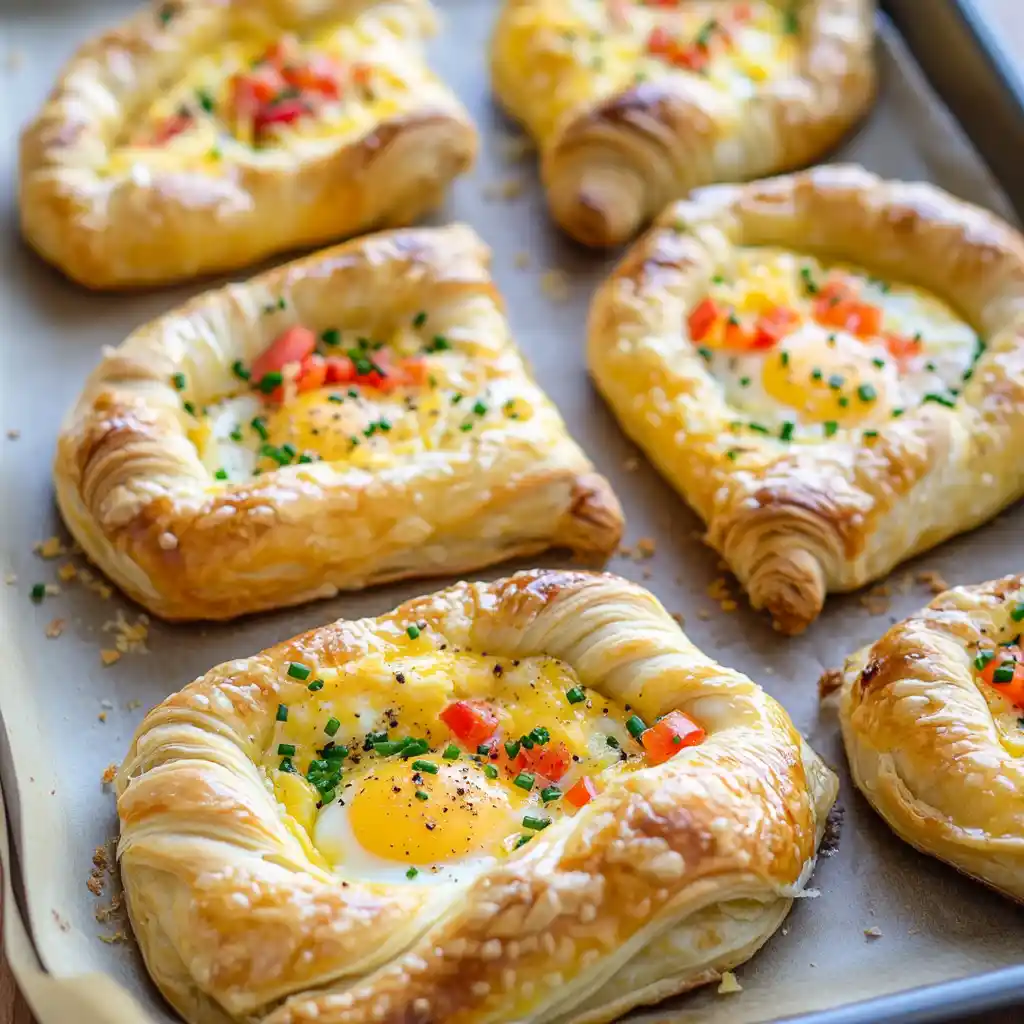
Ingredients
- 1 sheet puff pastry, thawed (Pepperidge Farm works great, well-chilled)
- 4 eggs (fresh with bright orange yolks)
- 1/4 cup milk (whole milk makes it creamier)
- 1/2 cup shredded cheddar cheese (sharp cheddar adds real flavor)
- 1/4 cup diced bell peppers (any color, diced small)
- Salt and pepper, to taste
- 2 tbsp chopped chives (fresh if possible, or green onions work)
- 1 egg, beaten (for brushing tops—makes them golden and shiny)
Instructions
- Crank your oven to 400°F and line a baking sheet with parchment paper. The parchment prevents sticking and makes cleanup easy.
- In a bowl, whisk together 4 eggs, milk, salt, and pepper until well combined and slightly frothy.
- Stir in shredded cheddar cheese, diced bell peppers, and chopped chives. Mix so everything’s evenly distributed.
- Here’s the crucial step: heat a non-stick skillet over medium-low heat and spray with cooking spray. Pour in the egg mixture and scramble gently, stirring frequently, until eggs are just cooked through but still slightly soft and creamy—not dry. This takes about 3-4 minutes. Remove from heat and let cool while you prep the pastry.
- On a lightly floured surface, carefully roll out the puff pastry into a rectangle about 12×8 inches. The dough should be cold and easy to handle.
- Cut the pastry into 4 equal squares (about 6×4 inches each). You want them all the same size so they cook evenly.
- Spoon about 2-3 tablespoons of scrambled egg mixture onto one half of each square, leaving about 1/2-inch border. Don’t overfill or it’ll leak.
- Fold the other half of the pastry over the filling to create a triangle shape. Press edges together firmly, then seal by pressing with fork tines all the way around. This crimped edge seals in filling and looks pretty.
- Arrange breakfast twists on your prepared baking sheet, spacing them about 2 inches apart because they’ll puff up.
- Beat 1 egg and brush it over the tops of the pastries—this gives them gorgeous golden, shiny finish.
- Bake for 15-20 minutes, checking at 15. They’re done when deeply golden brown and puffed up beautifully. The pastry should look crispy and flaky.
- Let cool on the baking sheet for 5 minutes before serving—they’re molten hot inside at first. Serve warm while the pastry is still flaky and crispy.
Nutrition Information (Per Twist):
- Calories: 340
- Carbohydrates: 22g
- Protein: 14g
- Fat: 22g
- Fiber: 1g
- Sodium: 380mg
- Calcium: 12% DV
These twists give you quality protein from eggs and cheese—basically a complete breakfast that’s portable and impressive.
Notes:
- You MUST pre-cook the egg mixture before wrapping in pastry. Raw eggs won’t cook properly inside puff pastry in just 15-20 minutes.
- Don’t overfill—use only about 2-3 tablespoons of filling per twist or it’ll leak everywhere and make a mess.
- Make sure your egg mixture is fairly dry, not wet and runny, or it’ll make the pastry soggy instead of flaky.
- The pastry should be cold when you work with it. If it’s sticky, pop it in the fridge for 5 minutes to firm up.
- Seal edges really well by pressing hard with fork tines all the way around. A tight seal prevents leaking.
Storage Tips:
These breakfast twists are best enjoyed fresh and warm when the pastry is still flaky and crispy. If you have leftovers, store them in an airtight container in the fridge for up to 2 days. Reheat in a 350°F oven for about 10 minutes to crisp them back up—don’t microwave or they’ll turn soggy and sad. You can assemble them the night before, refrigerate covered, and bake fresh in the morning. Or freeze baked twists and reheat in the oven from frozen for quick grab-and-go breakfasts throughout the week.
Serving Suggestions:
- Weekend Brunch: Serve with fresh fruit and hash browns for a complete, impressive brunch spread that looks professional
- Grab-and-Go Breakfast: Perfect for busy mornings—grab one on your way out the door for portable breakfast
- Brunch Party: Make a double batch and set out with various dipping sauces like hot sauce, ketchup, or hollandaise
- Meal Prep: Bake on Sunday, refrigerate, and reheat throughout the week for easy breakfasts when you’re rushing
Mix It Up (Recipe Variations):
Bacon Breakfast Twists: Add 4 strips of crumbled cooked bacon to the egg mixture. Everything’s better with bacon, and these are no exception—ridiculously good.
Sausage and Cheese Twists: Use cooked crumbled breakfast sausage instead of bell peppers for a heartier, more filling version perfect for hungry mornings.
Southwestern Breakfast Twists: Add diced jalapeños and corn, use Mexican cheese blend, serve with salsa on the side for Southwestern flair and heat.
Ham and Swiss Twists: Add diced ham and Swiss cheese instead of cheddar and bell peppers. Tastes like a fancy cafe breakfast sandwich in portable, flaky form.
What Makes This Recipe Special:
These breakfast twists use store-bought puff pastry as a shortcut that still delivers impressive, flaky results without hours of laminating dough. What sets these apart from plain scrambled eggs is the portability and impressive presentation—they look like something from a French bakery but take 30 minutes start to finish. The key is pre-cooking the filling so it’s dry enough not to make dough soggy, and sealing them properly so nothing leaks. Less filling is better than too much, and baking until deeply golden ensures the pastry is fully cooked, flaky, and crispy.
