
Ever wonder why your scrambled eggs always seem boring and one-dimensional while restaurant scrambles are loaded with vegetables and stay fluffy instead of rubbery? I used to think adding vegetables to eggs would make breakfast taste like health food punishment until I discovered this foolproof cauliflower egg scramble recipe that’s become my go-to for everything from quick weekday breakfasts to meal prep that actually tastes good reheated. Now my kids eat cauliflower without complaining (which might qualify me for a parenting medal), and my low-carb friends keep asking for the recipe because apparently this is the breakfast that makes them forget they’re missing toast—plus it keeps you full for hours without that mid-morning energy crash.
Here’s the Thing About This Recipe
What makes this cauliflower egg scramble work is how sautéing the cauliflower first removes excess moisture and develops nutty, caramelized flavor before adding the eggs, preventing that watery, bland scramble disaster that ruins so many veggie-egg combinations. I learned the hard way that you can’t just dump raw cauliflower and eggs together and expect good results. This low-carb breakfast scramble uses the technique of cooking vegetables until slightly tender and golden, then adding seasoned eggs that scramble around the cauliflower pieces, and finally melting cheese at the end for creamy richness. It’s honestly that simple—patience with the cauliflower, gentle stirring for fluffy eggs, and timing the cheese so it melts perfectly without overcooking the eggs.
What You’ll Need (And My Shopping Tips)
Good fresh cauliflower makes all the difference—I learned this after buying those pre-cut florets in bags three times that smelled weird and turned my scramble brown and mushy. You want a whole head of cauliflower with tight, white florets and bright green leaves. The head should feel heavy for its size with no brown spots or soft areas. Fresh cauliflower has a mild, almost sweet smell; if it smells sulfurous or funky, it’s past its prime.
The egg situation is crucial. You’re making an egg dish where eggs are the star, so quality matters. Fresh eggs at room temperature create fluffier scrambles than cold eggs straight from the fridge, so pull them out about 30 minutes before cooking. You want eggs with bright orange yolks if possible—those come from chickens with better diets and have more flavor.
Milk adds creaminess to the eggs—I use whole milk, but any milk works including plant-based options like almond or oat milk. Don’t skip the milk thinking you’re saving calories; that tablespoon per egg makes the difference between fluffy and rubbery scrambles.
Cheddar cheese should be sharp for maximum flavor. Pre-shredded cheese is convenient for busy mornings, but if you have time, shredding from a block gives better melt and cleaner ingredients (no anti-caking agents). I always buy a block and shred what I need.
Garlic powder adds savory depth without the hassle of mincing fresh garlic first thing in the morning. Make sure yours is fresh and aromatic—old garlic powder tastes like dust. Quality olive oil adds flavor that cooking spray just can’t match. Check out this comprehensive guide to cooking eggs if you want to understand the science behind perfect scrambles.
I always grab an extra head of cauliflower because once I discovered this recipe, we make it multiple times a week, and having backup means I never run out.
Let’s Make This Together
Start by chopping your cauliflower into small florets, about the size of a cherry tomato or smaller. Here’s where I used to mess up: I’d leave them too big and end up with some pieces burnt while others stayed raw. Don’t be me—uniform small pieces mean everything cooks evenly. You can even pulse them in a food processor for rice-sized pieces if you want the cauliflower to really blend into the eggs.
In a bowl, whisk together your eggs, milk, garlic powder, salt, and pepper until completely uniform with no streaks of white—this takes about 30 seconds of good whisking. Set this aside while you cook the cauliflower.
Heat your olive oil in a large skillet over medium heat. Not medium-high, just medium—you want the cauliflower to soften and get golden without burning. Add those chopped cauliflower florets and spread them in a single layer. Here’s my secret: let them sit undisturbed for about 2 minutes to develop some golden color on the bottom, then stir and repeat. This takes 5-7 minutes total. You want them slightly tender with some golden-brown spots, not mushy or raw.
Pour that whisked egg mixture right over the cooked cauliflower in the skillet. Let it sit undisturbed for about 30 seconds until you see the edges just starting to set. This creates those beautiful fluffy curds instead of tiny, dry scrambled bits.
Using a spatula, gently stir the mixture with big, slow movements. Push the eggs from the edges toward the center, tilting the pan to let uncooked egg flow to the edges. The cauliflower will get incorporated into the eggs as you stir. Keep doing this gentle stirring until the eggs are about 90% cooked but still look slightly wet.
Sprinkle that shredded cheddar cheese on top and turn off the heat. Let it sit for just 30 seconds—the residual heat will melt the cheese perfectly without overcooking the eggs. Give it one final gentle stir to distribute the melted cheese throughout. If you’re looking for another veggie-packed egg dish, try this Spinach Mushroom Frittata that works beautifully for meal prep.
Transfer to plates immediately and serve while it’s still hot and creamy. Every second you wait, the eggs continue cooking and can go from perfect to rubbery.
When Things Go Sideways (And They Will)
Scramble came out watery and wet? The cauliflower released too much moisture into the eggs. In reality, I’ve learned to cook cauliflower until it’s actually slightly golden and any moisture has evaporated before adding eggs. If this happens (and it will), just cook longer to evaporate the excess liquid, or drain it off carefully.
Eggs turned out dry and rubbery? Don’t panic—you cooked them too long or at too high heat. This is totally fixable for next time by using lower heat, stirring more gently, and pulling them off when they still look slightly underdone. The cauliflower egg scramble will still be edible, just less perfect texturally.
Cauliflower burned before getting tender? Your heat was too high, or your pieces were too large. Next time, cut smaller pieces and use true medium heat, not medium-high. You might need to add a splash of water and cover for a minute to steam-soften stubborn pieces.
Cheese clumped instead of melting smoothly? You added it while the heat was still too high, or you used pre-shredded cheese with lots of anti-caking agents. Next time, turn off the heat completely before adding cheese and consider shredding from a block for better melting.
When I’m Feeling Creative
Mexican Cauliflower Scramble: Add 1/4 cup diced bell peppers and jalapeños with the cauliflower. Use pepper jack cheese instead of cheddar and top with salsa, avocado, and cilantro. Around here, we call this the “fiesta breakfast” version.
Italian Herb Scramble: Add 1/2 cup cherry tomatoes and fresh basil with the cauliflower. Use mozzarella instead of cheddar and finish with grated Parmesan and a drizzle of balsamic glaze. When I’m feeling fancy, this becomes my weekend brunch staple.
Loaded Veggie Scramble: Add 1/2 cup diced mushrooms and 1/4 cup diced onions with the cauliflower. Use a cheese blend and top with green onions. The extra vegetables make this incredibly filling without adding many calories.
Everything Bagel Scramble: Season the eggs with everything bagel seasoning instead of garlic powder. Top with cream cheese dollops and chives. Tastes like an everything bagel with cream cheese but without the carbs.
What Makes This Recipe Special
This cauliflower egg scramble represents the perfect marriage of nutrition and satisfaction, proving that low-carb breakfast doesn’t mean sacrificing flavor or feeling deprived. What sets this recipe apart from basic scrambled eggs is how the cauliflower adds bulk and nutrients without overwhelming the dish—when properly cooked until golden and tender, it develops nutty, almost sweet flavor that enhances rather than competes with the eggs. The technique of cooking vegetables first removes excess moisture that would otherwise make eggs watery, while also developing caramelization that creates depth of flavor simple scrambled eggs simply cannot achieve. The addition of milk creates custard-like creaminess, while melted cheese provides richness and helps bind everything together into cohesive, satisfying breakfast. The nutritional profile is impressive—high protein from eggs, fiber and vitamin C from cauliflower, calcium from cheese—making this genuinely filling breakfast that keeps you satisfied for hours without heavy carbs. Learn more about the nutritional benefits of cauliflower and why this versatile cruciferous vegetable has become such a popular low-carb substitute.
Things People Ask Me About This Recipe
Can I make this cauliflower egg scramble ahead of time?
Sort of! Scrambled eggs don’t reheat perfectly, but this scramble holds up better than most because the cauliflower helps maintain texture. You can make a big batch and refrigerate in portions for up to 3 days. Reheat gently in a skillet or microwave with a splash of milk to restore creaminess.
What if I don’t have fresh cauliflower for this low-carb scramble?
Frozen cauliflower works but you must thaw it completely and squeeze out all the water first—otherwise your scramble will be watery. Fresh cauliflower really is better for texture and flavor. You could also use riced cauliflower, which cooks even faster and blends more seamlessly into the eggs.
Can I add protein to make this more filling?
Absolutely! Cook crumbled turkey or chicken sausage (the kind without pork) separately and stir it in at the end. Diced cooked chicken, turkey bacon bits, or even cooked ground turkey all work great. Just don’t add raw meat directly to the scramble.
How do I prevent my scramble from getting rubbery?
The keys are: don’t cook eggs over high heat, stir gently rather than aggressively, and pull them off heat when they still look slightly wet because they keep cooking from residual heat. Adding milk also helps create creamier texture that’s more forgiving.
Is this cauliflower egg scramble recipe good for meal prep?
It’s decent for meal prep! Cook a big batch on Sunday, portion into containers, and refrigerate for up to 3 days. Reheat gently rather than nuking on high—add a splash of milk to restore moisture. The texture won’t be quite as perfect as fresh but it’s still really good and way better than fast food.
Can I make this dairy-free?
For dairy-free, skip the cheese or use dairy-free cheese alternative, and use plant-based milk (almond, oat, coconut) instead of dairy milk. The scramble works well without cheese—just add extra seasonings for flavor. You won’t have the cheesy richness but it’s still delicious.
Before You Head to the Kitchen
I couldn’t resist sharing this cauliflower egg scramble because it’s the breakfast that finally made my family excited about eating vegetables in the morning, and it’s become our weekday staple that makes healthy eating feel effortless instead of like punishment. The best scramble mornings are when I have the cauliflower prepped and ready, and I can make this in the time it takes my coffee to brew. It’s become our go-to low-carb breakfast that doesn’t feel like we’re missing anything, and honestly, I hope it becomes yours too.
Print
Cauliflower Egg Scramble
Description
This fluffy, flavorful cauliflower egg scramble delivers restaurant-quality eggs with vegetables and cheese—the low-carb breakfast that keeps you full and energized all morning!
Prep Time: 5 minutes | Cook Time: 12 minutes | Total Time: 17 minutes | Servings: 2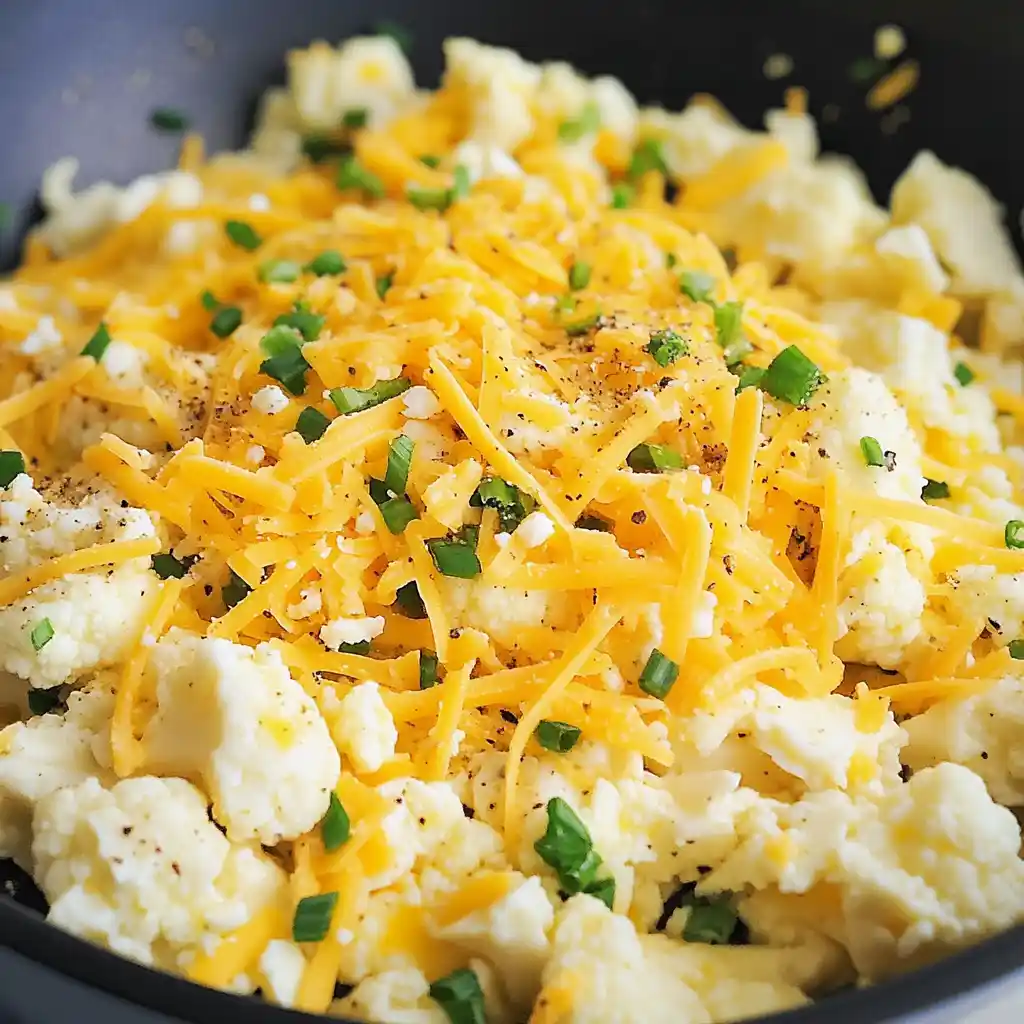
Ingredients
- 8 oz cauliflower, chopped into small florets (about 2 cups, uniform size matters)
- 4 large eggs, room temperature works best
- 1/4 cup milk (any kind—dairy, almond, oat)
- 1/2 cup shredded cheddar cheese (sharp cheddar has the best flavor)
- 1/4 tsp garlic powder (fresh, aromatic)
- Salt and pepper, to taste (be generous)
- 1 tbsp olive oil (regular, not extra virgin for cooking)
Instructions
- Chop your cauliflower into small, uniform florets about cherry-tomato size or smaller. Consistent sizing means everything cooks evenly—don’t rush this step.
- In a bowl, whisk together eggs, milk, garlic powder, salt, and pepper until completely uniform with no streaks of white. This takes about 30 seconds of good whisking. Set aside.
- Heat olive oil in a large skillet over medium heat. Not medium-high, just medium—you want cauliflower to soften and caramelize without burning.
- Add chopped cauliflower florets to the skillet and spread in a single layer. Let them sit undisturbed for about 2 minutes to develop golden color, then stir and repeat. Cook for 5-7 minutes total until slightly tender with golden-brown spots.
- Pour the whisked egg mixture right over the cooked cauliflower in the skillet. Let it sit undisturbed for about 30 seconds until edges just start to set. This creates beautiful fluffy curds.
- Using a spatula, gently stir with big, slow movements. Push eggs from edges toward center, tilting pan to let uncooked egg flow to edges. The cauliflower gets incorporated as you stir. Continue gentle stirring until eggs are about 90% cooked but still look slightly wet.
- Sprinkle shredded cheddar cheese on top and turn off the heat. Let it sit for just 30 seconds—residual heat melts the cheese perfectly without overcooking eggs.
- Give it one final gentle stir to distribute melted cheese throughout. Transfer to plates immediately and serve while hot and creamy. Enjoy this delicious cauliflower egg scramble!
Nutrition Information (Per Serving):
- Calories: 295
- Carbohydrates: 8g
- Protein: 20g
- Fat: 21g
- Fiber: 3g
- Sodium: 340mg
- Vitamin C: 70% DV
- Calcium: 22% DV
- Iron: 10% DV
- Vitamin K: 15% DV
This cauliflower egg scramble delivers serious nutrition with high-quality protein from eggs and cheese for sustained energy, impressive vitamin C from cauliflower for immune support, low carbs for blood sugar stability, fiber for digestive health and satiety, and healthy fats that keep you satisfied all morning—basically a complete, balanced breakfast that happens to be low-carb.
Notes:
- Small, uniform cauliflower pieces are crucial for even cooking. Don’t leave them too large.
- Medium heat is essential! Too high burns cauliflower and makes rubbery eggs.
- Cook cauliflower until actually golden—this removes moisture and develops flavor.
- Let eggs sit undisturbed for 30 seconds before stirring to create fluffy curds.
- Pull eggs off heat when still slightly wet. They keep cooking from residual heat.
- Room temperature eggs scramble more evenly than cold ones.
Storage Tips:
Store leftover cauliflower egg scramble in an airtight container in the refrigerator for up to 3 days. This scramble actually reheats better than plain scrambled eggs because the cauliflower helps maintain texture. Reheat gently in a skillet over low heat with a splash of milk, or microwave for 30-45 seconds. You can make a big batch on Sunday for meal prep throughout the week. The texture won’t be quite as perfect as fresh but it’s still really good and incredibly convenient. Don’t freeze scrambled eggs—they get rubbery and weird when thawed.
Serving Suggestions:
- With Whole Grain Toast: If you’re not strictly low-carb
- Topped with Avocado: Adds creaminess and healthy fats
- Alongside Turkey Sausage: For extra protein and heartiness
- With Hot Sauce: Adds heat and acidity that cuts richness
Mix It Up (Recipe Variations):
Mexican Cauliflower Scramble: Add 1/4 cup diced bell peppers and jalapeños with the cauliflower. Use pepper jack cheese and top with salsa, avocado, and fresh cilantro. Serious flavor punch.
Italian Herb Scramble: Add 1/2 cup halved cherry tomatoes and fresh basil with the cauliflower. Use mozzarella instead of cheddar. Finish with grated Parmesan and balsamic drizzle. Tastes like Italian breakfast.
Loaded Veggie Scramble: Add 1/2 cup sliced mushrooms and 1/4 cup diced onions with the cauliflower. Use a cheese blend and top with green onions. The extra vegetables make this incredibly filling.
Everything Bagel Scramble: Season eggs with 2 teaspoons everything bagel seasoning instead of garlic powder. Top with dollops of cream cheese and fresh chives. All the bagel flavor without the carbs.
What Makes This Recipe Special:
This cauliflower egg scramble achieves restaurant-quality results through the technique of cooking cauliflower first until golden and tender, which removes excess moisture and develops nutty caramelization that enhances rather than overwhelms the eggs. The gentle stirring method creates fluffy curds rather than rubbery texture, while the strategic addition of cheese at the end provides richness without greasiness, proving that low-carb breakfast can be genuinely satisfying and delicious when you understand proper technique and respect ingredient timing.
