
Have you ever tried making something that looked fancy on the menu and ended up with something that tasted completely underwhelming at home? That was me the first time I cooked endive. I bought it thinking it would be this impressive, restaurant-worthy vegetable and then stood in my kitchen staring at it wondering what I’d gotten myself into. It took a few experiments — and one particularly sad attempt at a salad — before I figured out that endive’s real magic happens when you cook it. Toss it into a creamy, cheesy chicken casserole and suddenly you’ve got a dish that tastes like something you’d order at a French bistro, made entirely in your own kitchen.
Here’s the Thing About This Recipe
What makes this chicken and endive casserole so much better than your average weeknight bake is that endive completely transforms when it hits heat. Raw endive has this pleasant bitterness that puts some people off — I was one of them for years. But once it wilts into that cream and chicken broth mixture, it mellows into something silky and subtly sweet, with just enough character left to make the dish taste interesting. That’s what most chicken casseroles are missing — a vegetable that actually contributes flavor to the sauce rather than just sitting there. Add a golden breadcrumb crust over melted mozzarella and Parmesan, and this chicken and endive casserole recipe becomes the kind of thing people ask you for before they’ve even finished their first serving.
What You’ll Need (And My Shopping Tips)
For this chicken and endive casserole recipe, a few ingredient choices make a genuine difference.
Fresh Belgian endive is what you want here — those pale, tightly packed little heads you’ll find near the specialty produce at most grocery stores. Don’t cheap out on wilted or browning endive; the outer leaves should look crisp and fresh. This Bon Appétit guide on endive is a great reference if you’ve never worked with it before and want to understand the different varieties. I always grab an extra head because they shrink down significantly when they cook (happens more than I’d like to admit).
Good chicken breasts matter here — look for ones that are roughly even in thickness so they cook at the same rate. If yours are very thick, I’ll butterfly them or give them a gentle pound with a rolling pin before browning. I learned this after one batch where half the chicken was perfectly cooked and the other half was still pink in the center. Not ideal.
Heavy cream is not the place to substitute half-and-half or milk in this recipe. The fat content is what allows the sauce to thicken properly in the oven without breaking and turning greasy. Trust me on this one — I’ve tried the lighter versions and they just don’t hold up the same way.
Fresh breadcrumbs will give you a far better crust than the fine, powdery stuff from a can. I just pulse a couple of slices of day-old bread in the food processor — it takes two minutes and the difference in texture on top of the casserole is immediately obvious.
Let’s Make This Together
Start by preheating your oven to 375°F and heating a drizzle of olive oil in a large skillet over medium heat. Add your chicken breasts and let them brown properly — about 4 minutes per side without moving them around too much. Here’s where I used to mess up: I’d flip them too early and end up tearing the surface instead of getting that golden crust. Wait until they release easily from the pan before flipping. They don’t need to be cooked through at this point — they’ll finish in the oven. Pull them out and set them aside.
In the same skillet, add a little more olive oil if needed and sauté the diced onion and minced garlic until softened, scraping up any browned bits left from the chicken. Add your chopped endive and cook until it starts to wilt, about 3-4 minutes. Now pour in the chicken broth and heavy cream, season well with salt and pepper, and let it simmer for a few minutes until the sauce thickens slightly. It won’t be super thick at this stage — it finishes thickening in the oven.
Place the browned chicken breasts in your casserole dish and pour the endive cream mixture over the top. Sprinkle the mozzarella and Parmesan generously over everything. Toss your breadcrumbs with a drizzle of olive oil until just coated and scatter them over the cheese layer. Bake uncovered for 25-30 minutes until the cheese is bubbling and the breadcrumbs are deep golden brown.
If you love a really elegant, satisfying chicken dinner, our chicken francaise uses a similarly rich technique and is absolutely worth making on a night when you want something special.
If This Happens, Don’t Panic
The sauce looks thin and watery after baking. The cream may not have reduced enough on the stovetop before going into the oven. Next time, let it simmer a full 4-5 minutes until noticeably thicker before pouring over the chicken. This is totally fixable right now by spooning some of the sauce back into a small saucepan and reducing it separately.
The breadcrumbs are pale and soft instead of golden. Pop the casserole under the broiler for 2-3 minutes and watch it closely — it goes from pale to golden to burnt faster than you’d expect. I always check at the 25-minute mark now specifically for this.
The chicken is dry. It probably went a little too long in the oven, or the breasts were uneven in thickness. In this chicken and endive casserole, the cream sauce should protect the chicken from drying out — make sure it’s fully covering the breasts before it goes in. Next time, a quick pound to even thickness before browning helps a lot.
The endive still tastes quite bitter. It needed a little more time wilting in the skillet before the liquid went in. Give it a full 4-5 minutes next time until it’s noticeably soft and reduced — that’s when the bitterness mellows out properly.
Ways to Mix It Up
When I want to make it feel extra indulgent, I’ll add a handful of sliced mushrooms to the skillet along with the endive for a Mushroom Chicken and Endive Casserole — the mushrooms soak up the cream sauce in the most satisfying way.
For a Lighter Chicken Endive Casserole, I swap the heavy cream for full-fat coconut milk — it’s a little unexpected but works surprisingly well and keeps the sauce rich without the dairy.
Around the holidays, I’ll add a teaspoon of Dijon mustard into the cream sauce before pouring it over the chicken for a Dijon Chicken and Endive Casserole that tastes completely French and genuinely impressive.
And for a Gluten-Free Chicken and Endive Casserole, just swap the breadcrumbs for gluten-free panko — it crisps up just as beautifully on top.
What Makes This Recipe Special
Endive has been a staple of Belgian and French cooking for well over a century, prized particularly in the colder months when it’s at its best. According to food historians on Wikipedia, Belgian endive — also called witloof — was famously discovered by accident in the 1830s when chicory roots stored in a Brussels cellar sprouted pale, tightly packed leaves that turned out to be remarkably tender and flavorful. It became a cornerstone of Belgian cuisine and spread throughout French cooking, where braising it in cream is one of the most classic preparations. What makes this chicken and endive casserole recipe special is that it takes that time-honored French technique of braised endive in cream and builds an entire satisfying meal around it — accessible enough for a weeknight but impressive enough for company.
Things People Ask Me About This Recipe
Can I make this chicken and endive casserole ahead of time?
Yes — assemble the whole casserole up to the point of adding the breadcrumbs, cover tightly, and refrigerate for up to 24 hours. Add the breadcrumbs right before baking and add about 10 extra minutes to the bake time since you’re starting from cold.
Can I use chicken thighs instead of breasts in this chicken and endive casserole recipe?
Absolutely, and honestly boneless, skinless thighs are a great swap — they stay juicier and are more forgiving if the casserole bakes a few minutes longer than planned. Use the same browning method and the same bake time.
What does endive taste like when it’s cooked?
Cooked endive is much milder than raw — it loses most of its bitterness and becomes silky and slightly sweet with just a gentle, pleasant flavor in the background. If you’ve avoided endive because of the raw bitterness, this casserole is a great way to be converted.
Can I freeze this casserole?
The cream sauce can separate slightly after freezing, so this is best eaten fresh or within 3 days from the fridge. If you do freeze it, wrap tightly and freeze before baking for best results. Thaw overnight in the fridge and bake as directed.
Is this chicken and endive casserole recipe beginner-friendly?
Very much so. The most involved part is the stovetop sauce, and even that is straightforward. If you can brown chicken and stir a cream sauce, you can absolutely pull this off.
What’s the best way to store leftovers?
Refrigerate in an airtight container for up to 3 days. Reheat covered in a 350°F oven until warmed through — about 15 minutes. The microwave works but softens the breadcrumb crust. I always reheat in the oven to keep that top layer crispy.
Before You Head to the Kitchen
I couldn’t resist sharing this chicken and endive casserole because it’s become my go-to proof that an unfamiliar ingredient — treated the right way — can completely transform a dish. The best dinner party moments are when someone takes a bite, raises an eyebrow, and asks what that incredible flavor in the sauce is. Endive. It’s always the endive. You’ve got this. Now go make something that surprises people.
Print
Chicken and Endive Casserole
Description
A creamy, golden-topped chicken and endive casserole with a rich Parmesan and mozzarella crust — the kind of Belgian-inspired comfort food recipe that makes any weeknight feel a little more special.
Prep Time: 20 minutes | Cook Time: 30 minutes | Total Time: 50 minutes | Servings: 4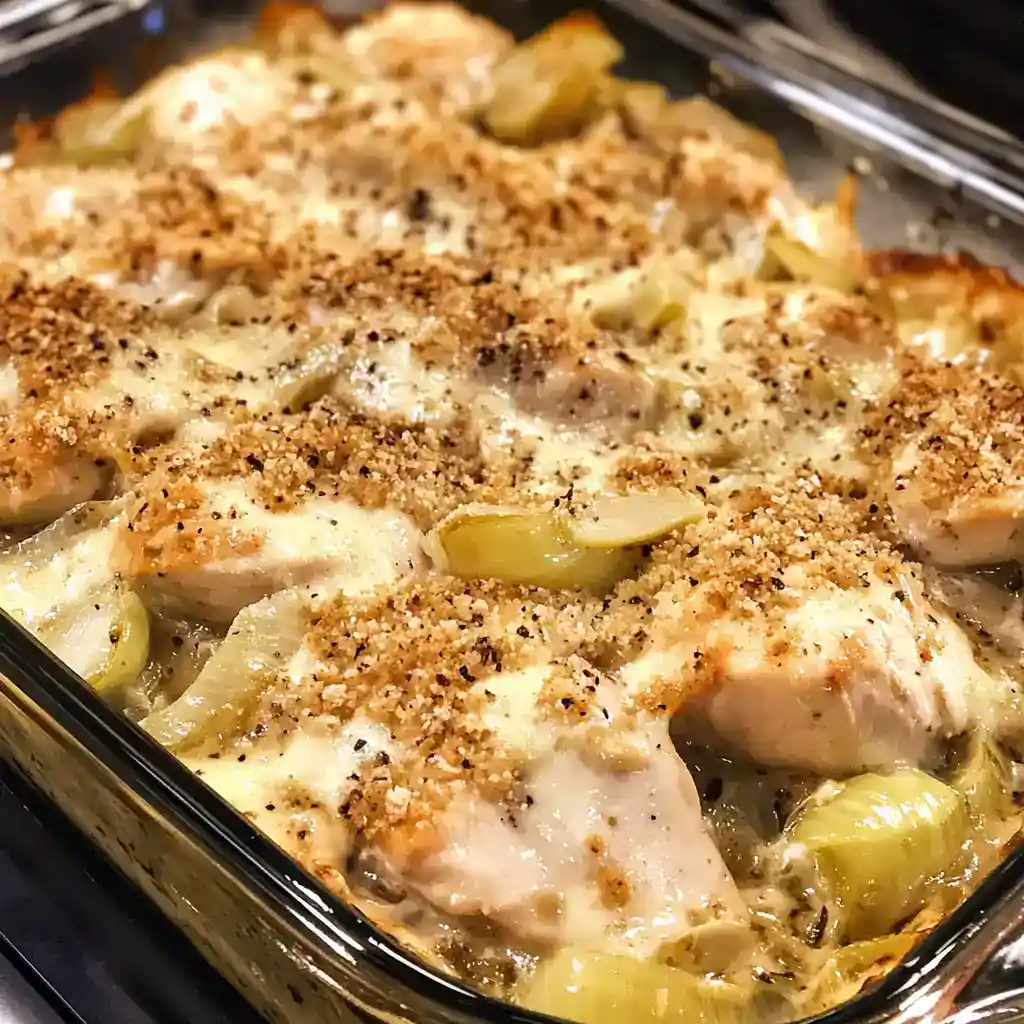
Ingredients
- 1 lb boneless, skinless chicken breasts (even thickness — pound if needed)
- 2 Belgian endives, chopped
- 1 onion, diced
- 2 cloves garlic, minced
- 1 cup chicken broth
- 1 cup heavy cream
- 1 cup shredded mozzarella cheese
- ½ cup grated Parmesan cheese
- ¼ cup fresh breadcrumbs (day-old bread pulsed in a food processor)
- Salt and pepper, to taste
- Olive oil, as needed
Instructions
- Preheat your oven to 375°F (190°C). Lightly grease a casserole dish and set aside.
- Heat a drizzle of olive oil in a large skillet over medium heat. Add chicken breasts and cook without moving for about 4 minutes per side until golden brown. They don’t need to be cooked through — they’ll finish in the oven. Remove and set aside.
- In the same skillet, add a little more olive oil if needed. Sauté the diced onion and minced garlic for 3-4 minutes until softened, scraping up any browned bits from the pan.
- Add the chopped endive and cook for 4-5 minutes, stirring occasionally, until wilted and noticeably reduced in volume.
- Pour in the chicken broth and heavy cream. Season well with salt and pepper. Simmer for 4-5 minutes, stirring, until the sauce has thickened slightly.
- Place the browned chicken breasts in the prepared casserole dish. Pour the endive cream sauce evenly over the chicken.
- Sprinkle the shredded mozzarella and grated Parmesan over the top.
- Toss the breadcrumbs with a drizzle of olive oil until lightly coated. Scatter evenly over the cheese layer.
- Bake uncovered for 25-30 minutes until the cheese is bubbling and the breadcrumbs are deep golden brown. If needed, broil for 2-3 minutes at the end for extra color — watch it closely.
- Let rest for 5 minutes before serving.
Nutrition Information (Per Serving, based on 4 servings)
- Calories: 520
- Carbohydrates: 14g
- Protein: 42g
- Fat: 33g
- Fiber: 2g
- Sodium: 680mg
- Calcium: ~35% DV (from mozzarella and Parmesan)
- Vitamin K: ~20% DV (from endive)
- Phosphorus: ~40% DV
Notes
- Don’t move the chicken too early when browning — wait until it releases from the pan naturally for the best golden crust.
- Let the cream sauce simmer a full 4-5 minutes on the stovetop before pouring over the chicken — it finishes thickening in the oven but needs a head start.
- Fresh breadcrumbs give a far better crust than canned — worth the two minutes it takes to make them.
- Give the endive adequate time to wilt fully in the skillet — this is where its bitterness mellows.
- Every oven runs a little differently, so start checking at the 25-minute mark.
Storage Tips
- Refrigerate leftovers in an airtight container for up to 3 days.
- Reheat covered in a 350°F oven for about 15 minutes to preserve the breadcrumb crust. The microwave works but softens the topping.
- Best eaten fresh — the cream sauce can separate slightly after freezing. If freezing, assemble before baking, wrap tightly, and freeze unbaked for up to 1 month. Thaw overnight in the fridge before baking.
Serving Suggestions
- Serve alongside steamed rice or buttered egg noodles to soak up all of that creamy endive sauce.
- A simple green salad with a sharp vinaigrette cuts through the richness of the casserole beautifully.
- Roasted asparagus or green beans make a clean, elegant side that complements the Belgian-inspired flavors.
- Crusty French bread on the side for scooping up any extra sauce from the dish is never a bad idea.
Mix It Up
Mushroom Chicken and Endive Casserole: Add a cup of sliced mushrooms to the skillet with the endive for an earthy, deeply savory twist. Dijon Chicken and Endive Casserole: Stir 1 tsp Dijon mustard into the cream sauce before pouring over the chicken for a classic French flavor profile. Gluten-Free Version: Swap regular breadcrumbs for gluten-free panko — it crisps up just as beautifully on top. Lighter Version: Substitute full-fat coconut milk for the heavy cream for a dairy-lighter sauce that still holds its richness.
What Makes This Recipe Special
This chicken and endive casserole draws on the classic Belgian technique of braising endive in cream — a preparation that has been central to Belgian and northern French cooking for well over a century. Cooking the endive fully in the cream sauce before baking is the key step that transforms its natural bitterness into something mellow and complex, making the sauce taste far more layered and interesting than a plain cream base ever could. It’s a technique that professional kitchens use constantly, and it works just as beautifully in a home casserole dish on a Tuesday night.
