
Have you ever made a curry at home and thought it was pretty good — until you took a bite of the restaurant version the following week and realized they were playing a completely different game? That was my experience for years until I figured out two things: the marinade has to go on for at least an hour, and coconut milk changes everything. This chicken tikka curry uses coconut milk in place of the heavier cream-based sauce, and the result is something lighter, brighter, and genuinely tropical that my family now requests on a near-weekly basis. My husband once tried to order takeout on a night I’d already started this. I wouldn’t let him.
Here’s the Thing About This Recipe
What makes this chicken tikka curry stand apart from other home curry attempts is the yogurt marinade working in combination with the coconut milk sauce. The yogurt tenderizes the chicken as it marinates — the lactic acid gently breaks down the proteins so the chicken stays incredibly moist and tender even after browning — and the coconut milk creates a sauce that’s rich and creamy without being heavy. Around here, we’ve figured out that turmeric, cumin, coriander, and paprika in the right proportions create a balanced, warm spice profile that layers beautifully rather than competing. It’s honestly that simple once you respect the marinade time and let the sauce simmer properly.
What You’ll Need (And My Shopping Tips)
The yogurt marinade is the foundation of great chicken tikka curry — use plain whole-milk yogurt for the most effective tenderizing. Low-fat yogurt works but doesn’t cling to the chicken as well and produces a slightly less developed crust when browning. Greek yogurt is excellent and produces a slightly thicker coating. I always grab a container larger than I need because someone inevitably dips something into the leftover marinade yogurt (happens more than I’d like to admit in my kitchen).
For the spices, fresh ground is meaningfully better than old ground — smell your cumin and coriander before using. If they smell faint or dusty rather than warm and aromatic, replace them. Turmeric in particular degrades quickly once ground and can taste stale rather than earthy and warm when old. A fresh jar makes a visible and tasteable difference in the finished curry.
Coconut milk — use full-fat from a can, not the carton variety sold as a dairy alternative. Full-fat canned coconut milk has the richness and fat content that makes the sauce cling to the chicken and coat the rice. Light coconut milk makes the sauce thinner and less satisfying. Shake the can before opening to mix the cream and liquid together.
Fresh ginger grated fresh is worth the extra minute over ground ginger — the flavor is cleaner, more vibrant, and more aromatic than the dried version, and it’s part of what makes this tikka curry taste like it came from a real kitchen rather than a spice packet.
Let’s Make This Together
Combine the yogurt, lemon juice, minced garlic, grated ginger, cumin, coriander, turmeric, paprika, salt, and pepper in a bowl. Add the cubed chicken and mix thoroughly to coat every piece. Cover and marinate for at least 1 hour at room temperature, or up to 8 hours in the refrigerator. Here’s where I used to rush — I’d marinate for 20 minutes and wonder why my chicken tasted like sauce on the outside and plain on the inside. The full hour is the minimum for the tenderizing and flavoring to penetrate.
Heat vegetable oil in a large skillet over medium heat. Add the chopped onion and sauté until completely translucent and starting to turn golden, about 6 to 8 minutes. Don’t rush this — properly caramelized onion is a flavor base that carries the whole sauce.
Add the marinated chicken in a single layer and cook until browned on all sides, about 3 to 4 minutes per side. The yogurt coating will darken and form a slightly crispy exterior — that’s exactly what you want. Pour in the diced tomatoes and coconut milk and stir everything together.
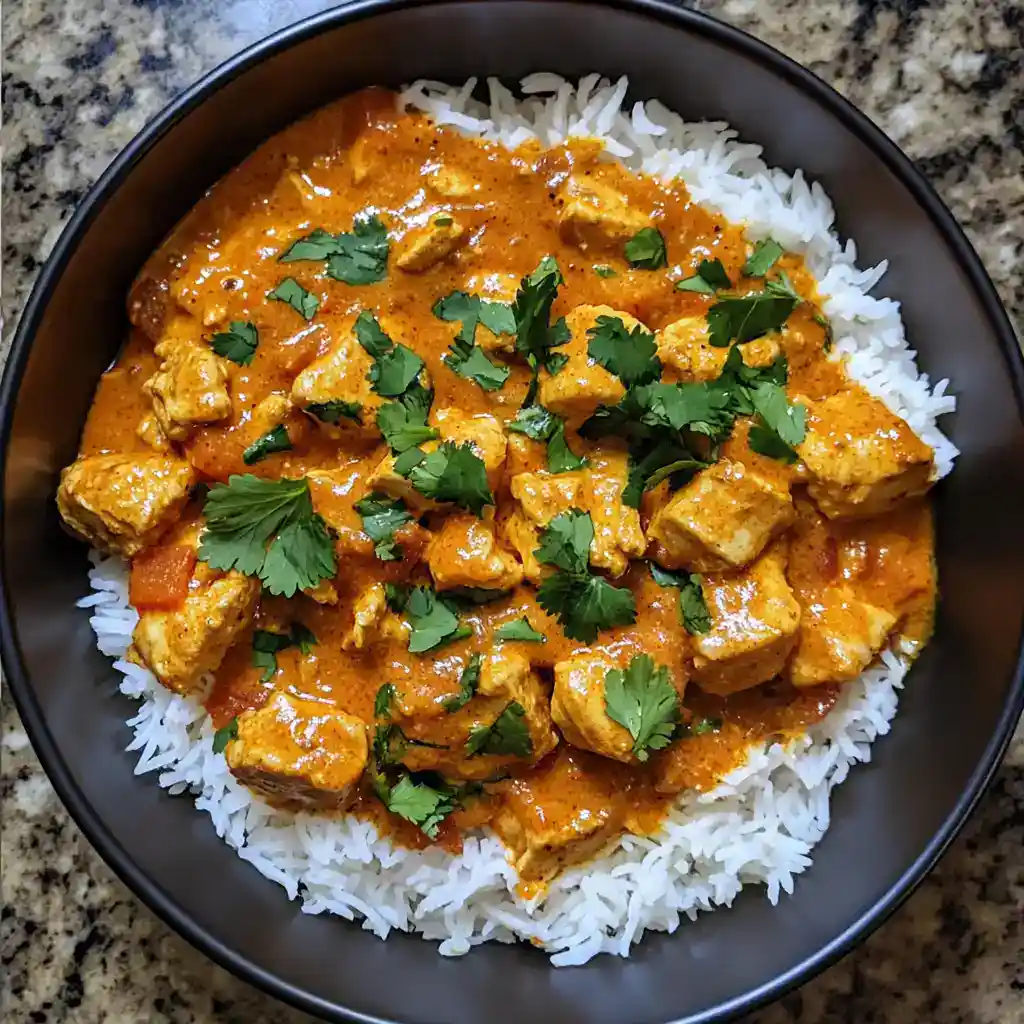
Reduce heat to low, cover, and simmer for 20 to 25 minutes until the chicken is fully cooked through and the sauce has thickened. Scatter fresh cilantro over the top and serve over steamed rice or with naan.
For another deeply satisfying Indian-inspired chicken curry with a cream-based sauce, check out this Chicken Tikka Masala from Station Recipes — a rich, restaurant-style version that’s a perfect complement to this lighter coconut milk approach.
If This Happens, Don’t Panic
Chicken is dry after cooking? It wasn’t marinated long enough, or it was cooked at too high a heat before the liquid went in. The yogurt marinade is doing structural work — less than an hour means less tenderizing. Next time, push to the full hour minimum. If this batch is dry, let it simmer in the sauce longer and the coconut milk will help re-hydrate the outer layer.
Sauce is too thin after 25 minutes? Remove the lid and let it cook on medium-low for an additional 5 to 10 minutes. The sauce will reduce and thicken as the coconut milk concentrates. Don’t add flour or cornstarch — just time and gentle heat.
Spice flavor is weak? Old spices or not enough of them. Taste the sauce mid-simmer and add a pinch more cumin or coriander if needed. A very small extra squeeze of lemon juice can also brighten the spice flavors if everything is tasting flat.
Yogurt curdling in the sauce? The heat was too high when the chicken went in, or the pan was too hot when the marinated chicken hit it. Medium heat throughout — not medium-high — keeps the yogurt coating intact as it cooks. It won’t ruin the dish but the texture is better when the coating stays together.
Ways to Mix It Up
Extra Spicy Tikka Curry: Add 1/4 to 1/2 teaspoon of cayenne pepper or two minced fresh green chilies to the marinade. The heat builds slowly through the simmer and becomes well-integrated with the coconut milk.
Tikka Curry with Spinach: Stir two large handfuls of fresh baby spinach into the curry in the last 3 minutes of cooking, just until wilted. The spinach adds color, nutrition, and a slight bitterness that contrasts beautifully with the coconut milk’s sweetness.
Tomato-Forward Tikka Curry: Use 1.5 cans of diced tomatoes instead of one and reduce the coconut milk to 1/2 cup. The result is a brighter, more acidic sauce that leans closer to a classic tikka masala profile.
Vegetable Tikka Curry: Replace the chicken with cubed paneer, chickpeas, or a combination of cauliflower florets and potatoes. Marinate the paneer the same way and handle it gently — it doesn’t need the full browning time that chicken does.
What Makes This Recipe Special
Tikka, meaning “pieces” or “bits” in Hindi and Punjabi, refers to the cut and marinated preparation of meat that predates the more famous masala sauce version by centuries. The yogurt-and-spice marinade has roots in tandoor cooking traditions across the Indian subcontinent, where marinated meat was cooked at high heat in clay ovens to create the characteristic charred exterior and juicy interior. Learn more about the rich history of turmeric — one of the most ancient and medically studied spices in the world — and how it became central to South Asian cooking. This chicken tikka curry brings that same marinade tradition to a home skillet, replacing the tandoor’s extreme heat with careful browning and a long, gentle simmer in a coconut-enriched sauce.
Questions I Always Get
How long do I really need to marinate the chicken for this tikka curry?
One hour is the minimum for noticeable tenderizing and flavor penetration — 20 to 30 minutes won’t do the same work. For the best result, marinate overnight in the refrigerator. The lemon juice and yogurt continue working over time, and the spices penetrate deeper with more contact time.
Can I use chicken thighs instead of chicken breast?
Yes — boneless, skinless chicken thighs are actually preferable for this chicken tikka curry because they’re more forgiving with heat and stay moister than breast even if slightly overcooked. Cut them into similar-sized cubes as you would the breast.
Is this chicken tikka curry recipe beginner-friendly?
The technique is approachable — the main skills are browning in batches without crowding and monitoring the simmer rather than boiling. The marinade does most of the work before cooking begins. If you can sauté an onion and not rush a sauce, you can make this.
What’s the difference between tikka curry and tikka masala?
The main difference in this recipe context is the sauce base — this tikka curry uses coconut milk for a lighter, tropical richness, while tikka masala typically uses heavy cream or cream and tomato for a richer, more deeply sauced result. Both use the same yogurt-marinated chicken tikka as the protein.
Can I make this chicken tikka curry ahead of time?
Yes — it actually improves overnight as the chicken continues to absorb the sauce. Cool completely before refrigerating in an airtight container for up to 3 days. Reheat gently on the stovetop over low heat with a small splash of coconut milk or water to loosen the sauce.
What rice goes best with chicken tikka curry?
Basmati rice is the traditional and best choice — its long, separate grains and floral aroma complement the spiced curry sauce. Jasmine rice is a good second choice. Regular long-grain white rice works fine but doesn’t add the aromatic element that basmati brings.
One Last Thing
This chicken tikka curry is the recipe I reach for when I want something that feels genuinely special without spending the evening in the kitchen. The coconut milk and spice combination produces a sauce that people always ask about, and the yogurt-marinated chicken is so tender it feels like a restaurant prepared it. Make a big batch and eat it across two nights — it’s better the second day. You’ve got this.
Print
Chicken Tikka Curry
Description
Tender yogurt-marinated chicken tikka curry in a fragrant coconut milk and tomato sauce — a lighter, coconut-kissed Indian-inspired dinner that’s deeply satisfying and ready in under an hour.
Prep Time: 15 minutes | Marinate Time: 1 hour | Cook Time: 35 minutes | Total Time: 1 hour 50 minutes | Servings: 4
Ingredients
For the Marinade:
- 1 lb boneless, skinless chicken breast, cut into 1-inch cubes
- 1 cup plain whole-milk yogurt
- 2 tbsp fresh lemon juice
- 2 cloves garlic, minced
- 1-inch piece fresh ginger, grated
- 1 tsp ground cumin
- 1 tsp ground coriander
- 1/2 tsp turmeric
- 1/2 tsp paprika
- Salt and pepper to taste
For the Curry:
- 2 tbsp vegetable oil
- 1 onion, chopped
- 1 can (14 oz) diced tomatoes
- 1 cup full-fat coconut milk
- Fresh cilantro, for garnish
Instructions
- Combine all marinade ingredients in a bowl, add the cubed chicken, and mix thoroughly to coat. Marinate for at least 1 hour at room temperature or up to 8 hours refrigerated.
- Heat vegetable oil in a large skillet over medium heat. Add the onion and sauté until completely soft and beginning to turn golden, 6 to 8 minutes.
- Add the marinated chicken in a single layer. Cook until browned on all sides, about 3 to 4 minutes per side.
- Pour in the diced tomatoes and coconut milk. Stir to combine.
- Reduce heat to low, cover, and simmer for 20 to 25 minutes until the chicken is cooked through and the sauce has thickened.
- Taste and adjust seasoning as needed.
- Garnish with fresh cilantro and serve hot over steamed basmati rice or with naan bread.
Nutrition Information (Per Serving)
- Calories: 365
- Carbohydrates: 16g
- Protein: 34g
- Fat: 18g
- Fiber: 3g
- Sodium: 480mg
- Iron: 3.2mg (18% DV)
- Vitamin C: 22mg (24% DV)
- Potassium: 680mg (14% DV)
Note: Nutrition estimates are based on 4 servings without rice. Values will vary based on the yogurt and coconut milk fat content used.
Notes
- Marinate for the full hour — this is the step that makes the chicken tender rather than just coated on the outside.
- Don’t rush the onion sauté — golden, deeply softened onion is the flavor base that carries the sauce.
- Use full-fat canned coconut milk, not carton coconut milk, for the right sauce richness.
- Fresh ginger grated on a microplane produces a finer, more evenly distributed flavor than chopped ginger.
Storage Tips
- Refrigerator: Store in an airtight container for up to 3 days. The flavor improves overnight.
- Reheating: Warm gently on the stovetop over low heat with a small splash of coconut milk or water to loosen the sauce.
- Freezer: Freeze in portions for up to 2 months. Thaw overnight in the fridge before reheating. Coconut milk-based sauces can separate slightly after freezing — stir well while reheating to recombine.
- Store separately from rice for best reheating results.
Serving Suggestions
- Over steamed basmati rice — the floral aroma complements the spiced sauce perfectly
- With warm naan or roti for scooping
- With a simple cucumber raita (yogurt, cucumber, cumin) alongside to cool the spice
- Garnished generously with fresh cilantro and a wedge of lemon for squeezing at the table
Mix It Up (Recipe Variations)
Extra Spicy: Add cayenne or minced fresh green chilies to the marinade.
With Spinach: Stir in baby spinach in the last 3 minutes until just wilted.
Tomato-Forward: Use 1.5 cans of tomatoes and reduce coconut milk to 1/2 cup for a brighter, more acidic sauce.
Vegetarian: Replace chicken with paneer, chickpeas, or cauliflower and potatoes.
What Makes This Recipe Special
The combination of a yogurt-lemon marinade and a coconut milk sauce creates a chicken tikka curry that achieves two things simultaneously — tender, deeply seasoned chicken from the outside in, and a sauce that’s both rich and light. The yogurt’s lactic acid tenderizes the protein during marination while the spices penetrate from the surface toward the center. When that marinated chicken hits a hot pan, the yogurt coating caramelizes into a flavorful, slightly sticky crust that holds the spices in place and adds texture to every bite. The coconut milk sauce then brings everything into a harmonious whole, adding creaminess without heaviness and a subtle sweetness that balances the warm spice profile perfectly.
