
Ever wonder why restaurant scallops have that perfect golden crust while homemade versions turn out rubbery and pale? I used to think making easy scallops and wild rice required culinary school training until I discovered this foolproof recipe. Now my family thinks I’m some kind of seafood expert whenever I serve this elegant dish, and I’m pretty sure my dinner guests assume I spent hours in the kitchen (if only they knew how many times I endedured up with overcooked, bouncy scallops before learning the critical pat-dry-and-don’t-move-them trick).
Here’s the Thing About This Recipe
What makes this easy scallops and wild rice work is the technique of getting your scallops bone-dry before they hit a screaming hot pan—that’s the secret to that gorgeous golden crust. I learned the hard way that wet scallops steam instead of sear, leaving you with sad, gray seafood instead of the caramelized beauties you’re dreaming of. This elevated comfort dish pairs sweet, buttery scallops with nutty wild rice and earthy mushrooms for a complete meal that feels fancy but comes together in under an hour. It’s honestly that simple: dry your scallops well, get the pan hot, and don’t touch them while they’re searing.
What You’ll Need (And My Shopping Tips)
Good sea scallops are worth seeking out at a reputable fish counter—look for “dry” scallops (not treated with preservatives) that smell sweet and ocean-fresh, not fishy or chemical (I learned this after buying “wet” scallops three times and wondering why they released so much liquid and never browned properly). You’ll need about 8 ounces, which gives you 2-3 large scallops per person for four servings.
For the wild rice base, grab wild rice (which is actually a grass seed, not true rice—fun fact), quality broth (chicken or vegetable, depending on your preference), a small onion, fresh garlic, and sliced mushrooms. Don’t cheap out on the mushrooms—get cremini or baby bellas for better flavor than basic white button mushrooms (happens more than I’d like to admit when I grab whatever’s on sale).
For finishing touches, you’ll need frozen peas, olive oil, salt, pepper, and fresh parsley for garnish. The parsley isn’t just for looks—it adds a fresh, bright note that cuts through the richness.
Wild rice takes longer to cook than regular rice (about 45 minutes), so plan accordingly. If you’re curious about wild rice and why it’s considered such a nutritious powerhouse, Wikipedia has fascinating information about this North American native grain that’s been harvested for thousands of years.
Here’s How We Do This
Start by rinsing your wild rice under cold water in a fine-mesh strainer—this removes any debris and excess starch. In a saucepan, bring 2 cups of broth to a boil, add the rinsed wild rice, reduce heat to low, cover, and simmer for about 45 minutes until the rice is tender and the liquid is absorbed. Here’s where I used to mess up: I’d keep lifting the lid to check on it, which releases steam and messes with the cooking time. Set a timer and trust the process.
While the rice is doing its thing, prep your scallops. This is the most critical step: pat the scallops completely dry with paper towels—I’m talking aggressively dry, like you’re trying to remove every molecule of moisture. Season both sides with salt and pepper. Here’s my secret: I let them sit on a paper towel-lined plate in the fridge for 10-15 minutes to dry out even more while I prep everything else.
In a large skillet, heat a tablespoon of olive oil over medium heat. Add your finely chopped onion and cook for about 3-4 minutes until translucent and soft. Don’t rush this step—properly softened onions add sweetness to the whole dish.
Add the minced garlic and sliced mushrooms to the skillet. Cook for about 5 minutes, stirring occasionally, until the mushrooms release their liquid and then reabsorb it, becoming tender and golden. The mushrooms should shrink down significantly.
Now for the fun part—push the vegetables to the side of the skillet and crank the heat to medium-high. Let the pan get hot for about a minute (this is crucial for that sear). Add the seasoned scallops to the cleared space in the pan, making sure they’re not touching each other. Here’s the golden rule I learned from a chef friend: once you put them down, DO NOT MOVE THEM for 2-3 minutes. Resist every urge to peek, nudge, or flip them early. You’ll know they’re ready when they release easily from the pan and have a gorgeous golden-brown crust.
Flip them once and cook for another 2-3 minutes on the other side until they’re golden and just cooked through—they should still have a slight translucency in the very center. Trust me on this one; overcooked scallops turn into expensive rubber erasers faster than you can say “I should have pulled them sooner.”
Once your wild rice is done, stir it into the skillet along with the frozen peas. Cook for an additional 2-3 minutes, stirring gently to combine everything and heat the peas through. The peas will thaw and warm up quickly—don’t overcook them or they’ll turn that sad army-green color.
Taste and adjust seasoning with additional salt and pepper if needed. I always need to add more salt at this stage because wild rice and scallops both benefit from generous seasoning. If you’re looking for another elegant seafood dish, try this Pan-Seared Salmon with Quinoa that uses similar searing techniques.
Serve hot, garnished with fresh chopped parsley. The contrast of sweet scallops, nutty rice, earthy mushrooms, and bright parsley is absolutely stunning both visually and flavor-wise.
If This Happens, Don’t Panic
Scallops won’t brown and keep releasing liquid? You probably bought “wet” scallops treated with preservatives, or you didn’t dry them well enough. In reality, I’ve learned to ask the fishmonger specifically for “dry” scallops and to dry them obsessively with paper towels before cooking.
Scallops turned rubbery and overcooked? You cooked them too long—scallops need just 2-3 minutes per side, and they continue cooking after you remove them from heat. If this happens next time, pull them when they still have a tiny bit of translucency in the center. This is totally fixable with practice and a timer.
Wild rice still crunchy after 45 minutes? Different brands and batches cook at different rates. Just keep simmering with a splash more broth until tender—it might take up to an hour for some wild rice. Don’t panic; it’s impossible to overcook wild rice to mush like you can with white rice.
Dish tastes bland despite seasoning? You probably need way more salt than you think. Scallops and wild rice are both pretty neutral, so this needs generous seasoning. I always taste multiple times and add salt in stages now.
When I’m Feeling Creative
Bacon Scallops and Wild Rice: When I want something more indulgent, I’ll cook 2-3 strips of bacon first, use the bacon fat instead of olive oil for cooking, and crumble the bacon on top at the end. Around special occasions, this becomes my show-stopping version.
Lemon Herb Scallops: Add the zest of one lemon to the rice and squeeze fresh lemon juice over everything at the end with fresh dill instead of parsley for a brighter, more elegant finish.
Creamy Mushroom Scallops: Stir in 1/4 cup of heavy cream or crème fraîche with the rice and peas for a rich, restaurant-style sauce.
Asian-Inspired Scallops and Rice: Swap the herbs for fresh ginger and garlic, add a splash of soy sauce and sesame oil to the rice, and garnish with scallions instead of parsley.
What Makes This Recipe Special
This easy scallops and wild rice recipe represents accessible home cooking that delivers restaurant-quality results through proper technique rather than complicated ingredients. Sea scallops are one of the most forgiving proteins to cook once you understand the basic principle: dry surface + hot pan + hands off = perfect sear. What makes this dish special is the combination of textures and flavors—sweet, buttery scallops with a caramelized crust, nutty wild rice with its distinctive chewy-tender bite, earthy mushrooms, and bright peas all come together in one skillet. Wild rice, despite its name, is actually a semi-aquatic grass native to North America that’s been harvested by indigenous peoples for centuries, particularly in the Great Lakes region. Its nutty flavor and nutritional profile (higher in protein and fiber than regular rice) make it perfect for pairing with delicate seafood. The technique of searing scallops is borrowed from French cooking, where achieving a golden crust (called the Maillard reaction) is considered essential to proper seafood preparation. The history of wild rice harvesting shows its cultural significance to Ojibwe and other indigenous communities, who have traditional methods of harvesting and processing this nutritious grain.
Things People Ask Me About This Recipe
What’s the difference between “wet” and “dry” scallops?
“Wet” scallops are treated with sodium tripolyphosphate (STP) to extend shelf life—they’re slippery, release tons of liquid, and won’t brown properly. “Dry” scallops are untreated, slightly sticky, and sear beautifully. Always ask your fishmonger for dry scallops specifically.
Can I use regular white rice instead of wild rice for this scallops recipe?
You can, but you’ll lose that distinctive nutty flavor and chewy texture that makes this dish special. If you use regular rice, reduce the cooking time to about 18-20 minutes and adjust the liquid ratio to 1 cup rice to 2 cups broth.
How do I know when scallops are perfectly cooked?
They should be opaque around the edges with a slight translucency in the very center, and they’ll feel slightly springy (not firm or rubbery) when you press them gently. The internal temperature should be about 115-120°F if you’re using a thermometer.
Can I make the wild rice ahead of time?
Absolutely! Cook the wild rice up to 2 days ahead, store in the fridge, and just warm it up when you’re ready to finish the dish. This makes the final cooking much faster and easier for entertaining.
Are scallops expensive? Is this recipe worth the splurge?
Good sea scallops are pricier than many proteins, but 8 ounces serves 4 people, so it’s not as expensive per serving as you might think. This recipe is absolutely worth it for special occasions or when you want to feel fancy without leaving home.
What’s the best way to reheat leftover scallops and wild rice?
Honestly, scallops don’t reheat well—they get rubbery. The wild rice mixture reheats great on the stovetop or in the microwave, but if you have leftover scallops, eat them cold in a salad rather than trying to reheat them.
One Last Thing
I couldn’t resist sharing this easy scallops and wild rice because it’s the recipe that finally made me feel confident cooking seafood at home. The best scallop nights are when everyone’s gathered around the table, fighting over who gets the most perfectly seared scallops, and someone inevitably says “this is restaurant-quality.” You don’t need professional training or expensive equipment—just good scallops, patience to let the wild rice cook, and the willingness to leave those scallops alone while they sear to golden perfection.
Print
Easy Scallops and Wild Rice
Description
This elegant easy scallops and wild rice combines sweet, perfectly seared sea scallops with nutty wild rice, earthy mushrooms, and bright peas for a complete meal that delivers restaurant-quality results with straightforward home-cooking techniques.
Prep Time: 10 minutes | Cook Time: 50 minutes | Total Time: 60 minutes | Servings: 4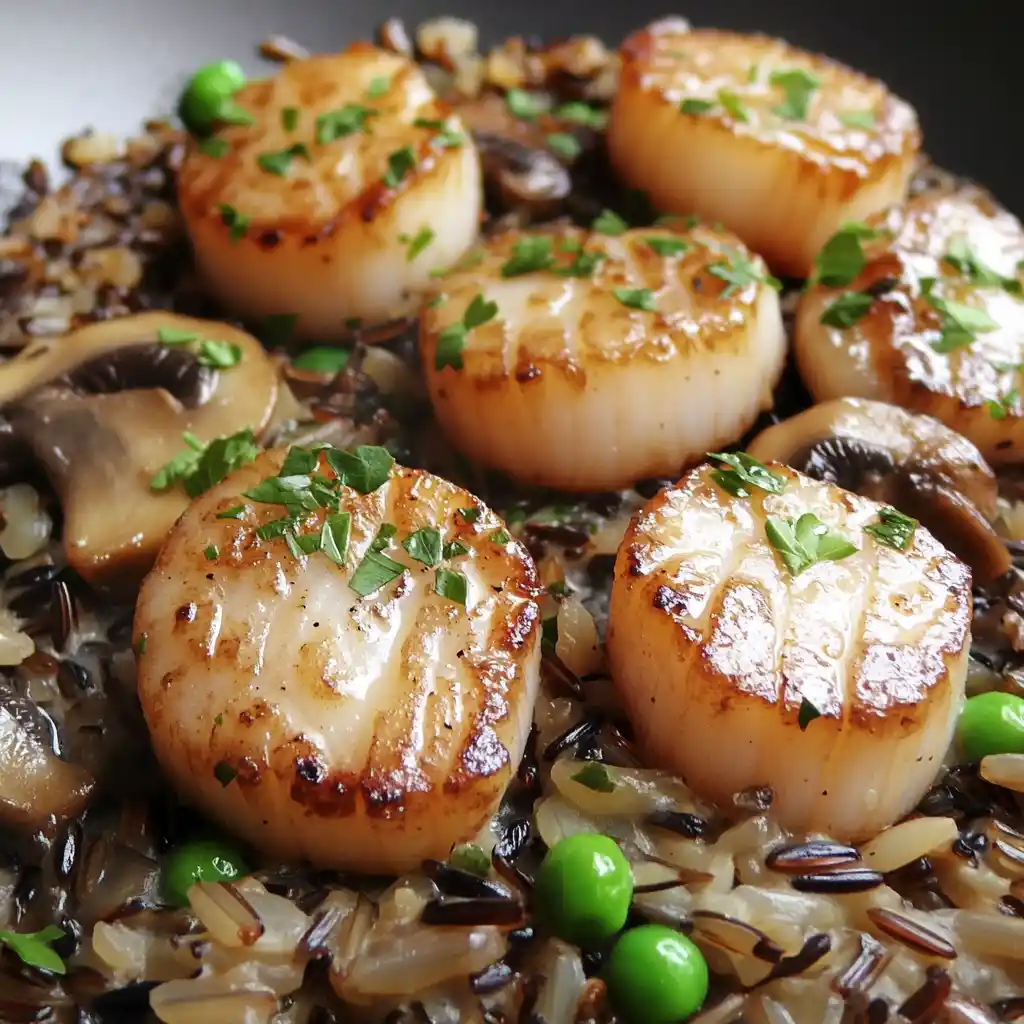
Ingredients
For the Scallops:
- 8 oz sea scallops (ask for “dry” scallops, not “wet”—this matters!)
- Salt and pepper, to taste
- 1 tbsp olive oil (for the vegetables; the scallops cook in the same pan)
For the Wild Rice:
- 1 cup wild rice, rinsed under cold water
- 2 cups chicken or vegetable broth (I use low-sodium to control salt)
- 1 small onion, finely chopped
- 2 cloves garlic, minced (fresh only, please)
- 1/2 cup sliced mushrooms (cremini or baby bella for best flavor)
- 1/2 cup frozen peas (no need to thaw)
For Garnish:
- Fresh parsley, chopped (don’t skip—it brightens everything)
Instructions
- Rinse the wild rice under cold water in a fine-mesh strainer. In a medium saucepan, bring the broth to a boil. Add the wild rice, reduce heat to low, cover, and simmer for about 45 minutes until the rice is tender and the liquid is absorbed. Set a timer and resist lifting the lid—let the steam do its work.
- While the rice is cooking, pat the scallops completely dry with paper towels—seriously, get them as dry as humanly possible. Season both sides generously with salt and pepper. Let them sit on a paper towel-lined plate while you prep the vegetables (this helps them dry out even more).
- In a large skillet, heat the olive oil over medium heat. Add the finely chopped onion and cook for 3-4 minutes until translucent and soft, stirring occasionally.
- Add the minced garlic and sliced mushrooms to the skillet. Cook for about 5 minutes, stirring occasionally, until the mushrooms release their liquid, reabsorb it, and become tender and golden. They should shrink down significantly.
- Push the vegetables to the side of the skillet and increase heat to medium-high. Let the cleared space get hot for about a minute. Add the seasoned scallops to the hot pan, making sure they’re not touching each other. DO NOT MOVE THEM for 2-3 minutes—resist every urge to peek or nudge. They’ll release easily when they’re ready and should have a gorgeous golden-brown crust.
- Flip the scallops once and cook for another 2-3 minutes on the other side until golden and just cooked through with a slight translucency in the very center. Remove from heat immediately—they’ll continue cooking from residual heat.
- Stir the cooked wild rice and frozen peas into the skillet with the vegetables. Cook for 2-3 minutes, stirring gently, until everything is combined and the peas are heated through and bright green.
- Taste and adjust seasoning with additional salt and pepper as needed—you’ll probably need more than you think.
- Serve hot with the scallops arranged on top of the wild rice mixture, garnished generously with fresh chopped parsley.
Nutrition Information (Per Serving):
- Calories: 285
- Carbohydrates: 38g
- Protein: 18g
- Fat: 6g
- Fiber: 4g
- Sodium: 480mg
- Vitamin B12: 35% DV
- Selenium: 40% DV
- Zinc: 20% DV
Scallops are an excellent source of lean protein and selenium, while wild rice provides more protein and fiber than regular rice, making this a nutritionally balanced meal.
Notes:
- Buy “dry” scallops specifically—ask your fishmonger. “Wet” scallops won’t brown properly and release too much liquid.
- Pat scallops obsessively dry with paper towels—moisture is the enemy of a good sear.
- Don’t move the scallops while they’re searing—let them sit undisturbed for 2-3 minutes per side.
- Wild rice cooking time varies by brand and batch—some takes 45 minutes, some takes up to an hour. Just keep cooking until tender.
- Every stove and pan is different, so adjust heat as needed to get that perfect golden sear without burning.
Storage Tips:
Store the wild rice mixture in an airtight container in the fridge for up to 4 days—it reheats beautifully on the stovetop or in the microwave with a splash of broth. However, scallops don’t reheat well and get rubbery. If you have leftover cooked scallops, eat them cold in a salad the next day rather than trying to reheat them. I don’t recommend freezing any part of this dish—the scallop texture suffers dramatically when frozen and thawed.
Serving Suggestions:
- Elegant Presentation: Arrange scallops on top of the wild rice mixture with extra parsley and a lemon wedge
- Complete Meal: With a simple arugula salad dressed with lemon vinaigrette
- Restaurant Style: Drizzle with a brown butter sauce or beurre blanc for extra richness
- Lighter Option: Serve the scallops alongside the rice instead of mixed in, with steamed green beans
Mix It Up (Recipe Variations):
Bacon Scallops and Wild Rice: Cook 2-3 strips of bacon first, use the bacon fat instead of olive oil, and crumble the bacon on top for incredible smoky richness.
Lemon Herb Scallops: Add the zest of one lemon to the rice and squeeze fresh lemon juice over everything at the end, with fresh dill instead of parsley.
Creamy Mushroom Scallops: Stir in 1/4 cup of heavy cream or crème fraîche with the rice and peas for a luxurious, restaurant-style sauce.
Asian-Inspired Scallops: Add fresh grated ginger with the garlic, finish with soy sauce and sesame oil, and garnish with sliced scallions instead of parsley.
What Makes This Recipe Special:
This easy scallops and wild rice showcases how proper technique elevates simple ingredients into restaurant-quality results. The key to perfect scallops is understanding the science: a dry surface plus high heat creates the Maillard reaction (caramelization) that gives you that golden crust. Pairing delicate scallops with nutty wild rice creates textural and flavor contrast that makes each bite interesting.
