
Ever wonder why restaurant tzatziki tastes so much fresher and more flavorful than the stuff in tubs at the grocery store? I used to think making authentic garlic herb tzatziki required Greek grandmother secrets until I realized it’s literally just mixing yogurt with cucumber, garlic, and herbs. Now my family refuses to eat store-bought tzatziki, and I’m pretty sure my dinner guests think I’m some kind of Mediterranean cooking expert (if only they knew I just learned to squeeze water out of cucumbers and stir things together).
Here’s the Thing About This Recipe
The secret to perfect garlic herb tzatziki isn’t complicated—it’s honestly just using thick Greek yogurt and squeezing out as much water as possible from that grated cucumber so your tzatziki isn’t watery. Here’s what I’ve learned the hard way: if you skip the cucumber-squeezing step, you’ll end up with runny, sad tzatziki instead of thick, creamy dip perfection. Around here, we’ve figured out that fresh herbs make all the difference—dried just doesn’t give you that bright, herbaceous punch. The garlic and lemon juice add zing, and that drizzle of olive oil on top is traditional and makes it look restaurant-quality. It’s honestly that simple, and it takes about 5 minutes of actual work plus some chilling time.
What You’ll Need (Don’t Stress!)
Good thick Greek yogurt is your base—use full-fat or 2% for the best texture and flavor. The fat-free stuff is too watery and tangy. I learned this after using fat-free once and ending up with sour, thin tzatziki. Look for authentic Greek yogurt that’s thick enough to hold a spoon upright.
Half a cucumber is perfect—you want the seedless English cucumber if you can find it, or regular cucumber with the seeds scooped out. Tzatziki is a traditional Greek sauce that’s served with everything from gyros to grilled meats to vegetable platters. Fresh garlic (not the jarred minced stuff) is crucial—two cloves give you that characteristic garlicky punch without being overwhelming.
Fresh dill and fresh parsley are non-negotiable—this is one recipe where dried herbs just won’t work. The fresh herbs give you that bright, green, herbaceous flavor that makes tzatziki special. Fresh lemon juice (not bottled) adds tanginess and brightness. Good quality olive oil for drizzling on top adds richness and makes it look beautiful. Salt and pepper to season.
Let’s Make This Together
Start by grating your cucumber using the large holes on a box grater. Place the grated cucumber in a clean kitchen towel or several layers of cheesecloth, and squeeze out as much water as you possibly can. Here’s where I used to mess up: I’d think I squeezed enough, but then I’d squeeze again and more water would come out. Really get aggressive with it—you want that cucumber as dry as possible.
In a bowl, combine your thick Greek yogurt with the squeezed-dry cucumber, minced garlic, chopped fresh dill, chopped fresh parsley, and lemon juice. Mix everything together until all the ingredients are fully incorporated and the mixture looks uniform. The cucumber should be evenly distributed throughout, not clumping in one spot.
Season with salt and pepper to taste. Start with about 1/4 teaspoon of salt and adjust from there—you can always add more but you can’t take it away. Give it a taste with a piece of pita bread or a cucumber slice, not just on a spoon, because you want to taste how it’ll actually work as a dip.
Transfer to a serving bowl and drizzle with a good swirl of olive oil on top. This isn’t just for looks—it adds richness and that authentic Greek touch. Cover and refrigerate for at least 30 minutes before serving. This chilling time lets all the flavors meld together and gives the garlic time to mellow slightly. Honestly, it’s even better if you make it a few hours ahead or the night before.
Serve chilled as a dip with pita bread, vegetables, or as a sauce for Grilled Chicken Gyro Wraps Bowl and other Mediterranean dishes. It’ll keep in the fridge for 3-4 days.
When Things Go Sideways (And How to Fix Them)
Tzatziki is watery and thin? You didn’t squeeze enough water out of the cucumber, or your Greek yogurt was too thin. In reality, I’ve learned to really wring that cucumber like I’m angry at it. If this happens, you can strain the tzatziki through cheesecloth to remove excess liquid, or stir in a few tablespoons of extra Greek yogurt to thicken it up.
Too garlicky and overwhelming? You used too much garlic or raw garlic is just too strong for you. Don’t panic—dilute it with more yogurt and cucumber. Next time, start with one clove and add the second one gradually after tasting. Some people are more sensitive to raw garlic than others.
Tastes bland or boring? You didn’t add enough lemon juice, salt, or fresh herbs. This is totally fixable—keep tasting and adjusting. The lemon juice is what makes everything bright and zingy, so don’t be shy with it. I usually end up adding more than the recipe calls for because I like it extra tangy.
Herbs taste wrong or bitter? Your dill or parsley wasn’t fresh, or you used the tough stems instead of the tender leaves. Make sure you’re using fresh, bright green herbs and only the leafy parts. If your herbs are starting to yellow or wilt, they’ll taste off.
When I’m Feeling Creative
Mint Tzatziki: Replace half the dill with fresh mint for a refreshing twist that’s amazing with lamb. Around summer cookouts, I’ll make this version and it’s always a hit.
Spicy Tzatziki: Add a pinch of cayenne pepper or some finely diced jalapeño for a kick that cuts through the cool creaminess.
Extra Herby Tzatziki: Add fresh chives or even a bit of fresh oregano to the mix for more complex herb flavor.
Avocado Tzatziki: Mash in half an avocado for a creamy, rich version that’s like Greek guacamole.
What Makes This Recipe Special
Tzatziki is one of the foundational sauces of Greek and Mediterranean cuisine, served with nearly everything from grilled meats to bread to vegetables. The combination of cool, tangy yogurt with fresh cucumber and herbs creates a refreshing sauce that balances rich, heavy dishes and adds moisture and flavor to grilled meats. The technique of straining the cucumber is crucial—in traditional Greek cooking, this step ensures the sauce maintains its thick, creamy consistency rather than becoming watery. Using Greek yogurt rather than regular yogurt is essential because it’s already been strained to remove excess whey, giving it that thick, almost sour cream-like texture. The fresh herbs aren’t just for flavor—they also contribute to the distinctive bright green color that makes authentic tzatziki so appealing.
Things People Ask Me About This Recipe
Can I make this garlic herb tzatziki ahead of time?
Absolutely! It’s actually better when made ahead because the flavors have time to meld. Make it up to 2 days ahead and store covered in the fridge. Just give it a stir and maybe add a fresh drizzle of olive oil before serving.
Why is my garlic herb tzatziki watery?
You didn’t squeeze enough water out of the cucumber. Cucumbers are like 95% water, and if you don’t remove most of it, your tzatziki will be thin and runny. Really squeeze that cucumber hard—you’ll be amazed how much water comes out.
Can I use regular yogurt instead of Greek yogurt for tzatziki?
You can, but you’ll need to strain it first through cheesecloth for several hours to thicken it up. Greek yogurt is already strained, which is why it’s perfect for tzatziki. Regular yogurt is too thin and will make watery tzatziki.
How long does homemade garlic herb tzatziki last?
It keeps in the fridge for 3-4 days in an airtight container. After that, the garlic can get stronger and the cucumbers might start releasing more water. It’s best within the first couple days.
Can I freeze tzatziki?
I wouldn’t recommend it. The yogurt separates when frozen and thawed, and the texture becomes grainy and weird. This is one of those things that’s best made fresh or a day or two ahead.
What can I serve with garlic herb tzatziki?
Everything! Pita bread, pita chips, fresh vegetables, grilled chicken, lamb, falafel, gyros, as a spread on sandwiches or wraps, dolloped on grilled fish—seriously, it goes with almost anything. It’s the ultimate multipurpose sauce.
Before You Head to the Kitchen
I couldn’t resist sharing this garlic herb tzatziki because it’s genuinely the sauce that transformed my cooking and made me realize how easy it is to make restaurant-quality Mediterranean food at home. The best tzatziki nights are when I make a huge batch and we spend the week dipping everything we can find into it—pita, vegetables, leftover chicken, even spreading it on sandwiches. Give it a try, and don’t be surprised when store-bought tzatziki starts tasting flat and boring in comparison.
Print
Garlic Herb Tzatziki
Description
Authentic garlic herb tzatziki with thick Greek yogurt, cucumber, and fresh herbs—easy Greek sauce ready in 5 minutes that’s perfect with everything from pita to grilled meats.
Prep Time: 10 minutes | Chill Time: 30 minutes | Total Time: 40 minutes | Servings: 8 (about 1.5 cups)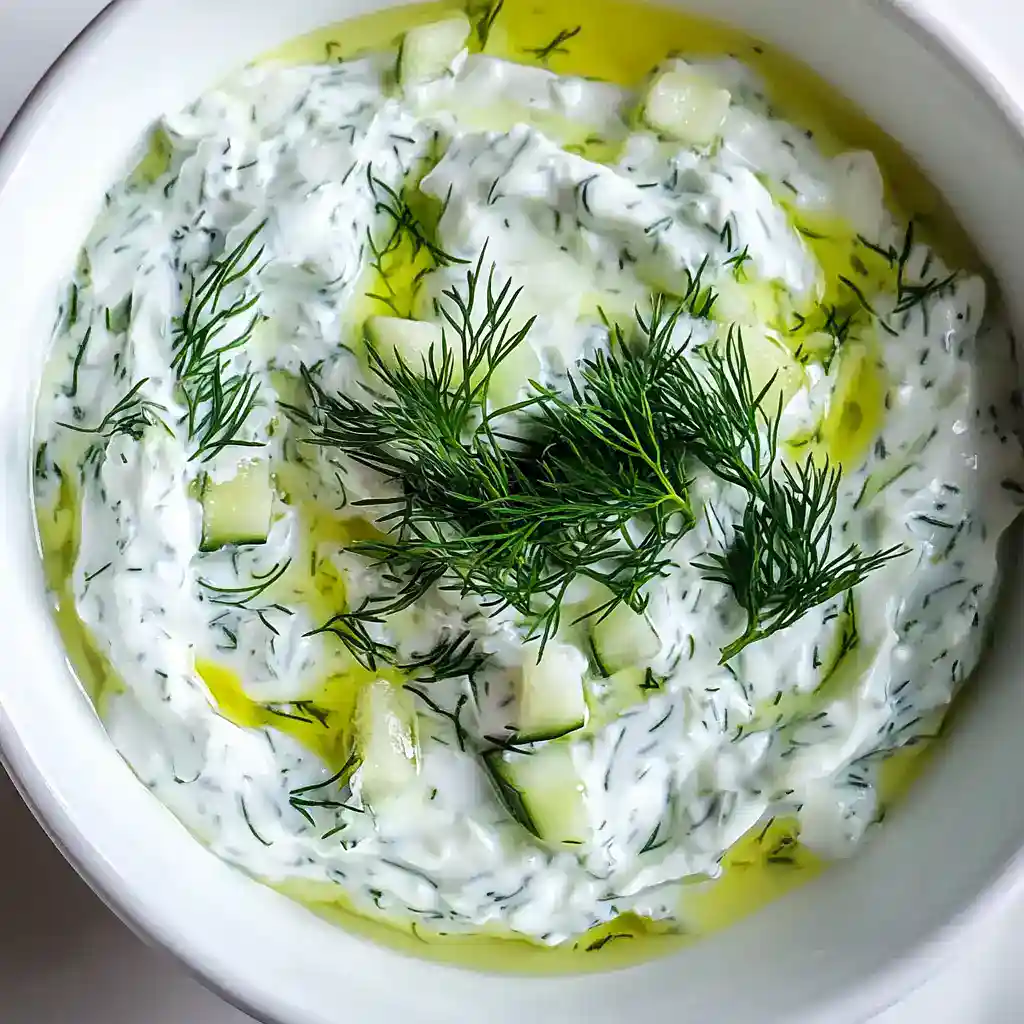
Ingredients
- 1 cup Greek yogurt (full-fat or 2% works best—not fat-free!)
- 1/2 cucumber, grated and excess water squeezed out (this step is crucial!)
- 2 cloves garlic, minced (fresh only!)
- 1 tablespoon fresh dill, chopped (dried won’t work here)
- 1 tablespoon fresh parsley, chopped
- 1 tablespoon lemon juice (from an actual lemon, not a bottle)
- Salt and pepper to taste
- Olive oil for drizzling (good quality makes it special)
Instructions
- Grate your cucumber using the large holes on a box grater. Place the grated cucumber in a clean kitchen towel or several layers of cheesecloth and squeeze out as much water as you possibly can. Really get aggressive with it—more water will come out than you think.
- In a bowl, combine the thick Greek yogurt, squeezed-dry cucumber, minced garlic, chopped fresh dill, chopped fresh parsley, and lemon juice.
- Mix everything together until all the ingredients are fully incorporated and evenly distributed throughout.
- Season with salt and pepper to taste. Start with 1/4 teaspoon salt and adjust from there. Taste it with a piece of pita or cucumber to see how it’ll actually work as a dip.
- Transfer to a serving bowl and drizzle with a good swirl of olive oil on top. This adds richness and looks beautiful.
- Cover and refrigerate for at least 30 minutes to allow the flavors to meld together. It’s even better if you can make it a few hours ahead or the night before.
- Serve chilled with pita bread, vegetables, or as a sauce for gyros, grilled meats, and Mediterranean dishes.
Nutrition Information (Per 3 tablespoon serving):
- Calories: 35
- Carbohydrates: 3g
- Protein: 3g
- Fat: 2g
- Fiber: 0g
- Sodium: 20mg (varies with salt added)
- Calcium: 45mg (3% DV)
This is basically a vegetable and yogurt condiment, so pile it on without guilt. It’s got protein and probiotics from the yogurt too.
Notes:
- Squeeze that cucumber hard! This is the most important step for thick tzatziki.
- Use thick Greek yogurt, not regular yogurt or low-fat Greek yogurt.
- Fresh herbs are essential—dried won’t give you the right flavor.
- Let it chill for at least 30 minutes so the flavors meld.
- Taste before serving and adjust lemon, salt, or garlic as needed.
Storage Tips:
Store in an airtight container in the fridge for up to 4 days. Give it a stir before serving as some liquid may separate out—this is normal. Don’t freeze it—the texture gets weird. If it seems too thick after chilling, stir in a teaspoon of water or lemon juice to loosen it up.
Serving Suggestions:
- With pita bread or pita chips for the classic dipping experience
- As a sauce for gyros or souvlaki for authentic Greek flavor
- With grilled chicken, lamb, or fish as a cooling accompaniment
- As a veggie dip with carrots, cucumbers, bell peppers, and cherry tomatoes
Mix It Up (Recipe Variations):
Mint Tzatziki: Replace half the dill with fresh mint for a refreshing twist that’s perfect with lamb.
Spicy Tzatziki: Add a pinch of cayenne pepper or finely diced jalapeño for heat.
Extra Herby Version: Add fresh chives, oregano, or extra dill for more herbaceous flavor.
Avocado Tzatziki: Mash in half a ripe avocado for creamy richness and gorgeous green color.
What Makes This Recipe Special:
Tzatziki represents the simplicity and elegance of Greek cooking—a handful of fresh ingredients combined to create something that’s greater than the sum of its parts. The technique of straining both the yogurt (which creates Greek yogurt) and removing water from the cucumber ensures a thick, creamy consistency that can be used as both a dip and a sauce. The combination of cool yogurt with fresh cucumber creates a refreshing element that perfectly balances rich grilled meats or acts as a cooling counterpoint to spicy dishes. Using fresh herbs rather than dried is essential because they provide bright, green flavor and color that defines authentic tzatziki. This versatile sauce is proof that some of the best recipes require no cooking at all—just quality ingredients and proper technique.
