
Ever wonder why some vegetable stir-fries turn out soggy and bland while others stay crisp and flavorful? I used to think making restaurant-quality veggie stir-fries required a wok and professional heat until I discovered this German artichoke stir-fry recipe. Now my family requests this at least once a week, and honestly, I’ve stopped apologizing for the unusual name because this fusion of European herbs and Asian technique just works (the sweet-savory sauce makes even artichoke skeptics come back for seconds).
Here’s the Thing About This Recipe
The secret to amazing artichoke stir-fry isn’t complicated—it’s about getting your pan hot enough and not overcrowding it. I learned the hard way that adding too many vegetables at once steams them instead of getting that nice caramelization. This German-Asian fusion works because the thyme adds earthy European flavor while the soy-honey sauce brings that sweet-savory balance that makes stir-fries so addictive. It’s honestly that simple. One pan, high heat, and you’ve got dinner on the table in 15 minutes flat.
What You’ll Need (And My Shopping Tips)
Good artichoke hearts are worth seeking out—I prefer the marinated kind from the deli section, but canned or jarred in water work fine too. Don’t cheap out on those sad, mushy artichoke hearts that have been sitting on the shelf forever; they fall apart when you stir-fry them. I learned this after ending up with artichoke mush instead of nice chunks (happens more than I’d like to admit). Make sure to drain them really well and pat dry before cooking.
The bell peppers add sweetness and color—using both red and yellow makes this look restaurant-pretty. Artichokes have a unique, slightly nutty flavor that pairs beautifully with the sweet peppers and savory sauce. Fresh bell peppers should be firm with glossy skin—skip any that feel soft or wrinkled.
Soy sauce brings that umami depth, while honey adds sweetness that balances everything out. The combination might seem weird for a “German” dish, but it creates this amazing glaze. Thyme is the German element here—it’s commonly used in German cooking and adds an earthy, slightly minty note that makes this different from typical Asian stir-fries.
Fresh parsley for garnish isn’t optional—it adds brightness and makes the whole dish look intentional instead of thrown together. Dried parsley just sits there looking sad, so skip it if you can’t find fresh.
Here’s How We Do This
Start by heating your olive oil in a large skillet over medium heat. Here’s where I used to mess up: I’d add everything at once. Don’t be me. Add your sliced bell peppers, onion, and garlic first. Let them cook for 5-7 minutes, stirring occasionally, until they’re tender and starting to get some color. You want that slightly charred edge that adds flavor.
Once the peppers and onions are tender, add your drained artichoke hearts to the skillet. Cook for another 3-4 minutes, stirring occasionally. The artichokes should warm through and maybe get a little golden on the edges. Be gentle—you want chunks, not mush.
While that’s happening, whisk together your soy sauce, honey, dried thyme, salt, and pepper in a small bowl. I learned this trick from years of stir-frying: have your sauce ready before you need it because things move fast once you start cooking.
Pour that sauce over everything in the skillet and stir well to coat all the vegetables. Let it cook for 2-3 minutes while stirring. The sauce should reduce slightly and get glossy, coating everything in that sweet-savory goodness.
Pull it off the heat and scatter fresh parsley on top. Serve this immediately as a side dish, or pile it over rice or quinoa for a complete meal, similar to how you’d serve vegetable stir-fry.
Trust me on this one—this is one of those dishes that tastes way more complicated than the 15 minutes it takes to make.
If This Happens, Don’t Panic
Vegetables releasing too much water? You probably didn’t drain the artichokes well enough or your heat was too low. Crank up the heat slightly and let the liquid evaporate. If your artichoke stir-fry is swimming in liquid, just cook it longer uncovered until it reduces.
Artichokes falling apart? You stirred too vigorously or they were too soft to begin with. Be gentle when mixing, and choose firmer artichoke hearts next time. In reality, I’ve learned that different brands have different textures, so experiment to find your favorite.
Sauce not thickening? The honey might not have reduced enough, or you had too much liquid from the vegetables. Just let it simmer for a few more minutes uncovered. Every stove cooks differently, so adjust timing as needed.
Everything tasting bland? You needed more salt or the soy sauce got diluted. Add more soy sauce or salt gradually, tasting as you go. The artichokes can handle bold flavors, so don’t be shy with seasoning.
When I’m Feeling Creative
Lemon Artichoke Stir-Fry: Add lemon zest and a squeeze of fresh lemon juice at the end for bright, citrusy flavor. Around spring, I’ll make this version when I want something that feels lighter.
Spicy German Stir-Fry: Add red pepper flakes or a diced jalapeño with the vegetables for heat. My husband loves this version with extra chili oil drizzled on top.
Protein-Packed Version: Toss in some cooked chickpeas or white beans during the last few minutes for a heartier main dish with extra protein.
Mushroom Artichoke Stir-Fry: Add sliced mushrooms along with the peppers for extra earthiness and meaty texture that makes this even more substantial.
What Makes This Recipe Special
This German artichoke stir-fry represents an interesting fusion of culinary traditions—combining the earthy thyme commonly used in German cooking with the quick stir-fry technique and sweet-savory sauce profile from Asian cuisine. What sets this dish apart is how artichokes, often relegated to dips and salads, become the star of a quick weeknight dinner. I discovered through trial and error that the key is treating artichokes gently while getting everything else properly caramelized—they’re already tender from canning, so they just need to warm through and pick up the sauce flavors. This represents modern home cooking where we borrow techniques and flavors from different traditions to create something quick, delicious, and uniquely satisfying.
Things People Ask Me About This Recipe
Can I use fresh artichokes instead of canned?
You can, but it’s a lot of work. You’d need to trim, cook, and quarter fresh artichokes before stir-frying, which takes 30+ minutes. Canned or jarred artichoke hearts are already cooked and ready to go, making this a true 15-minute meal.
Is this German artichoke stir-fry actually German?
It’s a fusion dish—the thyme is typical of German cooking, but the stir-fry technique and soy-honey sauce are Asian-inspired. It’s more about creative flavor combinations than authentic cuisine. Sometimes the best dishes come from mixing traditions.
Can I make this ahead of time?
You can prep all the vegetables ahead and store them separately in the fridge. The actual stir-frying should be done right before serving though—reheated stir-fries never have the same crisp-tender texture. This is best made fresh.
What should I serve with this artichoke stir-fry?
It’s great as a side dish with grilled chicken or fish. For a vegetarian main, serve it over rice, quinoa, or noodles. A simple green salad rounds out the meal nicely. I sometimes stuff it into pita pockets for lunch.
Can I freeze leftover artichoke stir-fry?
You can freeze it for up to 2 months, but the texture of the vegetables changes—they get softer. It’s better fresh, but frozen leftovers work okay stirred into fried rice or pasta. Reheat gently to avoid mushiness.
Why is my stir-fry soggy instead of crispy?
Your pan probably wasn’t hot enough, or you overcrowded it with vegetables. High heat and giving vegetables space to breathe is key. Cook in batches if needed, and make sure everything is well-drained before adding to the pan.
One Last Thing
I couldn’t resist sharing this German artichoke stir-fry because it’s honestly saved my weeknight dinner routine more times than I can count. The best quick meals are when something simple and healthy tastes like you put in way more effort—and this recipe delivers that perfect balance every single time.
Print
German Artichoke Stir-Fry
Description
This quick fusion stir-fry combines tender artichoke hearts with colorful bell peppers in a sweet-savory sauce. Perfect for busy weeknights or as a unique side dish, this artichoke stir-fry comes together in just 15 minutes.
Prep Time: 5 minutes | Cook Time: 10 minutes | Total Time: 15 minutes | Servings: 4 servings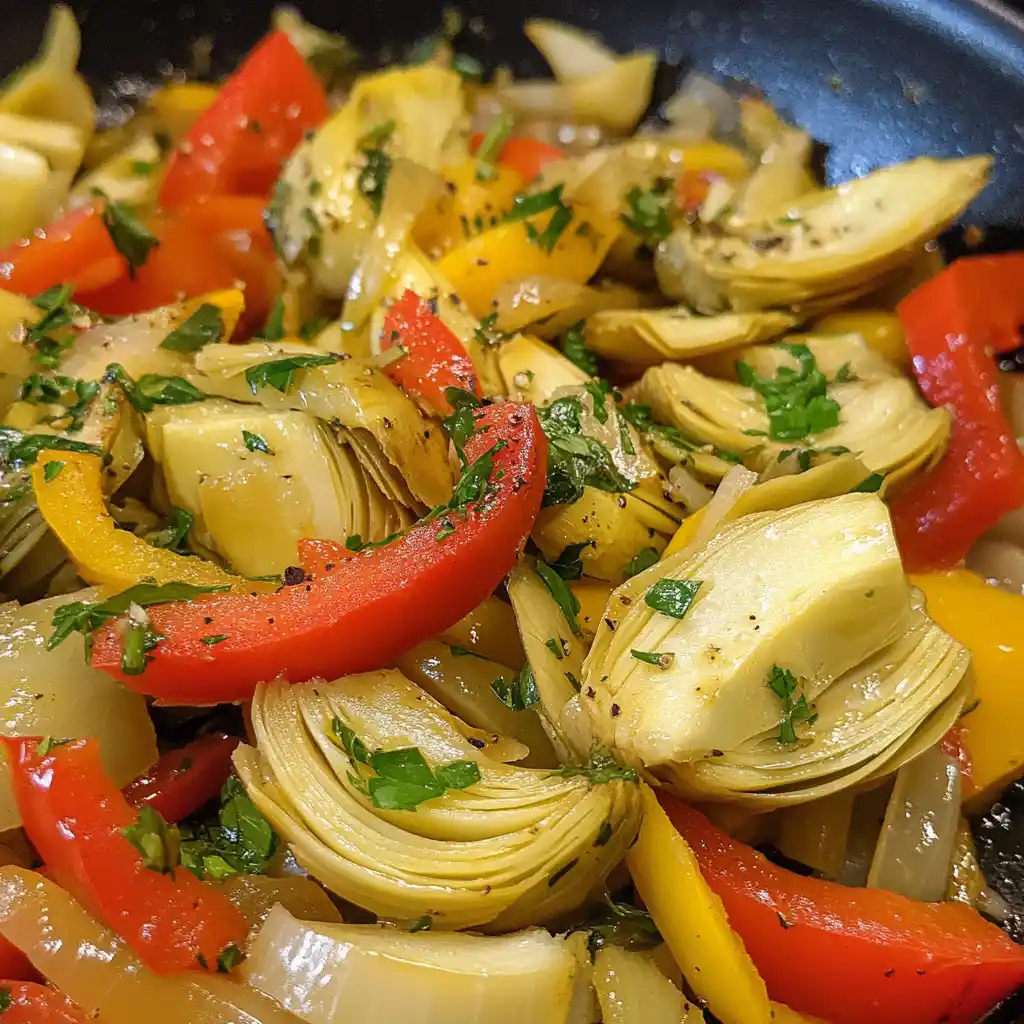
Ingredients
- 8 oz artichoke hearts, drained and quartered (canned or jarred, patted dry)
- 1 red bell pepper, sliced (about 1 cup)
- 1 yellow bell pepper, sliced (about 1 cup, adds nice color)
- 1 small onion, thinly sliced (yellow or white onion)
- 2 cloves garlic, minced (about 1 tsp, fresh only)
- 2 tbsp olive oil (for stir-frying)
- 2 tbsp soy sauce (low-sodium gives you better control)
- 1 tbsp honey (mild variety works best)
- 1/2 tsp dried thyme (this is the German element)
- Salt and pepper, to taste (start with 1/4 tsp each)
- Fresh parsley, for garnish (a handful, chopped)
Instructions
- Heat olive oil in a large skillet over medium heat. Make sure the pan is hot before adding vegetables.
- Add your sliced bell peppers, onion, and minced garlic. Cook for 5-7 minutes, stirring occasionally, until the vegetables are tender and starting to get some nice color on the edges.
- Add the drained and quartered artichoke hearts to the skillet. Cook for another 3-4 minutes, stirring occasionally but gently. You want them warmed through and maybe slightly golden.
- While the artichokes cook, whisk together the soy sauce, honey, dried thyme, salt, and pepper in a small bowl until the honey dissolves.
- Pour the sauce over all the vegetables in the skillet and stir well to coat everything evenly. Cook for 2-3 minutes, stirring frequently, until the sauce reduces slightly and gets glossy.
- Remove from heat and taste. Adjust seasoning if needed—you might want more salt or soy sauce depending on your preference.
- Scatter fresh chopped parsley on top and serve immediately. Great as a side dish or pile it over rice for a complete meal.
Nutrition Information (Per Serving):
- Calories: 135
- Carbohydrates: 18g
- Protein: 3g
- Fat: 7g
- Fiber: 5g
- Sodium: 420mg
- Vitamin C: 120% DV
- Vitamin A: 35% DV
- Potassium: 12% DV
Artichokes and bell peppers provide fiber and vitamins while being naturally low in calories.
Notes:
- Drain and pat dry the artichoke hearts really well to prevent excess liquid in the pan.
- Don’t overcrowd the pan—if your skillet is small, cook in batches for best results.
- High heat is important for stir-frying, but watch carefully so nothing burns.
- Be gentle when stirring the artichokes so they don’t fall apart.
- Have your sauce whisked together before you start cooking—things move fast.
Storage Tips:
Store leftovers in an airtight container in the fridge for up to 3 days. Reheat gently in a skillet over medium heat or in the microwave. Add a splash of water if it seems dry. This doesn’t freeze particularly well—the vegetables get mushy when thawed. Best enjoyed fresh or within a day or two.
Serving Suggestions:
- Over Rice: Serve over white or brown rice for a complete vegetarian main dish
- Side Dish: Pair with grilled chicken, fish, or steak as a colorful vegetable side
- In Pita: Stuff into whole wheat pitas with hummus for a Mediterranean-inspired lunch
- With Pasta: Toss with cooked pasta and extra Parmesan for a quick dinner
Mix It Up (Recipe Variations):
Lemon Artichoke Stir-Fry: Add 1 tsp lemon zest and squeeze of fresh lemon juice at the end for bright, citrusy flavor perfect for spring.
Spicy German Stir-Fry: Add 1/4 tsp red pepper flakes or one diced jalapeño with the vegetables for heat that adds excitement.
Protein-Packed Version: Toss in one 15-oz can drained chickpeas or white beans during the last 2 minutes for heartier main dish with extra protein.
Mushroom Artichoke Stir-Fry: Add 8 oz sliced mushrooms along with the peppers for extra earthiness and meaty texture.
What Makes This Recipe Special:
This German artichoke stir-fry represents creative fusion cooking—combining earthy European thyme with quick Asian stir-fry technique and sweet-savory sauce. Artichokes move from supporting player to star ingredient, proving that canned vegetables can shine in weeknight dinners. The result is a quick, flavorful dish that borrows the best from different culinary traditions.
