
Ever wonder why some pasta bakes taste like boring cafeteria food while others are so irresistible you can’t stop going back for more? I used to think pasta bakes were just lazy weeknight dinners until I discovered this foolproof Greek ramps pasta bake recipe. Now my family requests this every spring when ramps are in season, and my dinner guests always ask what that incredible garlicky flavor is (if only they knew I used to be intimidated by ramps before learning how simple they are to cook with).
Here’s the Thing About This Recipe
What makes this Greek ramps pasta bake work is the genius combination of wild ramps—those fleeting spring onions with intense garlic-onion flavor—with salty feta, briny olives, and sweet cherry tomatoes that create layers of Mediterranean flavor. The secret to authentic pasta bake success isn’t complicated sauces or hours of work—it’s all about building flavor with quality ingredients and letting the oven do the work of melding everything together. I learned the hard way that overcooking ramps turns them bitter and limp, but sautéing them just until fragrant? Here’s what I’ve learned: they infuse the entire dish with that wild, pungent flavor that makes this taste special. It’s honestly that simple, and no fancy tricks needed to make this taste like you imported it from a Greek island.
What You’ll Need (And My Shopping Tips)
Good fresh ramps are worth hunting down at farmer’s markets or specialty stores during their brief spring season (usually April through early June). Don’t cheap out on sad, wilted ramps; look for ones with vibrant green leaves and firm white bulbs. I always grab an extra bunch because these Greek ramps pasta bake portions disappear fast, and ramps have such a short season that you want to use them while you can (happens more than I’d like to admit that I miss ramp season entirely and have to wait a whole year).
For the pasta, penne works perfectly because its tubes catch all the delicious bits of feta and olives. Cherry tomatoes should be ripe and smell sweet—the Kalamata olives add essential briny, meaty flavor that’s non-negotiable for authentic Greek vibes. I learned this after using canned black olives three times and wondering why my dish tasted flat.
Good quality feta cheese makes all the difference—look for blocks of feta packed in brine, not the pre-crumbled stuff that’s often dry and flavorless. Greek or Bulgarian feta are ideal. Fresh Parmesan that you grate yourself is worth the extra effort over the green can. The dried herbs—oregano and thyme—are classic Greek flavors, and those red pepper flakes add just enough heat to wake everything up without making it spicy.
Let’s Make This Together
Start by preheating your oven to 375°F and generously greasing a 9×13 inch baking dish with olive oil. Bring a large pot of salted water to a boil and cook your penne until al dente—this is crucial because it’ll cook more in the oven. Here’s where I used to mess up: cooking the pasta until fully done meant it turned mushy after baking. Drain the pasta and set it aside.
While the pasta cooks, clean your ramps thoroughly—they grow in dirt and can be gritty. Chop both the white bulbs and green leaves; nothing goes to waste here. Heat that olive oil in a large skillet over medium heat, then add the chopped ramps and minced garlic. Sauté for just 2-3 minutes until fragrant and the leaves start to wilt. Don’t be me—I used to overcook ramps until they turned bitter, but quick cooking keeps them vibrant.
Add your halved cherry tomatoes and Kalamata olives to the skillet and cook for another 2-3 minutes until the tomatoes just start to soften. Now for the fun part: add your drained pasta to the skillet along with the crumbled feta, grated Parmesan, salt, pepper, oregano, thyme, and red pepper flakes. Toss everything together until well combined—the residual heat will start melting the cheeses.
Transfer this gorgeous mixture to your prepared baking dish, spreading it out evenly. Here’s my secret: cover the dish tightly with foil for the first part of baking so the pasta stays moist, then uncover for browning. Around here, we’ve figured out that this two-stage baking creates the best texture. I learned this trick from my neighbor who studied cooking in Athens.
Bake covered for 20 minutes, then remove the foil and bake another 10 minutes until the top is golden and bubbly with crispy edges. Let it cool for 5-10 minutes before serving so it sets up properly and doesn’t fall apart. If you’re making this as part of a Mediterranean feast, check out this Greek Lemon Potatoes that pairs beautifully.
If This Happens, Don’t Panic
Pasta turned out dry and hard? You probably cooked it too long before baking or didn’t use enough olive oil. In reality, I’ve learned to cook pasta 2 minutes less than package directions and add an extra drizzle of olive oil when mixing everything. If this happens (and it will if you’re not watching), just add a splash of pasta water or broth before baking.
Ramps taste bitter instead of pleasantly pungent? This is totally fixable for next time—you cooked them too long or over too-high heat. I always use medium heat now and just sauté until fragrant, not until browned. Ramps are delicate and need gentle cooking.
Top isn’t browning nicely? Don’t panic, just crank the oven to 400°F for the last 5 minutes or run it under the broiler for 1-2 minutes, watching closely. Every oven runs differently, so trust your eyes. If your Greek ramps pasta bake looks pale, it just needs a bit more heat at the end.
Ways to Mix It Up
When I’m feeling fancy, I’ll make Lemon Ramps Pasta Bake by adding the zest of one lemon and a squeeze of juice before baking for bright, citrusy notes that are incredible. Around special occasions, I’ll switch it up with Spinach Ramps Version by adding 2 cups of fresh spinach with the tomatoes for extra greens and nutrition.
For a Protein-Packed Bake, add 2 cups of shredded rotisserie chicken or cooked chickpeas to make this a complete one-dish meal. If you want a Creamy Greek Pasta, stir in 1/2 cup of Greek yogurt or heavy cream before baking for richness that’s absolutely luxurious.
What Makes This Recipe Special
This Greek ramps pasta bake works because it celebrates the intense, wild flavor of ramps—those prized spring alliums that foragers wait all year for—while balancing them with classic Mediterranean ingredients that complement without overwhelming. The technique of briefly sautéing aromatics before baking is borrowed from Greek cooking traditions, where building layers of flavor creates depth. What sets this apart from other pasta bakes is those ramps—they bring a complex garlic-onion flavor that you simply can’t replicate with regular ingredients. According to ramp traditions, these wild leeks have been foraged for centuries in North America and are celebrated for their brief season and distinctive flavor that signals spring’s arrival.
Things People Ask Me About This Recipe
Can I make this Greek ramps pasta bake ahead of time?
Absolutely! Assemble the entire dish up to 24 hours ahead, cover tightly, and refrigerate. When ready to bake, let it sit at room temperature for 20 minutes, then bake as directed, adding 5-10 minutes to the covered baking time since it’s cold.
What if I can’t find ramps for this recipe?
Ramps have a short season, so if you miss it, substitute with a combination of scallions and garlic—use 1 bunch of scallions plus 4 cloves of garlic for similar flavor. It won’t be exactly the same, but it’ll still be delicious.
Can I freeze this pasta bake?
Yes! Assemble the dish but don’t bake it, then wrap tightly and freeze for up to 3 months. Bake from frozen, covered, at 375°F for 60 minutes, then uncovered for 15 minutes until hot and bubbly throughout.
Is this Greek ramps pasta bake beginner-friendly?
Definitely! If you can boil pasta and sauté vegetables, you’ve got this. The oven does most of the work, and even if your timing isn’t perfect, it’ll still taste great.
How do I clean ramps properly?
Ramps grow in dirt, so trim the roots, then soak them in cold water for 10 minutes. Swish them around, lift them out, and rinse under running water. Pat dry before chopping—this removes all the grit.
Can I use a different pasta shape?
Absolutely! Rigatoni, ziti, fusilli, or shells all work beautifully. Just choose a shape with nooks and crannies that can catch all the delicious cheese and olive bits.
Before You Head to the Kitchen
I couldn’t resist sharing this Greek ramps pasta bake recipe because it’s become our celebration of spring every single year when ramps finally appear at the market. The best ramp season dinners are when everyone’s gathered around this bubbling, golden pasta bake, and you’re feeling proud that you captured those fleeting wild flavors. Trust me on this one—master this savory, comforting Greek ramps pasta bake, and you’ll have a dish that makes the most of spring’s most prized ingredient.
Print
Greek Ramps Pasta Bake
Description
Wild ramps with tangy feta, briny olives, and sweet tomatoes create this irresistible Greek ramps pasta bake that celebrates spring’s most sought-after ingredient.
Prep Time: 20 minutes | Cook Time: 30 minutes | Total Time: 50 minutes | Servings: 6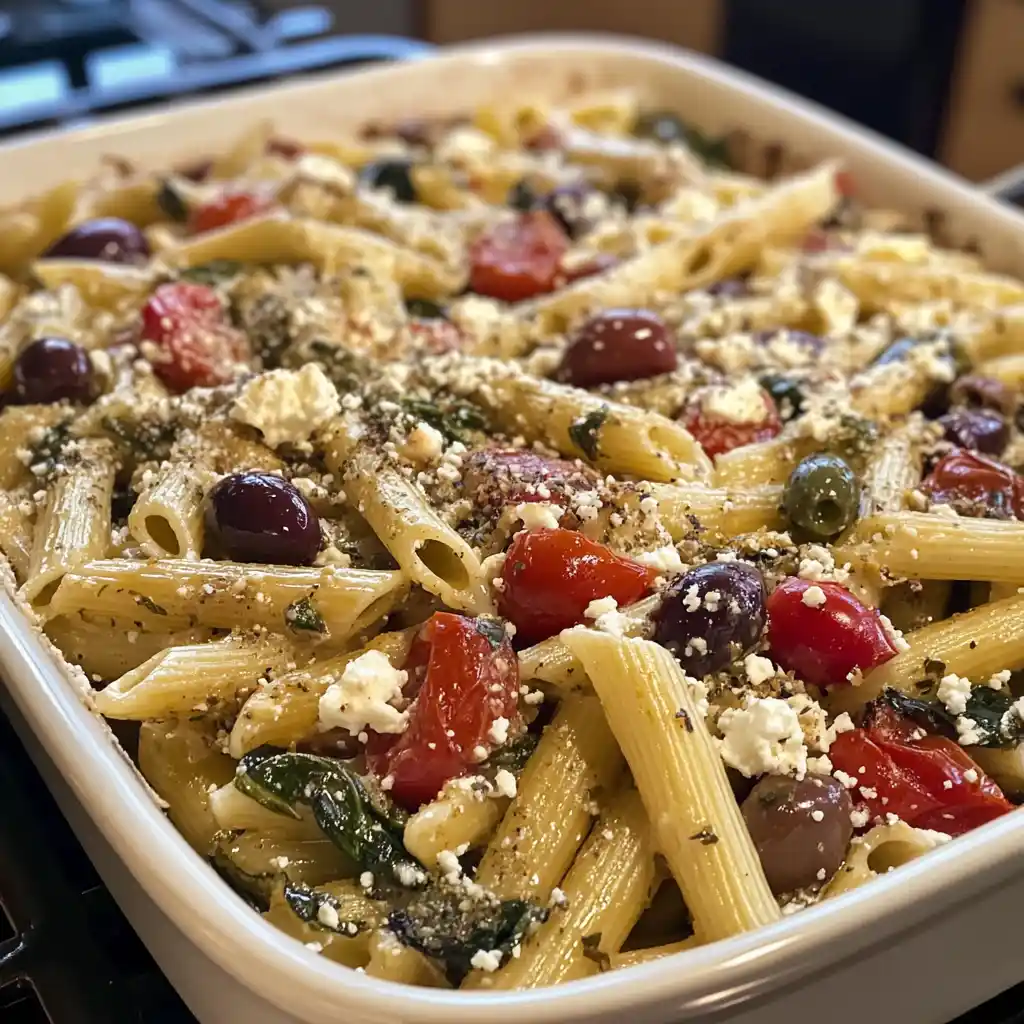
Ingredients
- 12 oz penne pasta (or any tube-shaped pasta)
- 1 bunch ramps, chopped (about 1 cup, both white bulbs and green leaves)
- 2 tbsp olive oil (plus extra for greasing the dish)
- 2 cloves garlic, minced (fresh is essential)
- 1 cup cherry tomatoes, halved (look for ripe, sweet ones)
- 1/2 cup Kalamata olives, pitted and halved (don’t substitute canned black olives)
- 1/2 cup crumbled feta cheese (get the good stuff in brine, not pre-crumbled)
- 1/4 cup grated Parmesan cheese (freshly grated, not the green can)
- Salt and pepper to taste (start with 1/2 tsp salt, 1/4 tsp pepper)
- 1/2 tsp dried oregano (or 1 tablespoon fresh)
- 1/2 tsp dried thyme (or 1 tablespoon fresh)
- 1/2 tsp red pepper flakes (adjust to your heat preference)
Instructions
- Preheat your oven to 375°F and generously grease a 9×13 inch baking dish with olive oil. Set this aside while you prep everything else.
- Bring a large pot of salted water to a rolling boil. Cook the penne pasta until al dente—about 2 minutes less than package directions since it’ll cook more in the oven. Drain well and set aside.
- While pasta cooks, clean those ramps thoroughly—they grow in dirt and can be gritty. Soak, swish, and rinse well. Chop both the white bulbs and green leaves; use everything.
- In a large skillet, heat olive oil over medium heat. Add your chopped ramps and minced garlic, and sauté for just 2-3 minutes until fragrant and the leaves start to wilt. Don’t overcook or they’ll turn bitter.
- Add the halved cherry tomatoes and Kalamata olives to the skillet. Cook for another 2-3 minutes until the tomatoes just start to soften and release some juice.
- Add your drained pasta to the skillet along with the crumbled feta, grated Parmesan, salt, pepper, oregano, thyme, and red pepper flakes. Toss everything together until well combined and the cheeses start to melt.
- Transfer this gorgeous mixture to your prepared baking dish, spreading it out evenly so everything bakes uniformly. Press down gently so it’s compact but not squished.
- Cover the baking dish tightly with aluminum foil and bake for 20 minutes. This keeps the pasta moist while everything melds together beautifully.
- Remove the foil and bake for an additional 10 minutes until the top is golden brown and bubbly with some crispy edges forming—this is the best part.
- Remove from the oven and let it cool for 5-10 minutes before serving so it sets up and doesn’t fall apart when you scoop it. Serve hot and enjoy those incredible wild spring flavors!
Nutrition Information (Per Serving):
- Calories: 315
- Carbohydrates: 42g
- Protein: 12g
- Fat: 11g
- Fiber: 3g
- Sodium: 520mg
- Calcium: 15% DV
- Iron: 12% DV
- Vitamin A: 25% DV
- Vitamin C: 15% DV
This Greek ramps pasta bake provides a balanced meal with complex carbohydrates, protein from the cheeses, and beneficial nutrients from those wild ramps and vegetables.
Notes:
- Seriously, don’t overcook the pasta before baking—al dente is crucial or it’ll turn mushy
- Clean ramps thoroughly; they grow in dirt and can be gritty if not properly washed
- Every oven runs differently, so watch the last 10 minutes of uncovered baking to prevent burning
- The dish sets up as it cools, making it easier to serve, so don’t skip that resting time
Storage Tips:
Keep leftover pasta bake in an airtight container in the fridge for up to 4 days. Reheat individual portions in the microwave or reheat the whole dish covered with foil in a 350°F oven for 20 minutes. This actually tastes great the next day after all the flavors have melded. Freeze unbaked for up to 3 months—bake from frozen at 375°F for 60 minutes covered, then 15 minutes uncovered.
Serving Suggestions:
- Complete Greek Meal: Serve with a simple Greek salad and crusty bread for an authentic Mediterranean feast
- Light Lunch: Pair with a crisp white wine and lemon-dressed arugula for an elegant springtime lunch
- Potluck Star: This travels well and stays warm, making it perfect for bringing to gatherings
- Weeknight Dinner: Serve as a complete one-dish meal that needs nothing more than maybe some garlic bread
Mix It Up (Recipe Variations):
Lemon Ramps Pasta Bake: Add the zest of one lemon and a squeeze of juice before baking for bright citrusy notes that make this taste even more spring-like and fresh.
Spinach Ramps Version: Add 2 cups fresh spinach with the tomatoes for extra greens and nutrition without changing the flavor profile significantly.
Protein-Packed Bake: Add 2 cups shredded rotisserie chicken or cooked chickpeas to make this a heartier, complete one-dish meal that feeds more people.
Creamy Greek Pasta: Stir in 1/2 cup Greek yogurt or heavy cream before baking for richness that makes this feel extra indulgent and luxurious.
What Makes This Recipe Special:
This Greek ramps pasta bake celebrates the brief, magical window when wild ramps appear in spring markets and forests. These foraged alliums bring an intensity and complexity that you simply cannot replicate with cultivated ingredients—their wild, pungent garlic-onion flavor infuses every bite with the essence of spring. By pairing them with classic Greek ingredients like feta, Kalamata olives, and oregano, this recipe honors both the wild American ingredient and Mediterranean cooking traditions. The baking method allows all these powerful flavors to meld together while creating that irresistible golden, bubbly top that makes pasta bakes so comforting.
