
Ever wonder why some lentil dishes turn out mushy and bland while others have great texture and layers of flavor? I used to think making grilled lentils stir-fry was impossible because lentils would just fall apart until I discovered that using pre-cooked, well-drained lentils and high heat transforms everything. Now my family requests this colorful, protein-packed stir-fry for weeknight dinners, and I’m pretty sure my skeptical meat-eating friends don’t realize they’re eating legumes (if only they knew how many batches I made that turned into lentil mush before learning the crucial timing and heat control techniques).
Here’s the Thing About This Recipe
What makes this grilled lentils stir-fry work is using lentils that are cooked just until tender (not mushy), draining them extremely well, and adding them at the end so they heat through without breaking down. I learned the hard way that you can’t stir-fry raw lentils or add them too early in the cooking process—they need to be pre-cooked and treated gently to maintain their structure. This Asian-inspired vegetarian stir-fry brings together hearty lentils with colorful vegetables, aromatic ginger and garlic, and the umami punch of soy sauce and sesame oil. It’s honestly that simple: properly cooked lentils, high heat, quick cooking, and strategic timing for adding ingredients.
What You’ll Need (And My Shopping Tips)
Good lentils are worth choosing carefully—brown or green lentils hold their shape best for stir-frying, while red lentils turn to mush and won’t work here (I learned this after trying red lentils three times and ending up with lentil paste). You’ll need 8 ounces dried lentils, which yields about 2 cups cooked. Cook them until just tender with a slight bite, not soft and falling apart.
For the vegetables, grab one red bell pepper and one yellow bell pepper (the different colors make this visually stunning), a medium zucchini, and a medium onion. Look for firm, crisp vegetables with no soft spots. Don’t cheap out on limp, sad vegetables from the discount bin—fresh, firm vegetables maintain texture during stir-frying (happens more than I’d like to admit when I’m trying to save money).
For aromatics and seasoning, you’ll need fresh garlic and fresh ginger (the jarred stuff just doesn’t deliver the same aromatic punch), soy sauce (I use low-sodium to control salt levels), and sesame oil. The sesame oil is crucial for that distinctive Asian flavor—don’t skip it or substitute with regular oil.
Salt, pepper, and fresh cilantro for garnish round out the ingredients. If you’re curious about the nutritional benefits of lentils and why they’re considered a superfood, Wikipedia has fascinating information about their protein, fiber, iron, and folate content.
Let’s Make This Together
Start by cooking your lentils if you haven’t already. Rinse 8 ounces of dried brown or green lentils, then simmer them in about 3 cups of water for 20-25 minutes until just tender but still holding their shape—you want them cooked through but with a slight bite, not mushy. Here’s my secret: I pull them 2-3 minutes before they seem fully done because they’ll continue cooking slightly as they cool, and we’ll heat them again in the stir-fry. Drain them extremely well in a fine-mesh strainer and spread them on a plate to cool and dry out a bit. Excess moisture is the enemy of good stir-frying.
While your lentils cool, prep your vegetables. Slice the bell peppers into thin strips (about 1/4 inch wide), slice the zucchini into half-moons about 1/4 inch thick, and slice the onion into thin strips. Mince your garlic and ginger—I use about 2 cloves of garlic and a piece of ginger roughly the size of your thumb. Having everything prepped and ready before you start cooking is crucial for successful stir-frying. I learned this from trial and error—trying to chop while cooking means burned garlic and unevenly cooked vegetables.
Heat a large skillet or wok over medium-high heat and add 1 tablespoon of sesame oil. Once the oil is shimmering and hot (but not smoking), add the minced garlic and ginger. Sauté for about 30 seconds, stirring constantly, until incredibly fragrant but not brown. Here’s where I used to mess up: I’d let the garlic burn by walking away for even 10 seconds. Stay with it and keep it moving.
Add the sliced onion and cook for about 2-3 minutes, stirring frequently, until it starts to turn translucent and soften slightly. The edges should just be starting to caramelize.
Toss in the sliced bell peppers and zucchini. Cook for 4-5 minutes, stirring frequently, until the vegetables are slightly tender but still have a pleasant crunch—this is stir-fry, not steamed vegetables, so you want them to retain texture. The bell peppers should have some char spots and the zucchini should be tender-crisp.
Now add your well-drained, cooled cooked lentils along with the soy sauce, the remaining tablespoon of sesame oil, salt (start with 1/2 teaspoon since soy sauce is salty), and pepper (about 1/4 teaspoon). Mix everything well to combine, making sure the lentils are coated with the sauce and distributed throughout the vegetables.
Cook for an additional 3-4 minutes, stirring gently but frequently, allowing the flavors to meld together and the lentils to heat through. The lentils should absorb the soy sauce and sesame oil while maintaining their shape. Trust me on this timing—any longer and the lentils start breaking down; any shorter and they won’t be hot enough or flavorful enough.
Taste and adjust seasoning—you’ll probably need more soy sauce or salt, and maybe a drizzle more sesame oil for richness. If you’re looking for another protein-packed stir-fry, try this Tofu and Vegetable Stir-Fry that uses similar high-heat techniques.
Remove from heat and garnish generously with fresh chopped cilantro (the fresh herb adds brightness that cuts through the savory richness). Serve immediately while everything is hot and the vegetables still have their crisp texture. This is delicious on its own or over rice, quinoa, or noodles.
When Things Go Sideways (And They Will)
Lentils turned to mush during stir-frying? You overcooked them initially or added them too early in the process. In reality, I’ve learned to cook lentils just until tender with a bite, drain them extremely well, and add them in the last 3-4 minutes only to heat through.
Vegetables are soggy instead of crisp-tender? Your heat was too low or your pan was overcrowded. Stir-frying requires high heat and room for vegetables to make contact with the hot pan. If this happens next time, use higher heat and cook in batches if your pan is small.
Tastes bland despite the soy sauce and sesame oil? You need more seasoning—add more soy sauce, a splash of rice vinegar for brightness, or even a pinch of sugar to balance the savory notes. Also, make sure you’re using toasted sesame oil (the dark stuff), not the light, flavorless kind.
Garlic and ginger burned and taste bitter? Your oil was too hot or you weren’t stirring constantly. Next time, add them to warm (not screaming hot) oil and keep them moving. If they burn, you really need to start over—there’s no fixing bitter burnt garlic.
Ways to Mix It Up
Spicy Szechuan Lentil Stir-Fry: When I want heat, I’ll add 1-2 teaspoons of chili garlic sauce or sriracha along with the soy sauce, and toss in some red pepper flakes. Around winter, this warming version becomes my go-to.
Teriyaki Lentil Stir-Fry: Use teriyaki sauce instead of plain soy sauce and add a tablespoon of honey or brown sugar for that sweet-savory glaze.
Thai-Inspired Lentil Stir-Fry: Add a tablespoon of lime juice, a splash of fish sauce (or more soy sauce to keep it vegan), and substitute Thai basil for cilantro.
Cashew Lentil Stir-Fry: Toss in 1/2 cup of roasted cashews with the lentils for extra crunch and richness—absolutely addictive.
What Makes This Recipe Special
This grilled lentils stir-fry represents the evolution of plant-based cooking from “healthy but boring” to genuinely exciting and crave-worthy. Lentils have been cultivated for over 13,000 years in the Middle East and have been a protein staple across cultures from Indian dal to French lentilles du Puy. What makes this recipe work is treating lentils not as a meat substitute but as an ingredient with its own merits—nutty, earthy, and satisfying when properly prepared. The challenge with stir-frying lentils is maintaining their structure while still achieving that characteristic stir-fry texture where everything is coated in sauce and slightly caramelized. The solution is pre-cooking the lentils to just-tender, draining them thoroughly to remove excess moisture, and adding them at the very end just to heat through and absorb flavors. The high-heat stir-fry technique (borrowed from Chinese wok cooking) creates those delicious charred spots on the vegetables while keeping them crisp-tender. The combination of sesame oil and soy sauce provides umami depth that makes this taste satisfying and complete despite being entirely plant-based. Fresh ginger and garlic add aromatic complexity that makes every bite interesting. The beauty of this dish is its versatility—it works as a complete meal on its own, over grains, or even as a taco filling. The history of lentils shows they’re one of humanity’s oldest cultivated crops, proving that plant-based protein isn’t a modern trend but a foundational food that has sustained civilizations.
Things People Ask Me About This Recipe
What type of lentils work best for this grilled lentils stir-fry?
Brown or green lentils hold their shape best for stir-frying. Red or yellow lentils turn to mush and won’t work here—save those for soups or dal. French green lentils (lentilles du Puy) are especially good if you can find them.
Can I use canned lentils instead of cooking from scratch?
Yes! Drain and rinse them very well, then pat them dry with paper towels to remove excess moisture. Canned lentils are already fully cooked, so add them in the last 2-3 minutes just to heat through.
Why is this called “grilled” lentils stir-fry?
The “grilled” likely refers to the charred, slightly caramelized flavor you get from high-heat stir-frying, which creates similar flavor to grilling. It’s a stir-fry technique, not actually grilled on a grill.
Can I make this ahead for meal prep?
You can! Make it up to 3 days ahead and store in the fridge. The vegetables will soften slightly as they sit, but it’s still delicious reheated. Add fresh cilantro right before serving rather than storing it garnished.
Is this recipe gluten-free?
It can be! Just use tamari or gluten-free soy sauce instead of regular soy sauce. Everything else is naturally gluten-free.
How do I prevent the lentils from getting mushy?
Cook them just until tender with a slight bite, drain extremely well, let them cool and dry out a bit, and add them only in the last 3-4 minutes of cooking. Gentle stirring (not aggressive mixing) also helps maintain their structure.
One Last Thing
I couldn’t resist sharing this grilled lentils stir-fry because it’s the recipe that taught me plant-based meals can be just as satisfying and exciting as meat-based ones when you use proper technique. The best stir-fry nights are when someone takes a bite, looks surprised, and says “wait, these are lentils?” You don’t need meat or complicated ingredients—just good legumes, high heat, proper timing, and the confidence to stir-fry vegetables until they’re perfectly crisp-tender with those delicious charred spots.
Print
Grilled Lentils stir-fry
Description
This vibrant grilled lentils stir-fry combines protein-packed lentils with colorful bell peppers, zucchini, and aromatic ginger and garlic in a savory soy-sesame sauce for a satisfying plant-based meal that proves vegetarian stir-fries can be just as exciting as meat-based versions.
Prep Time: 15 minutes (plus lentil cooking time if starting from dried) | Cook Time: 15 minutes | Total Time: 30 minutes | Servings: 4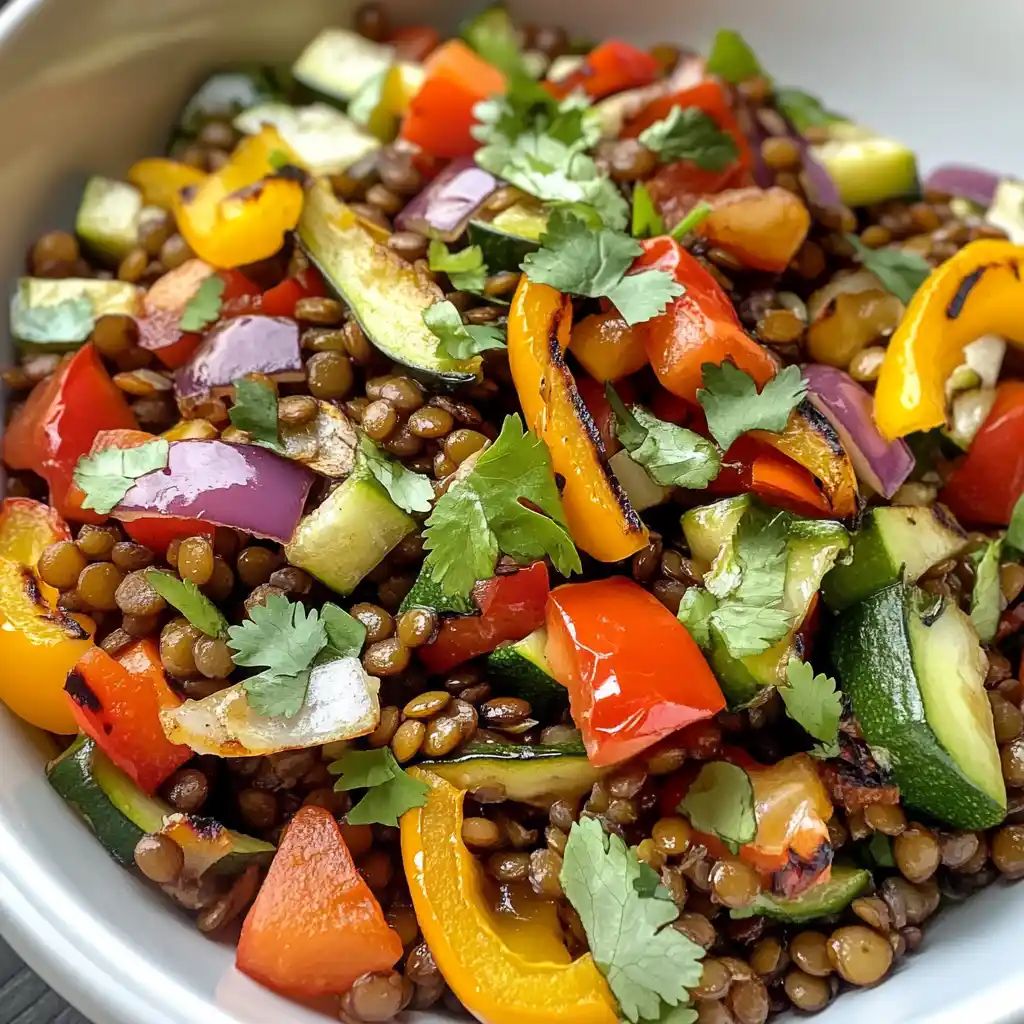
Ingredients
For the Stir-Fry:
- 8 oz dried brown or green lentils (yields about 2 cups cooked—cook until just tender, not mushy)
- 1 red bell pepper, sliced into thin strips
- 1 yellow bell pepper, sliced into thin strips (the colors make this visually stunning)
- 1 medium zucchini, sliced into 1/4-inch half-moons
- 1 medium onion, sliced into thin strips
- 2 cloves garlic, minced (fresh only—makes a huge difference)
- 2 tbsp soy sauce (low-sodium so you control the salt)
- 2 tbsp sesame oil, divided (use toasted sesame oil—the dark, aromatic kind)
- 1 tsp fresh ginger, minced (about a thumb-sized piece)
- Salt and pepper to taste (start with 1/2 tsp salt, 1/4 tsp pepper)
For Garnish:
- Fresh cilantro, chopped (essential for brightness)
Instructions
- If starting with dried lentils, rinse 8 oz brown or green lentils and simmer in about 3 cups water for 20-25 minutes until just tender but still holding their shape—you want them with a slight bite, not mushy. Drain extremely well in a fine-mesh strainer and spread on a plate to cool and dry out. Excess moisture is the enemy of stir-frying.
- While lentils cool, prep all your vegetables: slice bell peppers into thin strips, zucchini into 1/4-inch half-moons, onion into thin strips. Mince the garlic and ginger. Having everything ready before you start cooking is crucial for successful stir-frying.
- Heat a large skillet or wok over medium-high heat. Add 1 tablespoon sesame oil. Once shimmering and hot (but not smoking), add the minced garlic and ginger. Sauté for about 30 seconds, stirring constantly, until incredibly fragrant but not brown—don’t walk away or it’ll burn.
- Add the sliced onion and cook for 2-3 minutes, stirring frequently, until it starts to turn translucent and soften slightly with edges just beginning to caramelize.
- Toss in the sliced bell peppers and zucchini. Cook for 4-5 minutes, stirring frequently, until vegetables are slightly tender but still have a pleasant crunch—you want char spots and crisp-tender texture, not steamed vegetables.
- Add the well-drained, cooled cooked lentils along with the soy sauce, remaining tablespoon of sesame oil, salt, and pepper. Mix well to combine, making sure lentils are coated with sauce and distributed throughout the vegetables.
- Cook for an additional 3-4 minutes, stirring gently but frequently, allowing flavors to meld and lentils to heat through. The lentils should absorb the sauce while maintaining their shape—any longer and they start breaking down.
- Taste and adjust seasoning—you’ll probably need more soy sauce or salt, maybe more sesame oil for richness.
- Remove from heat and garnish generously with fresh chopped cilantro. Serve immediately while hot and vegetables still have crisp texture. Delicious on its own or over rice, quinoa, or noodles.
Nutrition Information (Per Serving):
- Calories: 285
- Carbohydrates: 42g
- Protein: 15g
- Fat: 8g
- Fiber: 16g
- Sodium: 520mg
- Iron: 40% DV
- Folate: 45% DV
- Potassium: 15% DV
This grilled lentils stir-fry provides exceptional plant-based protein and fiber from lentils, plus iron, folate, and vitamins from the colorful vegetables.
Notes:
- Use brown or green lentils only—red or yellow lentils turn to mush and won’t work for stir-frying.
- Cook lentils just until tender with a bite, drain extremely well, and let them cool before stir-frying.
- Have all ingredients prepped before you start cooking—stir-frying moves fast and you can’t stop to chop.
- High heat is crucial for stir-frying—you want char spots and crisp-tender vegetables, not steamed mush.
- Add lentils in the last 3-4 minutes only to heat through and absorb flavors without breaking down.
- Use toasted sesame oil (dark, aromatic) not light sesame oil (flavorless).
Storage Tips:
Store cooled stir-fry in an airtight container in the fridge for up to 4 days. The vegetables will soften slightly as they sit, losing some of their crisp texture, but the flavor remains excellent. Reheat gently on the stovetop over medium heat, stirring frequently, or microwave in 1-minute intervals. Add a splash of water or soy sauce if it seems dry. Don’t freeze this—lentils and vegetables get mushy and unpleasant when thawed. This makes great meal prep—portion into containers with rice for easy grab-and-go lunches all week.
Serving Suggestions:
- Bowl Style: Over jasmine or brown rice with sriracha and lime wedges
- Noodle Base: Toss with rice noodles or soba for a complete one-bowl meal
- Lettuce Wraps: Spoon into butter lettuce leaves for a low-carb, hand-held version
- Taco Filling: Use as filling for soft tacos with avocado and pickled vegetables
Mix It Up (Recipe Variations):
Spicy Szechuan Lentil Stir-Fry: Add 1-2 teaspoons chili garlic sauce or sriracha with the soy sauce, plus red pepper flakes for heat lovers.
Teriyaki Lentil Stir-Fry: Use teriyaki sauce instead of plain soy sauce and add 1 tablespoon honey or brown sugar for sweet-savory glaze.
Thai-Inspired Lentil Stir-Fry: Add 1 tablespoon lime juice, a splash of fish sauce (or more soy sauce for vegan), and substitute Thai basil for cilantro.
Cashew Lentil Stir-Fry: Toss in 1/2 cup roasted cashews with the lentils for extra crunch and richness—absolutely addictive.
What Makes This Recipe Special:
This grilled lentils stir-fry treats lentils as an ingredient with its own merits rather than a meat substitute, using high-heat stir-fry technique to create charred, flavorful vegetables while maintaining lentil structure. The solution to stir-frying lentils successfully is pre-cooking them to just-tender, draining thoroughly, and adding only at the end to heat through and absorb flavors without breaking down.
