
Ever wonder why homemade tzatziki from Mediterranean restaurants tastes so much more vibrant and fresh than the store-bought versions? I used to think making authentic herb tzatziki required some kind of Greek grandmother’s secret knowledge until I discovered this foolproof recipe. Now I make this creamy, herb-packed sauce at least once a week for everything from grilled meats to veggie platters, and honestly, my family has started eating vegetables they normally ignore just because they can dip them in this stuff (which feels like a parenting miracle considering the first time I tried, I forgot to squeeze the water from the cucumber and ended up with watery, sad yogurt soup instead of thick, luscious tzatziki).
Here’s the Thing About This Recipe
What makes authentic Greek tzatziki work so beautifully is the balance between thick, creamy yogurt, crisp cucumber that’s been properly drained, fresh garlic that’s sharp but not overwhelming, and those bright herbs that make everything taste alive. I learned the hard way that you can’t just stir together yogurt and cucumber and call it tzatziki—the cucumber releases tons of water that’ll turn your sauce into a puddle, and the wrong yogurt consistency ruins everything. This classic Mediterranean sauce uses English cucumber (also called hothouse cucumber) because it has fewer seeds and less water, plus a trio of fresh herbs that create complex, refreshing flavor. It’s honestly that simple once you understand the importance of removing excess moisture and letting flavors meld together, and no special equipment needed beyond a grater and bowl.
What You’ll Need (And My Shopping Tips)
Good Greek yogurt is essential here—I grab full-fat Greek yogurt because it’s thick and creamy, not watery. Don’t cheap out on low-fat or non-fat yogurt, and absolutely don’t use regular yogurt because it’s too thin and runny (happens more than I’d like to admit when I try to be health-conscious and wonder why my tzatziki has the consistency of soup). The yogurt should be thick enough that a spoon stands up in it. Fage or Chobani are reliable brands, but any quality full-fat Greek yogurt works.
English cucumbers are worth seeking out—they’re the long, thin cucumbers wrapped in plastic at the grocery store. They have fewer seeds, thinner skins, and less water than regular cucumbers. If you can only find regular cucumbers, you can use them, but you’ll need to peel and seed them, and squeeze out even more water. Fresh herbs are absolutely non-negotiable here—dried herbs taste like dust compared to fresh dill, mint, and parsley that smell incredible when you chop them.
Fresh garlic should be minced finely or pressed through a garlic press for even distribution. Lemon juice should be fresh-squeezed if possible because bottled tastes flat and artificial. Good olive oil for drizzling adds richness and authentic Greek flavor—I use extra virgin for the final drizzle. I always make a double batch because this disappears instantly, and it keeps in the fridge for several days. For more details on the history and variations of tzatziki, check out this guide to Greek sauces from Food Network.
Let’s Make This Together
Start by prepping that cucumber, which is absolutely crucial to getting this right. Grate the English cucumber using the large holes on a box grater directly into a clean kitchen towel or several layers of cheesecloth. Here’s where I used to mess up—I’d grate it into a bowl and try to pour off the liquid, which never worked. Instead, gather up that towel around the grated cucumber and squeeze hard over the sink, twisting and wringing it like you’re trying to wring out a wet towel. You’ll be shocked how much liquid comes out—keep squeezing until you can’t get any more water out.
In a mixing bowl, combine the thick Greek yogurt with your squeezed-dry cucumber. The cucumber should be as dry as possible—if it’s still releasing water, squeeze it again. Add the minced garlic, and here’s my secret: start with less garlic than you think you need because raw garlic gets stronger as it sits. You can always add more, but you can’t take it out once it’s in there.
Chop your fresh herbs—dill, mint, and parsley—removing any thick stems. I use kitchen scissors to snip herbs directly over the bowl because it’s faster and easier than a knife. Don’t be me—I used to roughly chop them, leaving big pieces that didn’t distribute well. Fine chopping releases more flavor and distributes better throughout the sauce.
Add the fresh lemon juice, salt, and pepper to the mixture. Stir everything together thoroughly until it’s well combined and uniform. Taste it and adjust seasoning—this is crucial because every batch needs slightly different amounts of salt, lemon, or garlic depending on the ingredients. It should taste bright, garlicky, herby, and well-seasoned, not bland or flat.
Cover the bowl tightly with plastic wrap and refrigerate for at least 1 hour, though 2-4 hours is even better. This chill time is absolutely essential—it allows the flavors to meld together and the garlic to mellow slightly. I learned this trick from Greek cooks who insist tzatziki made right before serving tastes harsh compared to properly rested tzatziki.
Right before serving, transfer to a serving bowl, drizzle with good olive oil, and garnish with extra fresh herbs if you want it to look fancy. Serve cold as a dip with pita bread and vegetables, as a sauce for grilled meats, or as a spread for sandwiches and wraps. For another Greek-inspired dish that pairs perfectly with tzatziki, try this Greek Chicken Souvlaki that’s made for this sauce.
If This Happens, Don’t Panic
Tzatziki came out watery and thin? You didn’t squeeze enough water from the cucumber, or you used regular yogurt instead of Greek. In reality, I’ve learned to squeeze that cucumber until my hands hurt, and always use full-fat Greek yogurt. This is totally fixable by straining the mixture through cheesecloth for 30 minutes to remove excess liquid.
Garlic tastes too strong and harsh? Don’t panic—you added too much or didn’t let it mellow in the fridge long enough. If this happens (and it will when you’re learning), add more yogurt to dilute the garlic, or let it sit longer in the fridge. Raw garlic mellows over time.
Tzatziki tastes bland and boring? You need more salt, lemon juice, or fresh herbs. Always taste and adjust before serving—this sauce should be vibrant and flavorful, not subtle. I’ve learned to be generous with the lemon and salt.
Herbs turned brown or black? Your herbs weren’t fresh enough, or you made it way too far in advance. Fresh herbs oxidize and darken over time. Make tzatziki no more than a day ahead for the prettiest color and freshest flavor.
When I’m Feeling Creative
Spicy Tzatziki: When I’m feeling bold, I add minced jalapeño or a pinch of cayenne pepper for heat. Around summer grilling season, this spicy version pairs perfectly with grilled lamb.
Feta Tzatziki: Crumble some feta cheese into the mixture for extra tanginess and salty richness. My Greek friend’s grandmother adds feta and swears it’s traditional in some regions.
Avocado Tzatziki: Mash in half an avocado for creaminess and healthy fats. This fusion version is gorgeous pale green and tastes incredible on fish tacos.
Lemon-Heavy Tzatziki: Double the lemon juice and add lemon zest for extra-bright, citrusy tzatziki that’s perfect for seafood.
Why This Works So Well
This herb tzatziki captures the essence of authentic Greek cuisine that’s been perfected over thousands of years. Tzatziki (or “cacık” in Turkish, showing its regional variations) has ancient roots in the eastern Mediterranean and is believed to have originated from similar yogurt-based sauces enjoyed throughout the region. What sets homemade tzatziki apart from store-bought versions is the freshness of herbs, proper yogurt thickness, and that crucial step of removing cucumber water that commercial versions often skip, leading to preservatives and thickeners to maintain consistency. The technique of properly draining cucumber and letting flavors meld creates a sauce that’s both refreshing and complex—cooling yogurt and cucumber balanced with sharp garlic and bright herbs. The cultural history of tzatziki shows how this simple sauce became essential to Greek and Turkish cuisine, served with everything from grilled meats to bread to meze platters.
Things People Ask Me About This Recipe
Can I make this herb tzatziki ahead of time?
Absolutely! It actually tastes better after sitting for several hours or overnight as flavors meld. Make it up to 2 days ahead and store covered in the refrigerator. Just give it a stir and add fresh olive oil and herbs right before serving.
What if I can’t find English cucumbers?
Use regular cucumbers, but peel them and cut them in half lengthwise to scoop out the seeds with a spoon before grating. You’ll need to squeeze out even more water since regular cucumbers are waterier than English ones.
Can I use dried herbs instead of fresh?
Not really—this recipe depends on fresh herbs for its bright, vibrant flavor. Dried herbs taste musty and dull in comparison. If you absolutely must, use 1 teaspoon total of dried herbs, but know it won’t taste the same.
Is this recipe beginner-friendly?
Totally. If you can grate cucumber and stir ingredients together, you’ve got this. The only technique that takes a tiny bit of practice is squeezing the cucumber dry, but it’s not difficult, just requires some muscle.
How long does tzatziki keep in the refrigerator?
Store covered in the fridge for up to 4 days. It may release some liquid as it sits—just stir it back in or pour off any excess water before serving. The flavors actually improve over the first day or two.
What’s the best way to serve tzatziki?
It’s incredibly versatile—serve as a dip with pita bread and raw vegetables, as a sauce for grilled meats (especially lamb, chicken, or fish), as a spread for gyros and wraps, or as a cooling side for spicy dishes.
Why I Had to Share This
I couldn’t resist sharing this because herb tzatziki is one of those magical sauces that makes everything taste better and transforms simple meals into something special, plus it’s genuinely healthy and packed with probiotics from the yogurt. The best tzatziki moments are when you watch people try it for the first time, their eyes light up, and they immediately start planning what else they can put it on. You’ve totally got this.
Print
Herb Tzatziki
Description
Creamy, refreshing Greek yogurt sauce packed with fresh herbs, cucumber, and garlic—this authentic herb tzatziki is perfect for dipping, spreading, or drizzling over Mediterranean dishes.
Prep Time: 15 minutes | Chill Time: 1 hour | Total Time: 1 hour 15 minutes | Servings: 8 (about 2 cups)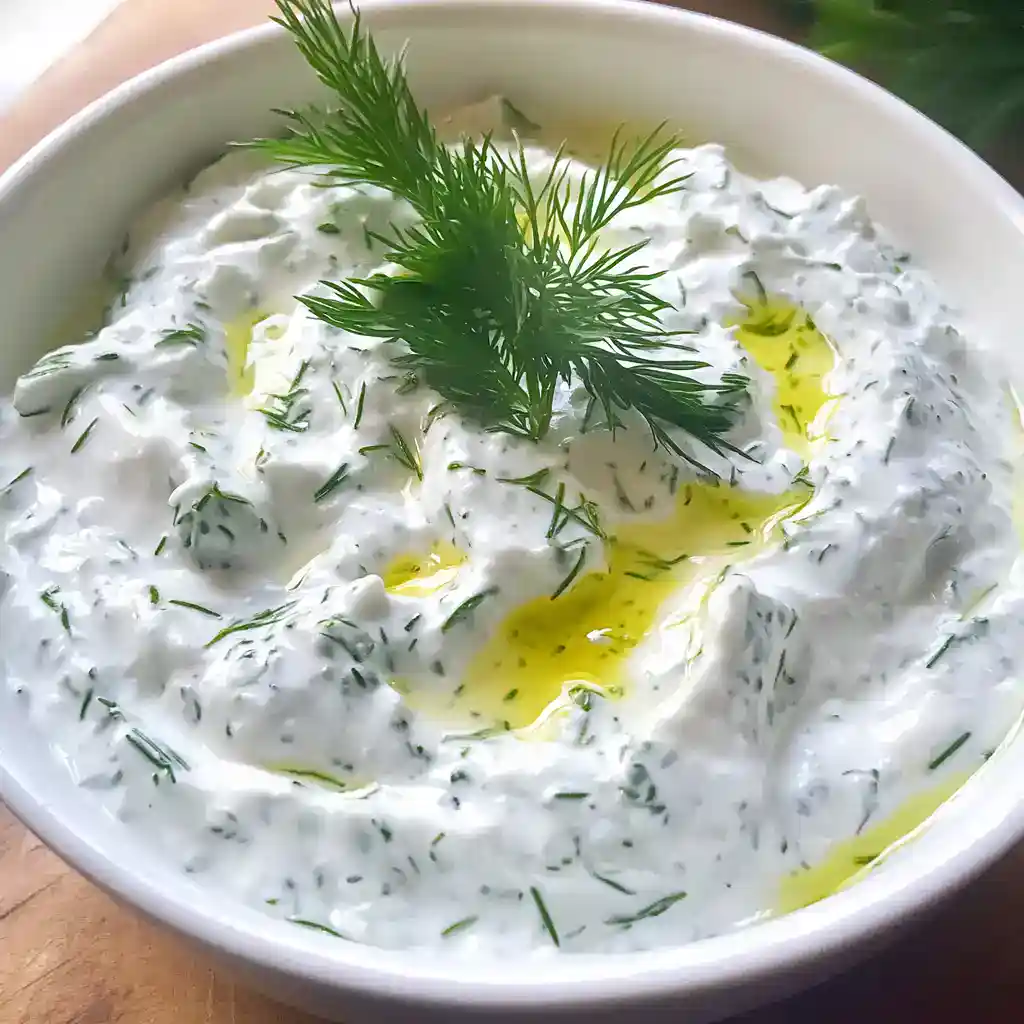
Ingredients
- 1 cup full-fat Greek yogurt (thick is essential)
- 1/2 English cucumber, grated (also called hothouse cucumber)
- 2 cloves garlic, minced or pressed
- 1 tablespoon fresh dill, finely chopped
- 1 tablespoon fresh mint, finely chopped
- 1 tablespoon fresh parsley, finely chopped
- 1 tablespoon fresh lemon juice (from about 1/2 lemon)
- Salt and pepper to taste (start with 1/4 tsp salt)
- Extra virgin olive oil for drizzling
- Extra fresh herbs for garnish (optional)
Instructions
- Grate the English cucumber using the large holes on a box grater directly into a clean kitchen towel or several layers of cheesecloth.
- Gather the towel around the grated cucumber and squeeze hard over the sink, twisting and wringing it to remove as much liquid as possible. You’ll get a surprising amount of water—keep squeezing until you can’t extract any more. This step is crucial for thick tzatziki.
- In a mixing bowl, combine the thick Greek yogurt with your squeezed-dry cucumber. Make sure that cucumber is really dry or your tzatziki will be watery.
- Add minced garlic (start with less if you’re sensitive to raw garlic—you can always add more), finely chopped fresh dill, mint, and parsley. Use kitchen scissors or a sharp knife to chop herbs finely for better distribution.
- Add fresh lemon juice, salt, and pepper. Stir everything together thoroughly until well combined and uniform in texture.
- Taste and adjust seasoning—it should be bright, garlicky, herby, and well-seasoned. Add more lemon, salt, or herbs as needed. Remember that flavors will mellow and develop as it chills.
- Cover the bowl tightly with plastic wrap and refrigerate for at least 1 hour, preferably 2-4 hours. This allows flavors to meld and the garlic to mellow. Don’t skip this—it makes a huge difference.
- Before serving, give it a good stir. Transfer to a serving bowl, drizzle with extra virgin olive oil, and garnish with additional fresh herbs if desired.
- Serve cold as a dip with pita bread and vegetables, as a sauce for grilled meats, or as a spread for sandwiches and wraps. Store covered in the refrigerator.
Nutrition Information (Per Serving, 1/4 cup):
- Calories: 35
- Carbohydrates: 3g
- Protein: 3g
- Fat: 2g
- Fiber: 0g
- Sodium: 90mg
- Calcium: 6% DV
- Probiotics: From Greek yogurt
This herb tzatziki provides probiotics from Greek yogurt, protein, and fresh herbs with minimal calories. It’s a healthy, flavorful addition to any meal.
Notes:
- CRUCIAL: Squeeze the grated cucumber really well or your tzatziki will be watery and thin.
- Use full-fat Greek yogurt for the best texture—low-fat or regular yogurt won’t work well.
- Fresh herbs are essential—dried herbs taste dull and musty in comparison.
- Start with less garlic than you think you need—raw garlic gets stronger as it sits.
- The 1-hour minimum chill time is important for flavors to meld properly.
- Taste and adjust seasoning before serving—every batch needs slightly different amounts.
Storage Tips:
Store herb tzatziki covered in an airtight container in the refrigerator for up to 4 days. It may release some liquid as it sits—just stir it back in or pour off excess water. The flavors actually improve over the first day or two. Don’t freeze—yogurt separates when frozen and thawed. Make fresh for best results.
Serving Suggestions:
- Traditional Meze: Serve with warm pita bread, olives, and raw vegetables for dipping
- Grilled Meats: Perfect sauce for lamb, chicken, beef, or fish skewers
- Gyros and Wraps: Essential spread for authentic Greek sandwiches
- Grain Bowls: Drizzle over Mediterranean grain bowls with falafel and vegetables
Mix It Up (Recipe Variations):
- Spicy Tzatziki: Add minced jalapeño or cayenne pepper for heat
- Feta Tzatziki: Crumble feta cheese into the mixture for extra tanginess
- Avocado Tzatziki: Mash in half an avocado for creaminess and beautiful green color
- Lemon-Heavy: Double the lemon juice and add zest for extra-bright citrus flavor
What Makes This Recipe Special:
This herb tzatziki uses authentic Greek techniques that create the signature thick, creamy texture—properly draining cucumber to remove excess water, using full-fat Greek yogurt for richness, and allowing time for flavors to meld together. The combination of three fresh herbs (dill, mint, parsley) creates complex, layered flavor that’s more interesting than single-herb versions, while the balance of garlic, lemon, and herbs makes it both refreshing and crave-worthy.
