
Ever wonder why some fusion pizzas taste like a confused jumble of ingredients while others create something genuinely exciting and new? I used to think making Korean ramps pizza was just throwing random ingredients on dough until I discovered that balancing the funky, spicy, garlicky elements is an art. Now my family requests this bold, umami-packed pizza every spring when ramps are in season, and I’m pretty sure my neighbors think I’ve opened a Korean-Italian fusion restaurant (if only they knew how many burned, over-seasoned pizzas I made before learning that less gochujang is more).
Here’s the Thing About This Recipe
What makes this Korean ramps pizza work is the careful layering of intensely flavored ingredients—tangy kimchi, pungent wild ramps, spicy-sweet gochujang, and mellow mozzarella all balance each other instead of fighting for dominance. I learned the hard way that you can’t just pile on maximum amounts of everything bold and expect harmony; each component needs restraint so the flavors complement rather than overwhelm. This Korean-Italian fusion pizza brings together the funky, fermented heat of Korean cuisine with the comfort and structure of classic pizza for something surprisingly cohesive. It’s honestly that simple: quality dough, strategic use of gochujang, proper cheese ratio, and seasonal ramps that tie everything together.
What You’ll Need (And My Shopping Tips)
Good pizza dough is worth either making yourself or buying from a local pizzeria—the refrigerated tubes at grocery stores work in a pinch, but fresh dough from a bakery or pizza place gives better texture and flavor (I learned this after using cardboard-tasting dough three times and wondering why my pizza wasn’t impressive). You’ll need 1 pound, which makes one large pizza or two personal-sized ones.
For the Korean flavors, grab kimchi (get the good stuff from a Korean market or quality grocery store—it should be tangy and funky, not bland), gochujang (Korean red chili paste—it’s sweet, spicy, and fermented, totally different from regular hot sauce), and fresh ramps. Ramps are wild leeks with a brief spring season (April-May), and their garlicky-oniony punch is essential to this recipe. Don’t cheap out on bottled “kimchi” that’s basically pickled cabbage—you want real fermented kimchi with funk and depth (happens more than I’d like to admit when I try to save money).
For the pizza construction, you’ll need shredded mozzarella (the good melty stuff), vegetable oil for cooking the ramps, scallions (also called green onions), and sesame seeds for garnish. The sesame seeds aren’t just decoration—they add nutty flavor and textural interest.
Salt and pepper round out the seasoning. If you’re curious about ramps and why foragers and chefs go crazy for them every spring, Wikipedia has fascinating information about these wild leeks native to North America.
Let’s Make This Together
Start by preheating your oven to 450°F—pizza needs high heat to get that crispy crust and properly melted cheese. If you have a pizza stone, put it in the oven now to preheat as well (though a regular baking sheet works fine).
While your oven heats, prep your ingredients. Drain your kimchi well in a strainer or colander, pressing out excess liquid—wet kimchi will make your pizza soggy. Chop it into bite-sized pieces. Here’s where I used to mess up: I’d leave the kimchi too wet and end up with a pool of liquid on my pizza.
Clean your ramps thoroughly (they grow in the ground and can be gritty) and chop them—use both the white bulbs and green leaves, though the bulbs have more intense flavor. You’ll need about 1 cup chopped.
Heat 2 tablespoons of vegetable oil in a skillet over medium heat. Add the chopped ramps and sauté for 2-3 minutes until slightly wilted and fragrant. Season with a pinch of salt and pepper. The ramps should soften but still have some texture—don’t cook them to mush. Remove from heat and set aside. I learned this pre-cooking step from a pizza chef who explained that raw ramps on pizza can be too pungent and won’t cook through properly in the short baking time.
On a lightly floured surface (or directly on a baking sheet if using pre-made dough), roll out your pizza dough into your desired shape—I go for a roughly 12-14 inch round or rectangle that fits my baking sheet. The dough should be about 1/4 inch thick, thinner if you like crispy crust, thicker if you prefer chewy.
Now for the sauce—spread the gochujang evenly over the dough, but use restraint. Here’s my secret: gochujang is intensely flavored, so you need way less than you’d use of tomato sauce. Start with about 1/4 cup and spread it thin, then add more only if needed. Too much gochujang makes the pizza overwhelmingly spicy and sweet. Trust me on this one; I learned the hard way that more isn’t better with this ingredient.
Sprinkle half of the mozzarella cheese over the gochujang layer—the cheese acts as a buffer between the spicy sauce and the toppings, and also helps everything adhere. Top with the drained, chopped kimchi and your sautéed ramps, distributing them evenly across the pizza.
Add the remaining mozzarella cheese on top of the kimchi and ramps—this second cheese layer helps everything meld together and prevents the toppings from burning. Sprinkle the thinly sliced scallions and sesame seeds over the cheese. The sesame seeds will toast as the pizza bakes, adding nutty flavor.
Carefully transfer your assembled pizza to the preheated oven (or onto your pizza stone if using). Bake for 12-15 minutes, checking at 12 minutes, until the crust is golden brown on the edges and the cheese is bubbly and starting to brown in spots. If you’re looking for another fusion pizza recipe, try this Thai Chicken Pizza that uses similar bold-flavor-balancing techniques.
Remove from the oven and let it cool for 2-3 minutes before slicing—this lets the cheese set slightly so your slices don’t slide apart into a molten mess. I learned this patience from countless pizzas where I couldn’t wait and ended up with cheese sliding off everywhere.
Slice and serve hot. The first bite should give you layers of flavor: tangy kimchi, garlicky ramps, spicy-sweet gochujang, and creamy mozzarella all working together.
When Things Go Sideways (And They Will)
Pizza turned out soggy with liquid pooling in the center? You didn’t drain the kimchi well enough, or you used too much gochujang. In reality, I’ve learned to really squeeze that kimchi dry and to use gochujang sparingly—a little goes a long way.
Overwhelmingly spicy and you can barely taste anything else? You used too much gochujang or too much kimchi. If this happens, there’s not much to fix except serving it with something cooling like a cucumber salad or extra cheese. Next time, use half the amount you think you need.
Ramps taste too raw and pungent? You skipped the sautéing step or didn’t cook them long enough. Raw ramps on pizza can be aggressively garlicky in a not-great way. Don’t panic for next time—just make sure to sauté them properly first.
Cheese didn’t melt properly or burned in spots? Your oven temperature was off or you baked too long. Every oven is different, so start checking at 12 minutes and adjust timing based on your specific oven.
Ways to Mix It Up
Bacon Kimchi Pizza: When I want something even more indulgent, I’ll add crispy chopped bacon along with the kimchi for a smoky, savory, funky combination that’s absolutely addictive. Around weekend pizza nights, this becomes my guilty pleasure version.
Vegan Korean Ramps Pizza: Skip the mozzarella and use vegan cheese (or nutritional yeast for a cheesy flavor without dairy), and make sure your gochujang doesn’t contain fish sauce—some brands do.
Bulgogi Pizza: Add thinly sliced marinated beef (bulgogi) along with the ramps and kimchi for a meaty Korean BBQ pizza that’s restaurant-worthy.
White Kimchi Pizza: Use a white sauce base (ricotta mixed with a little gochujang for mild heat) instead of straight gochujang for a less aggressive, creamier version.
What Makes This Recipe Special
This Korean ramps pizza represents the exciting evolution of fusion cuisine—not just randomly combining elements from different cultures, but thoughtfully integrating flavors and techniques in ways that create something new and cohesive. Pizza has always been adaptable; Italian immigrants in America transformed it with new ingredients, and every pizza culture from Japan to Brazil has made it their own. What makes this particular fusion work is the shared love of umami, funk, and bold flavors in both Korean and Italian cuisines. Kimchi brings fermented tang and spice similar to aged cheese or cured meats; gochujang provides sweet heat like a spicy tomato sauce might; mozzarella offers creamy richness to balance the aggressive flavors; and ramps tie it all together with their garlicky punch that feels at home in both Korean and Italian contexts. The spring seasonality of ramps makes this a special occasion pizza rather than an everyday meal, which adds to its appeal. Korean-style pizzas are actually popular in Korea, where chains like Mr. Pizza have been serving fusion combinations for decades, proving this isn’t just a Western novelty but part of Korean food culture itself. The history of fusion cuisine shows how cross-cultural cooking evolves naturally as people and ingredients move around the world, creating exciting new dishes that honor multiple traditions.
Things People Ask Me About This Recipe
Can I use regular scallions or garlic instead of ramps?
You can, but you’ll lose that special wild ramp flavor that makes this pizza unique. Ramps have a brief season (April-May), so this is really a springtime special occasion pizza. If using scallions and garlic, increase the amounts slightly to compensate for ramps’ intensity.
Is gochujang very spicy? Can I adjust the heat?
Gochujang has moderate heat—less aggressive than sriracha but definitely noticeable. You can start with less (2-3 tablespoons instead of 1/2 cup) and see how you like it. Different brands vary in spiciness, so taste yours before committing.
Can I make this Korean ramps pizza without kimchi?
You can, but kimchi provides crucial funk and tang that makes the flavor profile work. Without it, you’re basically making a gochujang and ramp pizza, which is fine but loses the distinctly Korean character. If you skip kimchi, consider adding pickled vegetables for acidity.
What kind of kimchi works best?
Traditional napa cabbage kimchi is ideal. Make sure it’s well-fermented (funky and tangy) rather than freshly made (crunchy and mild). Avoid the pre-packaged “fresh kimchi” from regular grocery stores that’s basically pickled cabbage—you want real fermented stuff.
Can I use store-bought pizza dough?
Absolutely! Fresh dough from a pizzeria or bakery is best, but refrigerated dough from the grocery store works fine. Just let it come to room temperature for 20-30 minutes before rolling it out—cold dough is hard to work with.
How do I store and reheat leftover Korean pizza?
Store in an airtight container in the fridge for up to 2 days. Reheat in a 375°F oven for 8-10 minutes to crisp up the crust—don’t microwave or it’ll get soggy and rubbery.
One Last Thing
I couldn’t resist sharing this Korean ramps pizza because it’s the recipe that taught me fusion cooking isn’t about throwing random ingredients together—it’s about understanding flavors deeply enough to combine them thoughtfully. The best pizza nights are when you serve something unexpected, everyone takes a skeptical first bite, and then fights over the last slice. You don’t need to be an expert in Korean or Italian cooking—just good ingredients, respect for bold flavors, and the courage to try something different.
Print
Korean Ramps Pizza
Description
This adventurous Korean ramps pizza combines tangy kimchi, pungent wild ramps, spicy-sweet gochujang, and creamy mozzarella on crispy dough for a fusion masterpiece that balances Korean funk with Italian comfort in every bite.
Prep Time: 15 minutes | Cook Time: 15 minutes | Total Time: 30 minutes | Servings: 4-6 (one large pizza)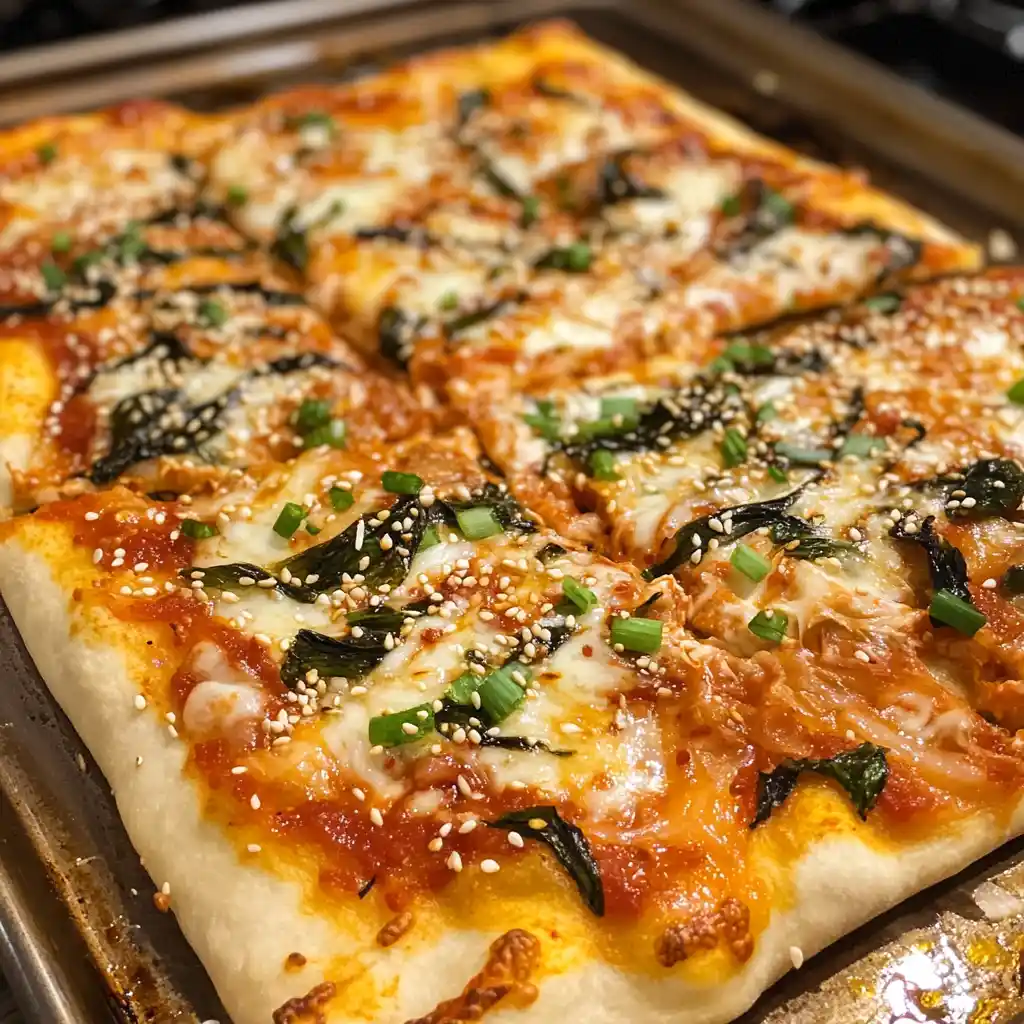
Ingredients
For the Pizza:
- 1 lb pizza dough (fresh from a pizzeria/bakery is best, room temperature)
- 1 cup kimchi, drained well and chopped (get real fermented kimchi, not pickled cabbage)
- 1 cup ramps, chopped (use both white bulbs and green leaves—clean thoroughly)
- 1 cup shredded mozzarella cheese (good melting quality)
- 1/2 cup gochujang (Korean red chili paste—start with 1/4 cup and add more if needed)
- 2 tbsp vegetable oil
- 1/4 cup scallions, thinly sliced (also called green onions)
- 1/4 cup sesame seeds (toast them for extra flavor if you want)
- Salt and pepper to taste
Instructions
Preheat your oven to 450°F (230°C). If you have a pizza stone, put it in the oven now to preheat—otherwise a regular baking sheet works fine.
- Drain your kimchi very well in a strainer or colander, pressing out excess liquid—wet kimchi makes soggy pizza. Chop into bite-sized pieces and set aside.
- Clean the ramps thoroughly (they can be gritty) and chop them, using both white bulbs and green leaves.
- In a skillet, heat 2 tablespoons vegetable oil over medium heat. Add the chopped ramps and sauté for 2-3 minutes until slightly wilted and fragrant. Season with a pinch of salt and pepper. The ramps should soften but still have texture. Remove from heat and set aside.
- On a lightly floured surface or directly on a baking sheet, roll out your pizza dough into a 12-14 inch round or rectangle, about 1/4 inch thick.
- Spread gochujang evenly over the dough, but use restraint—start with about 1/4 cup spread thin. Gochujang is intensely flavored, so you need way less than you’d use of tomato sauce. Add more only if needed after tasting.
- Sprinkle half of the mozzarella cheese over the gochujang layer. This acts as a buffer and helps everything adhere.
- Top with the drained, chopped kimchi and sautéed ramps, distributing evenly across the pizza.
- Add the remaining mozzarella cheese on top of the kimchi and ramps. Sprinkle the thinly sliced scallions and sesame seeds over the cheese.
- Carefully transfer to the preheated oven and bake for 12-15 minutes, checking at 12 minutes, until the crust is golden brown and the cheese is bubbly and starting to brown in spots.
- Remove from oven and let cool for 2-3 minutes before slicing—this lets the cheese set slightly so slices don’t slide apart.
- Slice and serve hot. Enjoy those layers of tangy, garlicky, spicy-sweet, creamy flavor!
Nutrition Information (Per Serving, 1/4 of pizza):
- Calories: 385
- Carbohydrates: 48g
- Protein: 14g
- Fat: 15g
- Fiber: 3g
- Sodium: 780mg
- Vitamin C: 20% DV
- Calcium: 15% DV
Kimchi provides probiotics and vitamins, ramps offer allium compounds with health benefits, and this pizza delivers substantial nutrition despite being indulgent.
Notes:
- Drain kimchi very well—excess liquid makes soggy pizza.
- Use gochujang sparingly—start with 1/4 cup, it’s intensely flavored and a little goes a long way.
- Sauté the ramps before topping—raw ramps can be too pungent and won’t cook through properly.
- Let room-temperature dough rest 20-30 minutes before rolling if it’s fighting back.
- Every oven is different—start checking at 12 minutes and adjust timing.
- Let pizza rest 2-3 minutes after baking before slicing or cheese will slide everywhere.
Storage Tips:
Store leftover pizza in an airtight container in the fridge for up to 2 days. The crust will soften as it sits, and the kimchi will continue releasing moisture. Reheat in a 375°F oven for 8-10 minutes to crisp up the crust—don’t microwave or it’ll get soggy and rubbery. The flavors actually intensify overnight, so leftovers are still delicious even if the texture isn’t quite as perfect. Don’t freeze this—the kimchi and ramps don’t freeze well and the texture suffers dramatically.
Serving Suggestions:
- Full Korean Pizza Night: Serve with cucumber salad and miso soup for a fusion feast
- Cool Contrast: Pair with a simple yogurt-based dip or sour cream to temper the heat
- Fresh Balance: Serve with a light arugula salad dressed with sesame oil and rice vinegar
- Beverage Pairing: Cold beer or sake cuts through the rich, spicy flavors perfectly
Mix It Up (Recipe Variations):
Bacon Kimchi Pizza: Add crispy chopped bacon along with the kimchi for smoky, savory, funky combination that’s absolutely addictive.
Vegan Korean Ramps Pizza: Skip mozzarella and use vegan cheese or nutritional yeast, make sure your gochujang is vegan (some contain fish sauce).
Bulgogi Pizza: Add thinly sliced marinated beef (bulgogi) along with ramps and kimchi for a meaty Korean BBQ pizza.
White Kimchi Pizza: Use a white sauce base (ricotta mixed with a little gochujang) instead of straight gochujang for a less aggressive, creamier version.
What Makes This Recipe Special:
This Korean ramps pizza showcases thoughtful fusion cooking—combining Korean fermented funk with Italian pizza structure in ways that create something cohesive and new. The shared umami focus in both cuisines makes this work: kimchi’s fermented tang, gochujang’s sweet heat, and ramps’ garlicky punch all feel at home on melted mozzarella and crispy dough. The spring seasonality of ramps makes this a special occasion pizza.
