
Remember the first time you smelled real Moroccan spices cooking — that incredible, layered warmth of cinnamon and cumin and ginger all together in one pot? I had that moment in a tiny restaurant years ago and spent the better part of a decade trying to recreate it in my own kitchen. My early attempts were either too timid with the spices or missing something I couldn’t quite name. It turned out what I was missing was the prunes. The moment I added them to my lamb tagine, everything clicked into place — that sweet, sticky depth that makes the sauce cling to every piece of meat and turns something already good into something genuinely unforgettable.
Here’s the Thing About This Recipe
What makes this lamb and prune tagine work where so many home versions fall short is the layering. You’re not just dumping everything into a pot — you’re building flavor at every stage. Browning the lamb properly. Blooming the spices in the pot before the liquid goes in. Giving the prunes time to melt into the sauce at the end so their natural sweetness becomes part of the broth rather than just floating on top of it. The result is a Moroccan lamb tagine that tastes genuinely complex and deeply savory, with that signature sweet-and-spiced balance that North African cooking does better than anywhere else in the world. It’s honestly that satisfying, and no fancy equipment required — a Dutch oven works perfectly.
What You’ll Need (And My Shopping Tips)
For this lamb and prune tagine recipe, a few ingredient choices make a real difference in the final result.
Good lamb shoulder is the only cut worth using here — it has the right fat-to-meat ratio to become completely tender and silky over the long braise without drying out. I learned this after one very disappointing batch made with leg of lamb that stayed tough and dry no matter how long I cooked it. Don’t cheap out on the cut. This Bon Appétit guide on cooking lamb breaks down exactly why shoulder is the gold standard for slow-cooked dishes like this one.
Pitted prunes — and please buy proper dried prunes, not those very firm, sugar-coated ones sometimes sold as “dried plums.” You want plump, soft, naturally sweet prunes that will practically melt into the sauce during the final simmer. I always grab an extra handful because they’re the part everyone tries to scoop extra of at the table (happens more than I’d like to admit).
The spice blend is where this lamb and prune tagine recipe gets its soul. Ginger, cumin, cinnamon, turmeric, coriander, and cayenne — each one plays a specific role and together they create the warm, complex flavor profile that defines Moroccan cooking. Don’t substitute a pre-made curry powder or ras el hanout here; the balance of these specific spices at these specific amounts is what makes this taste right.
Lamb or beef broth provides the braising liquid — go with lamb broth if you can find it for a deeper, more authentic flavor, but good quality beef broth works beautifully too.
Let’s Make This Together
Start by heating a drizzle of oil in your Dutch oven or tagine over medium heat. Add the cubed lamb shoulder in a single layer — and here’s where I used to mess up every single time by cramming everything in at once and ending up with grey, steamed meat. Work in batches if you need to. Let each piece sit undisturbed for a full minute before turning to develop a proper brown crust on all sides. That caramelized exterior is the flavor foundation of the entire dish.
Once the lamb is browned, add the chopped onion and minced garlic directly to the pot. Cook for about 3-4 minutes until softened, scraping up any browned bits from the bottom as you go. Now for the fun part — stir in all the spices together: ginger, cumin, cinnamon, turmeric, coriander, and cayenne. Let them cook for a full minute, stirring constantly. Your kitchen is going to smell absolutely incredible at this point. That blooming step is what transforms ground spices from dusty and flat to fragrant and alive.
Pour in the broth and bring everything to a gentle simmer. Cover the pot and let the lamb and prune tagine cook low and slow for 1.5 to 2 hours, checking occasionally, until the lamb is completely fork-tender. In the last 15-20 minutes, add your pitted prunes and stir them gently into the sauce. They’ll soften and start to break down slightly, releasing their sweetness directly into the braising liquid. Taste for seasoning, adjust with salt and pepper, and serve hot over couscous or rice with fresh parsley scattered over the top.
If you love the deep, slow-braised satisfaction of a long-cooked meat dish, our beef ragu uses a similar patient approach and is absolutely worth making on your next Sunday cooking day.
If This Happens, Don’t Panic
The lamb is still tough at the 1.5-hour mark. Don’t panic — just keep the lid on and keep going. Lamb shoulder from different animals can vary significantly in cooking time. Keep the heat truly low, check every 20 minutes, and trust the process. This lamb and prune tagine cannot be rushed.
The sauce is too thin. Remove the lid for the last 20-30 minutes of cooking and let it reduce uncovered. The prunes will also help thicken things as they soften and break down — give them the full 20 minutes before worrying.
The sauce is too sweet. A pinch more salt and a tiny pinch of cayenne stirred in at the end will balance it out immediately. The prunes add natural sweetness that varies depending on the brand, so always taste before serving.
The spices taste flat or dusty. They didn’t get enough time blooming in the pot before the broth went in. A full minute of cooking dry spices in the fat is the minimum — 90 seconds is even better. This is totally preventable next time by just staying patient at that step.
Ways to Mix It Up
When I want to make it feel even more traditionally Moroccan, I’ll add a handful of blanched almonds and a tablespoon of honey along with the prunes for a Royal Lamb and Prune Tagine — it’s the special occasion version that gets every single compliment at the table.
For a Lamb, Prune, and Apricot Tagine, I’ll swap half the prunes for dried apricots — the combination of the two fruits creates a brighter, slightly more complex sweetness that works beautifully with the cinnamon.
On nights when I want something with a little more texture, I’ll add two diced carrots along with the broth for a Vegetable Lamb and Prune Tagine that feels even heartier and more substantial.
And for a Spicier Lamb Tagine, I double the cayenne and add half a teaspoon of harissa paste along with the spices — it keeps the warmth of the original but adds a genuine heat that builds with every bite.
What Makes This Recipe Special
The tagine is one of the oldest and most beloved cooking vessels in North African culinary tradition, originating in the Maghreb region of Morocco, Algeria, and Tunisia, where slow braising over low heat has been a cornerstone of home cooking for centuries. According to food historians on Wikipedia, the conical shape of a traditional clay tagine is designed to trap steam and return condensation to the dish, keeping the meat extraordinarily moist over long cooking times. The pairing of meat with dried fruit — particularly prunes and apricots — is a signature of Moroccan cuisine rooted in the ancient trade routes that brought spices, preserved fruits, and culinary traditions across the Sahara. What makes this lamb and prune tagine recipe special is that it captures the full depth of that tradition in a Dutch oven, making one of the world’s great slow-cooked dishes completely accessible for a home kitchen.
Things People Ask Me About This Recipe
Can I make this lamb and prune tagine ahead of time?
Yes — and it’s genuinely better the next day. The spices continue to develop overnight and the sauce deepens beautifully. Refrigerate for up to 4 days and reheat gently on the stovetop over low heat with a splash of broth if needed.
Do I need an actual tagine pot to make this lamb and prune tagine recipe?
Not at all. A heavy Dutch oven with a tight-fitting lid works perfectly and is what most home cooks use. The key is low, steady heat and a covered pot — the specific vessel matters less than the technique.
Can I use a different cut of lamb?
Bone-in lamb shoulder pieces will give you even more flavor if you can find them, as the bones add depth to the braising liquid. Avoid leg of lamb — it’s too lean for this kind of low, slow cooking and will dry out before it becomes tender.
Can I freeze this lamb and prune tagine?
Yes, it freezes beautifully for up to 3 months. The prunes soften even further after freezing, which actually makes the sauce richer and more integrated. Cool completely, portion into freezer-safe containers, and thaw overnight in the fridge before reheating gently on the stovetop.
How spicy is this tagine?
With ¼ tsp of cayenne for a full pound of lamb, the heat level is very mild — a gentle warmth in the background rather than anything that will challenge heat-sensitive eaters. If you want more kick, add up to ½ tsp without overwhelming the other spices.
What’s the best thing to serve with this lamb and prune tagine?
Couscous is the traditional and most fitting accompaniment — it soaks up the sauce beautifully. Steamed rice works well too. A simple side of roasted vegetables or a fresh herb salad balances the richness of the tagine nicely.
Before You Head to the Kitchen
I couldn’t resist sharing this lamb and prune tagine because it’s the recipe that taught me what North African cooking is really about — patience, layering, and trusting that a handful of spices and a long, slow braise can transform simple ingredients into something that tastes like it came from somewhere extraordinary. The best tagine nights are when you lift the lid to check on it and the smell alone stops everyone in the room. You’ve got this. Now go make something worth remembering.
Print
Lamb and Prune Tagine
Description
A deeply spiced, slow-braised Moroccan lamb and prune tagine with a rich, sweet-and-savory sauce — the kind of North African comfort food recipe that makes any dinner feel like a special occasion.
Prep Time: 15 minutes | Cook Time: 2 hours | Total Time: 2 hours 15 minutes | Servings: 4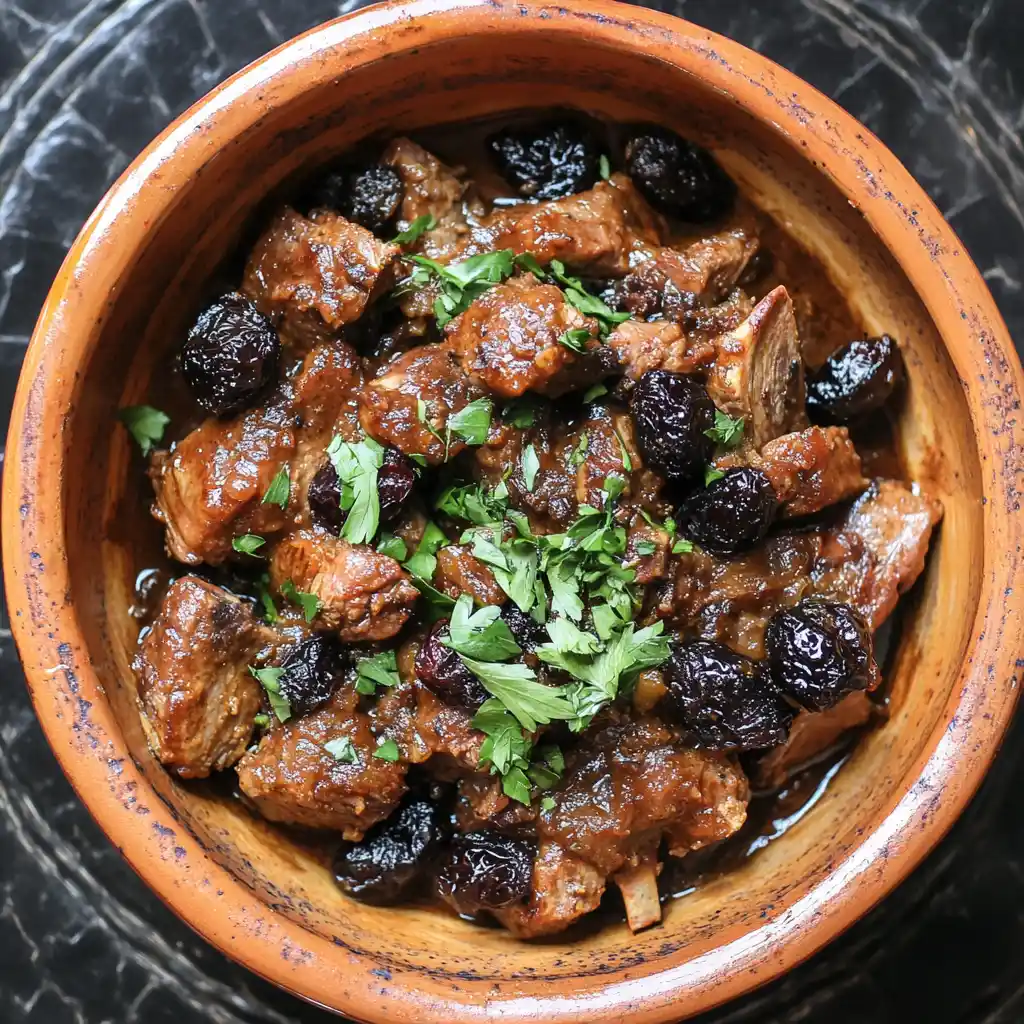
Ingredients
- 1 lb boneless lamb shoulder, cubed into 1½-inch pieces
- 1 onion, chopped
- 2 cloves garlic, minced
- 1 tsp ground ginger
- 1 tsp ground cumin
- 1 tsp ground cinnamon
- ½ tsp ground turmeric
- ½ tsp ground coriander
- ¼ tsp cayenne pepper
- 1 cup beef or lamb broth
- 1 cup pitted prunes (soft, plump variety)
- Salt and pepper, to taste
- Oil, for browning
- Fresh parsley, chopped, for garnish
- Couscous or steamed rice, for serving
Instructions
- Heat a drizzle of oil in a large Dutch oven or tagine over medium heat. Add the lamb cubes in a single layer — work in batches if needed. Let each piece sit undisturbed for a full minute before turning to develop a proper brown crust. Brown on all sides, then set aside.
- In the same pot, add the chopped onion and minced garlic. Cook for 3-4 minutes until softened, scraping up any browned bits from the bottom of the pot.
- Stir in the ginger, cumin, cinnamon, turmeric, coriander, and cayenne pepper all at once. Cook for a full minute, stirring constantly, until the spices are fragrant and deeply aromatic.
- Return the browned lamb to the pot. Pour in the broth and stir to combine. Bring to a gentle simmer.
- Cover the pot and cook over low heat for 1.5 to 2 hours, checking occasionally, until the lamb is completely fork-tender and pulls apart easily.
- Add the pitted prunes to the pot and stir gently into the sauce. Simmer uncovered for 15-20 minutes until the prunes have softened and the sauce has thickened slightly.
- Taste and adjust seasoning with salt and pepper.
- Serve hot over couscous or steamed rice, garnished with fresh chopped parsley.
Nutrition Information (Per Serving, based on 4 servings)
- Calories: 420
- Carbohydrates: 32g
- Protein: 31g
- Fat: 18g
- Fiber: 4g
- Sodium: 480mg
- Iron: ~22% DV (from lamb)
- Potassium: ~25% DV (from prunes and lamb)
- Vitamin B12: ~45% DV (from lamb)
Notes
- Brown the lamb in batches — crowding the pot leads to steamed, grey meat instead of properly caramelized pieces, and that browning is essential to the depth of the final sauce.
- Give the spices a full minute to bloom in the pot before adding liquid — this is the step that takes the tagine from good to genuinely great.
- Prune sweetness varies by brand — always taste before serving and balance with salt or a pinch more cayenne as needed.
- Every stovetop runs a little differently — keep the heat truly low throughout the long braise for the most tender result.
- Don’t rush the prune stage — 15-20 minutes is what they need to fully integrate their sweetness into the sauce.
Storage Tips
- Refrigerate in an airtight container for up to 4 days — the flavor deepens significantly overnight.
- Freeze for up to 3 months. The prunes become even more integrated after freezing, making the sauce richer. Cool completely before portioning into freezer-safe containers.
- Thaw overnight in the fridge and reheat gently on the stovetop over low heat with a splash of broth if the sauce has thickened.
- Do not microwave on high — reheat low and slow to keep the lamb tender.
Serving Suggestions
- Serve over traditional Moroccan couscous — fluff it with a fork and a drizzle of olive oil for the best texture.
- Steamed basmati or jasmine rice soaks up the sauce beautifully as an alternative to couscous.
- A side of warm flatbread for scooping up extra sauce is never a bad idea.
- A simple cucumber and tomato salad with lemon dressing cuts through the richness of the tagine perfectly.
Mix It Up
Royal Lamb and Prune Tagine: Add a handful of blanched almonds and a tablespoon of honey with the prunes for a festive, celebratory version. Lamb, Prune, and Apricot Tagine: Replace half the prunes with dried apricots for a brighter, more complex fruit sweetness. Vegetable Lamb and Prune Tagine: Add 2 diced carrots and 1 diced sweet potato with the broth for an even heartier, more substantial one-pot meal. Spicier Lamb Tagine: Double the cayenne and add ½ tsp harissa paste with the spices for a version with real, building heat.
What Makes This Recipe Special
This lamb and prune tagine honors the centuries-old Moroccan tradition of slow-braising meat with warm spices and dried fruit — a cooking style that emerged from the ancient trade routes connecting North Africa to the spice markets of the Middle East and Asia. Blooming the spice blend directly in the pot before any liquid is added is the technique that separates a truly aromatic tagine from a flat, one-dimensional one. Combined with prunes that are given enough time to melt into the braising liquid rather than simply sitting in it, the result is a sauce with the kind of layered, complex sweetness that defines North African cooking at its very best.
