
Have you ever ordered something at an Indian restaurant and spent the entire meal trying to figure out what made it so deeply, impossibly good? That’s exactly what happened to me with lamb rogan josh the first time I tried it — I couldn’t stop thinking about the rich, aromatic sauce and the melt-in-your-mouth lamb. So I went home and tried to recreate it. The first attempt was a disaster. The second was closer. By the third try, my family stopped mid-bite and asked if I’d secretly taken cooking classes. This is that third-try recipe, refined over years into something genuinely worth the two hours it asks of you.
Here’s the Thing About This Recipe
What makes this lamb rogan josh work where other home curry attempts taste flat is the toasting of the spices directly in the pot after browning the lamb. That two-minute step where cumin, coriander, turmeric, paprika, and cayenne hit the hot oil transforms them from raw ground powder into something aromatic and complex — the heat activates oils in the spices that plain simmering can’t replicate. Around here, we’ve figured out that the long, slow braise is what separates good lamb curry from great lamb curry. Lamb shoulder or leg has enough fat and connective tissue that it needs time to break down, and rushing it produces chewy, disappointing meat. Two hours at a gentle simmer turns it fork-tender and allows the spices to penetrate all the way through. It’s honestly that simple — good spices, proper browning, patient simmering.
What You’ll Need (And My Shopping Tips)
Boneless lamb shoulder or leg is the right cut for this lamb rogan josh — it has the marbling and structure to stay moist through a long braise. Lamb for curry should have some visible fat; lean cuts dry out and toughen no matter how long you cook them. Ask your butcher for stewing lamb or cut a lamb shoulder roast into 1.5-inch cubes yourself. I’ve tried using leg thinking it was a premium upgrade and it ended up dry and stringy because leg is too lean for this application.
For the spices, freshness matters enormously. Smell your cumin, coriander, turmeric, and paprika before using — they should smell warm, aromatic, and vibrant. Old spices smell dusty and contribute almost nothing to the finished curry. I replace my ground spices every 6 months for recipes like this where they’re the primary flavor source (happens more than I’d like to admit that I cook with year-old spices and wonder why everything tastes muted).
Tomato puree creates the base of the sauce and provides both body and acidity. Canned crushed tomatoes work if you can’t find puree — blend them smooth first. Fresh tomatoes don’t have the same concentrated flavor or consistency and produce a thinner, less rich sauce.
Fresh ginger and garlic are essential — the combination is foundational to Indian cooking and pre-minced jarred versions don’t have the same punch. Grate the ginger on a microplane for the finest texture that distributes evenly through the sauce.
Let’s Make This Together
Heat vegetable oil in a large, heavy-bottomed pot or Dutch oven over medium heat. Add the chopped onion and cook until completely soft and beginning to turn golden, about 8 to 10 minutes. Here’s where patience pays off — deeply caramelized onion is the flavor foundation of the curry, and undercooked onion tastes sharp and raw.
Add the garlic and ginger and cook for 1 minute until fragrant. Add the cubed lamb and brown on all sides, working in batches if needed to avoid crowding the pot. The lamb doesn’t need to be fully cooked, just seared enough to develop color.
Add the cumin, coriander, turmeric, paprika, and cayenne. Stir constantly and cook for 2 minutes — you’ll smell the spices bloom and become aromatic. This is the critical step that most home cooks skip, and it’s what makes restaurant curry taste different from home curry.
Pour in the tomato puree and water, season with salt, and stir everything together. Bring to a boil, then immediately reduce heat to low. Cover and simmer gently for 1.5 to 2 hours, stirring occasionally, until the lamb is fork-tender and the sauce has thickened. The surface should show only small, gentle bubbles — a rolling boil makes the lamb tough.
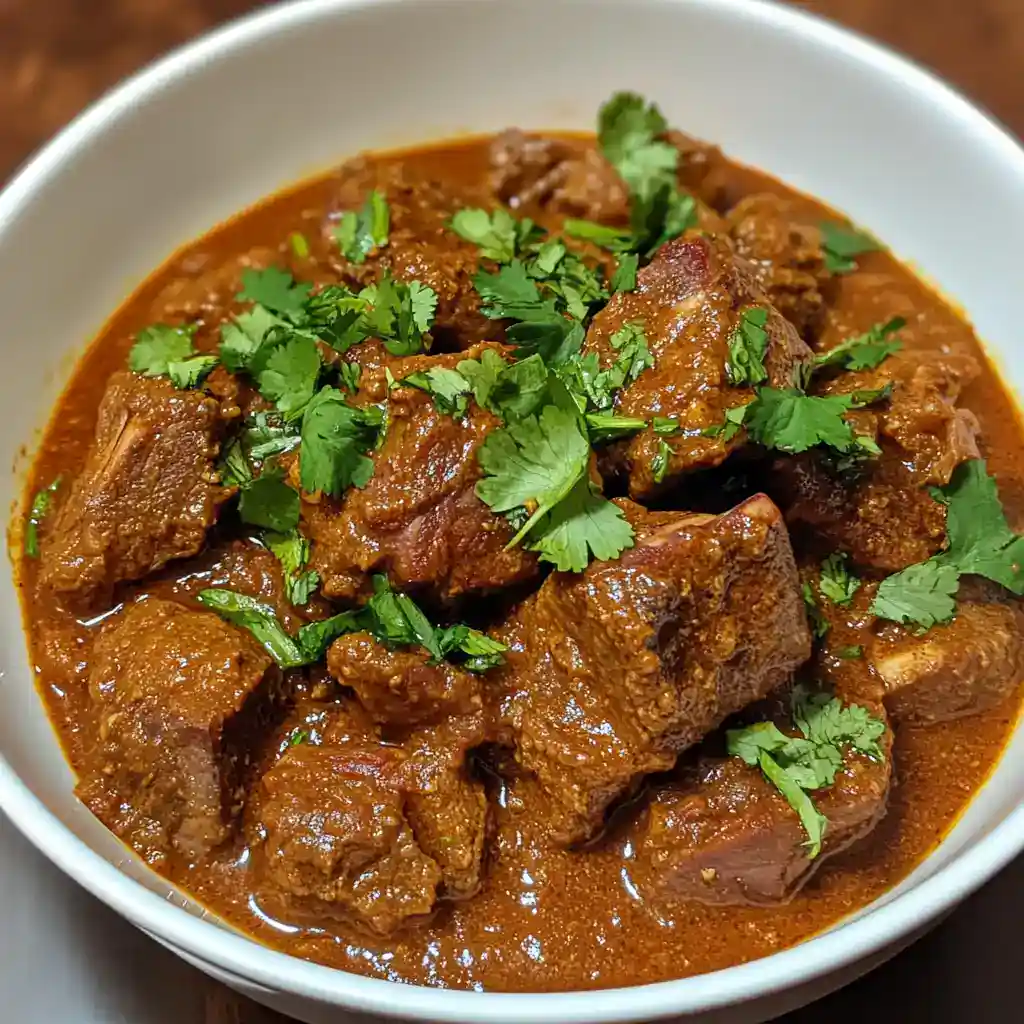
Taste and adjust salt before serving. Scatter fresh cilantro over the top and serve with steamed basmati rice or warm naan.
For another deeply satisfying lamb dish worth trying, check out this Easy Lamb and Oats from Station Recipes — a completely different preparation that showcases lamb in a unique, hearty way.
If This Happens, Don’t Panic
Lamb is still tough after 2 hours? The simmer was too vigorous, or the cut was too lean. Lower the heat to the absolute minimum and give it another 30 to 45 minutes. Truly tender lamb should fall apart with light fork pressure.
Sauce is too thin at the end? Remove the lid and simmer uncovered for 10 to 15 minutes to reduce and concentrate the sauce. The tomato puree should thicken naturally as the water evaporates.
Spices taste raw or bitter? They weren’t toasted long enough before the liquid went in. Next time, give the full 2 minutes of constant stirring in the hot oil. If it’s already cooked, a small pinch of sugar can help balance bitterness.
Curry tastes flat overall? Add a squeeze of lemon juice or a small splash of cream in the last 5 minutes. Both brighten and round out the flavors without changing the fundamental character of the dish.
Ways to Mix It Up
Creamy Lamb Rogan Josh: Stir in 1/2 cup of heavy cream or plain yogurt in the last 10 minutes of cooking for a richer, more luxurious sauce. The dairy softens the spices and adds a velvety texture.
Extra Spicy Rogan Josh: Double the cayenne pepper or add 2 to 3 minced fresh green chilies with the ginger and garlic. The heat builds slowly through the braise and becomes well-integrated rather than sharp.
Almond Lamb Rogan Josh: Add 1/4 cup of ground almonds or almond flour with the tomato puree. The almonds thicken the sauce naturally and add a subtle sweetness and richness that’s traditional in Mughlai-style curries.
Vegetable Lamb Rogan Josh: Add cubed potatoes, carrots, or cauliflower florets in the last 30 minutes of cooking. They absorb the curry flavors and turn this into a complete one-pot meal.
What Makes This Recipe Special
Rogan josh originated in the Kashmir Valley of Northern India and Pakistan, where it was a centerpiece of Kashmiri Pandit cuisine before becoming popularized across the Indian subcontinent and eventually worldwide through British Indian restaurants. The name translates roughly to “red lamb” or “red juice,” referring to the deep color created by Kashmiri red chilies — though this home version uses more accessible paprika and cayenne. The technique of browning meat, blooming spices, and slow-braising in a tomato-based sauce is characteristic of Mughlai cooking. Learn more about the culinary and cultural significance of lamb and mutton across global cuisines. This lamb rogan josh honors that tradition while adapting the technique for a home kitchen.
Questions I Always Get
Can I use beef or chicken instead of lamb for this rogan josh?
Beef chuck works with the same technique and produces excellent results — the cooking time is similar. Chicken works but needs far less time — use bone-in thighs and reduce the simmer to 45 minutes to 1 hour. The spice profile stays the same regardless of protein.
How do I know when the lamb is done in this rogan josh?
The lamb should pull apart easily with a fork with no resistance. If you have to saw through it or it feels chewy, it needs more time. Test a piece at the 1.5 hour mark and adjust from there based on tenderness.
Can I make lamb rogan josh in a slow cooker?
Yes — brown the lamb and toast the spices on the stovetop first, then transfer everything to a slow cooker. Cook on low for 6 to 8 hours or high for 3 to 4 hours. The flavor is excellent though the sauce will be slightly thinner than the stovetop version.
Is this lamb rogan josh recipe beginner-friendly?
The technique is straightforward — brown, toast spices, add liquid, simmer. The main skill is patience. As long as you keep the heat low enough that it’s barely bubbling and give it the full time, the curry largely takes care of itself.
How do I store and reheat lamb rogan josh?
Refrigerate in an airtight container for up to 4 days — the flavor actually improves significantly overnight. Reheat gently on the stovetop over low heat with a splash of water to loosen the sauce. This curry freezes beautifully for up to 3 months.
What rice goes best with lamb rogan josh?
Steamed basmati rice is traditional and the best choice — its floral aroma and long, separate grains are the perfect foil for the rich curry sauce. Naan bread for scooping is also traditional and excellent alongside the rice.
One Last Thing
This lamb rogan josh is the kind of recipe that fills your kitchen with an aroma so good that neighbors start texting to ask what you’re making. The slow braise transforms the lamb into something impossibly tender, and the spice-rich sauce tastes like hours of effort even though most of that time is completely hands-off. Make a big batch and eat it across two nights — it’s genuinely better the second day. You’ve got this.
Print
Lamb Rogan Josh
Description
Deeply spiced lamb rogan josh with fork-tender lamb in a rich tomato-based curry sauce — a Kashmiri-inspired braise that’s worth every minute of the two-hour simmer.
Prep Time: 15 minutes | Cook Time: 2 hours | Total Time: 2 hours 15 minutes | Servings: 4
Ingredients
- 1 lb boneless lamb shoulder or leg, cubed into 1.5-inch pieces
- 2 tbsp vegetable oil
- 1 large onion, finely chopped
- 4 cloves garlic, minced
- 1-inch piece fresh ginger, grated
- 2 tsp ground cumin
- 2 tsp ground coriander
- 1 tsp turmeric
- 1 tsp paprika
- 1/2 tsp cayenne pepper (adjust to taste)
- 1 cup tomato puree
- 1 cup water
- Salt, to taste
- Fresh cilantro, chopped, for garnish
Instructions
- Heat vegetable oil in a large pot or Dutch oven over medium heat. Add onion and cook until soft and golden, 8 to 10 minutes.
- Add garlic and ginger. Cook 1 minute until fragrant.
- Add cubed lamb and brown on all sides, working in batches if needed to avoid crowding.
- Add cumin, coriander, turmeric, paprika, and cayenne. Stir constantly and cook for 2 minutes to toast the spices until aromatic.
- Pour in tomato puree and water. Season with salt and stir to combine.
- Bring to a boil, then reduce heat to low. Cover and simmer gently for 1.5 to 2 hours, stirring occasionally, until lamb is fork-tender and sauce has thickened.
- Taste and adjust salt. Garnish with fresh cilantro and serve hot with steamed basmati rice or naan bread.
Nutrition Information (Per Serving)
- Calories: 340
- Carbohydrates: 12g
- Protein: 28g
- Fat: 20g
- Fiber: 3g
- Sodium: 420mg
- Iron: 3.8mg (21% DV)
- Vitamin C: 18mg (20% DV)
Note: Nutrition estimates are based on 4 servings without rice or naan. Values will vary based on the lamb cut used.
Notes
- Brown the lamb in batches to avoid crowding — crowded meat steams instead of sears.
- Toast the spices for the full 2 minutes in the hot oil — this blooms the flavors and is essential to restaurant-quality curry.
- Keep the simmer gentle — small bubbles only. A rolling boil makes the lamb tough.
- The curry improves overnight — make it a day ahead if possible.
Storage Tips
- Refrigerator: Store in an airtight container for up to 4 days. The flavor deepens significantly overnight.
- Reheating: Warm gently on the stovetop over low heat with a splash of water to loosen the sauce.
- Freezer: Freeze in portions for up to 3 months. Thaw overnight in the fridge before reheating.
- Lamb curries freeze exceptionally well and maintain their texture and flavor better than most dishes.
Serving Suggestions
- Over steamed basmati rice with warm naan alongside
- With a simple cucumber raita (yogurt, cucumber, cumin) to cool the spice
- Garnished with extra cilantro and a wedge of lemon for squeezing
- Alongside a vegetable side like sautéed spinach or roasted cauliflower
Mix It Up (Recipe Variations)
Creamy: Stir in 1/2 cup heavy cream or yogurt in the last 10 minutes for a richer sauce.
Extra Spicy: Double the cayenne or add minced fresh green chilies with the ginger and garlic.
Almond: Add 1/4 cup ground almonds with the tomato puree for traditional Mughlai richness.
Vegetable: Add cubed potatoes, carrots, or cauliflower in the last 30 minutes for a complete meal.
What Makes This Recipe Special
The technique of toasting whole or ground spices in hot oil before adding liquid is foundational to Indian cooking and is what creates the layered, complex flavor profile that defines restaurant-quality curry. When spices hit hot fat, their fat-soluble flavor compounds activate and distribute throughout the cooking medium in a way that adding them to water cannot achieve. The two-hour braise then allows those activated spices to penetrate the lamb completely while the connective tissue breaks down into gelatin, creating a sauce that’s naturally thickened and deeply savory. It’s a technique that has been perfected over centuries and produces results that no shortcut method can replicate.
