
Have you ever tried making Middle Eastern food at home and worried it would be too complicated or require a million spices you don’t have? I used to think Lebanese cuisine was strictly restaurant territory until my friend’s grandmother showed me this incredibly simple one-pot dish at a potluck. That unexpected introduction to Lebanese eggplant barley completely changed how I think about weeknight dinners. Now this is my go-to when I want something hearty and satisfying that doesn’t require babysitting on the stove, and honestly, I’m pretty sure my meal-prep obsessed coworker thinks I’ve hired a personal chef (if only she knew I literally throw everything in one pot and walk away while it simmers).
Here’s the Thing About This Recipe
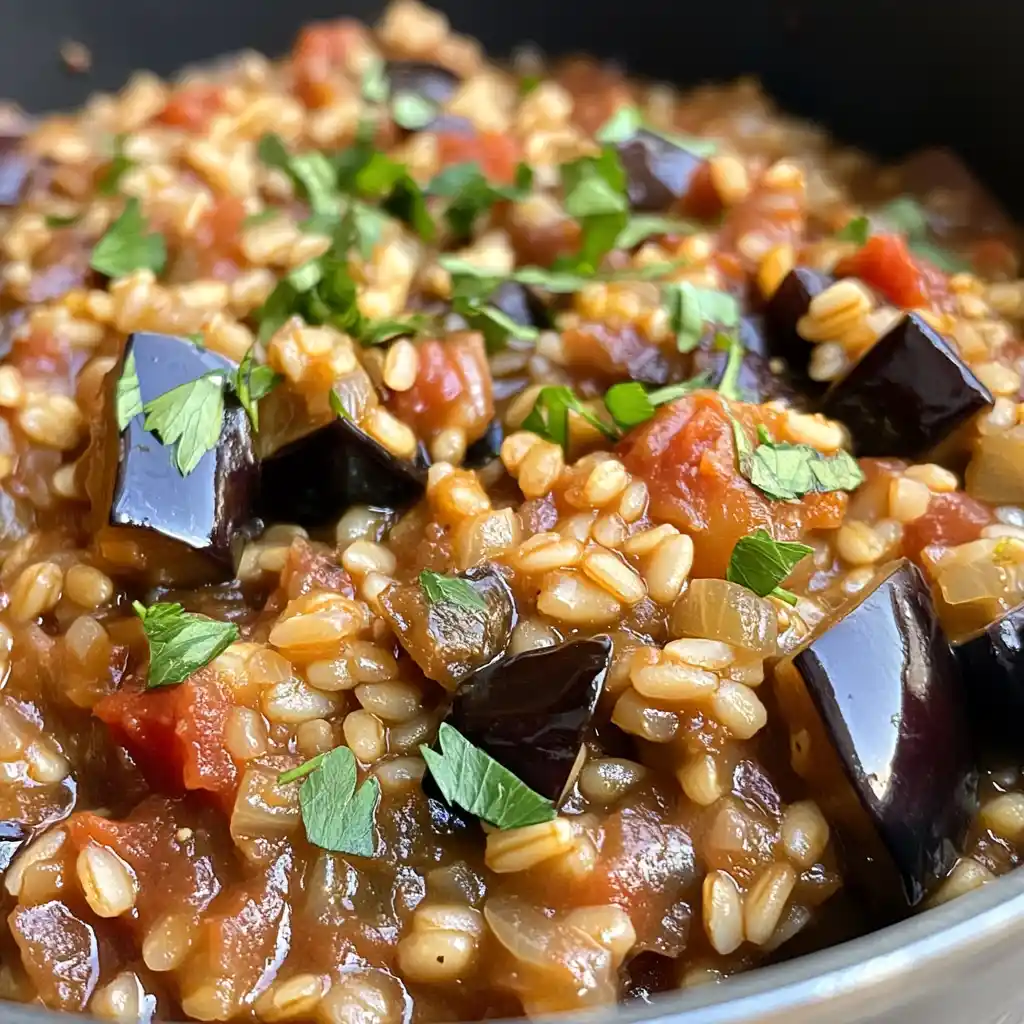
What makes this Lebanese eggplant barley work so well is how the eggplant melts into this silky, almost creamy texture while the barley soaks up all those incredible spices and tomato flavors. I learned the hard way that eggplant can be tricky—sometimes it’s bitter, sometimes it’s spongy—but cooking it this way completely transforms it into something magical. The secret? Letting everything simmer together so the flavors marry and the barley gets tender and chewy without turning mushy. Around here, we’ve figured out that pearl barley is the perfect grain for this because it holds its shape and has this satisfying, nutty bite. It’s honestly that simple—no complicated Middle Eastern cooking techniques needed, just good ingredients and patience while it bubbles away.
What You’ll Need (And My Shopping Tips)
Good eggplants are worth picking carefully—look for ones that feel heavy for their size with shiny, smooth skin. Don’t cheap out on those sad, wrinkled eggplants with brown spots; I learned this after buying questionable ones three times that turned bitter and ruined the whole dish. Medium-sized eggplants are perfect here because they’re easier to dice and have fewer seeds than the enormous ones.
Pearl barley is different from quick-cooking barley, so grab the right one (happens more than I’d like to admit when I’m rushing through the bulk bins). Pearl barley has had the outer hull removed and cooks up tender with a slight chewiness that’s perfect for this dish. Fresh garlic makes all the difference—that pre-minced stuff in a jar just doesn’t have the same punch. I always grab an extra head because someone inevitably wants to make this again the next week.
Canned diced tomatoes are your friend here—I actually prefer them to fresh tomatoes for this recipe because they’re consistent and already broken down. Look for ones without added salt so you can control the seasoning yourself. Vegetable broth can be store-bought or homemade; I go for low-sodium because I like being in control of the salt level. Ground cumin is essential to that warm, earthy Lebanese flavor profile—make sure yours is fresh because old cumin tastes dusty and sad.
Olive oil should be decent quality since it’s building the base of your flavor. Fresh parsley is traditional for garnish, though if you skip it, I won’t judge (I forget it about half the time). Paprika adds color and a subtle sweetness—I usually go for regular sweet paprika, but smoked paprika works if you want a deeper flavor.
Let’s Make This Together
Start by heating a good glug of olive oil in a large pot over medium heat. Add your chopped onion and minced garlic, then sauté until everything’s fragrant and the onions turn translucent—about 3-4 minutes. Here’s where I used to mess up: don’t let the garlic brown or it’ll taste bitter. You want golden and aromatic, not dark and burnt.
Toss in your diced eggplant and let it cook, stirring occasionally, until it starts to soften—about 5-7 minutes. The eggplant will soak up that olive oil like a sponge at first, which is totally normal. Don’t panic and add more oil; it’ll release moisture as it cooks. I learned this trick from my friend’s grandmother: the eggplant should start to collapse a bit and lose that raw, spongy texture.
Now for the fun part: stir in your pearl barley and let it toast for a few minutes, stirring frequently. This step is optional but really amps up the nutty flavor of the barley. You’ll smell it getting toasty and see it turning slightly golden. Don’t be me and wander off during this step; I used to get distracted and end up with burned barley stuck to the bottom of my pot.
Pour in the diced tomatoes and vegetable broth, then season with cumin, paprika, salt, and pepper. Give everything a good stir to make sure the barley isn’t clumping together. Here’s my secret: I always taste the broth at this point to check the seasoning because it’s way easier to adjust now than later.
Bring the whole mixture to a boil, then reduce the heat to low, cover your pot with a lid, and let it simmer for 30-40 minutes. The barley should be tender and chewy, and most of the liquid should be absorbed. I learned this the hard way: check it around the 30-minute mark because every stove is different and you don’t want it to dry out completely or turn to mush. If it’s looking dry but the barley’s still hard, add a splash more broth and keep cooking.
Once the barley is tender and everything looks gorgeous and melded together, remove the pot from heat. Taste and adjust your seasoning if needed—sometimes it needs an extra pinch of salt or a squeeze of lemon juice (which isn’t in the original recipe but I always add anyway). Serve this Lebanese eggplant barley hot, garnished with fresh parsley if you remembered to buy it, alongside some crusty bread or over fluffy rice if you want to stretch it further.
When Things Go Sideways (And They Will)
Eggplant tastes bitter? This usually happens with older eggplants or ones with lots of seeds. In reality, I’ve learned to pick smaller, younger eggplants and avoid the ones that feel light for their size. If this happens, adding a pinch of sugar to the tomatoes can help balance it out (not enough to make it sweet, just to cut the bitterness).
Barley is still hard after 40 minutes? Your heat was probably too low or you didn’t use enough liquid. This is totally fixable—just add more broth (or even water in a pinch), bring it back to a simmer, cover, and cook for another 10-15 minutes. Different brands of barley can take different cooking times, so don’t stress if yours needs extra time.
Dish turned out too liquidy? Don’t panic—just remove the lid and let it simmer uncovered for a few more minutes to evaporate excess liquid. If this happens (and it will), just keep cooking and stirring occasionally. I always check mine at 30 minutes now because I’d rather add liquid than have it turn into soup. Everything stuck to the bottom of the pot? Your heat was too high or you didn’t stir enough. Use a wooden spoon to scrape up those brown bits—they’re flavor gold, not burnt food, as long as they’re not black.
When I’m Feeling Creative
Spicy Lebanese Eggplant Barley: Add a teaspoon of red pepper flakes with the cumin for a warm kick that pairs beautifully with the sweet eggplant. When I’m feeling fancy, I’ll add a drizzle of chili oil on top when serving.
Herbed Version: Stir in fresh mint and dill along with the parsley at the end for a brighter, more herbaceous flavor. Around the summer months, I’ll use this variation because fresh herbs from the garden make it feel special.
Protein-Packed Barley: Add cooked chickpeas in the last 10 minutes of cooking for extra protein and texture. I do this when I want it to be a complete meal without any sides.
Lemon-Tahini Lebanese Barley: Drizzle with tahini thinned with lemon juice before serving for that classic Middle Eastern creaminess. This is my go-to when I want something that feels more substantial and rich.
What Makes This Recipe Special
This Lebanese eggplant barley recipe represents the heart of Levantine cooking—simple, seasonal ingredients cooked slowly to develop deep, complex flavors. The technique of simmering grains with vegetables is common throughout the Middle East, where one-pot meals have fed families for generations. What sets this apart from other grain-based dishes is how the eggplant breaks down into the sauce, creating richness without cream or excessive oil. The combination of cumin and paprika provides that warm, aromatic quality that makes Lebanese food so comforting, while the pearl barley adds substance and makes this genuinely filling without feeling heavy.
Things People Ask Me About This Recipe
Can I make this Lebanese eggplant barley ahead of time?
Absolutely! This actually tastes better the next day after all the flavors have had time to meld together. Store it in an airtight container in the fridge for up to 4 days. The barley will absorb more liquid as it sits, so when reheating, add a splash of broth or water to loosen it up. I make this every Sunday for easy weekday lunches.
What if I can’t find pearl barley for this recipe?
You can substitute with farro, brown rice, or even quinoa, though cooking times will vary. Pearl barley has a specific chewy texture that’s hard to replicate, but farro comes pretty close. If using quinoa, reduce the cooking time to about 20 minutes and use less liquid. I’ve tried most substitutions, and while they work, pearl barley really is worth seeking out for the authentic texture.
Is this Lebanese eggplant barley vegan?
Yes! As long as you use vegetable broth, this is completely plant-based and vegan-friendly. It’s naturally packed with fiber, vitamins, and protein from the barley, making it a nutritious option for any diet. I serve this to my vegan friends all the time and they love it.
Can I freeze this dish?
You can freeze it for up to 3 months in airtight containers. The texture of the eggplant may change slightly when thawed—it gets a bit softer—but the flavor holds up beautifully. Thaw overnight in the fridge and reheat on the stove with a splash of liquid. I usually freeze individual portions for quick lunches.
What should I serve with this Lebanese eggplant barley?
This is pretty substantial on its own, but it pairs beautifully with a simple cucumber-tomato salad, some tangy labneh or Greek yogurt on the side, and warm pita bread for scooping. A squeeze of fresh lemon juice over the top brightens everything up. I usually keep it simple because the barley is already so flavorful.
How can I tell when the barley is done cooking?
The barley should be tender but still have a slight chew—it shouldn’t be mushy or crunchy. Taste a few grains around the 30-minute mark. If it’s still too firm, keep cooking and checking every 5 minutes. The liquid should be mostly absorbed, with just a bit of sauciness left. Trust your taste buds more than the timer.
Before You Head to the Kitchen
I couldn’t resist sharing this Lebanese eggplant barley recipe because it’s one of those rare dishes that’s genuinely nourishing, flavorful, and requires minimal effort for maximum reward. The best Lebanese barley nights are when I make a huge pot and have leftovers for days, each serving somehow tasting better than the last. Give yourself permission to adjust the spices to your taste, don’t stress if your barley takes a bit longer to cook than expected, and remember that even slightly imperfect one-pot Middle Eastern dinners beat takeout any day of the week.
Print
Lebanese Eggplant Barley
Description
This hearty, comforting Lebanese eggplant barley combines tender eggplant, nutty pearl barley, and warm spices in a one-pot dish that’s perfect for easy weeknight dinners or meal prep.
Prep Time: 15 minutes | Cook Time: 50 minutes | Total Time: 1 hour 5 minutes | Servings: 4-6
Ingredients
- 2 medium eggplants, peeled and diced into 3/4-inch cubes (about 6 cups)
- 1 cup pearl barley (not quick-cooking)
- 1 medium onion, chopped
- 3 cloves garlic, minced finely
- 1 can (14 oz) diced tomatoes (preferably no salt added)
- 2 cups vegetable broth, preferably low-sodium (plus extra if needed)
- 1 tsp ground cumin (make sure it’s fresh for best flavor)
- 1 tsp paprika (sweet or smoked both work)
- Salt and pepper, to taste (start with 1 tsp salt)
- Fresh parsley, for garnish (totally optional)
- 3 tbsp olive oil (decent quality matters)
Instructions
- In a large pot or Dutch oven, heat olive oil over medium heat. Add the chopped onion and minced garlic, then sauté for 3-4 minutes until fragrant and the onions turn translucent. Watch the garlic carefully—you want golden, not brown.
- Add the diced eggplant to the pot and cook for 5-7 minutes, stirring occasionally, until it starts to soften and lose that raw, spongy texture. Don’t worry when it soaks up all the oil at first—it’ll release moisture as it cooks.
- Stir in the pearl barley and let it toast for 2-3 minutes, stirring frequently so it doesn’t stick. You’ll smell it getting nutty and toasty—that’s exactly what you want.
- Pour in the diced tomatoes (with their juice) and vegetable broth. Season with ground cumin, paprika, salt, and pepper. Give everything a good stir to make sure the barley isn’t clumping together and all the spices are distributed.
- Bring the mixture to a boil over medium-high heat, then reduce the heat to low, cover the pot with a lid, and let it simmer for 30-40 minutes. Check around the 30-minute mark—the barley should be tender with a slight chew, and most of the liquid should be absorbed. If it looks dry but the barley’s still hard, add a splash more broth and keep cooking.
- Once the barley is tender and everything looks beautifully melded together, remove the pot from heat. Taste and adjust seasoning if needed—sometimes it needs an extra pinch of salt or a squeeze of lemon juice.
- Serve the Lebanese eggplant barley hot, garnished with fresh parsley if you have it. This is delicious on its own or served with crusty bread, yogurt, or over rice.
Nutrition Information (Per Serving – based on 6 servings):
- Calories: 220
- Carbohydrates: 40g
- Protein: 6g
- Fat: 7g
- Fiber: 10g
- Sodium: 340mg
- Sugar: 6g
- Iron: 15% DV
- Vitamin C: 20% DV (from eggplant and tomatoes)
This provides excellent fiber from the barley and eggplant, making it a filling, nutritious meal that keeps you satisfied for hours.
Notes:
- Dice eggplant evenly so it cooks at the same rate—about 3/4-inch cubes work perfectly.
- Fresh spices matter here—old cumin tastes dusty and won’t give you that warm, aromatic flavor.
- Every stove runs differently, so check your barley around 30 minutes and adjust cooking time as needed.
- Don’t skip toasting the barley—it adds a nutty depth that makes the dish special.
- Add a squeeze of lemon juice at the end for brightness (not in the original recipe but I always do it).
Storage Tips:
Store leftover Lebanese eggplant barley in an airtight container in the fridge for up to 4 days. The barley will absorb more liquid as it sits, so when reheating, add a splash of broth or water to loosen it up. Reheat gently on the stovetop over medium-low heat, stirring occasionally. This freezes beautifully for up to 3 months—freeze in individual portions for easy grab-and-go lunches. Thaw overnight in the fridge and reheat on the stove. The texture of the eggplant may soften slightly when frozen, but the flavor stays delicious.
Serving Suggestions:
- Tangy Yogurt or Labneh: A dollop on top adds creamy coolness that balances the warm spices
- Cucumber-Tomato Salad: Fresh, crisp vegetables with lemon dressing complement the hearty barley
- Warm Pita Bread: Perfect for scooping up every last bite
- Fresh Lemon Wedges: A squeeze of lemon brightens everything beautifully
Mix It Up (Recipe Variations):
Spicy Lebanese Eggplant Barley: Add 1 teaspoon red pepper flakes with the cumin and drizzle with chili oil when serving for a warming kick.
Herbed Version: Stir in chopped fresh mint and dill along with the parsley at the end for a brighter, more herbaceous flavor profile.
Protein-Packed Barley: Add a can of drained chickpeas in the last 10 minutes of cooking for extra protein and a more substantial meal.
Lemon-Tahini Lebanese Barley: Drizzle with tahini thinned with lemon juice and water before serving for classic Middle Eastern creaminess.
What Makes This Recipe Special:
This Lebanese eggplant barley recipe showcases the beauty of Levantine one-pot cooking—simple ingredients simmered together slowly to create deep, complex flavors. The eggplant breaks down into the sauce, creating natural richness without cream or excessive oil, while the pearl barley provides satisfying texture and makes this genuinely filling. The warm spices of cumin and paprika deliver that signature Lebanese comfort food quality that makes this dish both nourishing and crave-worthy.
