
Ever wonder why restaurant pesto tastes so bright and fresh while yours turns dark and bitter? I used to think you needed a professional food processor to make perfect lemon pesto until I discovered this ridiculously simple recipe. Now my party guests hover around this homemade pesto dip and beg for the recipe, and I’m pretty sure they think I’m some kind of Italian cooking genius (if only they knew this takes 5 minutes and one food processor).
Here’s the Thing About This Recipe
What makes this fresh basil pesto work is adding lemon juice at the end and using fresh, high-quality ingredients—that’s literally the secret to bright green pesto that doesn’t oxidize and turn brown. Most people make traditional pesto and wonder why it tastes heavy and goes dark within an hour. The secret to authentic vibrant flavor isn’t complicated techniques—it’s all about balancing the richness of cheese and nuts with bright citrus. It’s honestly that simple, no Italian grandmother required.
What You’ll Need (And My Shopping Tips)
Good fresh basil is absolutely essential here—look for bright green leaves with no dark spots or wilting. I learned this after making bitter, brown pesto twice with sad, old basil from the discount bin. The leaves should smell intensely aromatic when you rub them between your fingers. Around here, we’ve discovered that growing our own basil or buying it from farmers markets gives the best flavor, but grocery store basil works fine if it’s fresh.
Fresh basil makes all the difference. According to Bon Appétit’s guide to basil, the leaves should be perky and vibrant with no browning or sliminess. Store it at room temperature with the stems in water like a bouquet—refrigerating turns the leaves black.
For the pine nuts, taste them before using to make sure they’re not rancid (happens more than I’d like to admit with old nuts). They should taste sweet and buttery, not bitter or sour. Fresh garlic should be firm and plump, not sprouting or dried out. Use real Parmesan cheese and grate it yourself from a block—pre-grated cheese has anti-caking agents that make the pesto grainy. Good quality extra virgin olive oil matters here since you can really taste it. Fresh lemon juice is non-negotiable—that bottled stuff tastes like cleaning products and will ruin your pesto.
Let’s Make This Together
Start by gathering all your ingredients—this comes together so fast you won’t have time to hunt for things once you start. Rinse your basil leaves gently and pat them completely dry with paper towels. Here’s where I used to mess up—wet basil makes watery pesto that doesn’t emulsify properly.
Toss your dry basil leaves, pine nuts, and garlic cloves into your food processor. Pulse about 8-10 times until everything’s finely chopped. You want small pieces but not completely pureed yet. Stop and scrape down the sides with a rubber spatula to make sure everything gets chopped evenly.
Add the grated Parmesan cheese and pulse a few more times to combine. Now for the fun part—with the food processor running, slowly drizzle in the olive oil through the feed tube. This gradual addition creates an emulsion and makes the pesto smooth and creamy instead of separated and oily. Process until it forms a smooth paste, about 30-45 seconds.
Add the fresh lemon juice and pulse just until it’s well combined. Here’s my secret that I learned from too many failed pestos: add the lemon juice last so the acid doesn’t react with the basil and turn it brown. Taste it and season with salt and pepper—start with ¼ teaspoon of salt and add more if needed.
Transfer your bright green lemon pesto to a serving bowl and garnish with fresh lemon zest. The zest adds an extra pop of lemon flavor and makes it look professional. Serve immediately with fresh vegetables, crackers, or toasted bread. This also pairs beautifully as a spread with this Bruschetta from the collection.
If This Happens, Don’t Panic
Pesto turned dark green or brown? You probably added the lemon juice too early or let it sit too long before serving. This is harder to prevent after it happens, but you can stir in a tablespoon more of fresh lemon juice to brighten it slightly. Next time, add lemon at the very end and serve immediately. I always make this right before guests arrive.
Pesto tastes bitter? Don’t panic—your garlic might have been too strong or your pine nuts were rancid. If this happens (and it will if your nuts are old), you can add a teaspoon of honey or a bit more Parmesan to balance it. Always taste your pine nuts before using them.
Pesto too thick or too thin? Next time adjust the olive oil amount. If it’s already made and too thick, drizzle in a bit more oil and pulse. Too thin? Add more cheese or a handful more basil and process again. The consistency should be like a thick, spreadable paste.
When I’m Feeling Creative
Walnut Lemon Pesto: Replace pine nuts with toasted walnuts for a more affordable version with deeper, earthier flavor. Around fall when walnuts are fresh, this version is incredible.
Spicy Lemon Pesto: Add a pinch of red pepper flakes or a fresh jalapeño to the food processor for some heat. My husband requests this version for everything.
Arugula Lemon Pesto: Replace half the basil with fresh arugula for a peppery twist. The arugula adds a nice bite that’s different from traditional pesto.
Vegan Lemon Pesto: Skip the Parmesan and add nutritional yeast plus an extra tablespoon of pine nuts for a dairy-free version. Add a tablespoon of miso paste for that umami depth.
What Makes This Recipe Special
Pesto originated in Genoa, Italy, where it’s traditionally made with a mortar and pestle (the name comes from the Italian “pestare,” meaning to pound or crush). According to Wikipedia’s entry on pesto, the classic Genovese version uses basil, pine nuts, garlic, Parmesan, and olive oil. What sets this lemon pesto dip apart is the addition of bright lemon juice and zest, which transforms traditional pesto into something lighter and more refreshing—perfect for dipping rather than just tossing with pasta. The lemon cuts through the richness of the cheese and nuts, creating a more balanced flavor that doesn’t feel heavy. This is the kind of appetizer that makes people think you spent hours in the kitchen when you really spent five minutes.
Things People Ask Me About This Recipe
Can I make this fresh basil pesto ahead of time?
You can make it a few hours ahead and store it in the fridge, but it’s best served fresh. Press plastic wrap directly onto the surface to prevent browning. The lemon juice helps it stay green longer than traditional pesto.
What if I can’t find pine nuts for this homemade pesto dip?
Walnuts, almonds, or cashews all work as substitutes. Toast them first to bring out their flavor. Pine nuts are traditional, but other nuts are perfectly acceptable and often more affordable.
Can I freeze this lemon pesto?
You can freeze it without the cheese for up to 3 months. Add the Parmesan after thawing. Freeze in ice cube trays for easy portioning, then transfer to freezer bags. The texture changes slightly but it’s still delicious.
What else can I use this pesto for besides dipping?
Toss it with pasta, spread it on sandwiches, use it as a pizza sauce, stir it into soups, or dollop it on grilled chicken or fish. It’s incredibly versatile and adds bright flavor to everything.
Is this lemon pesto dip actually healthy?
It’s pretty nutritious! Basil is packed with antioxidants and vitamins, pine nuts have healthy fats, and there’s minimal processing. It’s calorie-dense from the oil and nuts, but a little goes a long way for flavor.
What’s the best way to store leftover pesto?
Keep it in an airtight container in the fridge for up to 5 days. Pour a thin layer of olive oil on top to prevent browning. Bring to room temperature before serving for the best flavor.
Before You Head to the Kitchen
I couldn’t resist sharing this lemon pesto dip because it’s saved me so many times when I need an impressive appetizer in minutes. The best party moments are when I set this out with some crusty bread and vegetables, and watch it disappear while everyone asks how I made it. Give this a try and you’ll never buy store-bought pesto again!
Print
Lemon Pesto Cocktail
Description
Bright, fresh, and incredibly flavorful—this homemade pesto with lemon is the perfect make-ahead appetizer that impresses everyone.
Prep Time: 5 minutes | Cook Time: 0 minutes | Total Time: 5 minutes | Servings: 8 (makes about 1 cup)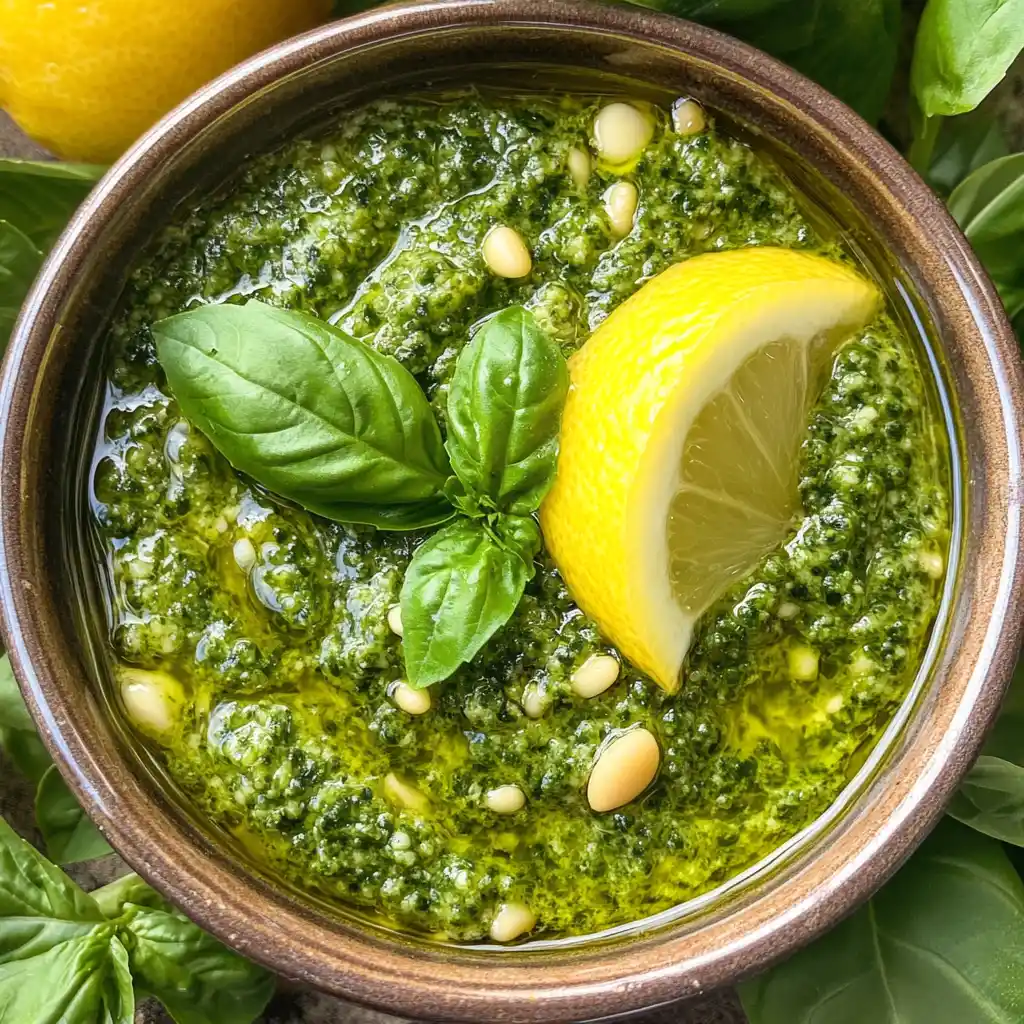
Ingredients
- 2 cups fresh basil leaves, packed (about 2 large bunches—make sure they’re dry)
- ¼ cup pine nuts (toast them if you want extra flavor)
- 2 cloves garlic (adjust based on how garlicky you like it)
- ½ cup grated Parmesan cheese (real Parm from a block, not pre-grated)
- ¼ cup olive oil (good quality extra virgin—you’ll taste it)
- ¼ cup fresh lemon juice (about 2 lemons—never use bottled)
- Salt and pepper to taste (start with ¼ tsp salt)
- Lemon zest for garnish (adds visual appeal and extra flavor)
Instructions
- Rinse your basil leaves gently and pat them completely dry with paper towels. Wet basil makes watery pesto that doesn’t emulsify right. This step is important—don’t skip it.
- In a food processor, combine the dry basil leaves, pine nuts, and garlic cloves. Pulse about 8-10 times until everything’s finely chopped. Stop and scrape down the sides with a rubber spatula to make sure everything gets chopped evenly.
- Add the grated Parmesan cheese and pulse a few more times to combine everything.
- With the food processor running, slowly drizzle in the olive oil through the feed tube. This gradual addition creates an emulsion and makes smooth, creamy pesto instead of separated, oily mess. Process until it forms a smooth paste, about 30-45 seconds. Every food processor is different, so yours might take more or less time.
- Add the fresh lemon juice and pulse just until it’s well combined. Don’t over-process or it’ll get too thin. The lemon juice goes in last so the acid doesn’t turn the basil brown.
- Taste your pesto and season with salt and pepper. Start with ¼ teaspoon salt and adjust from there—the Parmesan is already salty, so you might not need much.
- Transfer the bright green lemon pesto to a serving bowl and garnish with fresh lemon zest. The zest adds extra pop and makes it look professional.
- Serve immediately as a dip with fresh vegetables (carrots, bell peppers, cucumbers), crackers, or toasted bread. This is best fresh but can be made a few hours ahead!
Nutrition Information (Per 2 Tablespoon Serving):
- Calories: 120
- Carbohydrates: 3g
- Protein: 4g
- Fat: 11g
- Fiber: 1g
- Sodium: 140mg
- Vitamin K: 35% DV (basil is loaded with this)
- Calcium: 10% DV (from the Parmesan)
This fresh basil pesto packs nutrients from herbs and healthy fats from nuts and olive oil—way better than processed store-bought dips.
Notes:
- Make sure your basil is completely dry before processing. Wet leaves make watery pesto.
- Add lemon juice last to prevent the acid from turning basil brown.
- Toast your pine nuts first if you want deeper, nuttier flavor.
- Use real Parmesan from a block. Pre-grated has anti-caking agents that make pesto grainy.
- Adjust garlic to taste. Start with 2 cloves and add more if you want it garlickier.
- Serve immediately or within a few hours for the brightest green color.
Storage Tips:
- Store in an airtight container in the fridge for up to 5 days.
- Pour a thin layer of olive oil on top to prevent browning and oxidation.
- Press plastic wrap directly onto the surface for extra protection.
- Freeze without cheese for up to 3 months in ice cube trays, then transfer to freezer bags.
- Bring to room temperature before serving for the best flavor and texture.
Serving Suggestions:
- As a Dip: Serve with fresh vegetables, crackers, or toasted baguette slices for dipping.
- On Pasta: Toss with hot pasta, adding pasta water to thin it out to sauce consistency.
- On Sandwiches: Spread on sandwiches or wraps instead of mayo for a flavor boost.
- With Proteins: Dollop on grilled chicken, fish, or steak right before serving.
Mix It Up (Recipe Variations):
Walnut Lemon Pesto: Replace pine nuts with ¼ cup toasted walnuts for a more affordable version with deeper, earthier flavor. Walnuts are way cheaper and taste amazing.
Spicy Lemon Pesto: Add ½ teaspoon red pepper flakes or 1 fresh jalapeño (seeds removed) to the food processor for heat. The spice complements the lemon beautifully.
Arugula Lemon Pesto: Replace 1 cup of the basil with 1 cup fresh arugula for a peppery twist. The arugula adds a nice bite that’s different from traditional pesto.
Vegan Lemon Pesto: Skip the Parmesan and add 3 tablespoons nutritional yeast plus an extra tablespoon of pine nuts. Add 1 tablespoon white miso paste for that umami depth you get from cheese.
What Makes This Recipe Special:
This pesto modernizes the traditional Genovese recipe by adding bright lemon juice and zest, which transforms it from a heavy pasta sauce into a versatile, lighter dip. The citrus cuts through the richness of the cheese and nuts while keeping the basil vibrant green longer than traditional recipes. It’s proof that classic recipes can be adapted for modern tastes while still respecting their Italian roots.
