
Ever wonder why some lemon poppy seed bread recipes turn out dry and boring while others are moist, tangy, and absolutely irresistible? I used to think making bakery-style lemon poppy seed bread at home was impossible until I finally cracked the code. Now my family requests this bright, citrusy treat every single weekend, and my neighbors think I’ve got some secret baking talent (if only they knew how many dense, flavorless loaves I made before getting this one just right).
Here’s the Thing About This Recipe
What makes this lemon poppy seed bread work is the perfect balance of tangy lemon and rich buttermilk. I learned the hard way that skimping on fresh lemon zest leaves you with bread that tastes more like plain vanilla than lemon. The buttermilk isn’t just for flavor—it’s what keeps this loaf incredibly moist and gives it that tender crumb that practically melts in your mouth. Around here, we’ve figured out that using both lemon zest and fresh lemon juice creates layers of citrus flavor that hit you in all the right ways. It’s honestly that simple—no fancy techniques, just real ingredients working together.
What You’ll Need (And My Shopping Tips)
Good lemons are worth hunting down at the farmers market or produce section where you can actually smell them. Don’t cheap out on those sad, hard lemons that have been sitting around forever—I learned this after making three batches with flavorless fruit. You want lemons that feel heavy for their size and have thin, bright yellow skin (that’s where all the aromatic oils live).
Fresh buttermilk makes a huge difference here. If you can’t find buttermilk, you can make a quick substitute by adding a tablespoon of lemon juice or white vinegar to regular milk and letting it sit for 5 minutes (happens more than I’d like to admit when I forget to check my fridge). I always grab an extra lemon because someone inevitably wants more lemon flavor, and honestly, you can never have too much citrus in this bread.
For the poppy seeds, check the bulk section or spice aisle—they should smell fresh and slightly nutty. Old poppy seeds can taste stale and won’t give you those lovely little pops of texture throughout each slice. You can learn more about selecting the freshest poppy seeds and their culinary uses to make sure you’re getting quality seeds.
Let’s Make This Together
Start by cranking your oven to 350°F and greasing your 9×5-inch loaf pan really well—I’m talking corners, sides, everything. Here’s where I used to mess up: I’d skip flouring the pan after greasing it, and then half my beautiful bread would stick to the bottom. Don’t be me.
In your big mixing bowl, whisk together all those dry ingredients: flour, sugar, salt, baking powder, baking soda, poppy seeds, and that gorgeous lemon zest. Now for the fun part—zesting those lemons. Use a microplane or fine grater and only get the yellow part; the white pith underneath is bitter and will make you sad.
Mix your wet ingredients in a separate bowl: oil, buttermilk, eggs, and fresh lemon juice. I learned this trick from my neighbor who’s an actual baker—room temperature eggs blend way better and create a smoother batter, so take them out of the fridge about 20 minutes before you start.
Here’s my secret: pour the wet ingredients into the dry and stir until just combined. You should still see a few flour streaks, and that’s totally fine. Overmixing creates tough, dense bread with tunnels running through it (ask me how I know). The batter will look thick and slightly lumpy—resist the urge to keep stirring.
Pour everything into your prepared pan and smooth the top gently. Slide it into the oven and set your timer for 50 minutes, but start checking around 45 because every oven has its own personality. You’re looking for a golden-brown top and a toothpick that comes out clean or with just a few moist crumbs. If you’re looking for another citrusy treat to try, check out this Orange Cranberry Bread that uses similar techniques.
When Things Go Sideways (And They Will)
Bread turned out dry? You probably baked it too long or your oven runs hot. In reality, I’ve learned to check my bread at least 5 minutes earlier than the recipe says because my oven is basically a blazing inferno. If this happens (and it will), next time reduce the baking time and cover the top with foil if it’s browning too fast.
Top cracked wide open? Don’t panic—that’s actually what you want! A nice crack down the middle means your lemon poppy seed bread rose properly. This is totally fixable if it doesn’t crack by making sure your oven temperature is accurate (get an oven thermometer, seriously).
Bread sank in the middle? This usually means you overmixed the batter or opened the oven door too early. I always check early now because I’m impatient, but I’ve learned to resist peeking before the 40-minute mark. The leavening needs time to work its magic without temperature fluctuations messing things up.
When I’m Feeling Creative
Glazed Lemon Poppy Seed Bread: When I’m feeling fancy, I’ll whisk together 1 cup of powdered sugar with 2-3 tablespoons of fresh lemon juice and drizzle it over the cooled bread. It turns this into a proper dessert-level situation.
Blueberry Lemon Poppy Seed Bread: Around the summer when berries are everywhere, I’ll gently fold in a cup of fresh blueberries right before baking. The berries burst and create these amazing jammy pockets throughout the loaf.
Almond Poppy Seed Bread: Swap half the lemon zest for almond extract (just 1/2 teaspoon—it’s strong!) for a different flavor profile that’s equally delicious. My mother-in-law requests this version every holiday.
Vegan Lemon Poppy Seed Bread: Replace the eggs with flax eggs (2 tablespoons ground flaxseed mixed with 6 tablespoons water), use dairy-free milk with vinegar instead of buttermilk, and you’ve got a plant-based version that’s surprisingly close to the original.
What Makes This Recipe Special
This lemon poppy seed bread stands out because it uses the whole lemon—both zest and juice—to create a bright, complex citrus flavor that most recipes miss. The technique of keeping wet and dry ingredients separate until the last moment, then barely mixing them together, is what professional bakers call the “muffin method.” It’s the secret to getting that perfect tender, cake-like crumb instead of tough, chewy bread.
The buttermilk isn’t just there for tang—it reacts with the baking soda to create extra lift and tenderness. You can learn more about how buttermilk works in baking and why it’s such a game-changer for quick breads. This is the kind of knowledge that’ll make all your baking better, not just this recipe.
Things People Ask Me About This Recipe
Can I make this lemon poppy seed bread ahead of time?
Absolutely! This bread actually gets better after sitting for a day because the flavors meld together. I usually make it the night before I need it, wrap it tightly in plastic wrap once it’s completely cool, and leave it on the counter. It stays moist and delicious for up to 3 days at room temperature.
What if I can’t find buttermilk for this bread?
Don’t stress about this part—just add 1 tablespoon of white vinegar or lemon juice to a measuring cup, then fill it up to the 1-cup mark with regular milk. Let it sit for 5 minutes and boom, you’ve got homemade buttermilk. I’ve used this trick more times than I can count.
How do I keep the poppy seeds from sinking to the bottom?
Here’s what I’ve learned: toss the poppy seeds with a tiny bit of the flour before adding them to the dry ingredients. The flour coating helps suspend them throughout the batter instead of letting gravity pull them down. Works like a charm every time.
Can I freeze this homemade lemon poppy seed bread?
Yes! Wrap the completely cooled loaf tightly in plastic wrap, then again in aluminum foil, and freeze for up to 3 months. Thaw it overnight on the counter still wrapped—this keeps all the moisture locked in. I always make two loaves and freeze one for those mornings when I need something special but don’t have time to bake.
Is this lemon poppy seed bread beginner-friendly?
This is one of the easiest quick breads you can make. If you can mix ingredients in two bowls and use an oven, you can make this. The most important thing is not overmixing—which actually makes it more forgiving than recipes that require perfect technique.
What’s the best way to store leftover bread?
Keep it wrapped tightly in plastic wrap or in an airtight container at room temperature for up to 3 days. Don’t refrigerate it—that actually makes bread go stale faster. If it lasts longer than 3 days (unlikely in my house), freeze individual slices wrapped in plastic for quick breakfasts.
One Last Thing
I couldn’t resist sharing this lemon poppy seed bread recipe because it’s one of those reliable, crowd-pleasing treats that makes you look like you know what you’re doing in the kitchen. The best bread-baking mornings are when your whole house smells like fresh lemon and everyone wanders into the kitchen asking what smells so amazing. Trust me on this one—you’ve got this.
Print
Lemon Poppy Seed Bread
Description
Bright, moist lemon poppy seed bread with the perfect balance of tangy citrus and tender crumb—this bakery-style quick bread is easier to make than you’d think and absolutely irresistible.
Prep Time: 15 minutes | Cook Time: 55 minutes | Total Time: 70 minutes | Servings: 10 slices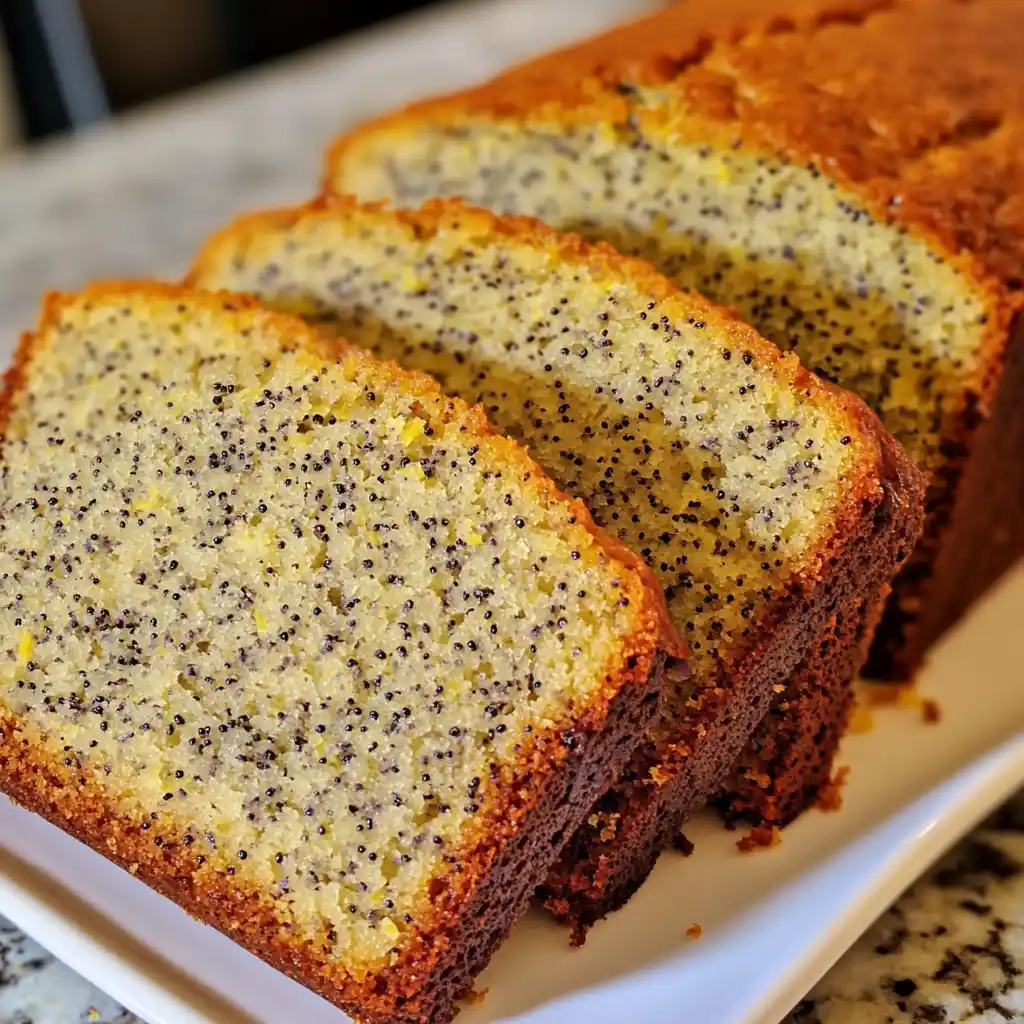
Ingredients
- 2 cups all-purpose flour (just scoop and level, no need to stress about exact measurements)
- 1 cup granulated sugar
- 1/2 teaspoon salt
- 1 teaspoon baking powder
- 1/2 teaspoon baking soda
- 2 tablespoons poppy seeds (make sure they’re fresh and fragrant)
- Zest of 2 medium lemons (only the yellow part, not the bitter white pith)
- 1/2 cup vegetable oil (or melted coconut oil if you want a subtle tropical note)
- 1 cup buttermilk, at room temperature (or use the vinegar/milk trick from the FAQ)
- 2 large eggs, at room temperature
- 2 tablespoons fresh lemon juice (from about half a lemon)
Instructions
- Start by preheating your oven to 350°F and generously greasing and flouring a 9×5-inch loaf pan—don’t skip the flour or you’ll regret it when half your bread sticks to the pan.
- In a large mixing bowl, whisk together the flour, sugar, salt, baking powder, baking soda, poppy seeds, and lemon zest until everything’s evenly distributed and you can smell that amazing citrus.
- In a separate bowl, whisk together the vegetable oil, buttermilk, eggs, and lemon juice until it’s smooth and well combined. Room temperature ingredients blend way better, so plan ahead if you can.
- Pour your wet ingredients into the dry ingredients and stir gently with a wooden spoon or spatula until just combined—you should still see a few flour streaks and the batter will look thick and slightly lumpy. Seriously, resist the urge to keep stirring or you’ll end up with tough bread.
- Pour the batter into your prepared loaf pan and smooth the top gently with a spatula. Give the pan a light tap on the counter to release any air bubbles.
- Slide it into the preheated oven and bake for 50-60 minutes, checking around the 45-minute mark because ovens vary wildly. You’re looking for a golden-brown top and a toothpick inserted in the center that comes out clean or with just a few moist crumbs.
- Let the bread cool in the pan for about 10 minutes—this makes it way easier to remove without it falling apart. Then turn it out onto a wire rack to cool completely before slicing (if you can wait that long).
- Slice into thick pieces and serve it warm or at room temperature. It’s perfect with morning coffee or as an afternoon treat.
Nutrition Information (Per Serving):
- Calories: 285
- Carbohydrates: 38g
- Protein: 4g
- Fat: 13g
- Fiber: 1g
- Sodium: 210mg
- Vitamin C: 8% DV (from fresh lemon juice)
- Calcium: 6% DV
This bread provides a good dose of vitamin C from the fresh lemon juice and zest, plus the poppy seeds add a small amount of calcium and healthy fats.
Notes:
- Room temperature matters: Take your eggs and buttermilk out of the fridge 20-30 minutes before you start. Cold ingredients don’t blend as smoothly and can create a denser loaf.
- Don’t overmix: This is the number one mistake people make with quick breads. Mix until you barely see any flour streaks and then stop—overmixing develops gluten and makes the bread tough.
- Zest before juicing: Always zest your lemons before you cut and juice them. Trust me, trying to zest a halved lemon is impossible and frustrating.
- Every oven runs differently: Start checking your bread 5 minutes earlier than the recipe suggests, especially if your oven tends to run hot. Better to check early than end up with dry bread.
- The crack is good: If your bread develops a big crack down the middle, that’s perfect! It means the bread rose properly and is exactly what you want to see.
Storage Tips:
Keep your lemon poppy seed bread wrapped tightly in plastic wrap or stored in an airtight container at room temperature for up to 3 days—it actually gets better on day two as the flavors develop. Don’t refrigerate it because that’ll dry it out fast. Microwaving leftover slices for about 10-15 seconds brings back that fresh-baked warmth and makes the bread taste like it just came out of the oven. For longer storage, wrap individual slices in plastic wrap, then place them in a freezer bag and freeze for up to 3 months. Thaw slices at room temperature or pop them straight into the toaster for a quick breakfast.
Serving Suggestions:
- Classic breakfast: Serve thick slices with softened butter and a hot cup of coffee or tea for the perfect morning treat.
- Fancy brunch: Toast slices lightly and top with whipped cream cheese mixed with a little lemon zest and honey.
- Afternoon tea: Cut into thin slices and serve alongside fresh berries and clotted cream for an elegant tea-time spread.
- Dessert mode: Warm a slice slightly and serve with a scoop of vanilla ice cream and fresh strawberries for an easy, impressive dessert.
Mix It Up (Recipe Variations):
Glazed Lemon Poppy Seed Bread: Whisk together 1 cup powdered sugar with 2-3 tablespoons fresh lemon juice until smooth, then drizzle over the cooled loaf. Let it set for 10 minutes before slicing—this turns it into a proper dessert-level treat.
Blueberry Lemon Poppy Seed Bread: Gently fold 1 cup fresh or frozen blueberries (don’t thaw them first) into the batter just before pouring it into the pan. The berries create amazing jammy pockets throughout the bread.
Almond Poppy Seed Bread: Reduce the lemon zest to 1 lemon and add 1/2 teaspoon pure almond extract to the wet ingredients for a totally different but equally delicious flavor profile.
Vegan Lemon Poppy Seed Bread: Replace the eggs with 2 flax eggs (2 tablespoons ground flaxseed mixed with 6 tablespoons water, let sit 5 minutes), and use 1 cup non-dairy milk mixed with 1 tablespoon vinegar instead of buttermilk. Everything else stays the same!
What Makes This Recipe Special:
This lemon poppy seed bread uses both lemon zest and juice to create layers of bright citrus flavor that most recipes miss. The “muffin method” technique—keeping wet and dry ingredients separate until the last moment, then barely mixing them—is what creates that perfect tender, cake-like crumb instead of dense, tough bread. The buttermilk reacts with the baking soda to create extra lift and incredible moisture that keeps this loaf fresh for days.
