
Ever wonder why some salads taste like boring rabbit food while others are so crunchy and refreshing you can’t stop eating them? I used to think making light celery and pomegranate salad was just tossing vegetables together until I discovered that slicing celery thinly on a bias, extracting pomegranate arils properly, and balancing the bright lemon dressing transforms this into something elegant and crave-worthy. Now my family requests this jewel-toned salad for every gathering, and I’m pretty sure my guests think I’ve been hiding my secret sophisticated salad skills (if only they knew how many batches I made with thick, stringy celery chunks and bitter white pomegranate pith before learning the crucial prep techniques).
Here’s the Thing About This Recipe
What makes this light celery and pomegranate salad work is slicing the celery very thinly on a diagonal to minimize stringiness and maximize surface area for dressing absorption, extracting clean pomegranate arils without bitter pith, and making a bright, simple dressing that enhances rather than masks the fresh flavors. I learned the hard way that thick celery chunks stay fibrous and tough, while paper-thin slices almost melt into tender-crisp ribbons. This elegant Middle Eastern-inspired salad brings together crisp celery, jewel-like pomegranate arils, fresh parsley, and bright lemon dressing for a refreshing side that’s beautiful enough for dinner parties yet simple enough for weeknights. It’s honestly that simple: proper knife skills, clean pomegranate extraction, balanced dressing, and understanding that chilling time allows flavors to meld.
What You’ll Need (And My Shopping Tips)
Good fresh celery is worth choosing carefully—look for tight, crisp stalks with bright green color and fresh leaves (I learned this after buying limp, bendy celery three times and ending up with sad, stringy salad). You’ll need about 1 large bunch, which yields roughly 4 cups when thinly sliced. Use the inner, paler stalks for the most tender texture and save the tough outer stalks for soup.
For the jewel component, grab a fresh pomegranate (look for heavy fruits with tight, unblemished skin—heavy means juicy). You’ll need about 1 cup of arils, which typically comes from one large pomegranate. Don’t buy pre-packaged arils unless absolutely necessary—they’re expensive and often not as fresh (happens more than I’d like to admit when I’m being lazy).
For freshness and dressing, you’ll need fresh flat-leaf parsley (not the curly kind—it has better flavor), good quality olive oil (fruity and pleasant, not harsh or bitter), fresh lemon juice, salt, and pepper.
If you’re curious about pomegranates and their nutritional benefits, Wikipedia has fascinating information about their antioxidants, ancient cultivation, and symbolic significance across cultures.
Let’s Make This Together
Start by preparing your celery—this is where technique matters. Wash the stalks well and trim off the leaves (you can save these for garnish if they’re fresh and pretty). Slice the celery very thinly on a diagonal, about 1/8 inch thick. Here’s where I used to mess up: I’d cut thick chunks and the salad would be fibrous and hard to eat. Thin diagonal slices create elegant ribbons that are tender-crisp and easy to fork. The diagonal cut also exposes more surface area for the dressing to coat.
Now for pomegranate extraction—there are several methods, but here’s my favorite: cut the pomegranate in half horizontally (around the equator), hold one half cut-side down over a bowl, and whack the back firmly with a wooden spoon. The arils will fall out mostly clean. Then, pick through to remove any white pith (it’s bitter). Alternatively, you can score the skin in quarters, pull it apart, and peel out the arils underwater (they sink while the pith floats). I learned this mess-free technique from my Middle Eastern cooking mentor who taught me that patience yields clean arils without purple-stained everything.
Chop your fresh parsley—I use the leaves and tender stems, discarding only the thick, woody stems. You want about 1/4 cup of chopped parsley, which adds color and herbaceous brightness.
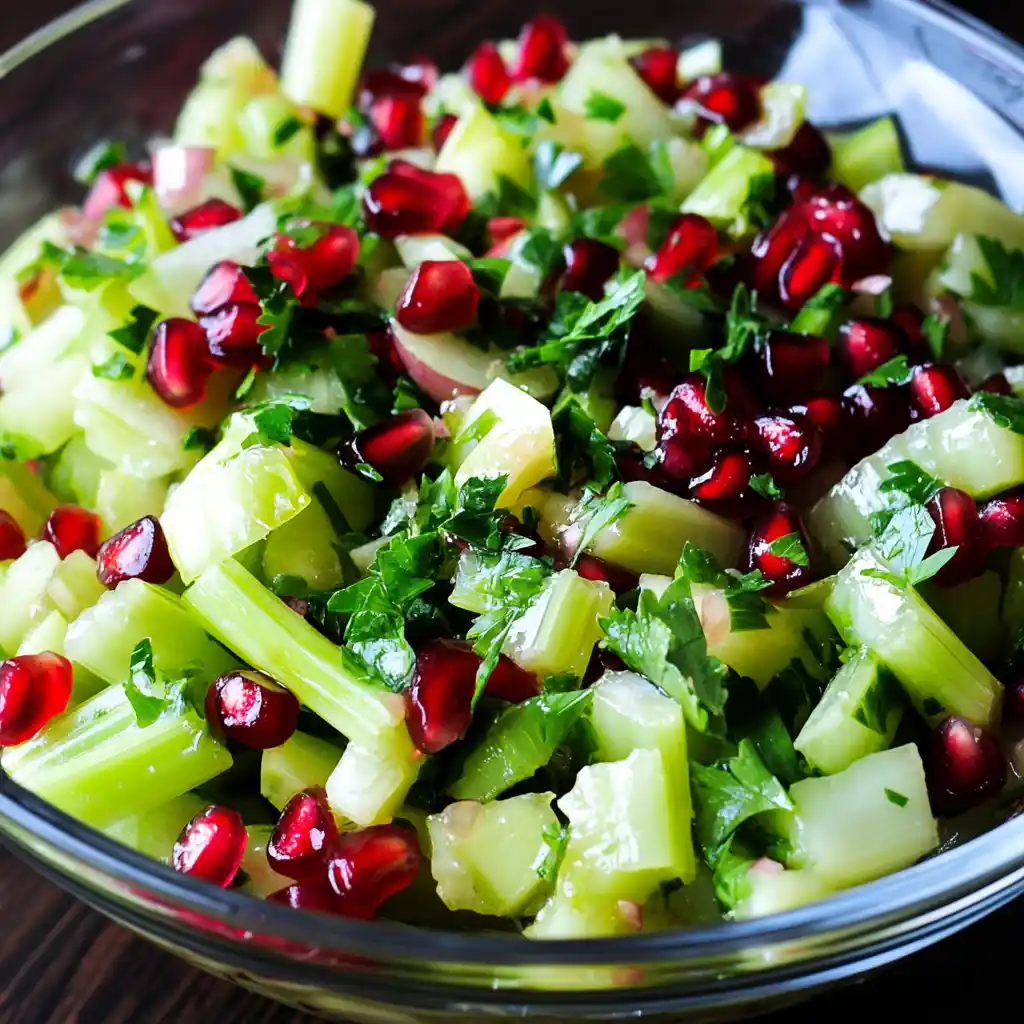
In a large bowl, combine the thinly sliced celery, pomegranate arils, and chopped parsley. Toss gently to distribute everything evenly. The colors should be beautiful—pale green celery, ruby red arils, and emerald parsley.
In a small bowl, whisk together the olive oil, fresh lemon juice (about one large lemon), salt (I start with 1/2 teaspoon), and pepper (a few good cracks). Taste the dressing—it should be bright and lemony with the richness of olive oil balancing the acidity. The salt should make everything taste vibrant without tasting salty. Adjust as needed before dressing the salad.
Pour the dressing over the celery mixture and toss gently to coat everything evenly. Be gentle—you don’t want to crush the pomegranate arils or bruise the parsley. The goal is every component lightly coated with the bright dressing.
Here’s the step that makes the difference: refrigerate the salad for at least 30 minutes before serving. This chilling time allows the flavors to meld together, the celery to absorb some of the dressing and become even more tender, and the whole salad to become properly cold and refreshing. Trust me on this timing; I learned from serving it immediately and finding the flavors hadn’t married yet. If you’re looking for another elegant, simple salad, try this Shaved Fennel and Orange Salad that uses similar thin-slicing techniques.
Serve chilled as a refreshing side dish. This is particularly good alongside rich main dishes like roasted chicken, grilled lamb, or holiday turkey—the bright acidity and crunch provide perfect contrast to heavier proteins.
Just before serving, give the salad a gentle toss and taste again. You might need a pinch more salt or a squeeze more lemon juice—don’t be shy about final adjustments.
When Things Go Sideways (And They Will)
Celery is tough and stringy instead of tender-crisp? You cut it too thick or used the tough outer stalks. In reality, I’ve learned to slice paper-thin on a diagonal and use the tender inner stalks. Thick chunks will never become tender no matter how long they sit.
Pomegranate arils have bits of bitter white pith? You weren’t patient enough during extraction. Go through and pick out all the white membrane—it only takes a minute and makes a huge difference. The bitterness ruins the delicate flavor balance.
Salad is watery with liquid pooling in the bottom? The celery released too much water, or you over-dressed it. Celery naturally releases liquid as it sits, especially after being dressed and salted. Drain off excess liquid before serving, or use a slotted spoon to serve.
Tastes flat and boring despite the fresh ingredients? You didn’t use enough salt or lemon juice. This salad needs generous seasoning to make the flavors pop—don’t be timid. Add salt and acid in small increments until it tastes vibrant.
Ways to Mix It Up
Mediterranean Version: When I want something richer, I’ll add crumbled feta cheese and toasted pine nuts for a more substantial salad with creamy, nutty elements. Around holiday dinners, this becomes my fancy version.
Fall Harvest Salad: Add diced crisp apple (like Honeycrisp) and toasted walnuts for a seasonal twist that’s equally refreshing but more autumnal.
Herb-Forward Salad: Add fresh mint and cilantro along with the parsley for a more complex herbal profile that’s very Middle Eastern.
Citrus Twist: Use a combination of lemon and orange juice in the dressing, and add orange segments to the salad for deeper citrus flavor.
What Makes This Recipe Special
This light celery and pomegranate salad represents the elegance of Middle Eastern and Mediterranean cuisine where simple, fresh ingredients are treated with respect and minimal manipulation. What makes this salad work is the textural and flavor contrasts: crisp celery provides crunch and mild, refreshing flavor; pomegranate arils burst with sweet-tart juice; fresh parsley adds herbaceous brightness; and the lemon-olive oil dressing ties everything together without overwhelming. The technique of slicing celery thinly on a diagonal is crucial—it transforms a vegetable often relegated to cooking or crudité into something elegant enough for special occasions. Diagonal cuts also expose more surface area for dressing absorption and create visual interest with those long, graceful ribbons. Pomegranate arils aren’t just beautiful—they provide bursts of juice that contrast perfectly with the crisp celery, and their sweet-tart flavor balances the vegetal notes. The chilling time is essential for allowing the acid in the lemon juice to slightly “cook” the celery (like ceviche does to fish), making it even more tender while still maintaining crunch. This salad embodies the principle that great cooking often means doing less—fewer ingredients, less manipulation, more emphasis on quality and proper technique. The color palette is stunning: pale green celery, deep red pomegranate, and bright green parsley create a visually striking dish that signals “this is special.” The lightness of this salad makes it perfect for balancing rich meals—the acidity cuts through fat, the crunch provides textural contrast, and the freshness refreshes the palate. The history of pomegranates shows they’ve been cultivated for over 5,000 years and hold symbolic significance in many cultures from ancient Persia to modern Middle Eastern cuisine.
Things People Ask Me About This Recipe
How do I extract pomegranate arils without making a mess?
The underwater method is cleanest: cut the pomegranate in quarters, submerge in a bowl of water, and gently pull out the arils. They sink while the white pith floats. Drain, discard the pith, and pat the arils dry.
Can I use bottled pomegranate arils?
You can for convenience, but fresh arils from a whole pomegranate taste better and are more cost-effective. Pre-packaged arils can be less juicy and more expensive. If using packaged, make sure they’re fresh with no dried-out or shriveled arils.
Why does my celery need to be sliced so thin?
Thick celery chunks are fibrous and tough to eat. Paper-thin diagonal slices create tender ribbons that are elegant and easy to fork. The thin slices also absorb the dressing better and become more tender as they chill.
Can I make this salad ahead for a party?
Yes! Make it up to 4 hours ahead and keep refrigerated. It actually improves as it sits and the flavors meld. Just give it a gentle toss before serving and drain any excess liquid that accumulated.
What else can I serve this with?
This salad is perfect alongside rich proteins like roasted chicken, grilled lamb, turkey, or holiday ham. The bright acidity and crunch balance heavier main dishes beautifully.
Can I add nuts or cheese to this salad?
Absolutely! Toasted walnuts or pine nuts add crunch, and crumbled feta or goat cheese adds creamy richness. These additions make it more substantial without losing the refreshing quality.
One Last Thing
I couldn’t resist sharing this light celery and pomegranate salad because it’s the recipe that taught me elegance often comes from simplicity—not complicated techniques or exotic ingredients, just quality components treated properly. The best salad moments are when guests take a bite expecting boring celery sticks and their eyes widen with surprise at how refreshing and sophisticated it actually is. You don’t need fancy skills or equipment—just a sharp knife, patient pomegranate extraction, and the confidence to let simple ingredients shine.
Print
Light Celery and Pomegranate Salad
Description
This elegant light celery and pomegranate salad combines paper-thin celery ribbons with jewel-like pomegranate arils and fresh parsley in a bright lemon dressing for a refreshing, sophisticated side dish that’s beautiful enough for special occasions yet simple enough for weeknights.
Prep Time: 15 minutes | Chill Time: 30 minutes | Total Time: 45 minutes | Servings: 6
Ingredients
For the Salad:
- 4 cups celery, thinly sliced on the diagonal (about 1 large bunch—use tender inner stalks)
- 1 cup pomegranate arils (from 1 large pomegranate—extract carefully to avoid bitter pith)
- 1/4 cup fresh flat-leaf parsley, chopped (not curly parsley—better flavor)
For the Dressing:
- 1/4 cup olive oil (good quality, fruity and pleasant)
- 2 tbsp fresh lemon juice (about 1 large lemon—bottled won’t give same brightness)
- Salt and pepper, to taste (start with 1/2 tsp salt)
Instructions
- Prepare celery by washing well and trimming off leaves. Slice very thinly on a diagonal, about 1/8 inch thick. Thin diagonal slices create elegant ribbons that are tender-crisp and easy to fork, plus they expose more surface area for dressing.
- Extract pomegranate arils using your preferred method: (1) Cut in half horizontally, hold cut-side down over bowl, whack the back with wooden spoon to release arils; or (2) Score skin in quarters, pull apart underwater, peel out arils (they sink, pith floats). Pick through to remove all white pith—it’s bitter.
- Chop fresh parsley, using leaves and tender stems, discarding only thick woody stems. You want about 1/4 cup chopped.
- In a large bowl, combine the thinly sliced celery, pomegranate arils, and chopped parsley. Toss gently to distribute evenly. The colors should be beautiful—pale green, ruby red, and emerald green.
- In a small bowl, whisk together the olive oil, fresh lemon juice, salt (start with 1/2 teaspoon), and pepper (a few good cracks). Taste the dressing—it should be bright and lemony with olive oil richness balancing the acidity.
- Pour the dressing over the celery mixture and toss gently to coat everything evenly. Be gentle—don’t crush pomegranate arils or bruise parsley.
- Refrigerate the salad for at least 30 minutes before serving. This chilling time allows flavors to meld, the celery to absorb dressing and become more tender, and the whole salad to become properly cold and refreshing.
- Just before serving, give the salad a gentle toss and taste again. Adjust with more salt or lemon juice if needed. If liquid has accumulated in the bottom, drain it off or use a slotted spoon to serve.
- Serve chilled as a refreshing side dish, especially good alongside rich proteins like roasted chicken, grilled lamb, or holiday turkey.
Nutrition Information (Per Serving):
- Calories: 115
- Carbohydrates: 11g
- Protein: 1g
- Fat: 9g
- Fiber: 2g
- Sodium: 180mg
- Vitamin C: 25% DV
- Vitamin K: 45% DV
- Potassium: 8% DV
This salad provides exceptional vitamin K from parsley and celery, plus antioxidants from pomegranate arils.
Notes:
- Slice celery paper-thin on diagonal—thick chunks stay fibrous and tough.
- Use tender inner celery stalks; save tough outer ones for soup.
- Extract pomegranate arils carefully to avoid bitter white pith.
- Chill for at least 30 minutes before serving so flavors meld properly.
- Fresh lemon juice makes a huge difference over bottled—worth the effort.
- Drain excess liquid that accumulates before serving for best presentation.
Storage Tips:
Store in an airtight container in the refrigerator for up to 2 days. The salad actually improves over the first 4-6 hours as flavors meld, but after a day the celery starts releasing too much liquid and becomes waterlogged. The pomegranate arils may start to lose their pop and the parsley can wilt. For best results, make it the morning of serving and let it chill until dinner. Don’t freeze this salad—the celery becomes limp and waterlogged when thawed, and pomegranate arils lose their texture completely.
Serving Suggestions:
- Holiday Table: Serve alongside roasted turkey or ham for festive color and refreshing contrast
- Middle Eastern Feast: Pair with grilled lamb, hummus, and pita for authentic Mediterranean meal
- Light Lunch: Serve over mixed greens with grilled chicken for complete salad meal
- Dinner Party: Present in a white serving bowl to show off the jewel-toned colors
Mix It Up (Recipe Variations):
Mediterranean Version: Add crumbled feta cheese and toasted pine nuts for more substantial salad with creamy, nutty elements.
Fall Harvest Salad: Add diced crisp apple (Honeycrisp) and toasted walnuts for seasonal twist that’s equally refreshing but more autumnal.
Herb-Forward Salad: Add fresh mint and cilantro along with parsley for more complex herbal profile that’s very Middle Eastern.
Citrus Twist: Use combination of lemon and orange juice in dressing, add orange segments to salad for deeper citrus flavor.
What Makes This Recipe Special:
This light celery and pomegranate salad showcases Middle Eastern elegance where simple, fresh ingredients receive minimal manipulation. The textural and flavor contrasts—crisp celery, bursting pomegranate arils, herbaceous parsley, bright lemon dressing—create sophistication from simplicity. Slicing celery paper-thin on diagonal transforms a humble vegetable into something elegant while maximizing surface area for dressing absorption.
