
Ever wonder why restaurant mashed potatoes are always perfectly creamy and smooth while homemade versions turn out lumpy, gluey, or just plain boring? I used to think making truly incredible loaded mashed potatoes required some kind of steakhouse secret technique until I discovered this foolproof recipe. Now I make these for every holiday dinner and Sunday supper when I need something that feels like a warm hug, and honestly, people have started requesting seconds before they even try the main course (which is pretty amazing considering the first time I attempted mashed potatoes, I over-mixed them so badly they turned into wallpaper paste and nobody could swallow more than one bite without gagging).
Here’s the Thing About This Recipe
What makes authentic loaded mashed potatoes work so beautifully is understanding that the potato variety matters enormously, you absolutely cannot overmix them, and all those delicious toppings—bacon, cheese, sour cream, green onions—need to be incorporated at the right time for maximum flavor without ruining the texture. I learned the hard way that you can’t just use any potato and mash it into oblivion expecting restaurant results. These comfort food classics use starchy russet potatoes that break down into fluffy clouds when properly cooked and gently mashed, then get loaded with all the good stuff that makes baked potatoes irresistible. It’s honestly that simple once you understand the importance of proper cooking, gentle handling, and strategic layering of add-ins, and no special equipment needed beyond a basic pot and masher.
What You’ll Need (And My Shopping Tips)
Good russet potatoes (also called Idaho potatoes) are essential here—they’re the big brown ones with thick skin and starchy flesh. Don’t cheap out on waxy potatoes like red or Yukon gold because they don’t mash as smoothly and can get gluey more easily (happens more than I’d like to admit when I grab whatever’s on sale and wonder why my mashed potatoes are gummy). Russets have high starch content that creates that fluffy, light texture everyone loves.
Whole milk works best for creamy mashed potatoes—I use whole or 2%, never skim because you need that fat for richness and texture. Unsalted butter should be at room temperature so it melts easily into the hot potatoes. Real butter makes a huge difference—don’t try substituting margarine because the flavor is noticeably inferior.
Shredded cheddar cheese should be sharp for maximum flavor—I grab extra sharp cheddar because mild just doesn’t have enough punch. Sour cream adds tang and creaminess that balances the richness. Quality bacon makes a difference—thick-cut bacon cooked until crispy is what you want, not those pre-cooked crumbles that taste like cardboard. Fresh green onions add color, freshness, and that onion-y bite.
I always make extra because these disappear instantly and they reheat beautifully. Fresh potatoes are better than old ones that have started sprouting or turning green. For more details on potato varieties and mashing techniques, check out this guide to perfect mashed potatoes from Food Network.
Let’s Make This Together
Start by peeling your russet potatoes and cutting them into roughly uniform cubes—about 1-2 inches each. Here’s where I used to mess up—I’d cut them all different sizes and the small pieces would be mush while the big pieces were still hard. Uniform size = even cooking.
Place the cubed potatoes in a large pot and cover with cold water—starting with cold water helps them cook more evenly than dropping them into boiling water. Add a generous pinch of salt to the water. Bring to a boil over high heat, then reduce to a steady simmer and cook for 15-20 minutes until the potatoes are fork-tender—you should be able to pierce them easily with a fork with no resistance.
Drain the potatoes really well in a colander, then return them to the same pot (which you’ve dried out—any water left makes watery mashed potatoes). Here’s my secret: let them sit in the pot for about a minute to steam off any excess moisture. This step makes a bigger difference than you’d think.
Now for the mashing—use a potato masher and mash the potatoes until they’re mostly smooth. Don’t be me—I used to use an electric mixer thinking it would save time, but overmixing with a mixer releases too much starch and creates gluey, sticky potatoes. Hand-mashing gives you control and better texture. A few small lumps are fine and actually desirable for rustic texture.
Once mashed, stir in the milk and butter with a wooden spoon or spatula until everything’s well combined and creamy. The heat of the potatoes will melt the butter beautifully. Add the shredded cheddar cheese and sour cream, stirring until the cheese melts and everything’s incorporated. The potatoes should be creamy, fluffy, and rich.
Taste and season with salt and pepper—this is crucial because potatoes need more salt than you’d think. Add it gradually, tasting as you go, until the flavor pops. Under-seasoned mashed potatoes taste flat and boring no matter how much cheese you add.
Transfer the loaded mashed potatoes to a serving dish (or serve straight from the pot if you’re keeping it casual), then top with crumbled bacon and chopped green onions. The toppings should go on right before serving so the bacon stays crispy and the green onions stay fresh. For another comfort food side that pairs perfectly with these, try this Mac and Cheese that has similar indulgent vibes.
If This Happens, Don’t Panic
Mashed potatoes turned out gluey and sticky? You overmixed them with a mixer or food processor, releasing too much starch. In reality, I’ve learned to always use a hand masher and stop as soon as they’re smooth. This can’t really be fixed once it happens, but remember for next time—gentle hand-mashing only.
Potatoes came out watery and thin? Don’t panic—you didn’t drain them well enough, or you added too much milk at once. If this happens (and it might), return them to the pot over low heat and stir constantly for a few minutes to evaporate excess moisture. Next time, drain thoroughly and add milk gradually.
Mashed potatoes taste bland? You didn’t use enough salt. Always taste and adjust—potatoes are like a blank canvas that needs proper seasoning to shine. Add salt gradually until they taste vibrant and flavorful.
Potatoes lumpy with hard bits? You didn’t cook them long enough, or you cut them unevenly. They should be completely fork-tender before draining. If you encounter lumps, you can press them through a ricer or push through a fine-mesh strainer, though that’s extra work.
When I’m Feeling Creative
Garlic Loaded Mashed Potatoes: When I want extra flavor, I add 4-6 cloves of roasted garlic mashed right into the potatoes. The sweet, mellow garlic flavor takes these to restaurant level.
Loaded Baked Potato Style: Top with extra cheese, more bacon, extra sour cream, and chives for the full loaded baked potato experience. Around the holidays, this over-the-top version always gets compliments.
Horseradish Mashed Potatoes: Add 2 tablespoons of prepared horseradish for a spicy kick that pairs beautifully with prime rib or steak. My father-in-law requests this version every time.
Make-Ahead Casserole: Transfer to a baking dish, top with extra cheese and bacon, and refrigerate. Reheat covered at 350°F for 30 minutes, then uncovered for 10 more. Perfect for holiday meal prep.
Why This Works So Well
These loaded mashed potatoes capture the essence of American comfort food that combines two beloved classics—creamy mashed potatoes and loaded baked potatoes. While mashed potatoes have been a staple across cultures for centuries, the “loaded” concept became popular in the 1970s-80s when steakhouses and casual dining restaurants started piling toppings on baked potatoes. This hybrid brings together the best of both worlds—the smooth, creamy texture of perfectly mashed potatoes with all those indulgent toppings. What sets homemade loaded mashed potatoes apart from restaurant versions is the control over quality ingredients and the ability to adjust richness levels. The technique of using starchy russet potatoes and avoiding overmixing creates that signature fluffy texture, while adding the toppings strategically ensures each element contributes its own distinct flavor and texture. The history of mashed potatoes shows how this simple dish evolved from peasant food to beloved comfort food across the world.
Things People Ask Me About This Recipe
Can I make these loaded mashed potatoes ahead of time?
Yes! Make them completely, transfer to a buttered baking dish, cover, and refrigerate for up to 2 days. To reheat, let come to room temperature, then bake covered at 350°F for 30 minutes, stirring halfway through. Add extra milk if needed to restore creaminess.
What if I don’t have a potato masher?
Use a fork (more work but it works), a ricer (makes super-smooth potatoes), or a hand mixer on the lowest speed for just a few seconds. Never use a blender or food processor—they’ll make your potatoes gluey by overworking the starch.
Can I use a different type of potato?
Russets are best for fluffy mashed potatoes, but Yukon golds make creamier, butterier-tasting mashed potatoes with a slightly denser texture. Red potatoes are too waxy and don’t mash as well—save those for roasting.
Is this recipe beginner-friendly?
Totally. If you can boil water and mash things, you’ve got this. The key is not overthinking it—cook until tender, mash gently, add dairy, season well. Even if your first batch isn’t perfect, it’ll still taste good.
How do I keep mashed potatoes warm for serving?
Keep them in a heat-safe bowl set over a pot of barely simmering water (double-boiler style), stirring occasionally. Or transfer to a slow cooker on the “warm” setting. Add a splash of milk if they thicken up while sitting.
Why are my mashed potatoes gray?
Potatoes oxidize when exposed to air. This is harmless but unattractive. Prevent it by keeping them covered until serving, or stir in a squeeze of lemon juice (you won’t taste it but it prevents browning).
Why I Had to Share This
I couldn’t resist sharing this because loaded mashed potatoes are one of those dishes that makes everyone happy, turns ordinary dinners into special occasions, and proves that comfort food doesn’t have to be complicated to be absolutely perfect. The best mashed potato moments are when you serve a big bowl of these creamy, bacon-topped clouds and watch everyone’s stress melt away as they dig in. You’ve totally got this.
Print
Loaded Mashed Potatoes
Description
Creamy, fluffy mashed potatoes loaded with sharp cheddar cheese, sour cream, crispy bacon, and fresh green onions—these indulgent loaded mashed potatoes are the ultimate comfort food side dish.
Prep Time: 15 minutes | Cook Time: 20 minutes | Total Time: 35 minutes | Servings: 6-8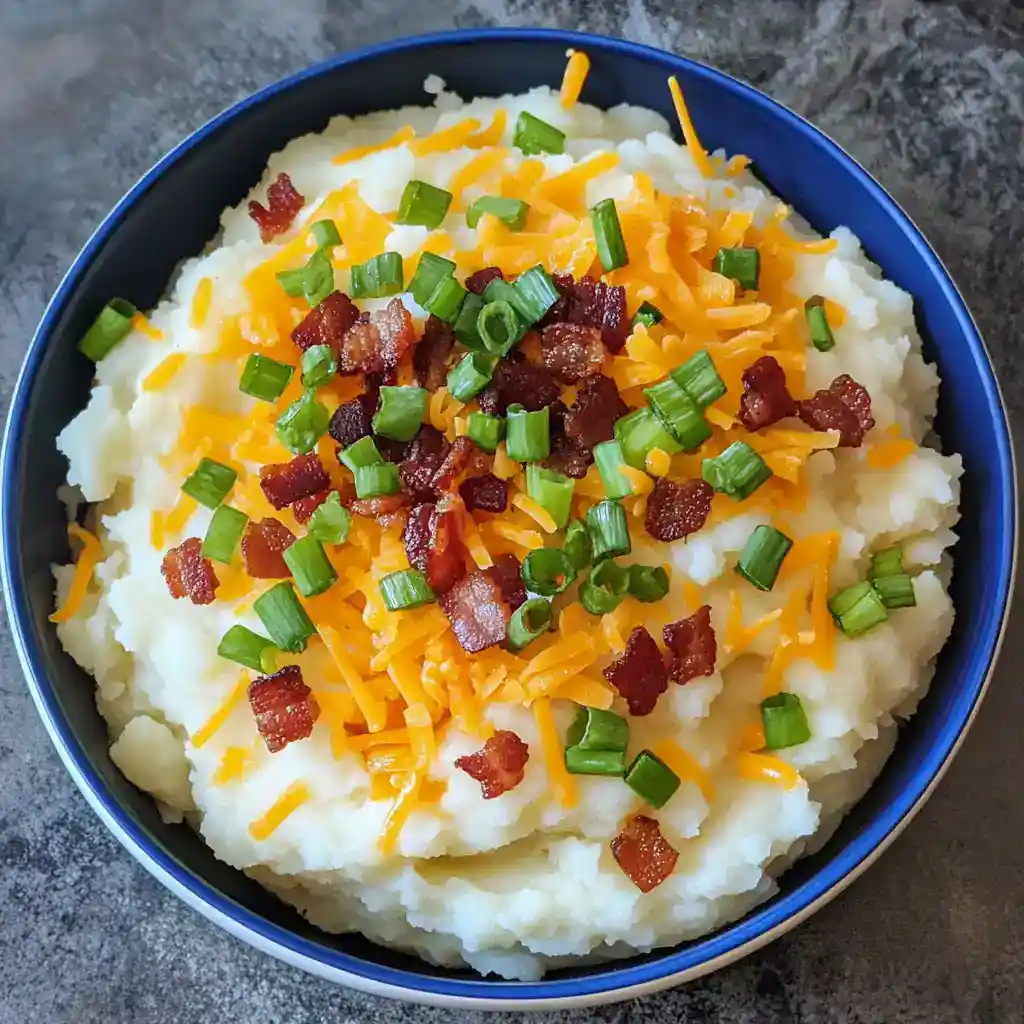
Ingredients
- 2 lbs russet potatoes, peeled and cubed into 1–2 inch pieces
- 1/2 cup whole milk (warmed is even better)
- 1/4 cup unsalted butter, room temperature
- 1 cup shredded sharp cheddar cheese
- 1/2 cup sour cream
- 4 slices thick-cut bacon, cooked crispy and crumbled
- 2 green onions, chopped (white and green parts)
- Salt and pepper to taste (start with 1 tsp salt)
Instructions
- Peel russet potatoes and cut into roughly uniform cubes, about 1-2 inches each. Uniform size ensures even cooking.
- Place cubed potatoes in a large pot and cover with cold water. Add a generous pinch of salt to the water.
- Bring to a boil over high heat, then reduce to a steady simmer. Cook for 15-20 minutes until potatoes are fork-tender—you should be able to pierce them easily with zero resistance.
- Drain the potatoes really well in a colander, then return them to the same pot (dried out). Let them sit for about a minute to steam off excess moisture. This step makes them fluffier.
- Using a potato masher, mash the potatoes until mostly smooth. Don’t use a mixer—it releases too much starch and makes them gluey. Hand-mashing gives you control and better texture. A few small lumps are fine.
- Stir in the milk and butter with a wooden spoon or spatula until well combined and creamy. The heat from the potatoes will melt the butter beautifully.
- Add the shredded cheddar cheese and sour cream, stirring until the cheese melts and everything’s incorporated. The potatoes should be creamy, fluffy, and rich.
- Taste and season with salt and pepper—potatoes need more salt than you think. Add gradually, tasting as you go, until the flavor really pops. Under-seasoned mashed potatoes taste flat no matter how much cheese you add.
- Transfer the loaded mashed potatoes to a serving dish (or serve straight from the pot for casual meals).
- Top with crumbled bacon and chopped green onions right before serving so the bacon stays crispy and the green onions stay fresh. Serve hot and watch them disappear.
Nutrition Information (Per Serving):
- Calories: 285
- Carbohydrates: 28g
- Protein: 10g
- Fat: 15g
- Fiber: 2g
- Sodium: 420mg
- Calcium: 15% DV
- Potassium: 18% DV
- Vitamin C: 20% DV
These loaded mashed potatoes provide potassium and vitamin C from potatoes, protein from cheese and bacon, and calcium from dairy. Enjoy as a satisfying comfort food side.
Notes:
- Use russet potatoes for the fluffiest texture—waxy potatoes get gluey when mashed.
- Cut potatoes uniformly so they cook evenly.
- Start potatoes in cold water, not boiling, for even cooking.
- Drain thoroughly and let steam for a minute—excess water makes watery mashed potatoes.
- Always use a hand masher, never a mixer or food processor, to avoid gluey texture.
- Taste and season generously—potatoes need plenty of salt to taste flavorful.
- Add toppings right before serving for best texture.
Storage Tips:
Store leftover mashed potatoes in an airtight container in the refrigerator for up to 4 days. Reheat gently on the stovetop over low heat, stirring constantly and adding milk as needed to restore creaminess. Or microwave in 30-second bursts, stirring between each. These don’t freeze well—the texture changes and becomes grainy when thawed.
Serving Suggestions:
- Holiday Dinner: Perfect alongside turkey, prime rib, or roasted chicken
- Steakhouse Style: Serve with grilled steak and roasted vegetables
- Comfort Meal: Pair with meatloaf and green beans for classic comfort food
- Casual Dinner: Great with rotisserie chicken and a simple salad
Mix It Up (Recipe Variations):
- Garlic Loaded: Add 4-6 cloves roasted garlic mashed into the potatoes
- Extra Loaded: Top with more cheese, extra bacon, more sour cream, and chives
- Horseradish Kick: Add 2 tablespoons prepared horseradish for spicy flavor perfect with beef
- Make-Ahead Casserole: Transfer to baking dish, top with extra cheese and bacon, refrigerate, and reheat covered
What Makes This Recipe Special:
These loaded mashed potatoes use starchy russet potatoes that break down into fluffy clouds when properly cooked, combined with the hand-mashing technique that avoids overworking the starch. The method of draining thoroughly and letting excess moisture steam off ensures creamy, never watery texture, while incorporating toppings strategically keeps each element distinct—crispy bacon, sharp cheese, tangy sour cream, and fresh green onions all contributing their own flavor and texture rather than becoming one homogeneous mass.
