
Ever wonder why some curry dishes taste flat and one-dimensional while others have layers of warm, complex spices that keep you coming back for more? I used to think making Moroccan artichoke curry meant just dumping spices in a pot until I discovered that blooming them in oil first unlocks their full flavor potential. Now my family requests this aromatic, vegetarian dish for weeknight dinners, and I’m pretty sure my neighbors think I’ve been secretly taking North African cooking classes (if only they knew how many batches I made that tasted like dusty spice powder before learning the crucial blooming step).
Here’s the Thing About This Recipe
What makes this Moroccan artichoke curry work is the careful layering of warm spices—cumin, coriander, turmeric, cinnamon, and cayenne—that create that distinctive Moroccan flavor profile without overwhelming the tender artichokes and creamy chickpeas. I learned the hard way that you can’t just add ground spices to liquid and expect magic; they need to be toasted in oil first to release their essential oils and develop depth. This North African-inspired vegetarian curry brings together pantry staples with canned artichoke hearts for a weeknight-friendly meal that tastes way more exotic than the effort required. It’s honestly that simple: quality spices, proper blooming technique, good canned ingredients, and patience to let flavors meld.
What You’ll Need (And My Shopping Tips)
Good olive oil is worth using here—this is a Mediterranean dish, so the fruity flavor of quality olive oil matters (I learned this after using cheap, flavorless oil three times and wondering why my curry tasted flat). You’ll need 2 tablespoons for sautéing.
For aromatics and spices, grab a medium onion, fresh garlic (not jarred—it makes a difference in aromatic dishes), ground cumin, ground coriander, ground turmeric, ground cinnamon, and cayenne pepper. These warm spices are the heart of Moroccan cuisine. Make sure your spices are relatively fresh—check the dates, because old spices lose potency and won’t deliver that aromatic punch you want (happens more than I’d like to admit when I dig into the back of my spice cabinet).
For the curry base, you’ll need canned diced tomatoes (fire-roasted adds nice depth if you can find them), canned chickpeas (drain and rinse to remove excess sodium and that canned taste), canned artichoke hearts (quartered ones are convenient, or quarter whole hearts yourself), and vegetable broth. Don’t cheap out on artichoke hearts packed in weird brine—get quality ones in water for best flavor.
Salt, pepper, and fresh cilantro for garnish round out the ingredients. If you’re curious about Moroccan cuisine and the spice combinations that define it, Wikipedia has fascinating information about tagines, couscous, and the influence of Berber, Arab, and Mediterranean culinary traditions.
Let’s Make This Together
Start by heating 2 tablespoons of olive oil in a large skillet over medium heat. Add your chopped onion and minced garlic, and sauté for about 5 minutes until the onion softens and becomes translucent. The garlic should be fragrant but not brown—if it starts browning, your heat is too high.
Now for the crucial spice blooming step: stir in the ground cumin, coriander, turmeric, cinnamon, and cayenne pepper. Here’s where I used to mess up: I’d add them and immediately dump in the wet ingredients. Instead, let them cook in the oil for 1-2 minutes, stirring constantly, until they’re incredibly fragrant and you can smell all those warm spices filling your kitchen. This toasting in oil releases the essential oils and transforms raw spice powder into complex, aromatic flavor. I learned this game-changing technique from a Moroccan cooking mentor who explained that this step is non-negotiable for authentic flavor.
Add the diced tomatoes with their juices (the juice adds acidity and helps create the sauce), drained and rinsed chickpeas, quartered artichoke hearts, and vegetable broth. Season with salt (I start with 1 teaspoon) and pepper (about 1/2 teaspoon). Give everything a good stir to combine and make sure the spices are distributed throughout the liquid.
Bring the curry to a simmer—you’ll see gentle bubbles breaking the surface. Then reduce the heat to medium-low and let it simmer uncovered for about 15-20 minutes, stirring occasionally. This simmering time allows the flavors to meld together, the sauce to thicken slightly as the tomatoes break down, and the artichokes to absorb all those beautiful spices. Trust me on this one; rushing this step means you’ll taste individual components instead of a cohesive dish.
After simmering, the sauce should have thickened to a nice consistency—not soupy, but not dry either. The chickpeas will have softened further and absorbed flavor, and the artichoke hearts will be tender and infused with all those warm spices.
Taste and adjust seasoning—you’ll probably need more salt (canned items vary in sodium content), maybe a pinch more cayenne if you want heat, or even a squeeze of lemon juice for brightness. This is your chance to make it perfect before serving. If you’re looking for another vegetarian curry recipe, try this Indian Chickpea Curry that uses similar spice-layering techniques.
Serve hot in bowls, garnished generously with fresh chopped cilantro (the fresh herb adds brightness that cuts through the rich, warm spices). This is delicious over rice, couscous (traditional for Moroccan dishes), or with crusty bread for soaking up the sauce.
If This Happens, Don’t Panic
Curry tastes dusty and the spices seem raw? You didn’t bloom them properly in oil or long enough. In reality, I’ve learned that those 1-2 minutes of toasting spices in oil before adding liquid is absolutely crucial. If this happens, you can try simmering longer to mellow the rawness.
Too spicy or too bland? You used too much cayenne or your spices were old. If too spicy, add a splash of coconut milk or a dollop of yogurt to temper the heat. If bland, add more salt and a pinch of each spice, letting it simmer a few more minutes.
Artichokes fell apart into mush? You simmered too long or too vigorously. Canned artichokes are already tender, so they just need to warm through and absorb flavors—they don’t need aggressive cooking. Next time, add them in the last 10 minutes of simmering.
Sauce is too thin and watery? Let it simmer uncovered for a few extra minutes to reduce and concentrate the flavors. You can also mash some of the chickpeas against the side of the pan to release their starches and thicken the sauce naturally.
When I’m Feeling Creative
Coconut Moroccan Curry: When I want something richer, I’ll add 1/2 cup of coconut milk at the end for a creamy, luxurious version that’s still Moroccan-inspired. Around cold winter nights, this becomes my comfort food variation.
Preserved Lemon Artichoke Curry: Add chopped preserved lemons (a Moroccan staple) in the last 5 minutes for authentic tangy brightness that’s incredible.
Harissa-Spiced Version: Stir in 1-2 tablespoons of harissa paste (North African chili paste) for extra heat and complexity.
Veggie-Loaded Curry: Add diced sweet potato or butternut squash at the beginning of simmering for extra heartiness and natural sweetness that complements the warm spices.
What Makes This Recipe Special
This Moroccan artichoke curry represents the accessible side of North African cuisine—using widely available ingredients to create authentic flavors without specialty shopping or complicated techniques. Moroccan cooking is characterized by its use of warm, aromatic spice blends like ras el hanout, but this recipe breaks down those flavors into individual spices that most home cooks already have. What makes this curry distinctly Moroccan rather than Indian or Thai is the combination of sweet (cinnamon), earthy (cumin, coriander), bright (turmeric), and warming (cayenne) spices that create complexity without overwhelming heat. The inclusion of chickpeas is very traditional in Moroccan tagines and stews, providing protein and creamy texture, while artichoke hearts are a Mediterranean ingredient that fits naturally into North African cuisine given Morocco’s coastal location and historical trade connections. The technique of blooming spices in oil before adding liquid is fundamental to achieving depth of flavor—it’s the difference between professional-tasting and home-cook-tasting results. Moroccan cuisine traditionally uses tagines (cone-shaped clay pots) for slow cooking, but this skillet version delivers similar layered flavors in a fraction of the time, making it perfect for weeknight cooking. The history of Moroccan cuisine shows influences from Berber, Arab, Moorish, and Mediterranean cultures, creating one of the world’s most distinctive and beloved culinary traditions.
Things People Ask Me About This Recipe
Can I use fresh artichokes instead of canned?
You can, but it’s significantly more work—you’d need to clean, trim, and par-cook them before adding to the curry. Canned artichoke hearts are convenient, tender, and work perfectly for this recipe. Fresh artichokes would be overkill for a weeknight dinner.
Is this Moroccan artichoke curry actually authentic?
This is Moroccan-inspired rather than strictly traditional. Authentic Moroccan cooking would more likely use a tagine pot and possibly different vegetables, but the spice profile and technique are true to the cuisine. Think of it as accessible home cooking influenced by Moroccan flavors.
Can I make this ahead for meal prep?
Absolutely! This actually tastes better the next day after flavors have melded overnight. Make it up to 3 days ahead, store in the fridge, and reheat gently on the stovetop. Add a splash of broth if it’s thickened too much.
What should I serve this with?
Traditionally, serve over couscous (pearl or regular), but rice, quinoa, or crusty bread all work beautifully. The goal is something to soak up the delicious sauce.
Can I freeze this curry?
Yes! This freezes well for up to 3 months. Thaw overnight in the fridge and reheat on the stovetop. The artichokes may be slightly softer after freezing, but the flavor holds up great.
Why do I need to bloom the spices in oil?
Blooming (toasting spices in oil) releases their essential oils and develops complex flavors that you simply can’t achieve by adding spices directly to liquid. This step is what separates restaurant-quality curry from bland home-cooked versions.
One Last Thing
I couldn’t resist sharing this Moroccan artichoke curry because it’s the recipe that taught me exotic flavors don’t require exotic ingredients or complicated techniques—just proper spice handling and patience. The best curry nights are when your kitchen smells like a Moroccan souk, everyone’s fighting over the last spoonful, and someone inevitably asks “how did you make this so flavorful?” You don’t need specialty ingredients or a tagine pot—just good pantry staples, fresh spices, and the discipline to bloom them properly in oil.
Print
Moroccan Artichoke Curry
Description
This aromatic Moroccan artichoke curry layers warm spices like cumin, coriander, cinnamon, and turmeric with tender artichoke hearts and creamy chickpeas in a tomato-based sauce for an accessible North African-inspired vegetarian dish that’s ready in 30 minutes.
Prep Time: 10 minutes | Cook Time: 25 minutes | Total Time: 35 minutes | Servings: 4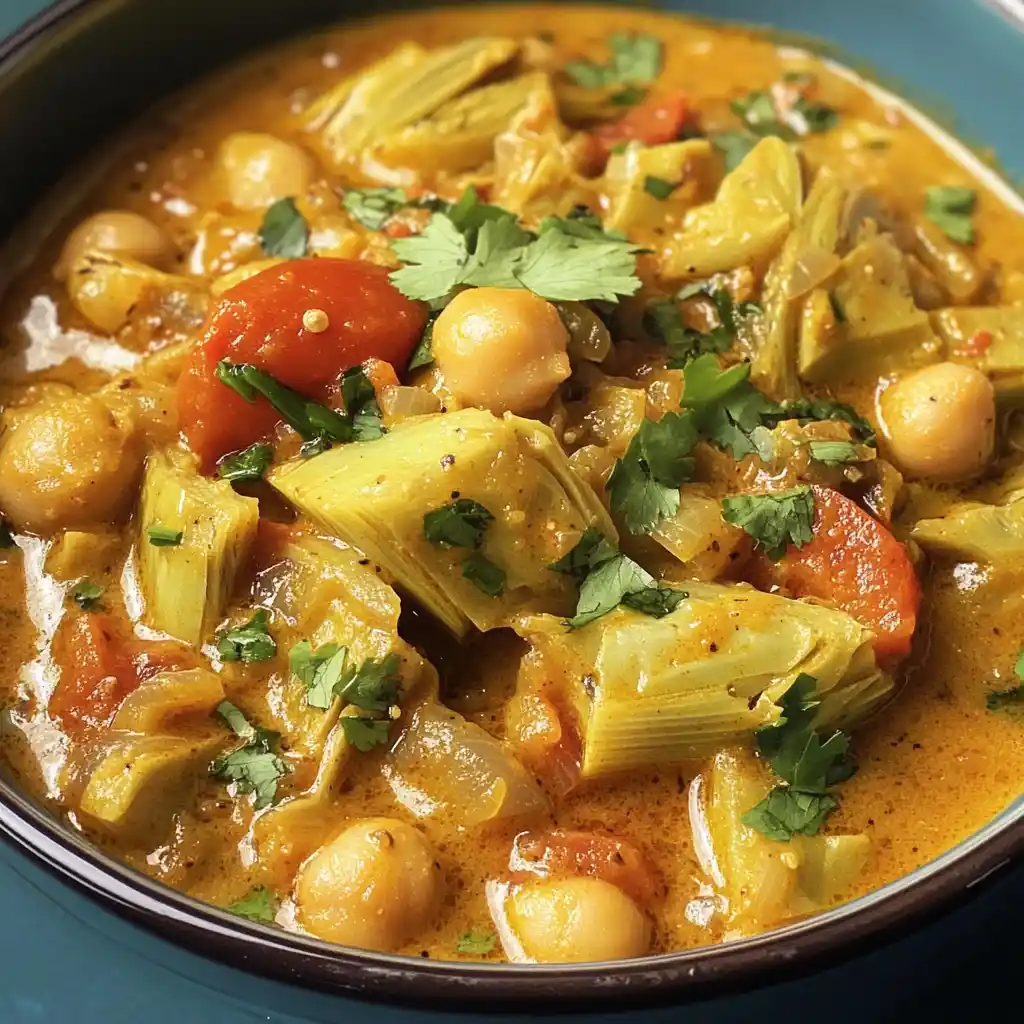
Ingredients
For the Curry:
- 2 tbsp olive oil (good quality—the fruity flavor matters in Mediterranean dishes)
- 1 medium onion, chopped
- 3 cloves garlic, minced (fresh only—makes a difference in aromatic dishes)
- 1 tsp ground cumin
- 1 tsp ground coriander
- 1/2 tsp ground turmeric
- 1/2 tsp ground cinnamon
- 1/4 tsp cayenne pepper (adjust for heat preference)
- 1 can (14 oz) diced tomatoes with juices (fire-roasted for extra depth if available)
- 1 can (14 oz) chickpeas, drained and rinsed
- 1 can (14 oz) artichoke hearts, quartered (packed in water, not weird brine)
- 1/2 cup vegetable broth (low-sodium so you control the salt)
- Salt and pepper, to taste (start with 1 tsp salt, 1/2 tsp pepper)
For Garnish:
- Fresh cilantro, chopped (essential for brightness)
For Serving:
- Couscous, rice, or crusty bread
Instructions
- Heat 2 tablespoons olive oil in a large skillet over medium heat. Add the chopped onion and minced garlic, and sauté for about 5 minutes until the onion softens and becomes translucent. The garlic should be fragrant but not brown.
- Now for the crucial spice blooming step: stir in the ground cumin, coriander, turmeric, cinnamon, and cayenne pepper. Cook for 1-2 minutes, stirring constantly, until incredibly fragrant—this toasting in oil releases essential oils and transforms raw spice powder into complex flavor.
- Add the diced tomatoes with their juices, drained and rinsed chickpeas, quartered artichoke hearts, and vegetable broth. Season with salt and pepper. Stir everything together to combine and distribute the spices throughout.
- Bring the curry to a simmer with gentle bubbles breaking the surface. Then reduce heat to medium-low and let it simmer uncovered for about 15-20 minutes, stirring occasionally. This allows flavors to meld, the sauce to thicken slightly, and the artichokes to absorb all those beautiful spices.
- After simmering, the sauce should have thickened to a nice consistency—not soupy, not dry. The chickpeas will be tender and flavorful, and the artichoke hearts infused with warm spices.
- Taste and adjust seasoning—you’ll probably need more salt, maybe more cayenne for heat, or even a squeeze of lemon juice for brightness.
- Serve hot in bowls, garnished generously with fresh chopped cilantro. Serve over couscous, rice, or with crusty bread for soaking up the sauce.
Nutrition Information (Per Serving):
- Calories: 245
- Carbohydrates: 35g
- Protein: 10g
- Fat: 9g
- Fiber: 11g
- Sodium: 580mg
- Iron: 20% DV
- Vitamin C: 25% DV
- Folate: 30% DV
This Moroccan artichoke curry provides exceptional fiber from chickpeas and artichokes, plus plant-based protein and iron, making it nutritionally dense and satisfying.
Notes:
- The 1-2 minute spice blooming step is non-negotiable for authentic, complex flavor—don’t skip it.
- Make sure your spices are relatively fresh—check dates, as old spices lose potency.
- Drain and rinse chickpeas to remove excess sodium and that canned taste.
- Use artichoke hearts packed in water for best flavor, not weird marinades.
- The sauce should thicken naturally as tomatoes break down—no need for thickeners.
- Fresh cilantro is essential for brightness that cuts through rich, warm spices.
Storage Tips:
Store cooled curry in an airtight container in the fridge for up to 5 days. The flavors actually deepen and improve after a day or two as everything melds together—this is an excellent make-ahead meal. Reheat gently on the stovetop over medium-low heat with a splash of vegetable broth if it’s thickened too much, or microwave in 1-minute intervals, stirring between. This freezes beautifully for up to 3 months—thaw overnight in the fridge before reheating. The artichokes may be slightly softer after freezing, but the flavor remains excellent.
Serving Suggestions:
- Traditional Moroccan: Over fluffy couscous (pearl or regular) with harissa on the side for heat lovers
- Simple Comfort: Over basmati or jasmine rice with naan or pita bread for scooping
- Rustic Style: In bowls with crusty bread for dunking and soaking up the sauce
- Complete Meal: With a simple cucumber-tomato salad and mint tea for authentic Moroccan dining
Mix It Up (Recipe Variations):
Coconut Moroccan Curry: Add 1/2 cup coconut milk at the end for a creamy, luxurious version that’s still Moroccan-inspired.
Preserved Lemon Artichoke Curry: Add chopped preserved lemons (a Moroccan staple) in the last 5 minutes for authentic tangy brightness.
Harissa-Spiced Version: Stir in 1-2 tablespoons harissa paste (North African chili paste) for extra heat and complexity.
Veggie-Loaded Curry: Add diced sweet potato or butternut squash at the beginning of simmering for extra heartiness and natural sweetness.
What Makes This Recipe Special:
This Moroccan artichoke curry demonstrates how accessible North African cuisine can be using pantry staples and proper technique. The spice blooming step releases essential oils and creates depth that separates restaurant-quality from bland home cooking. The combination of sweet cinnamon, earthy cumin and coriander, bright turmeric, and warming cayenne creates distinctly Moroccan complexity without overwhelming heat.
