
Ever wonder why restaurant Moroccan food tastes so much more complex and layered than what you make at home? I used to think creating authentic North African flavors required a spice cabinet the size of my pantry until I discovered this foolproof Moroccan asparagus stew. Now my family devours this fragrant, warming dish every week, and I’m pretty sure my coworkers think I’ve been secretly taking cooking classes (if only they knew this entire pot comes together in under 30 minutes with spices I already had on hand).
Here’s the Thing About This Stew
What makes this Moroccan asparagus stew work is the layering of warm spices—you’re toasting cumin, coriander, and smoked paprika to wake up their flavors before adding the liquids. I learned the hard way that dumping all the spices in at once gives you a flat, one-note stew nobody gets excited about. The asparagus stays bright and tender while the chickpeas add heartiness, and the tomato-broth base ties everything together with just enough liquid to keep it stew-like but not soupy. It’s honestly that simple—no fancy techniques or hard-to-find ingredients, just smart spice layering.
What You’ll Need (And My Shopping Tips)
Good fresh asparagus is worth hunting down at the farmers market during spring season. Don’t be me—I used to grab the thinnest spears thinking they’d be more tender, and ended up with mushy asparagus that disappeared into the stew three times before I figured out that medium-thickness spears hold up better. Look for asparagus with tight, closed tips and firm stalks (happens more than I’d like to admit that I forget to check the tips).
The spices matter here too. I always grab whole cumin and coriander when I can and grind them myself because the flavor is way more vibrant than pre-ground. For the smoked paprika, the Spanish pimentón kind adds an incredible depth that regular paprika just can’t match. Chickpeas are your protein and texture hero here—I keep several cans in the pantry because someone inevitably wants this stew at the last minute. The diced tomatoes need to be good quality (I stick with San Marzano or fire-roasted varieties for the best flavor).
Let’s Make This Together
Start by heating a large pot over medium heat with a drizzle of olive oil. Here’s where I used to mess up: I’d skip the sautéing step and just dump everything in, which meant bland onions and raw garlic flavor. Sauté your chopped onion and minced garlic until the onion turns translucent and your kitchen smells amazing—about 5 minutes.
Now for the fun part—toss in your diced red bell pepper and cook for another 2-3 minutes until it starts to soften. Here’s my secret: I stir in the cumin, coriander, and smoked paprika now and cook them for just 1 minute until they smell toasty and fragrant. This blooming technique is what makes Moroccan food taste so complex and aromatic.
Pour in the diced tomatoes and vegetable broth, then bring everything to a simmer. Add your chickpeas and asparagus pieces to the pot and let it all simmer together for 10-12 minutes until the asparagus is tender but still has a bit of bite. Just like my chickpea tagine, you want the vegetables to be cooked through but not mushy. Season with salt and pepper to taste—I always do this at the end because the broth and canned tomatoes can be salty.
Serve the Moroccan asparagus stew over cooked couscous or rice, and garnish with fresh cilantro. I learned this trick from a Moroccan cookbook I picked up years ago—the fresh herbs at the end add brightness that balances all those warm spices perfectly.
If This Happens, Don’t Panic
Stew turned out too thick? You probably let it simmer too long and the liquid evaporated. In reality, I’ve learned to just add another cup of vegetable broth and bring it back to a simmer until you get the consistency you want. If it’s too thin (and it will be if you added too much broth), don’t panic—just let it simmer uncovered for 10 more minutes to reduce.
Stew tastes bland? This is totally fixable with more salt and an extra pinch of your spices. I always check early now because different vegetable broths have wildly different flavor levels. If the asparagus is overcooked and mushy, you probably simmered it too long—happens to everyone. Just cook it for 8 minutes next time instead of the full 12.
Ways to Mix It Up
When I’m feeling fancy, I’ll make Harissa Asparagus Stew by stirring in a tablespoon of harissa paste with the spices—perfect when you want some North African heat. Around the holidays, I’ll do a Preserved Lemon Version with chopped preserved lemon added in the last few minutes for that authentic Moroccan tang.
For a Creamy Moroccan Stew, I sometimes stir in a few tablespoons of tahini or a splash of coconut milk at the end, which makes it rich and luxurious. My favorite lazy variation is the Spiced Chickpea Bowl—skip the asparagus entirely and double the chickpeas for a year-round version that doesn’t depend on spring produce.
What Makes This Recipe Special
This Moroccan asparagus stew draws inspiration from traditional North African tagines but adapts the technique for a quick weeknight meal. What sets this apart from other vegetable stews is the combination of warm spices and the unusual inclusion of asparagus, which isn’t typically featured in Moroccan cuisine but works beautifully with the flavor profile. The blooming spice technique and layered cooking method create depth usually achieved through hours of slow cooking, proving you don’t need all day to make something that tastes complex and special.
Things People Ask Me About This Recipe
Can I make this Moroccan asparagus stew ahead of time?
Absolutely! It actually tastes better the next day after the flavors have had time to meld. Just store it in the fridge for up to 4 days and reheat gently on the stove.
What if asparagus isn’t in season for this recipe?
You can substitute green beans, zucchini, or even broccoli using the same cooking method. Just adjust the simmering time based on your vegetable—green beans need the full 12 minutes while zucchini only needs about 8.
Is this Moroccan asparagus stew spicy?
Not at all! The spices are warm and aromatic rather than hot. If you want heat, add some harissa paste or red pepper flakes to taste.
Can I freeze this homemade Moroccan stew?
The chickpeas and broth freeze great, but asparagus gets mushy when thawed. If you want to freeze it, leave out the asparagus and add it fresh when you reheat.
Is this Moroccan asparagus stew beginner-friendly?
Totally! If you can chop vegetables and simmer a pot, you can make this. It’s honestly one of the most forgiving stews I make because there’s very little that can go wrong.
What’s the best way to serve this stew?
I love it over fluffy couscous, but it’s also amazing with rice, quinoa, or even crusty bread for soaking up all that flavorful broth.
Why I Had to Share This
I couldn’t resist sharing this Moroccan asparagus stew because it’s proven to my family that healthy plant-based meals can be just as satisfying and flavorful as anything else. The best weeknight dinners are when the kitchen smells incredible, everyone’s excited to eat, and I know I’m serving something nutritious—this recipe checks all those boxes.
Print
Moroccan Asparagus Stew
Description
A fragrant, warming Moroccan asparagus stew with chickpeas, bell peppers, and aromatic spices—ready in just 30 minutes for a complete plant-based meal that tastes like it simmered all day.
Prep Time: 10 minutes | Cook Time: 20 minutes | Total Time: 30 minutes | Servings: 6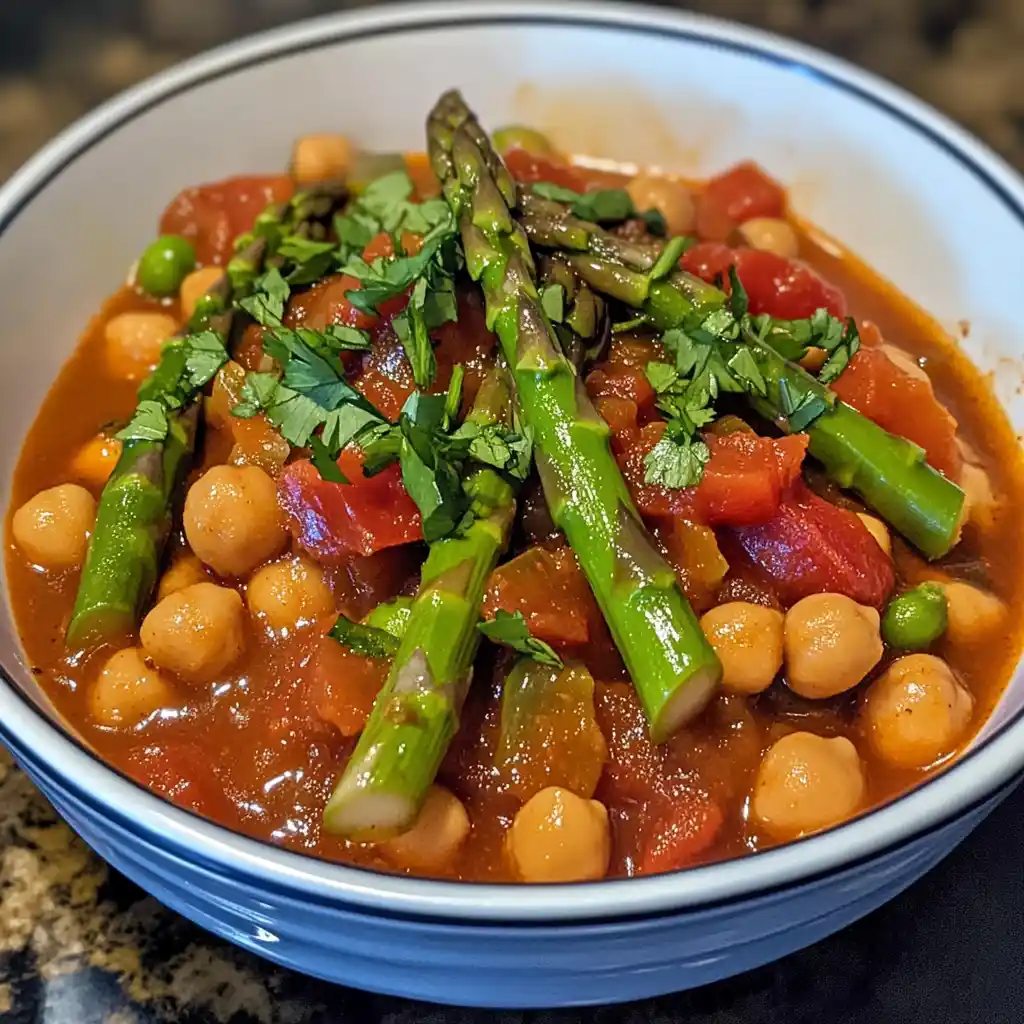
Ingredients
- 1 lb asparagus, trimmed and cut into 2-inch pieces (medium-thickness spears work best)
- 1 can (14 oz) chickpeas, drained and rinsed
- 1 onion, chopped
- 2 cloves garlic, minced
- 1 red bell pepper, diced
- 1 can (14 oz) diced tomatoes (fire-roasted adds great flavor)
- 2 cups vegetable broth (low-sodium lets you control the salt)
- 1 teaspoon ground cumin (toast it fresh if you can)
- 1 teaspoon ground coriander
- 1/2 teaspoon smoked paprika (the Spanish kind is amazing)
- Salt and pepper, to taste
- Fresh cilantro, for garnish
- Cooked couscous or rice, for serving
Instructions
- Heat a drizzle of olive oil in a large pot over medium heat. Add the chopped onion and minced garlic, sautéing for about 5 minutes until the onion is soft and translucent. Don’t rush this step—it builds the flavor base.
- Toss in the diced red bell pepper and cook for another 2-3 minutes until it starts to soften and get a little color on the edges.
- Here’s where the magic happens—stir in the cumin, coriander, and smoked paprika. Cook for just 1 minute, stirring constantly, until the spices smell toasty and incredible. This blooming step wakes up all those aromatics.
- Pour in the diced tomatoes with their juices and the vegetable broth, then bring everything to a simmer. You should see gentle bubbles breaking the surface.
- Add the chickpeas and asparagus pieces to the pot. Let it all simmer together for 10-12 minutes until the asparagus is tender but still has a slight bite—you don’t want it mushy.
- Season with salt and pepper to taste. Start with 1/2 teaspoon salt and adjust from there since different broths have different sodium levels.
- Serve the Moroccan asparagus stew over a bed of fluffy couscous or rice, then garnish generously with fresh cilantro. The herbs really brighten up all those warm spices.
Nutrition Information (Per Serving):
- Calories: 145
- Carbohydrates: 24g
- Protein: 7g
- Fat: 2.5g
- Fiber: 7g
- Sodium: 420mg
- Vitamin C: 65% DV
- Vitamin K: 45% DV
- Iron: 15% DV
- Folate: 35% DV
This stew delivers substantial plant-based protein from chickpeas, plus asparagus provides tons of vitamin K and folate for a nutritionally complete meal.
Notes:
- Seriously, don’t skip blooming those spices—it transforms the whole dish
- Every stove has its own personality, so if your stew is reducing too fast, lower the heat
- This goes from perfectly simmered to overcooked asparagus fast, so set a timer
- Medium-thickness asparagus spears hold their shape better than thin ones
- Don’t skip the fresh cilantro garnish; it adds brightness that balances the warm spices
Storage Tips:
- Keep refrigerated in an airtight container for up to 4 days
- Freeze the base without asparagus for up to 3 months, then add fresh asparagus when reheating
- Reheat gently on the stove with a splash of extra broth if it’s thickened up
- The flavors actually improve overnight, so this is perfect for meal prep
Serving Suggestions:
- Traditional: Serve over fluffy couscous with a side of warm pita bread
- Grain Bowl: Spoon over quinoa or brown rice with a dollop of Greek yogurt on top
- Crusty Bread: Skip the grains entirely and serve with thick slices of crusty bread for dipping
- Topped: Add a squeeze of lemon juice, toasted almonds, and extra cilantro for restaurant-style presentation
Mix It Up (Recipe Variations):
- Harissa Asparagus Stew: Stir in 1-2 tablespoons harissa paste with the spices for authentic North African heat
- Preserved Lemon Version: Add 2 tablespoons chopped preserved lemon in the last few minutes for tangy complexity
- Creamy Moroccan Stew: Swirl in 3 tablespoons tahini or coconut milk at the end for richness
- Spiced Chickpea Bowl: Skip the asparagus and double the chickpeas for a year-round version
What Makes This Recipe Special:
This Moroccan asparagus stew adapts traditional tagine techniques for a quick weeknight meal without sacrificing flavor complexity. The blooming spice method—toasting cumin, coriander, and smoked paprika in oil before adding liquids—creates layers of flavor that normally require hours of slow cooking. While asparagus isn’t a traditional Moroccan ingredient, it works beautifully with North African spice profiles, proving that culinary traditions can evolve while still honoring their roots.
