
Ever wonder why some one-pan meals taste like boring leftovers thrown together while restaurant versions are so elegant and flavorful? I used to think cooking seafood perfectly at home required multiple pots and precise timing until I discovered this foolproof one-pan crab with asparagus and quinoa recipe. Now my family requests this for special weeknight dinners, and my guests always ask how I made something so impressive in one skillet (if only they knew I used to overcook crab into rubber bands before learning this gentle layering technique).
Here’s the Thing About This Recipe
What makes this one-pan crab with asparagus and quinoa work is the genius of layering ingredients by their cooking times—quinoa cooks first, then delicate asparagus and crab just heat through on top using residual steam. The secret to authentic restaurant-quality seafood isn’t complicated techniques or fancy equipment—it’s all about not overcooking the crab and building bright lemon flavor throughout. I learned the hard way that stirring everything together from the start means mushy asparagus and rubbery crab. Here’s what I’ve learned: gentle steaming on top of the cooking quinoa keeps everything perfectly tender. It’s honestly that simple, and no fancy tricks needed to make this taste like you paid thirty dollars for it at a coastal restaurant.
What You’ll Need (And My Shopping Tips)
Good quality lump crab meat is worth seeking out—look for fresh or pasteurized crab in the refrigerated seafood section, not the shelf-stable canned stuff that’s usually stringy and fishy. Don’t cheap out on imitation crab here; real crab is what makes this special. I always check for shell fragments because even “picked” crab meat sometimes has tiny pieces (happens more than I’d like to admit that I find shells while eating and wish I’d checked better).
Fresh asparagus should be firm with tight tips, not wilted or slimy. For the quinoa, white, red, or tri-color all work beautifully—pick whichever you prefer. Make sure to rinse it well before using to remove the natural bitter coating. I learned this after skipping the rinse three times and wondering why my quinoa tasted soapy.
Fresh lemon is non-negotiable—you need both the juice and zest for maximum bright flavor. Pick one that feels heavy for its size. Good chicken or vegetable broth makes all the difference; low-sodium gives you better control over seasoning. Fresh parsley for garnish adds that pop of color and fresh flavor that makes this feel complete instead of plain.
Let’s Make This Together
Start by heating that olive oil in your largest skillet with a lid over medium heat. Add your minced garlic and cook for just one minute until fragrant but not browned. Here’s where I used to mess up: burning the garlic by having the heat too high, which makes everything taste bitter instead of sweet and mellow.
Add your rinsed quinoa to the skillet and toast it for 2-3 minutes, stirring occasionally, until it smells slightly nutty. This step adds depth of flavor that you don’t get from just boiling quinoa. Pour in the broth, lemon juice, half of the lemon zest, salt, and pepper. Give everything a good stir, then bring it to a boil. Once boiling, reduce the heat to low, cover with a tight-fitting lid, and let it simmer for 15 minutes without lifting the lid. Don’t be me—I used to peek constantly and all the steam would escape.
Now for the fun part: after those 15 minutes, the quinoa should be mostly cooked with most of the liquid absorbed. Here’s my secret: arrange your bite-sized asparagus pieces and lump crab meat in an even layer right on top of the quinoa. Don’t stir them in—just lay them on top. Cover again and cook for 5-7 minutes until the asparagus is tender-crisp and the crab is heated through. Around here, we’ve figured out that this steaming method keeps the crab impossibly tender and the asparagus perfectly cooked.
Remove from heat and gently fluff the quinoa with a fork, incorporating the crab and asparagus as you go. Be gentle here so the crab doesn’t break apart into tiny shreds. Taste and adjust seasoning—you’ll probably need more salt and pepper than you initially added. I learned this trick from a chef friend: always taste at the end because cooking concentrates flavors.
Sprinkle with the remaining lemon zest and fresh chopped parsley, then serve hot right from the skillet for that rustic, impressive presentation. If you’re making this as part of a seafood dinner, check out this Roasted Garlic Bread that’s perfect for serving alongside.
If This Happens, Don’t Panic
Crab turned out rubbery and overcooked? You probably cooked it too long or stirred it in too early. In reality, I’ve learned that crab just needs to be warmed through, not actually cooked—it’s already cooked when you buy it. If this happens (and it might while you’re learning timing), remember to add the crab later next time.
Quinoa is still crunchy after the full cooking time? This is totally fixable—add 1/4 cup more broth and cook covered for another 5 minutes. I always check the quinoa at 15 minutes now because different brands absorb liquid at different rates, so trust your texture test.
Everything tastes bland despite the lemon? Don’t panic, just add more lemon juice, lemon zest, and salt after cooking. Every lemon has different acidity levels, so adjust accordingly. If your one-pan crab with asparagus and quinoa needs more brightness, a pat of butter stirred in at the end adds richness and helps carry flavors.
Ways to Mix It Up
When I’m feeling fancy, I’ll make Shrimp and Crab Version by adding 8 oz of peeled shrimp with the crab for a double seafood treat that’s absolutely luxurious. Around spring, I’ll switch it up with Pea and Crab Style by adding 1 cup of frozen peas with the asparagus for extra sweetness and color.
For a Spicy Cajun Crab version, add 1 teaspoon of Cajun seasoning to the quinoa and finish with a squeeze of hot sauce—my husband requests this constantly. If you want a Mediterranean Twist, add cherry tomatoes and crumbled feta cheese in the last few minutes for bright, tangy complexity.
What Makes This Recipe Special
This one-pan crab with asparagus and quinoa works because it respects the delicate nature of crab meat while efficiently cooking everything in layers based on their required cooking times. The technique of steaming seafood on top of grains is borrowed from Middle Eastern pilaf traditions, where proteins cook gently in the steam rising from rice or grains below. What sets this apart from other one-pan meals is the elegant combination of sweet crab, fresh asparagus, and fluffy quinoa bound together with bright lemon—it feels special enough for company but easy enough for weeknights. According to quinoa cooking methods, this ancient grain is actually a complete protein, making it perfect for pairing with lighter proteins like crab.
Things People Ask Me About This Recipe
Can I make this one-pan crab dish ahead of time?
Seafood is best served fresh, but you can prep everything ahead—rinse quinoa, trim asparagus, pick through crab—then cook right before serving. The actual cooking only takes 25 minutes, so it’s perfect for making fresh even on busy nights.
What if I can’t find lump crab meat?
Large shrimp, lobster chunks, or even firm white fish like cod work beautifully with this method. The cooking time might vary slightly—shrimp needs about 3-4 minutes, fish about 5-7 minutes depending on thickness.
Can I use brown rice instead of quinoa?
Brown rice works but needs much longer cooking—about 45 minutes. White rice cooks in about 18 minutes. Adjust your liquid and cooking times accordingly. Quinoa is ideal here because it cooks quickly and has a light texture that doesn’t overpower delicate crab.
Is this one-pan crab with asparagus and quinoa beginner-friendly?
Yes! If you can boil quinoa and layer ingredients, you’ve got this. The technique is simple—just resist the urge to stir everything together too early, and you’ll have perfect results.
How do I know when asparagus is done?
It should be bright green and tender when pierced with a fork, but still have a slight crunch. Overcooking turns it gray-green and mushy, so check at 5 minutes if you have thin spears.
Can I make this dairy-free?
This recipe is already dairy-free! Just make sure your broth doesn’t contain any dairy. For extra richness without dairy, add an extra tablespoon of olive oil or a splash of coconut cream at the end.
Before You Head to the Kitchen
I couldn’t resist sharing this one-pan crab with asparagus and quinoa because it’s become my go-to recipe when I want to look like a gourmet cook without actually stressing in the kitchen. The best weeknight dinners are when everyone’s impressed by this elegant, lemony dish served right from the skillet, and you’re secretly relieved that it all cooked in one pan. Trust me on this one—master this light, flavorful one-pan crab with asparagus and quinoa, and you’ll have a restaurant-quality meal that actually fits into busy life.
Print
One-Pan Crab with Asparagus and Quinoa
Description
Sweet lump crab and tender asparagus steam perfectly over lemony quinoa in this elegant one-pan crab with asparagus and quinoa that makes weeknight seafood effortless.
Prep Time: 10 minutes | Cook Time: 25 minutes | Total Time: 35 minutes | Servings: 4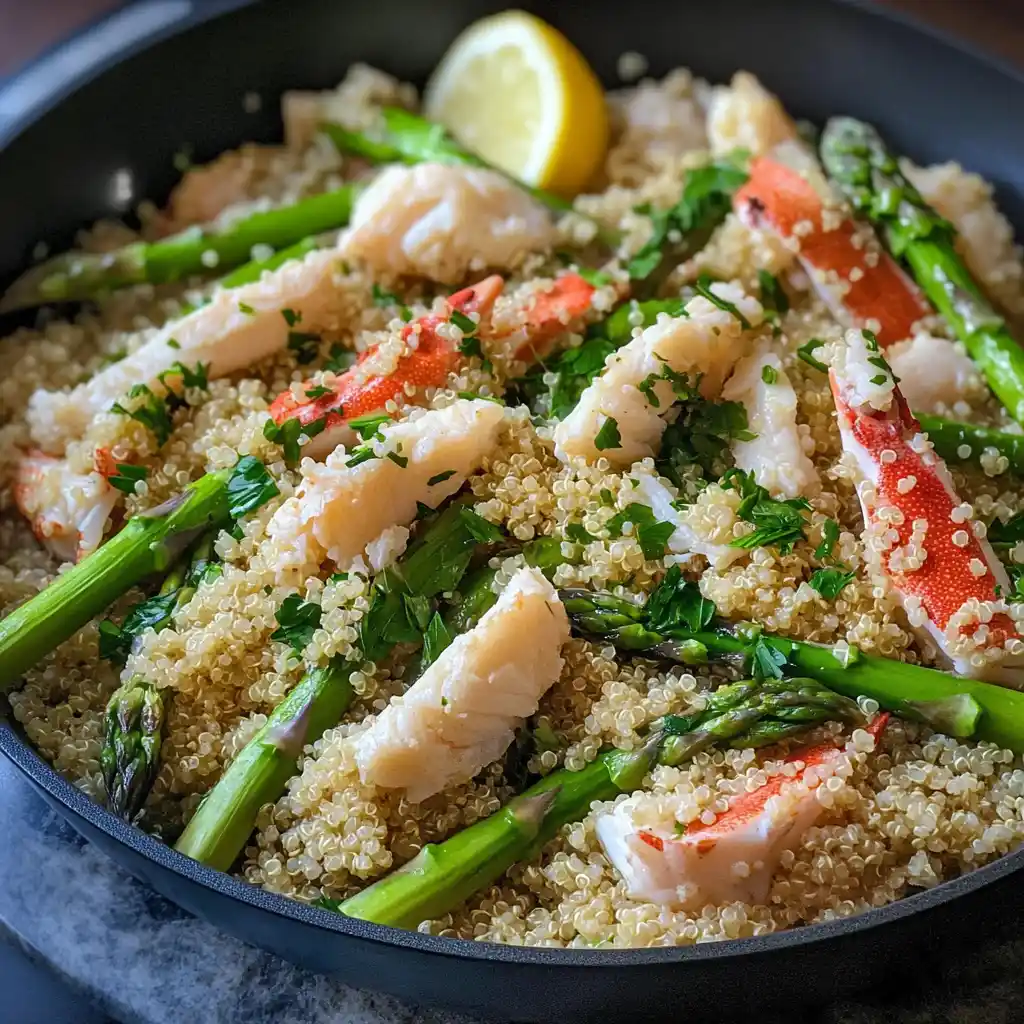
Ingredients
- 8 oz lump crab meat (fresh or pasteurized, picked through for shells)
- 1 bunch asparagus, trimmed and cut into 1-inch pieces (about 1 lb)
- 1 cup quinoa (any color works—rinse well before using)
- 2 cups chicken or vegetable broth (low-sodium gives you better control)
- 1 lemon, zested and juiced (you need both—about 3 tbsp juice, 1 tbsp zest)
- 2 cloves garlic, minced (fresh is essential here)
- 2 tbsp olive oil (good quality for best flavor)
- Salt and pepper, to taste (start with 1/2 tsp salt, 1/4 tsp pepper)
- Fresh parsley, for garnish (about 2 tablespoons, chopped)
Instructions
- Heat that olive oil in your largest skillet with a lid over medium heat. Add minced garlic and cook for just 1 minute, stirring frequently, until fragrant but not browned.
- Add your rinsed quinoa to the skillet and toast for 2-3 minutes, stirring occasionally, until it smells slightly nutty. This adds depth that plain boiled quinoa doesn’t have.
- Pour in the broth, lemon juice, half of the lemon zest, salt, and pepper. Stir well, then bring to a boil over medium-high heat.
- Once boiling, reduce heat to low, cover with a tight-fitting lid, and simmer for 15 minutes without lifting the lid. Resist the urge to peek—you want all that steam trapped inside.
- After 15 minutes, the quinoa should be mostly cooked. Now arrange your bite-sized asparagus pieces and lump crab meat in an even layer right on top of the quinoa. Don’t stir them in—just lay them on top.
- Cover again and cook for 5-7 minutes until the asparagus is tender-crisp and bright green, and the crab is heated through. The steam from the quinoa cooks them perfectly.
- Remove from heat and gently fluff the quinoa with a fork, incorporating the crab and asparagus as you go. Be gentle so the crab doesn’t break into tiny pieces.
- Taste and adjust seasoning—you’ll probably need more salt and pepper. Sprinkle with remaining lemon zest and fresh chopped parsley, then serve hot right from the skillet.
Nutrition Information (Per Serving):
- Calories: 285
- Carbohydrates: 32g
- Protein: 20g
- Fat: 9g
- Fiber: 5g
- Sodium: 580mg
- Vitamin C: 15% DV
- Iron: 20% DV
- Folate: 25% DV
- Selenium: 45% DV (from that crab!)
This one-pan crab with asparagus and quinoa provides excellent lean protein, complete amino acids from quinoa, and beneficial nutrients from asparagus.
Notes:
- Seriously, rinse that quinoa well—it has a natural bitter coating that needs washing off
- Don’t stir the crab and asparagus into the cooking quinoa—steam them on top for perfect texture
- Every skillet conducts heat differently, so check asparagus at 5 minutes to prevent overcooking
- Pick through crab meat for shells even if the package says it’s cleaned—you’ll thank me later
Storage Tips:
Keep leftovers in an airtight container in the fridge for up to 2 days. Reheat gently in a skillet over medium-low heat with a splash of broth to prevent drying out, or microwave at 50% power in 30-second intervals. The crab and asparagus will be more tender after reheating but still delicious. Don’t freeze this—seafood and asparagus don’t freeze well and the texture suffers significantly.
Serving Suggestions:
- Complete Meal: This is already a balanced meal, but serve with crusty bread to soak up those lemony juices
- Light Dinner: Pair with a simple green salad dressed with lemon vinaigrette for an elegant, light meal
- Special Occasion: Serve with white wine and roasted garlic bread for a restaurant-quality dinner at home
- Lunch Prep: Pack into containers for impressive work lunches that reheat beautifully
Mix It Up (Recipe Variations):
Shrimp and Crab Version: Add 8 oz peeled, deveined shrimp with the crab for a double seafood treat that’s incredibly luxurious and satisfying.
Pea and Crab Style: Add 1 cup frozen peas with the asparagus for extra sweetness, color, and a more British-inspired flavor profile.
Spicy Cajun Crab: Add 1 teaspoon Cajun seasoning to the quinoa and finish with hot sauce for Southern-inspired heat that’s addictive.
Mediterranean Twist: Add halved cherry tomatoes with the asparagus and top with crumbled feta cheese for tangy, bright Greek-inspired flavors.
What Makes This Recipe Special:
This one-pan crab with asparagus and quinoa proves that elegant seafood dinners don’t require multiple pots, precise timing, or culinary school training. By understanding that different ingredients need different cooking times and building the dish in layers, this recipe achieves restaurant-quality results with minimal effort. The bright lemon that’s cooked into the quinoa and also added fresh at the end creates layers of citrus flavor that keep every bite interesting. This technique respects the delicate nature of crab meat while efficiently cooking everything together in one skillet that goes straight to the table.
