
Ever wonder why restaurant duck is crispy-skinned and perfectly pink while homemade versions turn out rubbery and gray? I used to think making one-pan duck with radish and wild rice was only for trained chefs until I discovered that rendering the fat slowly and using residual heat are the secrets. Now my family requests this elegant dish for special dinners, and I’m pretty sure my guests think I went to culinary school (if only they knew how many batches I made with flabby skin and overcooked meat before learning the crucial techniques).
Here’s the Thing About This Recipe
What makes this one-pan duck with radish and wild rice work is properly rendering the duck fat to create crispy skin, using that rendered fat to flavor the rice, and finishing everything in the oven so the duck stays pink and juicy while the rice absorbs all those amazing flavors. I learned the hard way that you can’t rush duck—the skin needs slow rendering over moderate heat, not high heat that burns the outside while leaving fat unrendered underneath. This restaurant-quality dish brings together rich duck, earthy wild rice, and peppery radishes that mellow beautifully when roasted. It’s honestly that simple: patience with the skin, proper pan management, strategic use of the oven, and understanding that duck is best served medium-rare to medium.
What You’ll Need (And My Shopping Tips
Good duck breasts are worth seeking out at specialty butchers or quality grocery stores—look for breasts with thick, even layers of fat and deep red meat (I learned this after buying thin, sad duck breasts three times and wondering why my results were disappointing). You’ll need 2 breasts, which serve 2-4 people depending on appetites.
For the wild rice base, grab wild rice (which is actually a grass seed, not true rice—it has a nutty, earthy flavor perfect for duck), chicken broth, a shallot (more delicate than onion for this elegant dish), and fresh garlic. Don’t cheap out on boxed broth that tastes like salt water—get quality broth or make your own (happens more than I’d like to admit when I grab whatever’s on sale).
For the vegetables and finishing, you’ll need fresh radishes (look for firm, crisp ones with bright color—they’ll roast and mellow into something completely different from raw), olive oil, butter, salt, pepper, and fresh parsley for garnish.
If you’re curious about duck and why it’s considered such a delicacy, Wikipedia has fascinating information about its rich flavor, high fat content, and culinary traditions across cultures from French to Chinese cuisine.
Let’s Make This Together
Start by bringing your duck breasts to room temperature—pull them from the fridge 20-30 minutes before cooking. Cold duck won’t render properly. Score the skin in a crosshatch pattern with a sharp knife, cutting through the fat but not into the meat (about 1/4 inch deep). This helps the fat render and the skin crisp up. Season both sides generously with salt and pepper.
Heat a large oven-safe pan (cast iron is ideal) over medium heat—not medium-high, just medium. Here’s where I used to mess up: I’d crank the heat thinking high heat meant crispy skin. Actually, duck needs moderate heat to render the thick layer of fat slowly. Place the duck breasts skin-side down in the dry pan (no oil needed—duck has plenty of its own fat). Let them cook undisturbed for about 5-7 minutes, watching as the fat renders and the skin turns deep golden brown and crispy. You’ll see a lot of fat accumulating in the pan—this is gold. Don’t flip until the skin is truly crispy and releases easily from the pan.
Flip the duck and cook the meat side for just 2-3 minutes—you want to sear it but not cook it through yet. Remove the duck breasts from the pan and set aside to rest. Pour off most of the rendered duck fat into a heat-safe container (save it for the most incredible roasted potatoes of your life), leaving about 2 tablespoons in the pan.
In the same pan with the duck fat, melt a tablespoon of butter over medium heat. Add the finely chopped shallot and minced garlic, sautéing for about 2 minutes until fragrant and soft but not brown. This creates the aromatic base for your rice.
Add the wild rice and toast it in the fat for about a minute, stirring to coat every grain. This toasting deepens the nutty flavor. Pour in the chicken broth, give it a stir, and bring to a simmer. Once simmering, reduce the heat to low, cover, and cook for 30 minutes. Wild rice takes longer than regular rice—don’t rush it. I learned this timing from trial and error; wild rice needs its full cooking time to become tender but still have that characteristic chew.
While the rice cooks, preheat your oven to 350°F. Trim and quarter your radishes—they’ll shrink and mellow as they roast, losing most of their peppery bite and gaining a sweet, almost turnip-like quality.
After the rice has cooked for 30 minutes, nestle the seared duck breasts back into the pan skin-side up on top of the rice mixture. The skin should be facing up so it stays crispy. Scatter the quartered radishes around and on top of the rice.
Cover the pan with aluminum foil and transfer to the preheated oven. Bake for 20-25 minutes. Here’s my secret: I pull it at 20 minutes for medium-rare (internal temp around 135°F) and let carryover cooking bring it to 140°F while it rests. If you prefer duck more cooked, go for the full 25 minutes. Trust me on this—duck is best served pink; well-done duck is tough and livery.
Remove from the oven and let everything rest for 5 minutes. This resting time is crucial—it allows the juices to redistribute in the meat so they don’t all run out when you slice. If you’re looking for another elegant one-pan meal, try this One-Pan Chicken with Farro and Mushrooms that uses similar techniques.
Slice the duck breasts against the grain into 1/2-inch slices. The meat should be rosy pink in the center with crispy golden skin. Arrange the slices over the rice and radishes, garnish with fresh chopped parsley, and serve immediately. The combination of rich duck, nutty wild rice, and sweet-mellow radishes with all that rendered duck fat is absolutely restaurant-worthy.
When Things Go Sideways (And They Will)
Duck skin is rubbery instead of crispy? You cooked it over too high heat or didn’t render it long enough. In reality, I’ve learned that duck needs patient rendering over moderate heat—5-7 minutes minimum skin-side down, watching the fat render and the skin bronzing slowly.
Duck is overcooked and gray inside? You cooked it too long in the oven or didn’t let it rest before the final cooking. Next time, pull it at 20 minutes for medium-rare, and remember that carryover cooking will add another 5 degrees as it rests.
Wild rice is still crunchy and undercooked? It didn’t cook long enough or you didn’t use enough liquid. Wild rice takes 40-50 minutes total to cook properly. If this happens, just add more broth and continue cooking until tender.
Radishes taste too harsh and peppery? They didn’t roast long enough. Radishes need that 20-25 minutes in the oven to mellow and sweeten. If they’re still sharp, you can always leave them out next time or substitute with turnips or fennel.
Ways to Mix It Up
Cherry-Glazed Duck: When I want something sweeter, I’ll make a quick cherry reduction with balsamic vinegar and drizzle it over the sliced duck for elegant presentation. Around holiday dinners, this becomes my show-stopping version.
Asian-Inspired Duck: Use soy sauce, ginger, and a splash of rice wine in the rice cooking liquid, and substitute bok choy or snap peas for the radishes for a different flavor profile.
Mushroom Duck with Wild Rice: Add sliced cremini or shiitake mushrooms with the radishes for extra umami and earthiness that complements duck beautifully.
Orange Duck: Add orange zest to the rice and a squeeze of orange juice over the finished dish for that classic French canard à l’orange inspiration.
What Makes This Recipe Special
This one-pan duck with radish and wild rice represents the magic that happens when you understand the unique properties of duck and cook it accordingly. Duck is fundamentally different from chicken—it has a thick layer of subcutaneous fat that needs to be rendered to achieve crispy skin, and the dark, rich meat is best served medium-rare like a steak rather than fully cooked like poultry. What makes this recipe work is the methodical approach: rendering the fat slowly for crispy skin, using that rendered fat to flavor the rice and vegetables (creating cohesion throughout the dish), and finishing in the oven where gentle, even heat cooks everything together without overcooking the duck. Wild rice is the perfect pairing because its nutty, earthy flavor stands up to the richness of duck without being overwhelmed, and its chewy texture provides contrast to the tender meat. Radishes undergo a remarkable transformation when roasted—they lose much of their peppery bite and develop a sweet, almost turnip-like quality that balances the rich duck. The technique of searing meat, building a grain or starch base in the same pan, then finishing everything in the oven is classic French bistro cooking—it maximizes flavor by using every drop of fond (those browned bits) and rendered fat while creating an impressive one-pan presentation. The history of duck in French cuisine shows it’s been a delicacy for centuries, with preparations like confit and magret showcasing the meat’s unique qualities.
Things People Ask Me About This Recipe
Is duck safe to eat medium-rare like beef?
Yes! Duck breast is served medium-rare in restaurants worldwide. Unlike chicken, whole duck doesn’t carry the same salmonella risk, and duck breast can be safely served pink (internal temp 135-140°F). The USDA technically recommends 165°F for all poultry, but this is considered overcautious for duck breast by culinary professionals.
Why does duck have so much fat, and what do I do with it?
Duck needs fat for insulation since they’re waterfowl. The rendered fat is culinary gold—save it! Use it for the most incredible roasted potatoes, sautéed vegetables, or even as a base for confit. Strain it and store in the fridge for up to 3 months.
Can I use regular rice instead of wild rice?
You can, but wild rice’s nutty, earthy flavor really complements duck’s richness perfectly. If using regular rice, reduce the cooking time to about 15-18 minutes and use less liquid (rice to liquid ratio of 1:2).
How do I know when the duck is done without a thermometer?
Press the thickest part of the breast—it should feel like the fleshy part of your palm below your thumb when you touch your thumb to your middle finger (medium-rare). Slicing into it should reveal rosy pink meat.
Can I make this with chicken instead of duck?
The recipe would work with chicken thighs (not breasts), but you’d lose the rich flavor and rendered fat that makes this special. You’d also need to cook chicken to 165°F instead of the 135-140°F for duck.
Why do I need to score the duck skin?
Scoring creates channels for the fat to render out, helping achieve crispy skin. Without scoring, the fat stays trapped under the skin and you get rubbery results.
One Last Thing
I couldn’t resist sharing this one-pan duck with radish and wild rice because it’s the recipe that taught me “fancy” cooking is often about technique, not complicated ingredients. The best dinner party moments are when you bring this elegant dish to the table and everyone’s impressed, but you know it was mostly hands-off oven time. You don’t need culinary school—just good duck, patience with fat rendering, and the confidence to serve duck the way restaurants do: beautifully pink.
Print
One-Pan Duck with Radish and Wild Rice
Description
This elegant one-pan duck with radish and wild rice features crispy-skinned, pink-centered duck breast alongside nutty wild rice and sweet roasted radishes, all cooked together using rendered duck fat for maximum flavor with restaurant-quality results.
Prep Time: 15 minutes | Cook Time: 1 hour | Total Time: 1 hour 15 minutes | Servings: 2-4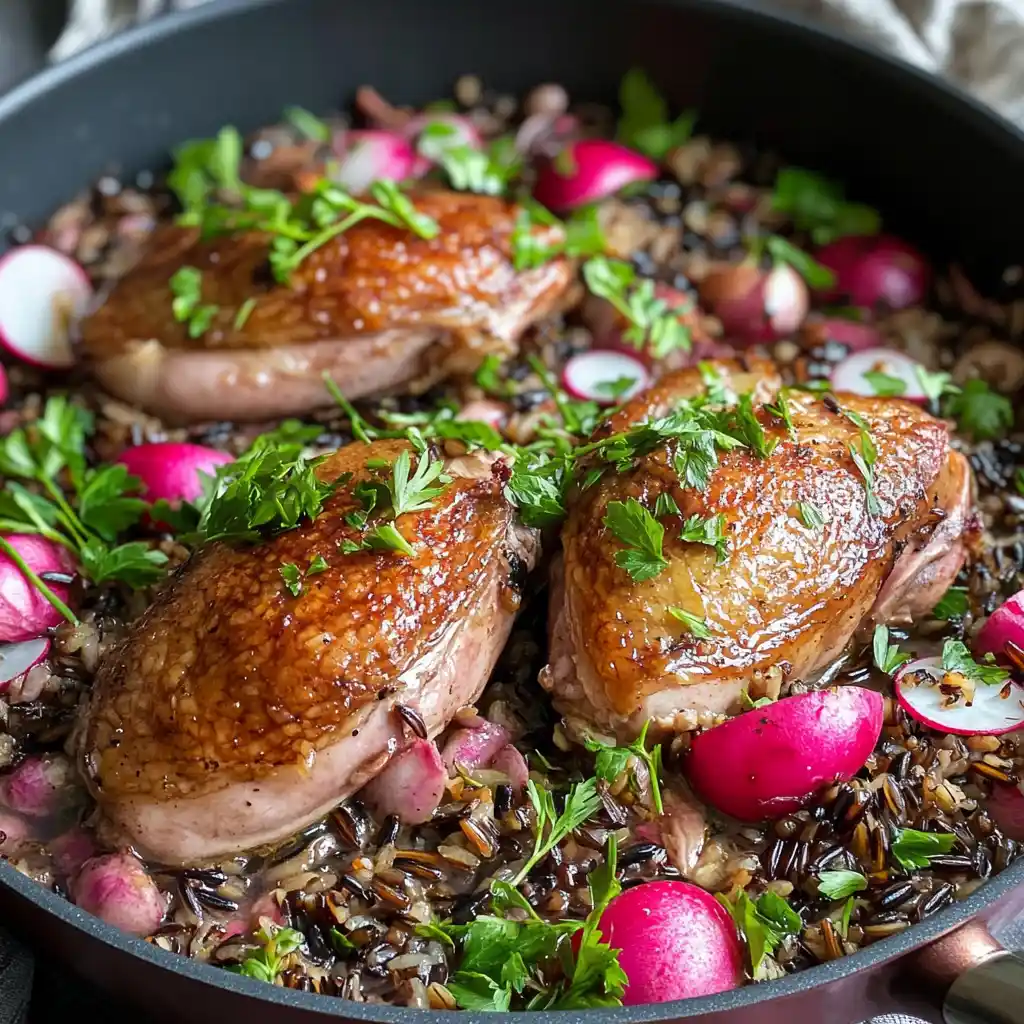
Ingredients
For the Duck:
- 2 duck breasts (about 6–8 oz each—look for thick, even fat layers)
- Salt and pepper (generous amounts for seasoning)
For the Wild Rice:
- 1 cup wild rice (the grass seed, not true rice—has nutty flavor)
- 2 cups chicken broth (quality broth, not salty boxed stuff)
- 1 tablespoon olive oil
- 1 tablespoon butter
- 1 shallot, finely chopped (more delicate than onion)
- 2 cloves garlic, minced (fresh only)
For the Radishes:
- 1 bunch radishes, trimmed and quartered (about 8–10 radishes)
For Garnish:
- Fresh parsley, chopped (adds brightness)
Instructions
- Bring duck breasts to room temperature (20-30 minutes out of fridge). Score the skin in a crosshatch pattern, cutting through fat but not into meat (about 1/4 inch deep). Season both sides generously with salt and pepper.
- Heat a large oven-safe pan (cast iron ideal) over medium heat—not medium-high, just medium. Place duck breasts skin-side down in the dry pan. Cook undisturbed for 5-7 minutes, watching the fat render and skin turn deep golden brown and crispy. The skin should release easily when ready.
- Flip duck and cook the meat side for 2-3 minutes to sear. Remove duck from pan and set aside. Pour off most rendered fat into a heat-safe container (save it!), leaving about 2 tablespoons in the pan.
- In the same pan with duck fat, melt 1 tablespoon butter over medium heat. Add chopped shallot and minced garlic, sautéing for about 2 minutes until fragrant and soft but not brown.
- Add wild rice and toast for about 1 minute, stirring to coat every grain. Pour in chicken broth, stir, and bring to a simmer. Once simmering, reduce heat to low, cover, and cook for 30 minutes.
- While rice cooks, preheat oven to 350°F (180°C). Trim and quarter your radishes.
- After rice has cooked 30 minutes, nestle the seared duck breasts back into the pan skin-side up on top of rice. Scatter quartered radishes around and on top of rice.
- Cover pan with aluminum foil and transfer to preheated oven. Bake for 20-25 minutes—pull at 20 minutes for medium-rare (internal temp 135°F) or 25 minutes for medium. The duck is best served pink.
- Remove from oven and let rest for 5 minutes. This allows juices to redistribute so they don’t run out when you slice.
- Slice duck breasts against the grain into 1/2-inch slices. The meat should be rosy pink in center with crispy golden skin. Arrange slices over rice and radishes, garnish with fresh parsley, and serve immediately.
Nutrition Information (Per Serving, serves 4):
- Calories: 485
- Carbohydrates: 38g
- Protein: 32g
- Fat: 22g
- Fiber: 4g
- Sodium: 580mg
- Iron: 30% DV
- Zinc: 20% DV
- B Vitamins: Excellent source
Duck provides high-quality protein, iron, zinc, and B vitamins, while wild rice offers fiber and minerals.
Notes:
- Score the duck skin in crosshatch pattern for proper fat rendering and crispy results.
- Render duck fat over medium heat, not high—patience creates crispy skin without burning.
- Save the rendered duck fat for incredible roasted potatoes or sautéed vegetables.
- Duck is best served medium-rare (135-140°F internal temp)—it’s safe and delicious pink.
- Wild rice takes 40-50 minutes total to cook properly—don’t rush it.
- Let duck rest 5 minutes after cooking before slicing or juices will run out.
Storage Tips:
Store leftover duck, rice, and radishes separately in airtight containers in the fridge for up to 3 days. The duck skin won’t stay crispy when stored—that’s inevitable with leftovers. Reheat the rice and radishes in the microwave or on the stovetop. For the duck, either enjoy it cold sliced over salad, or reheat gently in a 300°F oven for about 10 minutes (it will cook further and won’t be pink anymore). Don’t freeze duck breast—the texture suffers dramatically when thawed. The wild rice can be frozen for up to 2 months.
Serving Suggestions:
- Elegant Dinner: Serve with a simple arugula salad and crusty bread
- Complete Meal: Add roasted asparagus or green beans on the side
- Wine Pairing: Serve with Pinot Noir or Burgundy that complements duck’s richness
- Presentation: Fan the duck slices over the rice for restaurant-style plating
Mix It Up (Recipe Variations):
Cherry-Glazed Duck: Make a quick cherry reduction with balsamic vinegar and drizzle over sliced duck for elegant, sweet-tart finish.
Asian-Inspired Duck: Use soy sauce, ginger, and rice wine in the rice cooking liquid, substitute bok choy for radishes.
Mushroom Duck with Wild Rice: Add sliced cremini or shiitake mushrooms with the radishes for extra umami and earthiness.
Orange Duck: Add orange zest to rice and squeeze of orange juice over finished dish for classic French canard à l’orange inspiration.
What Makes This Recipe Special:
This one-pan duck with radish and wild rice showcases understanding duck’s unique properties—slowly rendering thick subcutaneous fat for crispy skin while keeping the rich, dark meat pink like steak. Using rendered duck fat to flavor the rice and vegetables creates cohesion throughout the dish. The oven finishing technique provides gentle, even heat that cooks everything together without overcooking the duck.
