
Ever wonder why restaurant fish dishes always look so elegant while yours turn out messy with three dirty pans? I used to think you needed culinary school to make impressive one-pan mahi-mahi until I discovered this ridiculously simple recipe. Now my family requests this healthy fish dinner at least once a week, and I’m pretty sure my friends think I’ve been secretly watching cooking shows all day (if only they knew this takes one skillet and 30 minutes total).
Here’s the Thing About This Recipe
What makes this easy mahi-mahi recipe work is cooking everything in stages in the same pan—that’s literally the secret to getting perfectly seared fish, fluffy bulgur, and tender peas without juggling multiple pots. Most people panic about cooking fish and grain together, wondering which one will be overcooked or undercooked. The secret to authentic one-pan cooking isn’t complicated timing—it’s all about layering ingredients so each component finishes at the right moment. It’s honestly that simple, no restaurant kitchen required.
What You’ll Need (And My Shopping Tips)
Good mahi-mahi is essential here—look for fillets that are firm, slightly translucent, and smell like clean ocean, not fishy. I learned this after buying sad, mushy fish twice from the discount section. The flesh should be pinkish-beige and spring back when you press it gently. Around here, we’ve discovered that asking the fishmonger when their delivery comes in and shopping that day makes all the difference.
Fresh fish matters more than anything else. According to Bon Appétit’s guide to buying fish, mahi-mahi should have bright, clear skin and firm texture. If it’s been previously frozen, that’s fine—just make sure it was thawed properly and doesn’t smell strong.
For the bulgur, go for medium-grain bulgur wheat which cooks faster than coarse bulgur. It should smell nutty and fresh, not stale or dusty. Frozen peas are actually better than fresh for this recipe because they’re picked at peak sweetness and flash-frozen (happens more than I’d like to admit—frozen beats old “fresh” peas every time). Your lemon should be bright yellow, firm, and heavy for its size. Fresh garlic beats jarred stuff always, and paprika should be vibrant red, not faded brown. Don’t skip the fresh parsley garnish—it adds a pop of color and freshness that makes this look restaurant-worthy.
Let’s Make This Together
Start by cranking your oven to 400°F and getting your oven-safe skillet ready. Here’s where I used to mess up—make sure your skillet can actually go in the oven. Cast iron works perfectly, as do many stainless steel pans with metal handles. No plastic or wooden handles!
In a small bowl, mix together your minced garlic, paprika, cumin, salt, pepper, and 1 tablespoon of olive oil to make a spice paste. Rub this mixture all over your mahi-mahi fillets, coating them evenly on both sides. The fish should be well-seasoned and aromatic.
Heat the remaining tablespoon of olive oil in your oven-safe skillet over medium-high heat until it’s shimmering. Add those seasoned mahi-mahi fillets and sear for 2-3 minutes per side until they have a nice golden crust. Don’t move them around—let them develop that beautiful color. They won’t be cooked through yet, and that’s okay.
Remove the fish from the skillet and set it aside on a plate. Now for the fun part—add your bulgur wheat and frozen peas directly to the same skillet. The residual oil and fish drippings will flavor everything beautifully. Give it a quick stir, then nestle those seared mahi-mahi fillets right on top of the bulgur and peas. Lay a couple lemon slices on each fillet.
Here’s my secret that I learned from too many failed attempts: cover the skillet tightly with aluminum foil to trap steam, which cooks the bulgur and keeps the fish moist. Transfer the whole thing to your preheated oven and bake for 15-20 minutes until the fish flakes easily with a fork and the bulgur is tender and has absorbed all the liquid.
Remove from the oven, shower everything with fresh chopped parsley, and serve immediately. This pairs beautifully with a simple green salad or this Roasted Asparagus from the collection.
If This Happens, Don’t Panic
Fish turned out dry and overcooked? You probably baked it too long or your fillets were thinner than 1 inch. This is harder to fix after the fact, but you can squeeze extra lemon juice over everything to add moisture. Next time, check at 15 minutes and pull it when the fish just barely flakes. I always set a timer now because fish goes from perfect to overdone in about 2 minutes.
Bulgur still crunchy after baking time? Don’t panic—you might need to add ¼ cup of water or broth to the pan, re-cover, and bake for another 5 minutes. If this happens (and it will if your bulgur was particularly dry), the extra liquid solves everything. Some bulgur brands absorb liquid differently.
Fish stuck to the pan during searing? Next time make sure your pan is really hot before adding the fish, and don’t try to flip it too early. If it’s sticking, it’s not ready to flip. If it’s already stuck, use a thin metal spatula to gently release it—the crust might not be as pretty but it’ll still taste great.
When I’m Feeling Creative
Mediterranean Mahi-Mahi: Add halved cherry tomatoes and sliced olives along with the bulgur and peas. Sprinkle with crumbled feta cheese after baking. Around summer when tomatoes are amazing, this version is incredible.
Spicy Mahi-Mahi: Add ½ teaspoon cayenne pepper to the spice rub and serve with a squeeze of lime instead of lemon. My brother requests this version because he loves heat.
Herby One-Pan Fish: Replace paprika and cumin with dried oregano and thyme for a more herbaceous flavor. Top with a dollop of Greek yogurt mixed with fresh dill at serving time.
Coconut Mahi-Mahi: Use quinoa instead of bulgur and add ½ cup coconut milk to the grains before baking. Finish with cilantro instead of parsley for a tropical twist.
What Makes This Recipe Special
Mahi-mahi, also called dolphinfish or dorado, is a sustainable, fast-growing fish popular in tropical and subtropical waters worldwide. According to Wikipedia’s entry on mahi-mahi, it’s prized for its firm texture and mild, slightly sweet flavor that pairs well with bold seasonings. What sets this one-pan mahi-mahi recipe apart is the cooking technique—searing the fish first creates a flavorful crust, then finishing everything together in the oven allows the bulgur to absorb all those delicious fish drippings and spices while staying perfectly moist under the foil. The result is a complete meal with protein, whole grains, and vegetables all infused with Mediterranean-inspired flavors, and only one pan to wash.
Things People Ask Me About This Recipe
Can I make this one-pan fish recipe with other types of fish?
Absolutely! Salmon, cod, halibut, or sea bass all work great. Just adjust cooking time based on thickness—thicker fillets need a few extra minutes, thinner ones need less. The technique stays the same.
What if I can’t find bulgur for this healthy fish dinner?
Quinoa or couscous work as substitutes. Quinoa takes about the same time, couscous is faster so add it later. Rice would need pre-cooking or much more liquid and time, so stick with quick-cooking grains.
How do I know when the mahi-mahi is done cooking?
It should flake easily when you gently press a fork into the thickest part, and the internal temperature should be 145°F if you’re using a thermometer. The flesh will be opaque and white, not translucent.
Can I prep this ahead for meal prep?
You can prep the spice rub and measure out the bulgur and peas ahead, but the fish should be cooked fresh for best texture. Cooked fish gets rubbery when reheated. This recipe is fast enough that there’s no need to prep ahead.
Is this easy mahi-mahi recipe actually healthy?
Super healthy! Lean protein from the fish, whole grains from bulgur, vegetables from peas, all cooked with minimal oil. It’s high in protein, fiber, B vitamins, and omega-3s while being relatively low in calories. A complete balanced meal.
What’s the best way to store leftovers?
Store in an airtight container in the fridge for up to 2 days. The fish will be more delicate when reheated, so do it gently. I usually eat leftovers cold or at room temperature rather than reheating because fish can get rubbery.
Before You Head to the Kitchen
I couldn’t resist sharing this one-pan mahi-mahi recipe because it’s completely changed my weeknight dinner routine. The best busy evenings are when I make this in one skillet, serve it straight from the pan, and only have one dish to wash afterwards. Give this a try and you’ll never stress about cooking fish again!
Print
One-Pan Mahi-Mahi with Peas and Bulgur
Description
Flavorful, healthy, and surprisingly elegant—this one-pan fish dinner proves you don’t need multiple pots to make something impressive.
Prep Time: 10 minutes | Cook Time: 25 minutes | Total Time: 35 minutes | Servings: 4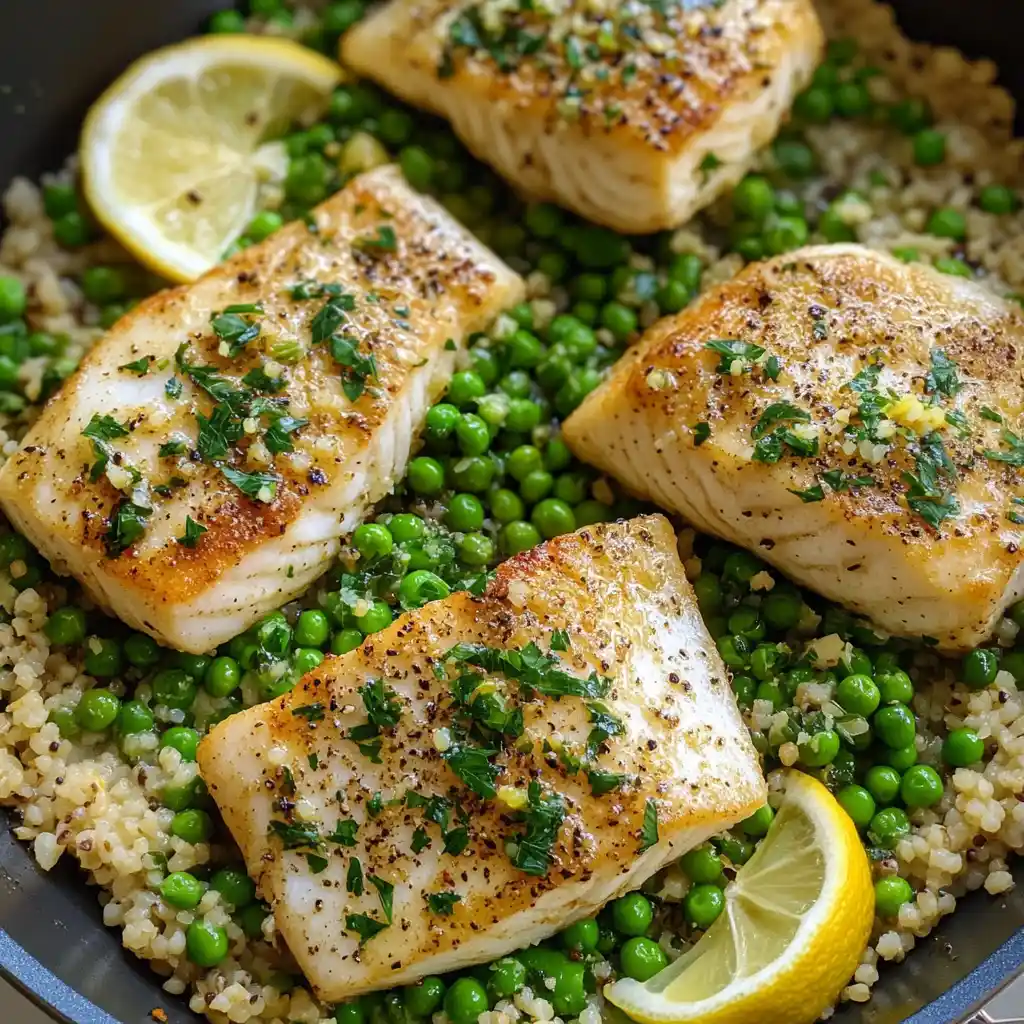
Ingredients
- 4 mahi-mahi fillets (6 oz each—make sure they’re about 1 inch thick)
- 1 cup bulgur wheat (medium-grain works best for timing)
- 1½ cups frozen peas (frozen is better than old fresh peas)
- 1 lemon, sliced (plus extra wedges for serving)
- 2 cloves garlic, minced (fresh only, please)
- 1 tsp paprika (make sure it’s vibrant red, not faded)
- ½ tsp cumin (adds warmth and earthiness)
- Salt and pepper, to taste (start with ½ tsp salt)
- 2 tbsp olive oil, divided (good quality makes a difference)
- Fresh parsley, chopped for garnish (don’t skip—it makes this look restaurant-worthy)
Instructions
- Crank your oven to 400°F (200°C) and make sure you have an oven-safe skillet ready. Cast iron or stainless steel with metal handles works perfectly. No plastic or wooden handles!
- In a small bowl, mix together the minced garlic, paprika, cumin, salt, pepper, and 1 tablespoon of olive oil to make a spice paste. Rub this mixture all over your mahi-mahi fillets, coating both sides evenly. The fish should smell amazing and be well-seasoned.
- Heat the remaining tablespoon of olive oil in your oven-safe skillet over medium-high heat until it’s shimmering. Add the seasoned mahi-mahi fillets and sear for 2-3 minutes per side until they have a nice golden crust. Don’t move them around—let them develop color. They won’t be cooked through yet, and that’s totally fine.
- Remove the fish from the skillet and set aside on a plate. Add the bulgur wheat and frozen peas directly to the same skillet. The residual oil and those delicious fish drippings will flavor everything beautifully. Give it a quick stir to combine.
- Nestle the seared mahi-mahi fillets right on top of the bulgur and peas. Lay 2-3 lemon slices on each fillet. The lemon infuses the fish as it bakes.
- Cover the skillet tightly with aluminum foil—this traps steam which cooks the bulgur and keeps the fish moist. Transfer the whole thing to your preheated oven and bake for 15-20 minutes. The fish should flake easily with a fork and the bulgur should be tender and have absorbed the liquid. Every oven is different, so check at 15 minutes.
- Remove from the oven carefully (that handle is HOT), shower everything with fresh chopped parsley, and serve immediately right from the skillet. Squeeze extra lemon over everything for brightness.
Nutrition Information (Per Serving):
- Calories: 385
- Carbohydrates: 32g
- Protein: 38g
- Fat: 10g
- Fiber: 8g
- Sodium: 380mg
- Omega-3 fatty acids: 450mg
- Vitamin C: 15% DV
- Iron: 12% DV
This one-pan fish dinner is incredibly balanced with lean protein, whole grains, and vegetables—restaurant-quality nutrition without the restaurant calories or price tag.
Notes:
- Make absolutely sure your skillet is oven-safe. Check the handle—no plastic or wood.
- The fish should be about 1 inch thick for even cooking. Thinner fillets will overcook, thicker ones need more time.
- Don’t skip searing the fish first. That golden crust adds so much flavor.
- Cover tightly with foil. The trapped steam is what cooks the bulgur and keeps everything moist.
- Every oven is different. Check at 15 minutes—the fish should just barely flake when you press it gently.
- If your bulgur seems dry, add ¼ cup water before covering and baking.
Storage Tips:
- Store leftovers in an airtight container in the fridge for up to 2 days.
- The fish will be more delicate when reheated, so do it gently or eat it cold.
- Reheat in the oven at 300°F covered with foil, or microwave on 50% power to prevent rubbery fish.
- Don’t freeze this—the fish texture gets weird and the bulgur gets mushy when thawed.
Serving Suggestions:
- With Salad: Serve alongside a simple arugula salad with lemon vinaigrette for a light, complete meal.
- With Yogurt Sauce: Top with Greek yogurt mixed with fresh dill and cucumber for a cooling contrast.
- For Meal Prep: Make individual portions in small oven-safe dishes for grab-and-go lunches (cook fresh, don’t reheat the fish).
- Family Style: Serve right from the skillet at the table for an impressive, rustic presentation.
Mix It Up (Recipe Variations):
Mediterranean Mahi-Mahi: Add 1 cup halved cherry tomatoes and ¼ cup sliced Kalamata olives along with the bulgur and peas. Sprinkle with crumbled feta cheese after baking for a Greek-inspired version.
Spicy Mahi-Mahi: Add ½ teaspoon cayenne pepper to the spice rub and use lime slices instead of lemon. Finish with chopped cilantro for a Latin-inspired twist with heat.
Herby One-Pan Fish: Replace paprika and cumin with 1 teaspoon dried oregano and ½ teaspoon thyme. Top with a dollop of Greek yogurt mixed with fresh dill at serving time.
Coconut Mahi-Mahi: Use quinoa instead of bulgur and add ½ cup coconut milk to the grains before baking. Finish with cilantro instead of parsley for a tropical flavor profile.
What Makes This Recipe Special:
This one-pan technique combines searing and baking in a single vessel, which layers flavors beautifully while keeping cleanup minimal. The bulgur absorbs all the delicious fish drippings and spices as it cooks, creating a deeply flavored grain that tastes like it required multiple steps. The foil cover creates a steam environment that keeps the fish incredibly moist while cooking the grains to fluffy perfection. It’s the kind of smart cooking that makes you look like a pro while actually being beginner-friendly.
