
Ever wonder why plant-based meals never seem as hearty and satisfying as the ones you order at restaurants? I used to think cooking seitan at home meant chewy, flavorless protein until I discovered this foolproof one-pan seitan with radish and amaranth. Now my family devours this complete meal every week, and I’m pretty sure my vegan neighbor thinks I’ve unlocked some secret plant-based cooking technique (if only she knew this entire dish happens in one skillet and takes less time than waiting for delivery).
Here’s the Thing About This Recipe
What makes this one-pan seitan with radish and amaranth work is the layering of flavors—you’re browning the seitan first to get those crispy edges, then building the rest of the dish in those same savory bits left in the pan. I learned the hard way that skipping the seitan-browning step gives you rubbery, sad protein nobody wants to eat. The radishes add a peppery bite that mellows as they cook, and the amaranth soaks up all that garlicky, smoky goodness while everything simmers together. It’s honestly that simple—no fancy techniques or a million pots to wash afterward.
What You’ll Need (And My Shopping Tips)
Good seitan is worth hunting down at your local co-op, health food store, or Asian market. Don’t be me—I used to grab the water-packed kind thinking it’d work fine, and ended up with a mushy mess three times before I figured out that vacuum-sealed seitan has better texture. Look for seitan that feels firm when you press the package (happens more than I’d like to admit that I forget to check the texture).
The amaranth matters here too. I always grab it from the bulk bins because it’s way cheaper than those tiny expensive boxes, plus you can buy exactly what you need. For the smoked paprika, the Spanish pimentón kind adds incredible depth that regular paprika just can’t match. Radishes are your surprise hero here—most people only eat them raw, but cooking transforms them into something sweet and tender. The garlic and cumin create that savory base (I keep both on hand because someone inevitably wants this dish at the last minute).
Let’s Make This Together
Start by heating your olive oil in a large skillet over medium heat—make sure it’s big enough to hold everything comfortably. Here’s where I used to mess up: I’d add the garlic and seitan at the same time and burn the garlic before the seitan even got a chance to brown. Add your minced garlic first and cook for just 1 minute until it smells amazing but isn’t turning brown yet.
Now for the fun part—add your sliced seitan to the skillet and cook for 5-7 minutes, stirring occasionally, until it’s lightly browned and getting those crispy edges. Here’s my secret: I resist the urge to stir it constantly so it actually develops color instead of just steaming. Toss in your halved radishes and cook for another 3-4 minutes until they start to soften and lose their harsh bite.
Add the amaranth to the skillet along with the smoked paprika, cumin, salt, and pepper. Pour in 2 cups of water and give everything a good stir. Just like my one-pan tofu with baby carrots, you want to make sure the grain is evenly distributed. Cover and simmer for 15-20 minutes until the amaranth is tender and has absorbed most of the liquid.
Remove from heat and let it sit covered for 5 minutes—this resting time lets the grain finish steaming and makes it fluffy instead of gummy. I learned this trick from my neighbor who’s been cooking grains for years—she taught me that patience during the resting phase is what separates good grain dishes from great ones. Fluff with a fork, adjust seasoning, and garnish with fresh parsley.
If This Happens, Don’t Panic
Seitan won’t brown? You probably had the heat too low or moved it around too much. In reality, I’ve learned to let it sit undisturbed for 2-3 minutes at a time so it actually develops a crust. If your amaranth turned out mushy (and it will if you used too much water), don’t panic—just cook it uncovered for a few extra minutes to evaporate the excess.
Dish tastes bland? This is totally fixable with more salt and an extra pinch of your spices. I always check early now because seitan itself is pretty neutral and needs aggressive seasoning. If the amaranth is undercooked and all the liquid’s gone, just add 1/4 cup more water and keep cooking covered. If your radishes are still too crunchy, you probably cut them too large—happens to everyone. Just halve them smaller next time.
Ways to Mix It Up
When I’m feeling fancy, I’ll make Spicy Seitan and Amaranth by adding a teaspoon of red pepper flakes with the spices—perfect when you need something with a kick. Around the holidays, I’ll do a Herb-Roasted Version with fresh thyme and rosemary tossed in during the last few minutes for an aromatic twist.
For a Creamy Tahini Bowl, I sometimes drizzle tahini sauce over everything at the end, which makes it rich and luxurious. My favorite lazy variation is the Simple Garlic-Paprika Amaranth—skip the radishes entirely when I’m out and it’s still absolutely delicious with just seitan and grain.
What Makes This Recipe Special
This one-pan seitan with radish and amaranth represents modern plant-based cooking that focuses on complete nutrition without sacrificing flavor or convenience. What sets this apart from typical grain bowls is cooking everything in one skillet—the amaranth absorbs all the savory flavors from the browned seitan and garlic instead of being cooked separately in plain water. Seitan has been used in Asian Buddhist cuisine for centuries as a meat alternative, and paired with protein-rich amaranth, this becomes a complete plant-based meal that actually keeps you full.
Things People Ask Me About This Recipe
Can I make this one-pan seitan dish ahead of time?
Absolutely! It actually reheats beautifully. I make a big batch on Sunday and portion it out for easy weekday lunches. Just store it in the fridge for up to 4 days.
What if I can’t find seitan for this recipe?
You can substitute extra-firm tofu (pressed and cubed) or tempeh using the same cooking method. The flavor will be different but equally delicious.
Is this one-pan seitan with radish and amaranth spicy?
Not at all! The smoked paprika adds warmth and depth rather than heat. If you want spice, add red pepper flakes or your favorite hot sauce.
Can I freeze this homemade seitan and amaranth dish?
The seitan and amaranth freeze okay for up to 2 months, but radishes get a weird texture when thawed. Better to keep it refrigerated and eat within 4 days.
Is this one-pan seitan recipe beginner-friendly?
Totally! If you can brown protein and simmer a grain, you can make this. It’s honestly one of the easiest complete meals I make because there’s very little that can go wrong.
What’s the best way to get crispy seitan?
Don’t overcrowd the pan, use medium heat, and resist stirring it constantly. Let it sit and develop that golden crust—patience is key here.
Why I Had to Share This
I couldn’t resist sharing this one-pan seitan with radish and amaranth because it’s proven to my non-vegan friends that plant-based meals can be just as satisfying and flavorful as anything else. The best weeknight dinners are when everyone’s happy, the kitchen cleanup takes 2 minutes, and I’ve got leftovers for tomorrow’s lunch—this recipe checks all those boxes.
Print
One-Pan Seitan with Radish and Amaranth
Description
A complete plant-based meal featuring crispy seitan, peppery radishes, and protein-rich amaranth all cooked together in one skillet—ready in 35 minutes with minimal cleanup.
Prep Time: 10 minutes | Cook Time: 25 minutes | Total Time: 35 minutes | Servings: 4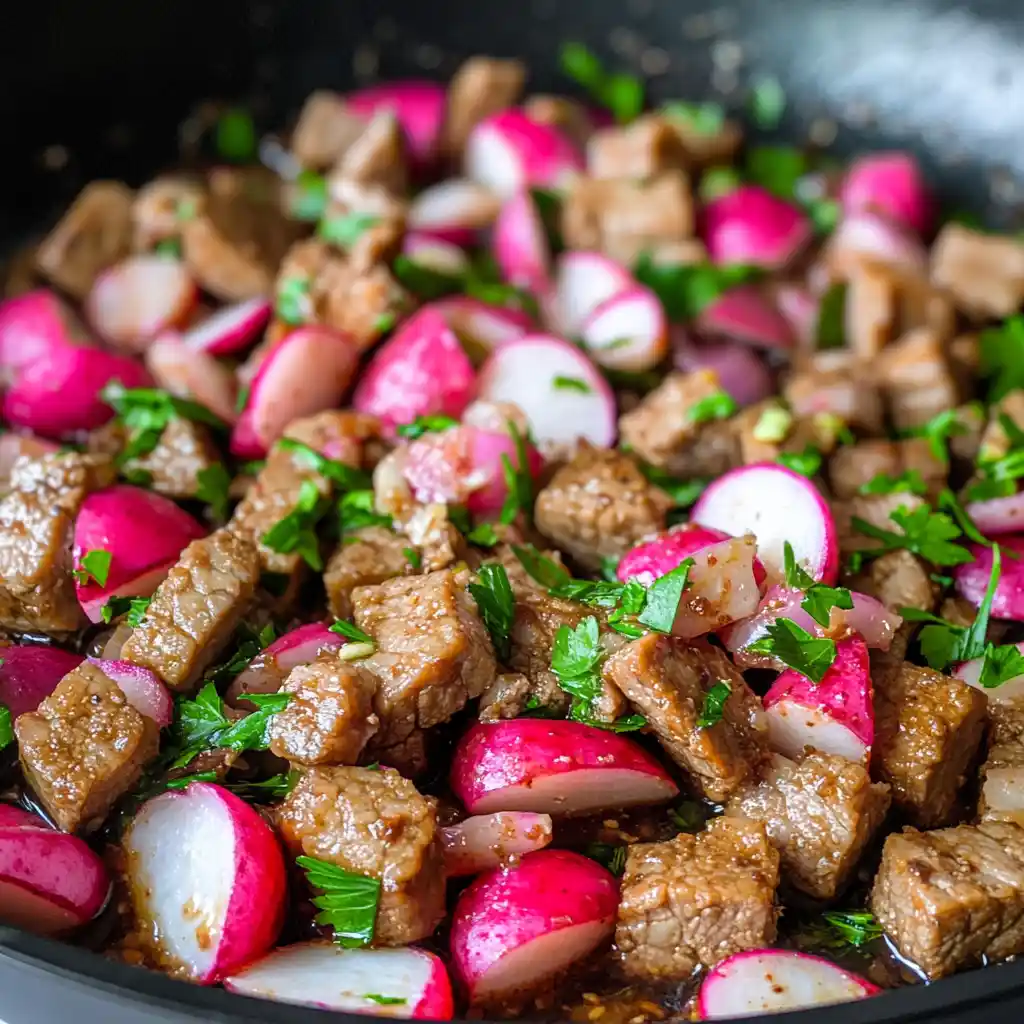
Ingredients
- 8 oz seitan, sliced into bite-sized pieces (vacuum-sealed works best)
- 6 oz radishes, halved (about 8–10 radishes)
- 4 oz amaranth (find it in bulk bins or the grain aisle)
- 2 tablespoons olive oil
- 2 cloves garlic, minced
- 1 teaspoon smoked paprika (Spanish pimentón is amazing here)
- 1/2 teaspoon cumin
- Salt and pepper, to taste (start with 1/2 teaspoon salt)
- 2 cups water
- Fresh parsley, for garnish (or whatever herbs you’ve got)
Instructions
- Heat the olive oil in a large skillet over medium heat. Add the minced garlic and cook for just 1 minute until it’s fragrant but not browned—burnt garlic tastes bitter.
- Add your sliced seitan to the skillet and cook for 5-7 minutes, stirring occasionally but not constantly, until it’s lightly browned and getting crispy edges. Let it sit undisturbed for 2-3 minutes at a time for best browning.
- Toss in the halved radishes and cook for another 3-4 minutes until they start to soften and their sharp bite mellows out. They should look slightly translucent around the edges.
- Add the amaranth to the skillet along with the smoked paprika, cumin, salt, and pepper. Give everything a good stir to coat the grain in the spices and oil. Pour in 2 cups of water and stir again to distribute everything evenly.
- Cover the skillet and bring to a simmer, then reduce heat to low. Let it cook for 15-20 minutes, or until the amaranth is tender and has absorbed most of the liquid. Check once or twice to make sure it’s not sticking.
- Remove from heat and let it sit covered for 5 minutes. This resting time is important—it lets the grain finish steaming and become fluffy.
- Fluff the amaranth with a fork and adjust seasoning if needed. Taste it—you might want more salt or smoked paprika depending on your preferences.
- Serve hot, garnished with fresh parsley. The herbs add brightness that balances all those savory, smoky flavors.
Nutrition Information (Per Serving):
- Calories: 275
- Carbohydrates: 28g
- Protein: 22g
- Fat: 9g
- Fiber: 5g
- Sodium: 520mg
- Iron: 30% DV
- Calcium: 15% DV
- Vitamin C: 20% DV
This dish provides complete plant-based protein from the combination of seitan and amaranth, plus radishes deliver vitamin C and the grain is loaded with iron.
Notes:
- Seriously, don’t skip browning the seitan—that’s where the flavor comes from
- Every stove has its own personality, so if your amaranth isn’t tender after 20 minutes, just add a splash more water and keep cooking
- This goes from perfectly cooked to stuck-to-the-pan fast if you forget to stir occasionally
- If your skillet is small, you might need to work in batches for even seitan browning
- Don’t skip the resting time; it really does make the amaranth fluffier
Storage Tips:
- Keep refrigerated in an airtight container for up to 4 days
- Don’t freeze this one if you want the radishes to maintain their texture
- Reheat gently in a skillet with a splash of water or broth, or microwave in 1-minute intervals
- The amaranth might absorb more liquid as it sits, so add a little water when reheating if needed
Serving Suggestions:
- Simple Bowl: Serve as-is with a squeeze of fresh lemon juice and extra herbs
- Asian-Inspired: Drizzle with soy sauce or tamari and sprinkle with sesame seeds
- Loaded Bowl: Top with avocado slices, cherry tomatoes, and a tahini drizzle
- Side Salad: Pair with a crisp green salad dressed with your favorite vinaigrette
Mix It Up (Recipe Variations):
- Spicy Seitan and Amaranth: Add 1 teaspoon red pepper flakes with the spices for heat
- Herb-Roasted Version: Toss in fresh thyme and rosemary during the last 5 minutes of cooking
- Creamy Tahini Bowl: Drizzle with tahini sauce thinned with lemon juice and water
- Simple Garlic-Paprika Amaranth: Skip the radishes when you’re out and double the seitan
What Makes This Recipe Special:
This one-pan seitan with radish and amaranth uses a restaurant technique of building flavors in layers—browning the protein first, then cooking the grain in those savory pan drippings. Unlike grain bowls where everything’s prepared separately, this method infuses the amaranth with deep flavor while keeping cleanup minimal. Radishes, typically eaten raw, transform when cooked into sweet, tender vegetables that lose their harsh bite—proving that vegetables can surprise you when treated differently than expected.
