
Ever wonder why some citrus breads taste like artificial orange candy while others burst with fresh, sunny flavor? I used to think getting real orange taste into baked goods was impossible until I discovered the power of fresh zest combined with juice. Now my family requests this vibrant orange zest bread every single week, and honestly, my kitchen smells like a citrus grove when this is baking (if only they knew how many bland, flavorless loaves I made before learning that zest is where all the aromatic magic lives).
Here’s the Thing About This Bread
What makes this orange zest bread work is using both the zest and the juice to create layers of citrus flavor that hit you in different ways. I learned the hard way that using just orange juice makes bread wet and subtle, while zest alone can be bitter—together, they’re perfect. The melted butter instead of oil creates a tender, cake-like crumb that’s richer and more satisfying than standard quick breads. Around here, we’ve figured out that fresh oranges make all the difference—those bottles of orange juice and dried zest just don’t deliver the same bright, aromatic punch. It’s honestly that simple—no extracts, no artificial flavoring, just real oranges doing their thing.
What You’ll Need (And My Shopping Tips)
Good oranges are worth hunting down—you want thin-skinned ones like navel or Valencia that feel heavy for their size and smell fragrant. I learned this after buying those thick-skinned oranges three times and getting barely any zest or juice from them (happens more than I’d like to admit). The best oranges for baking have smooth, bright orange skin without soft spots or wrinkles.
Fresh butter makes a huge difference here—don’t use margarine or you’ll lose that rich, bakery flavor. I always grab an extra orange because someone inevitably wants more citrus flavor, and honestly, you can never have too much orange zest in this bread. For the milk, whole milk creates the richest texture, but any kind works if that’s what you have.
Here’s a crucial tip: zest your oranges before you juice them. Trying to zest a halved orange is basically impossible and incredibly frustrating. Use a microplane or fine grater and only get the orange part—the white pith underneath is bitter and will make your bread taste soapy. You can learn more about selecting and using fresh citrus and how the essential oils in the zest contain most of the aromatic compounds that create that signature orange flavor.
Let’s Make This Together
Start by cranking your oven to 350°F and greasing your 9×5-inch loaf pan really well—I’m talking every corner and crevice. Here’s where I used to mess up: I’d skip flouring the pan after greasing, and then half my beautiful bread would stick to the bottom. Don’t be me—grease and flour generously.
In your large mixing bowl, whisk together the flour, sugar, baking powder, and salt until everything’s evenly distributed. Set this aside while you prep the wet ingredients. Now for the fun part: in a separate bowl, whisk together your melted butter (let it cool slightly so it doesn’t scramble the eggs), eggs, milk, orange zest, and fresh orange juice. I learned this trick from my grandmother who was an amazing baker—room temperature eggs blend better and create a smoother batter, so take them out of the fridge about 20 minutes before you start.
Here’s my secret: when you add the wet ingredients to the dry, pour everything in at once and stir gently with a wooden spoon or spatula until just combined. You should still see a few flour streaks, and that’s totally fine. Overmixing creates tough, dense bread with tunnels running through it—ask me how I know. The batter will look thick and slightly lumpy, which is exactly what you want.
Pour the batter into your prepared pan and smooth the top gently with a spatula. Slide it into the preheated oven and set your timer for 50 minutes, but start checking around 45 because every oven has its own personality. You’re looking for a golden-brown top and a toothpick that comes out clean or with just a few moist crumbs clinging to it.
Let the bread cool in the pan for about 10 minutes—this gives it time to set up and makes removing it way easier. Then turn it out onto a wire rack to cool completely before dusting with powdered sugar. The powdered sugar adds a touch of sweetness and makes it look professionally finished. If you’re looking for more citrus-packed baking inspiration, check out this Lemon Blueberry Bread that uses similar zesting techniques.
When Things Go Sideways (And They Will)
Bread turned out dry and crumbly? You probably baked it too long or your oven runs hot. In reality, I’ve learned to check my bread at least 5 minutes earlier than the recipe says and cover the top with foil if it’s browning too fast. If this happens (and it will), next time reduce the baking time and trust your toothpick test over the timer.
Top cracked wide open? Don’t panic—that’s actually normal for quick breads! A nice crack down the middle means your bread rose properly. This is totally expected and even desirable, so don’t worry if it happens.
Bread sank in the middle or has a dense, gummy center? This usually means you overmixed the batter or opened the oven door too early. I always resist peeking before the 40-minute mark now because the leavening needs time to work without temperature drops messing things up.
Orange flavor too subtle or bitter? You either didn’t use enough fresh zest or accidentally included the white pith. Next time, use a light hand when zesting and really pile on that orange-colored outer layer—that’s where all the flavor lives. The pith is your enemy and will make everything taste bitter and medicinal.
When I’m Feeling Creative
Glazed Orange Zest Bread: When I’m feeling fancy, I’ll whisk together 1 cup powdered sugar with 2-3 tablespoons fresh orange juice and drizzle it over the cooled bread. It creates this beautiful glaze that soaks into the top and makes it taste like something from an upscale bakery.
Orange Cranberry Bread: Around the holidays when cranberries are everywhere, I’ll fold in 1 cup of fresh or dried cranberries right before baking. The tart berries cut through the sweetness and create gorgeous pops of red throughout each slice.
Orange Almond Bread: Swap 1/4 cup of the flour for almond meal and add 1/2 teaspoon almond extract to the wet ingredients. The nutty flavor pairs beautifully with orange and creates a more sophisticated flavor profile that adults especially love.
Chocolate Chip Orange Bread: Fold in 1/2 cup of mini chocolate chips to the batter for a chocolate-orange combination that tastes like those chocolate oranges you smash at Christmas. My kids request this version for special occasions and birthdays.
What Makes This Recipe Special
This orange zest bread stands out because it uses both the aromatic oils from fresh orange zest and the bright acidity from fresh juice to create a complex citrus flavor that bottled juice or extracts simply cannot replicate. The technique of mixing wet and dry ingredients separately, then combining them with minimal stirring, is the classic “muffin method” that creates tender quick breads instead of tough, chewy loaves.
The use of melted butter instead of oil is crucial—butter contains milk solids that add flavor and create a finer, more cake-like crumb structure. This bread also uses a higher ratio of sugar to flour than typical quick breads, which keeps it moist and tender for days. You can learn more about quick bread baking science and how chemical leaveners like baking powder create rise without yeast or lengthy proofing times.
Things People Ask Me About This Bread
Can I make this orange zest bread ahead of time?
Absolutely! This bread actually gets better after sitting for a day because the flavors have time to develop and meld together. I usually make it the night before I need it, wrap it tightly in plastic wrap once it’s completely cool, and leave it on the counter. It stays moist and delicious for up to 4 days at room temperature.
What if I only have bottled orange juice for this bread?
Don’t stress about this part—bottled juice works in a pinch, but you really need fresh orange zest for the best flavor. The zest contains essential oils that create most of the orange aroma and taste. If you use bottled juice, definitely use fresh zest from at least 2 oranges to get that bright citrus punch.
Can I add a glaze to make it sweeter?
Yes! A simple glaze made from 1 cup powdered sugar mixed with 2-3 tablespoons fresh orange juice creates a beautiful, sweet coating. Drizzle it over the cooled bread and let it set for about 10 minutes before slicing. This turns it into more of a dessert-level treat.
Can I freeze this homemade orange zest bread?
Absolutely! Wrap the completely cooled loaf tightly in plastic wrap, then again in aluminum foil, and freeze for up to 3 months. Thaw it overnight on the counter still wrapped—this keeps all the moisture locked in. I always make two loaves and freeze one for those mornings when I need something special but don’t have time to bake.
Is this orange zest bread good for gift-giving?
This is one of the best breads for gifting! The bright orange flavor feels special and festive, it keeps well for several days, and it looks beautiful dusted with powdered sugar. Wrap it in cellophane with a ribbon and you’ve got a homemade gift that people genuinely get excited about.
What’s the best way to store leftover bread?
Keep it wrapped tightly in plastic wrap or in an airtight container at room temperature for up to 4 days. Don’t refrigerate it—that actually makes bread go stale faster. If it lasts longer than 4 days in your house (unlikely because it’s so good), freeze individual slices wrapped in plastic for quick breakfasts or snacks.
One Last Thing
I couldn’t resist sharing this orange zest bread recipe because it’s one of those bright, cheerful treats that makes any morning feel special. The best bread-baking days are when your whole house smells like fresh oranges and sunshine, and everyone keeps wandering into the kitchen asking when they can have a slice. You’ve got this—it’s basically foolproof once you remember to use fresh zest.
Print
Orange Zest Bread
Description
Bright, moist orange zest bread with layers of fresh citrus flavor and a tender, cake-like crumb—this sunny quick bread is easier to make than you’d think and absolutely irresistible with morning coffee or afternoon tea.
Prep Time: 15 minutes | Cook Time: 55 minutes | Total Time: 70 minutes | Servings: 10 slices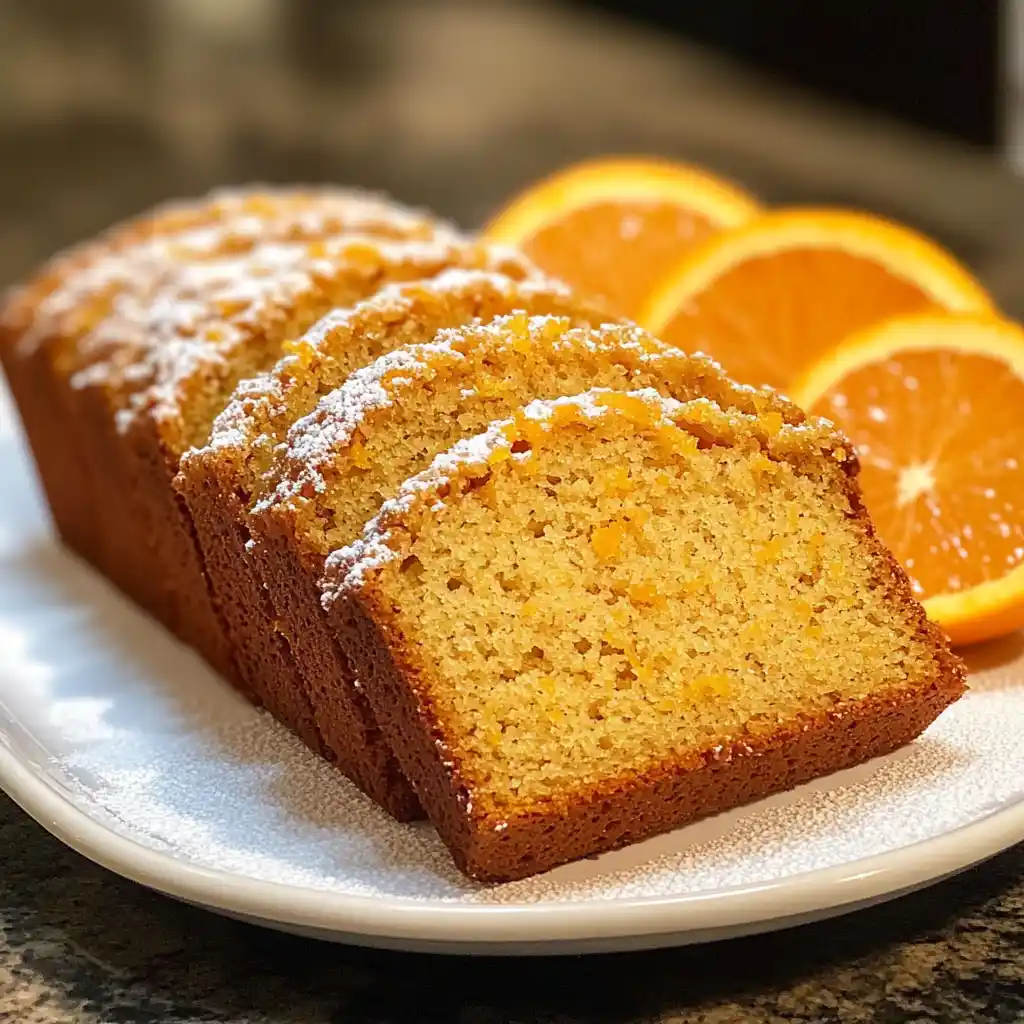
Ingredients
- 2 cups all-purpose flour (just scoop and level, no need for precision)
- 1 cup granulated sugar
- 1/2 cup unsalted butter, melted and cooled slightly (don’t use margarine)
- 2 large eggs, at room temperature (this makes blending easier)
- 1 cup whole milk, at room temperature (any milk works, but whole is richest)
- 1 tablespoon baking powder
- 1/2 teaspoon salt
- Zest of 2 medium oranges (only the orange part, not the bitter white pith)
- Juice of 1 orange (about 1/4 cup fresh juice)
- Powdered sugar for dusting (about 2 tablespoons)
Instructions
- Start by preheating your oven to 350°F and generously greasing and flouring a 9×5-inch loaf pan—don’t skip the flour or you’ll regret it when half your bread sticks to the pan.
- In a large mixing bowl, whisk together the flour, sugar, baking powder, and salt until everything’s evenly distributed and you can see the leavening spread throughout.
- In a separate bowl, whisk together the melted butter (let it cool for a few minutes so it doesn’t scramble the eggs), eggs, milk, orange zest, and fresh orange juice until smooth and well combined. Room temperature ingredients blend way better, so plan ahead if you can.
- Pour your wet ingredients into the dry ingredients and stir gently with a wooden spoon or spatula until just combined—you should still see a few flour streaks and the batter will look thick and slightly lumpy. Seriously, resist the urge to keep stirring or you’ll end up with tough bread.
- Pour the batter into your prepared loaf pan and smooth the top gently with a spatula. The batter should fill the pan about two-thirds full.
- Slide it into the preheated oven and bake for 50-60 minutes, checking around the 45-minute mark because ovens vary wildly. You’re looking for a golden-brown top and a toothpick inserted in the center that comes out clean or with just a few moist crumbs.
- Let the bread cool in the pan for about 10 minutes—this makes it way easier to remove without it falling apart. Then turn it out onto a wire rack to cool completely before dusting with powdered sugar.
- Once completely cool, dust the top generously with powdered sugar using a fine-mesh sieve. Slice into thick pieces and serve with butter, cream cheese, or just on its own—it’s perfect any way you enjoy it.
Nutrition Information (Per Serving):
- Calories: 290
- Carbohydrates: 42g
- Protein: 5g
- Fat: 11g
- Fiber: 1g
- Sodium: 240mg
- Vitamin C: 15% DV (from fresh orange juice and zest)
- Calcium: 8% DV
This bread provides a good dose of vitamin C from fresh oranges, plus the richness of butter creates a satisfying, tender crumb that keeps you full.
Notes:
- Zest before juicing: Always zest your oranges before you cut and juice them. Trust me, trying to zest a halved orange is impossible and incredibly frustrating.
- Only the orange part: When zesting, use a light touch and only get the bright orange outer layer. The white pith underneath is bitter and will ruin your bread’s flavor.
- Room temperature matters: Take your eggs and milk out of the fridge 20-30 minutes before you start. Cold ingredients don’t blend as smoothly and can create a denser loaf.
- Don’t overmix: Mix until you barely see any flour streaks and then stop—overmixing develops gluten and makes the bread tough and tunneled.
- Every oven runs differently: Start checking your bread 5 minutes earlier than the recipe suggests, especially if your oven tends to run hot. Better to check early than end up with dry bread.
- The crack is good: If your bread develops a big crack down the middle, that’s perfect! It means the bread rose properly and is exactly what you want to see.
Storage Tips:
Keep your orange zest bread wrapped tightly in plastic wrap or stored in an airtight container at room temperature for up to 4 days—it actually gets better on day two as the orange flavors develop and deepen. Don’t refrigerate it because that’ll dry it out fast and make it stale. For longer storage, wrap individual slices in plastic wrap, then place them in a freezer bag and freeze for up to 3 months. Thaw slices at room temperature or pop them straight into the toaster for a quick breakfast. The bread also freezes beautifully whole—just wrap the entire cooled loaf in plastic wrap and then foil before freezing.
Serving Suggestions:
- Classic breakfast: Serve thick slices with softened butter and a hot cup of coffee or tea for the perfect morning treat that feels special but isn’t too sweet.
- Fancy brunch: Toast slices lightly and serve with whipped cream cheese mixed with a little orange zest and honey for an elegant brunch spread.
- Afternoon tea: Cut into thin slices and serve alongside fresh berries and clotted cream for a delightful tea-time offering.
- Dessert mode: Warm a slice slightly and serve with a scoop of vanilla ice cream and a drizzle of honey for an easy, impressive dessert.
Mix It Up (Recipe Variations):
Glazed Orange Zest Bread: Whisk together 1 cup powdered sugar with 2-3 tablespoons fresh orange juice until smooth, then drizzle over the cooled loaf. Let it set for 10 minutes before slicing—this creates a bakery-style finish that’s absolutely stunning.
Orange Cranberry Bread: Gently fold 1 cup fresh or dried cranberries into the batter just before pouring it into the pan. The tart berries create amazing flavor contrast and gorgeous color throughout the bread.
Orange Almond Bread: Replace 1/4 cup flour with almond meal and add 1/2 teaspoon pure almond extract to the wet ingredients for a nutty, sophisticated flavor that pairs beautifully with the citrus.
Chocolate Chip Orange Bread: Fold 1/2 cup mini chocolate chips into the batter for a chocolate-orange combination that tastes like those chocolate oranges you get at holidays. Kids and adults both love this version!
What Makes This Recipe Special:
This orange zest bread uses both fresh orange zest and juice to create layers of bright citrus flavor that extracts or bottled juice simply cannot replicate. The essential oils in fresh zest contain the most aromatic compounds, while the juice provides acidity and moisture. The “muffin method” technique—keeping wet and dry ingredients separate until the last moment, then barely mixing them—creates that perfect tender, cake-like crumb instead of dense, tough bread. Using melted butter instead of oil adds richness and creates a finer texture with better flavor that lasts for days.
