Description
A rich, complex peach teriyaki dressing with fresh garlic and ginger—ready in 15 minutes for a versatile sauce that transforms salads, grilled proteins, and vegetables.
Prep Time: 5 minutes | Cook Time: 10 minutes | Total Time: 15 minutes | Servings: 12 (about 2 tablespoons per serving)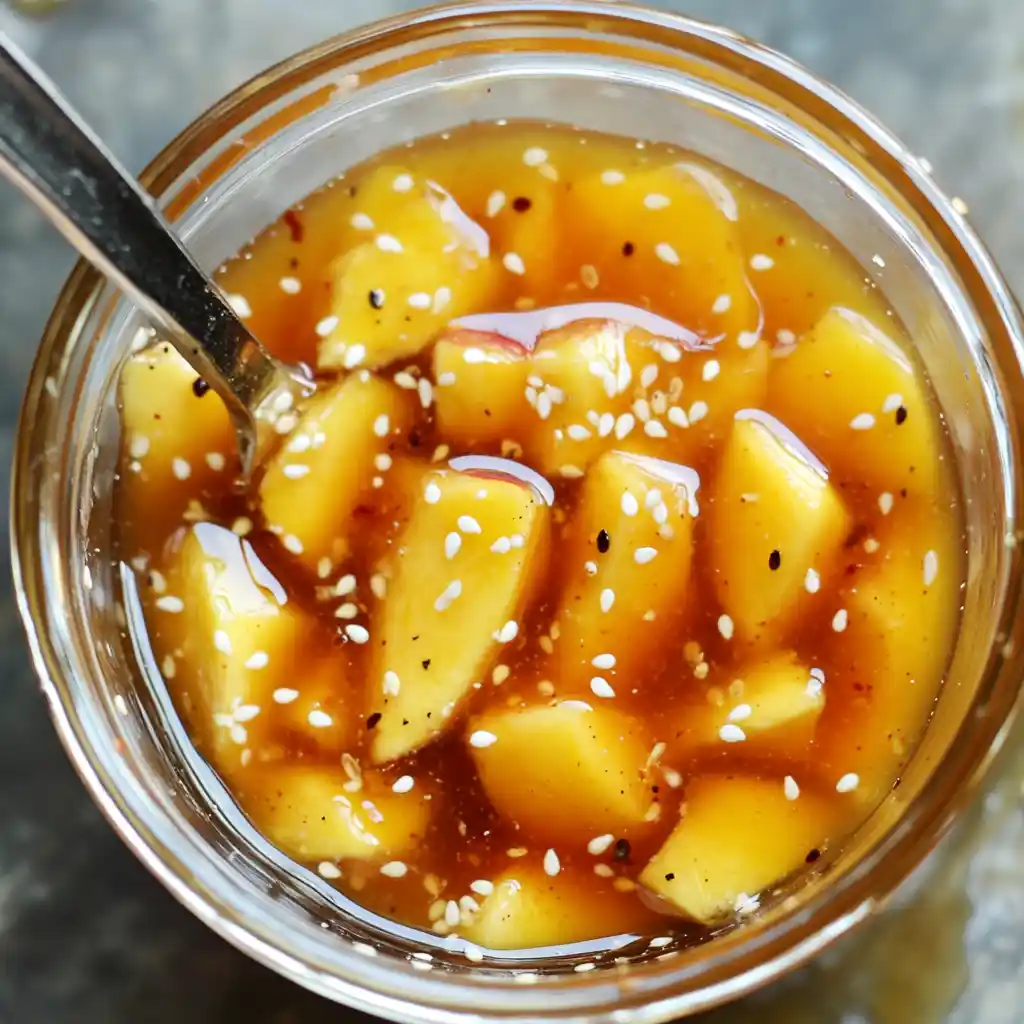
Ingredients
- 1 cup fresh or canned peaches, chopped (fresh at peak season or canned in juice—not syrup)
- 3/4 cup soy sauce (low-sodium is essential to avoid oversalting)
- 1/4 cup honey (good quality adds floral depth)
- 2 tablespoons rice vinegar (unseasoned—not the sushi kind)
- 1 clove garlic, minced
- 1/2 teaspoon ground ginger (or 1 teaspoon fresh grated for more punch)
- 1/4 teaspoon black pepper
- 1/4 cup water
Instructions
- In your blender, combine the chopped peaches, soy sauce, honey, rice vinegar, minced garlic, ground ginger, black pepper, and water. Add everything at once—no need to do this in stages.
- Blend until completely smooth and well combined, about 30 seconds. Stop and taste the raw mixture—adjust honey if too tart or add a splash more vinegar if too sweet. Much easier to fix now than after cooking.
- Transfer the blended mixture to a medium saucepan. Bring to a simmer over medium heat, stirring occasionally. Don’t walk away—it can boil over fast once it gets hot.
- Cook for 5-7 minutes, stirring occasionally, until the dressing thickens slightly and the flavors deepen. You’ll see it go from thin and bright to slightly glossy and more complex smelling.
- Remove from heat and let cool to room temperature before using or storing. The sauce will thicken a bit more as it cools—this is normal.
- Transfer to an airtight jar or container. Use immediately drizzled over salads, grilled chicken, salmon, or vegetables, or refrigerate for up to one week. Shake or stir well before each use.
Nutrition Information (Per Serving):
- Calories: 45
- Carbohydrates: 10g
- Protein: 1g
- Fat: 0g
- Fiber: 0g
- Sodium: 580mg
- Vitamin C: 4% DV
- Iron: 2% DV
This dressing provides natural fruit sugars from peaches and beneficial compounds from garlic and ginger—a flavorful sauce that’s surprisingly low in calories.
Notes:
- Seriously, use low-sodium soy sauce or this will be way too salty
- Taste before cooking and adjust the balance—it’s much easier to fix raw than cooked
- Don’t skip the simmering step—it’s what makes this taste like a real sauce
- Fresh grated ginger is even better than ground if you have it on hand
- The dressing will thicken more as it cools, so don’t over-reduce it on the stove
Storage Tips:
- Keep refrigerated in an airtight container for up to 1 week
- Don’t freeze—the peach texture breaks down oddly when thawed
- Shake or stir well before each use as natural separation occurs
- If it thickens too much in the fridge, whisk in a teaspoon of water to thin
Serving Suggestions:
- Salad Dressing: Drizzle over mixed greens with mandarin oranges and sesame seeds
- Grilled Chicken Glaze: Brush on during the last few minutes of grilling
- Salmon Marinade: Marinate for 30 minutes before baking or grilling
- Vegetable Dip: Use as a dipping sauce for spring rolls or grilled vegetables
Mix It Up (Recipe Variations):
- Spicy Peach Teriyaki: Add 1 teaspoon sriracha or red pepper flakes for heat
- Mango-Peach Teriyaki: Use half mango and half peach for tropical flavor
- Thick Peach Glaze: Simmer extra 5 minutes for a thick, brush-on grilling glaze
- Simple Peach Sauce: Skip rice vinegar and garlic for a sweeter, milder version
What Makes This Recipe Special:
This peach teriyaki dressing bridges Japanese teriyaki traditions with American stone fruit flavors, creating a fusion sauce that feels both familiar and excitingly new. Unlike store-bought teriyaki sauces that rely on corn syrup and artificial flavors, this version uses real peaches as a natural thickener and sweetener, developing genuine fruit complexity through the cooking process. The brief simmering step transforms a simple blended mixture into a glossy, layered sauce with depth that raw dressings simply cannot achieve—proving that a few extra minutes of cooking can make an extraordinary difference in flavor development.