
Have you ever tried combining ingredients that seem like they shouldn’t work together and ended up with something completely magical? I stumbled onto this Peruvian Brussels Sprouts Couscous after a trip to Lima where I fell in love with how Peruvian cooking uses bright citrus and warm spices, then came home craving those flavors but only had North African couscous in my pantry. Now this fusion side dish shows up at every family gathering, and my cousin swears it’s the only way she’ll eat Brussels sprouts (which is saying something, because she’s hated them since childhood).
Here’s What Makes This Work
The secret to this Peruvian Brussels Sprouts Couscous is how the earthy, caramelized Brussels sprouts play with the fluffy, nutty couscous and those pops of sweet raisins. I learned the hard way that roasting the sprouts until they’re actually crispy matters—mushy Brussels sprouts in here just don’t cut it. Here’s the thing about this recipe: it’s not traditional Peruvian food (couscous is North African), but it captures the bold, bright flavors I tasted in Peru with the cumin, lime, and that balance of sweet and savory. The toasted almonds add crunch, the lime juice brightens everything up, and honestly, it comes together faster than you’d think. No fancy tricks needed—just good roasting technique and fresh lime.
What You’ll Need (Don’t Stress!)
Good Brussels sprouts are worth hunting down at the farmer’s market if you can—look for tight, bright green heads about the size of a walnut. Don’t cheap out on those sad, yellowing ones at the back of the grocery store produce section. I learned this after buying terrible Brussels sprouts three times and wondering why my recipe kept turning out bitter (spoiler: old sprouts are the problem).
For the couscous, regular or whole wheat both work great—I usually grab whatever’s on sale. The vegetable broth should taste good on its own because it flavors the whole dish. Fresh cumin and paprika make a huge difference here; if your spices smell like dust, replace them. I always grab an extra lime because someone inevitably wants more citrus punch, and the juice of one lime can vary wildly depending on the fruit.
The raisins add sweet little bursts throughout (golden or regular both work), and toasted almonds are non-negotiable for that crunch factor. Don’t skip toasting them—raw almonds taste flat compared to the nutty richness you get from a quick toast. Fresh cilantro for garnish isn’t just for looks; it ties all those bright flavors together.
Here’s How We Do This
Start by cranking your oven to 400°F and getting a baking sheet ready. Trim those Brussels sprouts and cut them in half through the stem—this gives you a flat side to caramelize. Here’s where I used to mess up: I’d overcrowd the pan thinking I’d save dishes, but crowded sprouts steam instead of roast. Give them space to breathe.
Toss the halved sprouts with 1 tablespoon of olive oil, cumin, paprika, salt (I use about ½ teaspoon), and pepper. Get your hands in there and make sure every sprout is coated. Spread them cut-side down on the baking sheet in a single layer. Slide them into the oven for 20-25 minutes until they’re tender and those edges are crispy and caramelized. Don’t skip the crispy part—that’s where all the flavor is.
While the Brussels sprouts are roasting, heat your remaining tablespoon of olive oil in a medium saucepan over medium heat. Add the couscous and toast it for 2-3 minutes, stirring constantly so it doesn’t burn. You’ll smell it getting nutty and see it turn golden—that’s the good stuff. Now for the easy part: pour in the vegetable broth and bring it to a boil. Just like my Peruvian friend taught me when I was trying to recreate the flavors I loved, the key is getting that liquid ratio right.
Once it’s boiling, reduce the heat to low, cover the pan, and let it simmer for about 10 minutes until all the liquid is absorbed. Pull it off the heat and let it sit covered for another 2 minutes (patience here pays off with fluffier couscous). Fluff that couscous with a fork until it’s light and airy, then fold in your roasted Brussels sprouts, raisins, chopped toasted almonds, and lime juice. Taste and adjust the salt and pepper—every batch needs something slightly different. Similar to this Moroccan Spiced Chickpea Couscous, the toasting step makes all the difference in developing deep, complex flavors.
If This Happens, Don’t Panic
Brussels sprouts turned out mushy instead of crispy? You probably had them piled too close together or your oven wasn’t hot enough. In reality, I’ve learned to use two baking sheets if I’m doubling this recipe because crowding is the enemy of crispy vegetables. If this happens (and it will at some point), just enjoy them anyway—they’ll still taste good, just not as texturally interesting.
Couscous came out gummy and clumped? You added too much liquid or didn’t fluff it enough. This is totally fixable—spread it on a baking sheet and let it dry out for a few minutes, then fluff again with a fork. I always measure my broth carefully now because even an extra ¼ cup can make it mushy.
Peruvian Brussels Sprouts Couscous tasting flat? You probably need more lime juice or salt. Every lime is different, so squeeze in more if it needs brightness. Also check that your cumin and paprika are fresh—old spices contribute basically nothing. Don’t panic if the almonds aren’t as crunchy after mixing—that’s normal as they absorb moisture. Just add a fresh handful on top when serving.
When I’m Feeling Creative
When I’m feeling fancy, I’ll add diced roasted sweet potato for a Heartier Peruvian Couscous that works as a main dish. Around the holidays, I make a Festive Version with dried cranberries instead of raisins and pecans instead of almonds. For a Protein-Packed Bowl, I’ll top this with grilled chicken or chickpeas for a complete meal. The Spicy Southwest Twist adds diced jalapeños and a pinch of cayenne for heat lovers, and it’s ridiculously good.
Why This Recipe Works So Well
This Peruvian Brussels Sprouts Couscous represents the beautiful way Peruvian cuisine has always embraced global influences while maintaining its signature bright, bold flavors. While couscous isn’t traditional to Peru, the combination of citrus, cumin, and the sweet-savory balance mirrors the flavor profiles you’ll find in authentic Peruvian cooking. The technique of roasting vegetables until caramelized and balancing textures—crispy sprouts, fluffy grain, crunchy nuts—creates a dish that’s both comforting and exciting. What sets this apart is how those roasted Brussels sprouts bring an earthy depth that grounds all the bright, zesty flavors.
Things People Ask Me About This Recipe
Can I make this Peruvian Brussels Sprouts Couscous ahead of time?
You can definitely prep the Brussels sprouts and toast the almonds ahead, but I always cook the couscous fresh right before serving. Couscous dries out when refrigerated and reheated. If you must make it ahead, keep the components separate and toss them together just before serving. The flavors actually meld nicely after an hour or two at room temperature.
What if I can’t find fresh Brussels sprouts?
Frozen Brussels sprouts work in a pinch, but they release more water and won’t get as crispy. If you’re using frozen, thaw them completely, squeeze out excess moisture with paper towels, and add an extra 5 minutes to the roasting time. I’ve done this when fresh ones weren’t available, and while not quite as good, they’re still tasty.
Is this recipe vegan-friendly?
Absolutely! This Peruvian Brussels Sprouts Couscous is naturally vegan as long as you use vegetable broth. It’s packed with plant-based protein from the almonds and couscous, making it a satisfying side or light main dish. My vegan friends request this constantly.
Can I use a different grain instead of couscous?
Sure! Quinoa works beautifully and actually makes it more authentically Peruvian since quinoa is native to Peru. Just cook the quinoa according to package directions and skip the toasting step. Israeli couscous (the big pearls) is great too, though it takes longer to cook.
How do I store leftovers?
Store in an airtight container in the refrigerator for up to 3 days. The Brussels sprouts lose some crispiness, but the flavors get even better. I actually love eating this cold as a salad the next day with an extra squeeze of lime. Don’t freeze it—the Brussels sprouts get weird and the couscous texture suffers.
What’s the best way to reheat this dish?
I prefer reheating it in a skillet over medium heat with a tiny splash of vegetable broth to loosen it up. Microwaving works but can dry it out, so cover it and add a tablespoon of water. Honestly though, I usually just eat leftovers cold or at room temperature because the flavors are so good.
One Last Thing
I couldn’t resist sharing this Peruvian Brussels Sprouts Couscous because it’s one of those recipes that proves fusion cooking can be incredibly delicious when you respect the flavors you’re borrowing from. The best dinner parties are when I serve this alongside grilled fish or roasted chicken and everyone’s fighting over the last scoop.
Print
Peruvian Brussels Sprouts Couscous
Description
This vibrant Peruvian Brussels Sprouts Couscous blends roasted vegetables with fluffy couscous, sweet raisins, and crunchy almonds for a fusion side dish that’ll surprise everyone at your table.
Prep Time: 10 minutes | Cook Time: 25 minutes | Total Time: 35 minutes | Servings: 4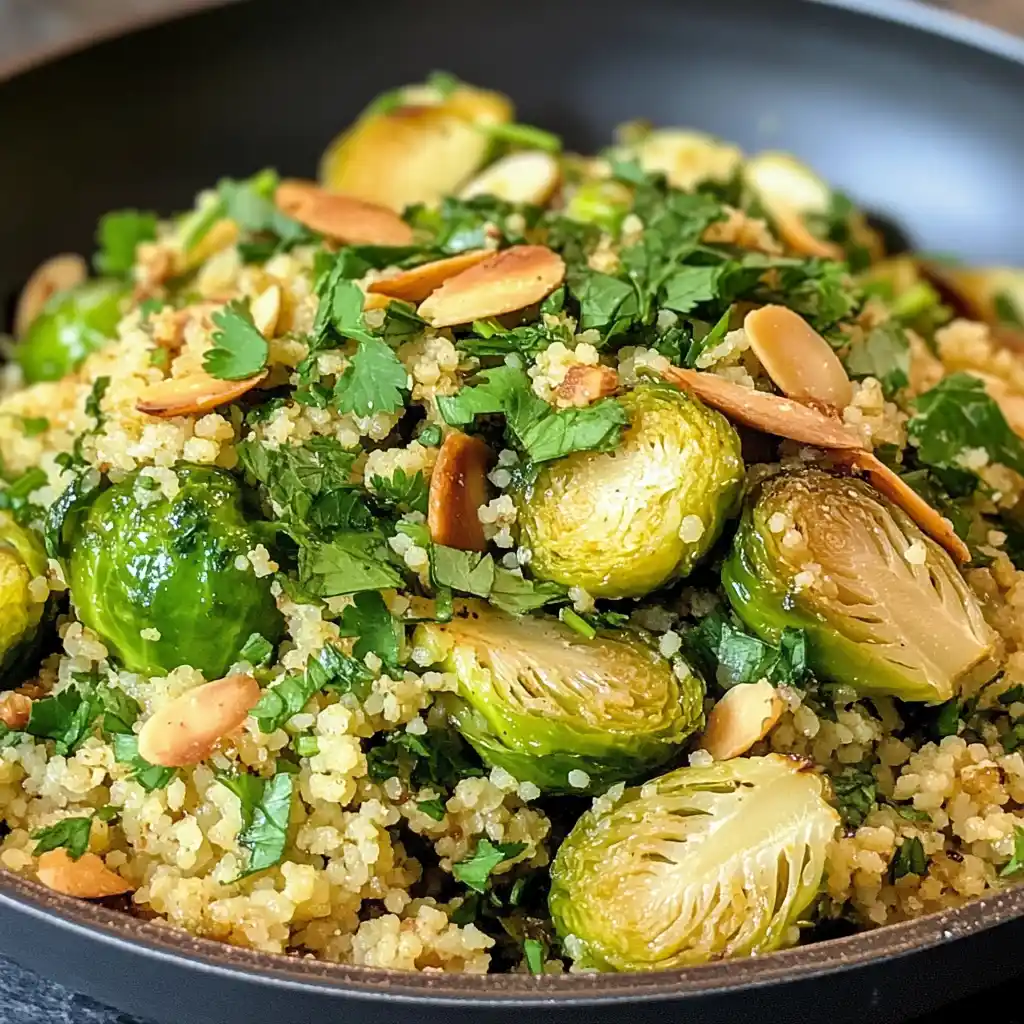
Ingredients
- 8 oz Brussels sprouts, trimmed and halved (about 2 cups)
- 2 tablespoons olive oil, divided
- ½ teaspoon ground cumin (make sure it’s fresh!)
- ½ teaspoon paprika
- Salt and black pepper, to taste
- 1 cup couscous (regular or whole wheat)
- 1¼ cups vegetable broth (good quality matters here)
- ¼ cup raisins (golden or regular)
- ¼ cup toasted almonds, chopped
- Juice of 1 lime (about 2 tablespoons)
- Fresh cilantro, chopped for garnish
Instructions
- Preheat your oven to 400°F and line a baking sheet with parchment paper or give it a light spray. Trim the Brussels sprouts and cut them in half through the stem so you get a nice flat side for caramelizing.
- On the baking sheet, toss the halved Brussels sprouts with 1 tablespoon olive oil, cumin, paprika, and a good pinch of salt and pepper (about ½ teaspoon salt). Spread them out in a single layer, cut-side down—don’t crowd them or they’ll steam instead of roast.
- Slide the pan into the oven and roast for 20-25 minutes until the sprouts are tender and those edges are crispy and caramelized. If you can wait that long, let them cool slightly while you make the couscous.
- In a medium saucepan, heat the remaining tablespoon of olive oil over medium heat. Add the couscous and toast it for 2-3 minutes, stirring constantly, until it smells nutty and turns slightly golden.
- Pour in the vegetable broth and bring to a boil. Once it’s bubbling, reduce the heat to low, cover the pan tightly, and simmer for about 10 minutes until all the liquid is absorbed.
- Remove from heat and let it sit covered for 2 minutes (seriously, don’t skip this step). Fluff the couscous with a fork until it’s light and fluffy.
- Fold in the roasted Brussels sprouts, raisins, chopped toasted almonds, and lime juice. Give it a gentle toss so everything’s evenly distributed. Taste and adjust salt and pepper if needed.
- Garnish with fresh cilantro and serve warm. Trust me, this disappears fast.
Nutrition Information (Per Serving):
- Calories: 285
- Carbohydrates: 44g
- Protein: 8g
- Fat: 10g
- Fiber: 6g
- Sodium: 380mg
- Vitamin C: 85% DV
- Vitamin K: 120% DV
- Folate: 18% DV
Brussels sprouts are packed with vitamin C and K, while almonds add healthy fats and vitamin E.
Notes:
- Seriously, don’t crowd the Brussels sprouts on the baking sheet or they won’t crisp up
- Toast the almonds in a dry skillet for 3-4 minutes until fragrant—game changer
- Every oven runs differently, so start checking the sprouts at 20 minutes
- Fresh lime juice tastes way better than bottled, so squeeze a real lime
- If your couscous seems dry, add a tiny splash of broth when fluffing
Storage Tips:
Store leftovers in an airtight container in the refrigerator for up to 3 days. The Brussels sprouts won’t be as crispy, but the dish is still delicious. I actually love it cold as a salad the next day. Don’t freeze this—the vegetables get mushy and the couscous texture changes weirdly. Reheat gently in a skillet with a splash of vegetable broth, or just eat it cold or at room temperature.
Serving Suggestions:
- As a Side Dish: Perfect alongside grilled chicken, salmon, or roasted lamb
- Light Main Course: Add a fried egg on top or serve with grilled halloumi for protein
- Potluck Star: This travels well and tastes great at room temperature
- Grain Bowl Base: Top with your favorite protein and extra vegetables for a complete meal
Mix It Up (Recipe Variations):
Heartier Peruvian Couscous: Add diced roasted sweet potato along with the Brussels sprouts for a more substantial dish that works as a main course
Festive Holiday Version: Swap raisins for dried cranberries and almonds for toasted pecans—gorgeous colors for the holidays
Protein-Packed Bowl: Top with grilled chicken, roasted chickpeas, or seared tofu for a complete meal
Spicy Southwest Twist: Add diced jalapeños and a pinch of cayenne with the spices, plus use pepitas instead of almonds for a southwestern vibe
What Makes This Recipe Special:
This Peruvian Brussels Sprouts Couscous honors the bright, bold flavors found in Peruvian cooking—citrus, cumin, and the perfect balance of sweet and savory—while using accessible ingredients. The technique of roasting vegetables until deeply caramelized before mixing with fluffy grains creates layers of flavor and texture that make this simple side dish feel special and complex.
