
Ever wonder why smoothie bowl shops charge $12 for what’s basically blended fruit with toppings? I used to waste money on overpriced açai bowls until I discovered this foolproof pineapple smoothie bowl recipe that’s become my go-to for quick breakfasts, post-workout fuel, and pretending I’m on a beach vacation while sitting in my kitchen. Now my kids actually request this for breakfast instead of sugary cereal (which might be my greatest parenting achievement), and my Instagram followers keep asking if I’m secretly at a resort in Hawaii because apparently my breakfast game looks that good—spoiler alert: I’m just in my pajamas at my kitchen counter, but nobody needs to know that.
Here’s the Thing About This Recipe
What makes this pineapple smoothie bowl work is how frozen pineapple creates that thick, ice-cream-like texture without watering it down with ice, while coconut milk adds tropical creaminess and Greek yogurt provides protein that actually keeps you full until lunch. I learned the hard way that smoothie bowls aren’t just regular smoothies poured into a bowl—the consistency matters. This tropical breakfast bowl uses strategic ingredient ratios and blending techniques to create that perfect thick texture that holds toppings rather than letting them sink immediately into soup. It’s honestly that simple—blend it thick, pile on the toppings artfully, grab a spoon, and resist drinking it like a regular smoothie because the whole point is eating it slowly while admiring your handiwork.
What You’ll Need (And My Shopping Tips)
Good frozen pineapple is worth stocking in your freezer—I learned this after using fresh pineapple three times and ending up with thin, watery smoothie bowls that looked nothing like the Instagram photos I was trying to recreate. You want frozen pineapple chunks that are rock-solid when you use them. If you can only find fresh pineapple, cut it into chunks and freeze it yourself for at least 4 hours before making this. The frozen fruit is what creates that thick, spoonable texture.
The banana situation requires some planning. You want a ripe banana with brown spots for natural sweetness and creaminess, but it should be frozen for the best texture. I always keep overripe bananas peeled and frozen in chunks specifically for smoothie bowls—they make everything thick and creamy without watering anything down. If you forget to freeze your banana, just use a fresh one and add a few ice cubes, but the texture won’t be quite as perfect.
Coconut milk adds that essential tropical flavor and creamy richness. Full-fat canned coconut milk works best—don’t use coconut milk from a carton (that’s basically coconut-flavored water). If you don’t like coconut flavor, regular whole milk or your favorite plant-based milk works too, but you’ll lose some of that vacation vibe.
Greek yogurt is crucial for protein and that luxurious creamy texture. Full-fat or 2% works better than fat-free because it makes your pineapple smoothie bowl actually satisfying instead of leaving you hungry an hour later. Plain Greek yogurt is essential—the flavored ones have way too much added sugar.
Honey sweetness is optional since ripe banana and pineapple are already pretty sweet, but a little drizzle enhances everything beautifully. Toppings are where you can get creative and honestly, they’re what makes smoothie bowls fun. Quality granola with actual flavor (not cardboard), fresh berries that look vibrant, chia seeds for nutrition and visual appeal, and shredded coconut for that final tropical touch. Check out this comprehensive guide to smoothie bowls if you want to understand why these Instagram-worthy breakfasts became such a phenomenon.
I always keep frozen fruit stocked because once I discovered this recipe, we make these bowls multiple times a week, and having backup frozen pineapple means I never run out.
Let’s Make This Together
Start by pulling your frozen pineapple out of the freezer—you want it rock-solid, not thawed at all. Here’s where I used to mess up: I’d let the fruit sit on the counter while I gathered other ingredients, and it would start thawing, making the final texture too thin. Don’t be me—work with frozen fruit straight from the freezer.
Add your frozen pineapple chunks, frozen banana chunks, coconut milk, Greek yogurt, and honey to your blender. Here’s the critical order for smooth blending: liquid first (coconut milk), then soft ingredients (yogurt), then frozen ingredients on top. This creates the liquid foundation that helps everything blend without creating air pockets.
Now for the blending technique that makes or breaks smoothie bowls: start on low speed to get things moving, then increase to high. You’ll need to stop and scrape down the sides multiple times with a spatula. Use your blender’s tamper if you have one to push ingredients toward the blades. This isn’t like making a regular smoothie where everything just blends smoothly—you have to work for it because we want it THICK.
The consistency should be like soft-serve ice cream—thick enough that when you pour it into your bowl, it holds its shape and doesn’t immediately spread out like soup. If it’s too thick to blend, add coconut milk one tablespoon at a time. If it’s too thin (this happens to everyone), add a handful more frozen pineapple or banana and blend again.
Pour that gorgeous yellow smoothie into your favorite wide, shallow bowl—these work better than deep bowls because you get more surface area for artistic topping arrangement. This is where the fun begins!
Now arrange your toppings like you’re creating art. I usually start with a line of granola down the middle, then add fresh berries in rows or clusters, sprinkle chia seeds strategically, and finish with shredded coconut for that snow-on-a-tropical-beach effect. The key is creating sections rather than just dumping everything on top randomly. If you’re looking for another tropical breakfast option, try this Mango Coconut Chia Pudding that has similar vacation vibes.
Grab a spoon and eat immediately—smoothie bowls wait for no one. They start melting and getting soupy pretty quickly, so this is one breakfast you actually need to eat right away. But honestly, that’s not usually a problem because they’re so good.
When Things Go Sideways (And They Will)
Smoothie bowl came out too thin and soupy? You probably used too much liquid or your fruit wasn’t frozen enough. In reality, I’ve learned to start with less coconut milk than the recipe calls for—you can always add more, but you can’t take it out. If this happens (and it will), just add more frozen fruit and blend again until it thickens up.
Blender won’t blend and keeps stalling? Don’t panic—your mixture is too thick or you have an air pocket. Add a splash more liquid and use your tamper to push ingredients toward the blades. If you don’t have a tamper, stop the blender, stir with a spoon, then try again. This is normal with thick smoothie bowls.
Pineapple smoothie bowl tastes too tart? You need a riper banana or more honey. I always taste the base before pouring into the bowl now because fruit tartness varies depending on ripeness and season. Start with an extra drizzle of honey—you can always add more sweetness, but you can’t take it away.
Toppings immediately sank into the smoothie? Your base was too thin. Next time, blend it thicker so toppings sit on top like they’re supposed to. The base should be spoonable, not pourable. If this happens, just mix everything together and call it a loaded smoothie bowl—still delicious!
When I’m Feeling Creative
Green Pineapple Bowl: Add a handful of baby spinach to the blend (you won’t taste it, I promise). Top with kiwi slices, hemp seeds, and granola. Around here, we call this the “sneaky greens” version because even my veggie-resistant kids eat it.
Protein Power Pineapple Bowl: Add a scoop of vanilla protein powder to the blend for extra staying power. Top with nut butter drizzle, sliced almonds, and banana. Perfect for post-workout fuel or meal replacement.
Berry Pineapple Fusion Bowl: Add 1/4 cup frozen mixed berries to the blend for a purple-pink color. Top with more fresh berries, bee pollen, and coconut chips. When I’m feeling fancy, this version becomes my weekend brunch staple.
Chocolate Tropical Bowl: Add 1 tablespoon cocoa powder to the blend. Top with cacao nibs, chocolate granola, and fresh strawberries. Tastes like dessert for breakfast and nobody’s complaining.
What Makes This Recipe Special
This pineapple smoothie bowl represents the perfect balance of nutrition and indulgence, proving that Instagram-worthy breakfast can be genuinely healthy and satisfying without the $12 price tag from trendy cafés. What sets this recipe apart from basic smoothies is how the thick, spoonable texture created by frozen fruit turns breakfast into an engaging eating experience rather than something you drink down in 30 seconds without thinking. The strategic combination of frozen pineapple for tropical sweetness and vitamin C, banana for creaminess and natural sugar, coconut milk for healthy fats, and Greek yogurt for protein creates sustained energy release rather than the blood sugar spike and crash of typical sweet breakfast foods. The artful topping arrangement isn’t just for aesthetics—different textures (crunchy granola, juicy berries, chewy chia seeds, soft coconut) make every bite interesting and satisfying in ways that uniform texture cannot achieve. Learn more about the nutritional benefits of pineapple and why this tropical fruit packs such impressive vitamin C, bromelain enzymes, and antioxidant power.
Things People Ask Me About This Recipe
Can I make this pineapple smoothie bowl ahead of time?
Not really—smoothie bowls are best enjoyed immediately while they’re thick and cold. However, you can prep smoothie bowl packs by portioning frozen pineapple, banana chunks, and measured yogurt into freezer bags. When you’re ready, just dump the contents into your blender with coconut milk and honey. The actual blending needs to happen right before eating.
What if I don’t have frozen pineapple for this tropical bowl?
Fresh pineapple works if you freeze it yourself for at least 4 hours. You can also use frozen mango or a tropical fruit blend from the freezer section. The key is using frozen fruit to create that thick texture—fresh fruit plus ice doesn’t give the same creamy consistency.
Can I use a different milk in this breakfast bowl recipe?
Absolutely! Regular dairy milk, almond milk, oat milk, or any plant-based milk works. Coconut milk adds tropical flavor, but if you don’t like coconut, use whatever milk you prefer. Just stick with full-fat or regular versions rather than low-fat for better creaminess.
How do I make this vegan?
Easy! Just swap the Greek yogurt for plant-based yogurt (coconut, almond, or soy yogurt all work well). Replace honey with maple syrup or agave nectar. The smoothie bowl works beautifully with these substitutions and tastes just as delicious.
What if I don’t have a high-powered blender?
You might need to blend longer and stop to scrape down the sides more frequently. Cut your fruit into smaller pieces to make it easier on your blender. Add a bit more liquid if needed to help things move. It’ll take longer, but it’s totally doable with a regular blender.
Why is my smoothie bowl a weird color instead of bright yellow?
Your banana might be overripe and brown inside, which makes the smoothie brownish rather than yellow. Use bananas that are just ripe with yellow skin and brown spots, not completely brown. Also, adding too much chia seeds to the blend (rather than just on top) can darken the color.
One Last Thing
I couldn’t resist sharing this pineapple smoothie bowl because it’s transformed how my family thinks about breakfast—turning it from boring routine into something colorful and fun that we actually look forward to. The best smoothie bowl mornings are when I prep those freezer packs on Sunday, then wake up knowing I just have to blend and arrange toppings. It’s become our healthy indulgence that feels like vacation even on regular Tuesday mornings, and honestly, I hope it becomes yours too.
Print
Pineapple Smoothie Bowl
Description
This thick, creamy pineapple smoothie bowl delivers tropical flavor with Instagram-worthy presentation—the refreshing breakfast that tastes like vacation but keeps you full all morning!
Prep Time: 5 minutes | Cook Time: 0 minutes | Total Time: 5 minutes | Servings: 1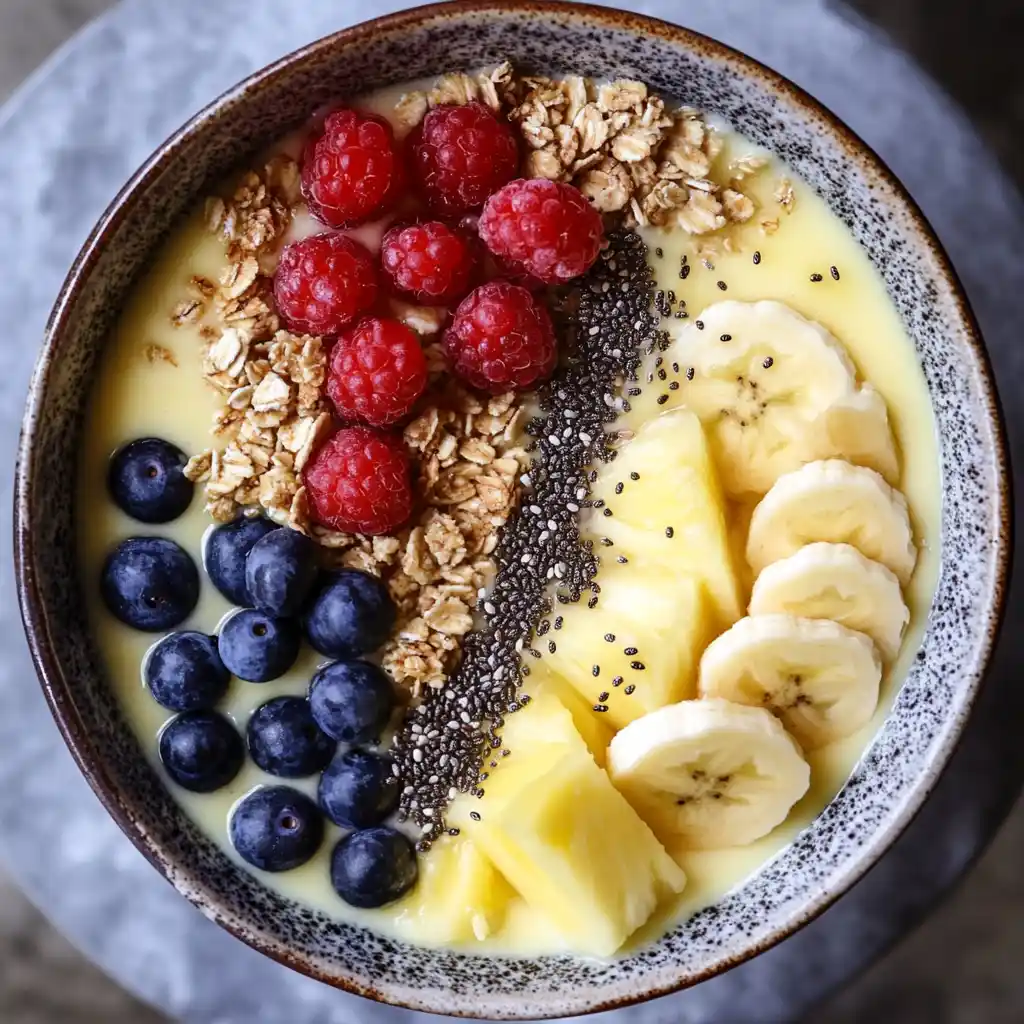
Ingredients
For the Base:
- 1 cup frozen pineapple chunks (rock-solid, straight from freezer)
- 1 ripe banana, frozen (peeled and frozen in chunks)
- 1/2 cup coconut milk (full-fat canned works best)
- 1/4 cup Greek yogurt (full-fat or 2% for creaminess)
- 1 tbsp honey (adjust based on fruit sweetness)
For the Toppings:
- 1/4 cup granola (quality granola with actual flavor)
- Fresh berries, for topping (whatever looks good at the store)
- 1 tbsp chia seeds, for topping (adds nutrition and texture)
- 2 tbsp shredded coconut, for topping (unsweetened or sweetened)
Instructions
- Make sure your pineapple and banana are frozen solid—this is crucial for that thick, ice-cream-like texture you want in a smoothie bowl.
- Add ingredients to your blender in the right order for smooth blending: coconut milk first at the bottom, then Greek yogurt, then frozen pineapple and banana on top. Drizzle in the honey.
- Start blending on low speed to get things moving, then increase to high. You’ll need to stop and scrape down the sides multiple times with a spatula. Use your blender’s tamper if you have one to push ingredients toward the blades.
- Keep blending until you achieve soft-serve ice cream consistency—thick enough that it holds its shape when you pour it into a bowl, not soupy. If it’s too thick to blend, add coconut milk one tablespoon at a time. If it’s too thin, add more frozen fruit.
- Pour that gorgeous yellow smoothie into your favorite wide, shallow bowl. The bowl shape matters—wide and shallow gives you more surface area for artistic topping arrangement.
- Now for the fun part—arrange your toppings like you’re creating art! Start with a line of granola down the middle, add fresh berries in rows or clusters, sprinkle chia seeds strategically, and finish with shredded coconut for visual appeal.
- Grab a spoon and eat immediately while it’s thick and cold. Smoothie bowls wait for no one—they start melting and getting soupy quickly. Enjoy this tropical breakfast that tastes like vacation!
Nutrition Information (Per Bowl):
- Calories: 485
- Carbohydrates: 78g
- Protein: 14g
- Fat: 16g
- Fiber: 10g
- Sodium: 65mg
- Vitamin C: 140% DV
- Calcium: 20% DV
- Iron: 15% DV
- Potassium: 18% DV
This pineapple smoothie bowl delivers serious nutrition with incredible vitamin C from pineapple for immune support (nearly 1.5 times your daily needs!), protein from Greek yogurt for sustained energy, healthy fats from coconut for satiety, fiber for digestive health and fullness, and natural fruit sugars for immediate energy without the crash—basically a complete breakfast that happens to taste like dessert.
Notes:
- Frozen fruit is essential for thick texture! Fresh fruit plus ice doesn’t create the same creamy consistency.
- Load your blender in order: liquid first, then soft ingredients, then frozen items on top for smooth blending.
- You’ll need to stop and scrape down sides multiple times—this is normal for thick smoothie bowls.
- The base should be spoonable, not pourable. If you can drink it through a straw, it’s too thin.
- Eat within 15 minutes for best texture—smoothie bowls melt and get soupy if they sit too long.
- Topping arrangement isn’t just aesthetic—different textures make every bite more interesting.
Storage Tips:
Honestly, smoothie bowls are best enjoyed immediately while they’re thick and cold. You can’t really store blended smoothie bowls—they separate and get icy if frozen, or turn into soup if refrigerated. Instead, prep smoothie bowl packs by portioning frozen pineapple, banana chunks, and measured yogurt into freezer bags for quick future bowls. These packs last up to 3 months in the freezer. When ready, just dump frozen fruit into the blender with coconut milk, yogurt, and honey. Keep toppings stored separately in airtight containers so they stay crunchy.
Serving Suggestions:
- After Morning Workout: The carbs and protein make it perfect for recovery
- Weekend Brunch Centerpiece: Make a smoothie bowl bar with various toppings
- Healthy Dessert Alternative: Satisfies sweet cravings without guilt
- With Extra Protein: Add a scoop of protein powder for meal replacement
Mix It Up (Recipe Variations):
Green Pineapple Bowl: Add 1 cup baby spinach to the blend (you won’t taste it, promise). Top with kiwi slices, hemp seeds, and granola. Perfect for sneaking greens into breakfast.
Protein Power Pineapple Bowl: Add 1 scoop vanilla protein powder to the blend. Top with 1 tablespoon nut butter drizzle, sliced almonds, and banana slices. Keeps you full for hours.
Berry Pineapple Fusion Bowl: Add 1/4 cup frozen mixed berries to the blend for gorgeous purple-pink color. Top with more fresh berries, bee pollen, and coconut chips. Absolutely stunning presentation.
Chocolate Tropical Bowl: Add 1 tablespoon unsweetened cocoa powder to the blend. Top with cacao nibs, chocolate granola, and fresh strawberries. Tastes like chocolate-covered tropical fruit.
What Makes This Recipe Special:
This pineapple smoothie bowl achieves café-quality results at home through strategic use of frozen fruit to create that thick, spoonable texture that transforms breakfast into an engaging eating experience rather than something mindlessly consumed. The combination of tropical pineapple for vitamin C and enzymes, creamy banana for natural sweetness, coconut milk for healthy fats, and Greek yogurt for protein creates balanced nutrition with sustained energy release, while the artful topping arrangement provides textural variety that makes every bite interesting and satisfying, proving that beautiful, Instagram-worthy breakfast can be genuinely nutritious and filling.
