
Ever wonder why homemade pita bread from Middle Eastern bakeries is so pillowy and perfect while store-bought versions taste like cardboard? I used to think making authentic pita bread with that signature pocket required years of practice or some kind of secret baking knowledge until I discovered this foolproof recipe. Now I make fresh pita at least twice a month for everything from shawarma to breakfast eggs, and honestly, watching them puff up in the oven never gets old (which is pretty amazing considering the first time I tried, not a single one puffed, and I ended up with flat discs that were basically fancy crackers because I didn’t get my oven hot enough).
Here’s the Thing About This Recipe
What makes authentic Middle Eastern pita bread work so beautifully is the combination of high heat that creates instant steam, causing the pocket to form, and properly developed dough that’s elastic enough to puff without tearing. I learned the hard way that you can’t just use any temperature or skip the kneading—the technique matters as much as the ingredients. This traditional flatbread uses simple pantry staples and active dry yeast to create soft, pillowy rounds with that iconic pocket perfect for stuffing. It’s honestly that simple once you understand the importance of oven temperature and dough hydration, and no special equipment needed beyond a baking sheet.
What You’ll Need (And My Shopping Tips)
Good all-purpose flour is all you need here—don’t overthink it with bread flour, though bread flour does work if that’s what you have. Active dry yeast should be fresh and not expired—I always check the date because old yeast won’t foam properly and your dough won’t rise (happens more than I’d like to admit when I find that packet from two years ago buried in my pantry). The yeast should bloom and get frothy when mixed with warm water—that’s how you know it’s alive.
Warm water should be between 105-110°F—warm to the touch but not hot enough to kill the yeast. I just use water from the tap that feels like a comfortable bath. Olive oil adds flavor and helps keep the dough soft. Sugar feeds the yeast and helps it activate faster. Salt is essential for flavor but gets added to the flour, not directly to the yeast.
I always make a double batch because fresh pita disappears instantly, and they freeze beautifully for quick meals later. Store-bought pita is fine in a pinch, but once you taste homemade with that soft, pillowy texture and slightly charred spots, there’s no going back. For more details on the history and variations of pita bread, check out this guide to flatbreads from Food Network.
Let’s Make This Together
Start by mixing your flour, salt, and sugar in a large bowl. In a small bowl, dissolve the yeast in warm water and let it sit for about 5 minutes until it gets foamy and bubbly on top. Here’s where I used to mess up—I’d use water that was too hot and kill the yeast, then wonder why nothing happened. If your yeast doesn’t foam, start over with fresh yeast and correct water temperature.
Add the frothy yeast mixture and olive oil to your flour mixture. Mix everything together with a wooden spoon or your hands until a shaggy dough forms. Turn it out onto a lightly floured surface and start kneading. Knead for 5-7 minutes until the dough becomes smooth, elastic, and slightly tacky but not sticky. Here’s my secret: the dough should feel like a soft earlobe when properly kneaded. Don’t be me—I used to under-knead and wonder why my pitas were tough.
Place the dough in a greased bowl, turning it once to coat the top with oil. Cover with a clean kitchen towel and let it rise in a warm place for 1-2 hours until doubled in size. I usually stick mine near a sunny window or on top of the fridge where it’s slightly warmer. Be patient—rushing the rise gives you dense pita.
About 30 minutes before the dough finishes rising, preheat your oven to 475°F and place a baking sheet inside to get screaming hot. This step is absolutely crucial—the hot baking sheet is what causes the instant steam that makes pitas puff. I learned this trick from Middle Eastern bakers who insist on a super hot surface.
Once the dough has doubled, punch it down to release the air. Divide it into 8 equal portions and shape each into a smooth ball. Cover the balls with a damp towel while you work so they don’t dry out. Take one ball and roll it out on a lightly floured surface into a circle about 1/4 inch thick and roughly 6-7 inches in diameter. Don’t roll too thin or they won’t puff properly.
Carefully open the oven and quickly but gently transfer the rolled pita directly onto the preheated baking sheet. Work fast to keep the oven hot—you can usually fit 2-3 at a time depending on your sheet size. Close the oven and bake for 5-7 minutes. Around 3 minutes, you should see them start to puff up like balloons. This is the magic moment—don’t open the oven door to check or you’ll let out the heat and they might deflate.
When they’re puffed and just starting to get light golden spots, pull them out. They’ll deflate slightly as they cool—that’s normal and creates the pocket. Wrap finished pitas in a clean kitchen towel to keep them soft and warm while you bake the remaining dough. For another Middle Eastern staple that pairs perfectly with pita, try this Hummus Recipe that’s perfect for dipping.
If This Happens, Don’t Panic
Pitas didn’t puff at all? Your oven wasn’t hot enough, your dough was rolled too thin or too thick, or your baking sheet wasn’t preheated. In reality, I’ve learned that oven temperature is everything—use an oven thermometer if you suspect yours runs cool. This is totally fixable next time—just make sure everything’s hot enough.
Pitas puffed but immediately deflated? Don’t panic—they’re supposed to deflate as they cool, creating the pocket. If they’re staying totally flat and hard like crackers, you baked them too long. Pull them out as soon as they puff and have a few golden spots.
Dough too sticky to work with? You might need a bit more flour. Add it gradually, a tablespoon at a time, until the dough is tacky but manageable. If this happens (and it will depending on humidity), just dust your work surface and hands with flour.
Pitas turned out tough and chewy? You over-kneaded the dough, rolled them too thick, or baked them too long. They should be soft and pliable when done, not hard or leathery.
When I’m Feeling Creative
Whole Wheat Pita: When I’m feeling health-conscious, I swap half the all-purpose flour for whole wheat flour. They’re heartier and have a nutty flavor that works beautifully with Mediterranean fillings.
Herb Pita: Add 2 tablespoons of dried herbs (za’atar, oregano, or rosemary) to the dough for flavored pita. Around the holidays, I make these for special meals and everyone asks what makes them taste so good.
Garlic Pita: Brush the rolled dough with garlic butter before baking for garlic pita that’s absolutely incredible. My family requests this version constantly.
Greek-Style Pita: Add a tablespoon of Greek yogurt to the dough for extra-soft, slightly tangy pita that stays fresh longer.
Why This Works So Well
This homemade pita bread captures the essence of traditional Middle Eastern flatbreads that have been staples of the region for thousands of years. Pita has ancient origins dating back to the Middle East over 4,000 years ago, making it one of the world’s oldest breads. What sets homemade pita apart from store-bought is the freshness, soft texture, and that dramatic puff that creates the pocket—something that’s nearly impossible to replicate with commercial production methods. The technique of baking on a very hot surface creates rapid steam inside the dough, causing it to balloon and form the characteristic pocket. The cultural history of pita bread shows how this versatile flatbread became central to cuisines across the Middle East, Mediterranean, and beyond, serving as both plate and utensil for countless dishes.
Things People Ask Me About This Recipe
Can I make this pita bread ahead of time?
Absolutely! The dough can be made through the first rise, then refrigerated for up to 24 hours before shaping and baking. Baked pitas keep at room temperature in a sealed bag for 2-3 days, or freeze for up to 3 months. Reheat in a dry skillet or wrapped in foil in a 350°F oven.
What if I don’t have active dry yeast?
Use instant yeast (also called rapid-rise) instead—you can mix it directly into the flour without proofing. Use the same amount. Don’t substitute baking powder or baking soda—pita needs yeast for proper texture and rise.
Why didn’t my pita form a pocket?
The most common reasons are: oven not hot enough, baking sheet not preheated, dough rolled too thin or too thick, or opening the oven door during the critical puffing phase. All the steam needs to be trapped inside for the pocket to form.
Is this recipe beginner-friendly?
Totally. If you can knead dough and roll it out, you’ve got this. The first few might not puff perfectly, but they’ll still taste amazing and can be used for flatbread pizzas or torn for dipping. My teenage son makes these for his friends now.
Can I cook these on the stovetop instead of the oven?
Yes! Heat a dry cast iron skillet or griddle over high heat until very hot. Cook the rolled pitas for about 2 minutes per side until puffed and spotted with brown. They won’t puff quite as dramatically as oven-baked, but they’re still delicious.
How thick should I roll the dough?
About 1/4 inch thick—thick enough to puff but thin enough to cook through quickly. If you can see through it when held up to light, it’s too thin. If it’s thicker than your pinky finger, it’s too thick.
Why I Had to Share This
I couldn’t resist sharing this because fresh, homemade pita bread is one of those simple pleasures that transforms ordinary meals into something special, and watching them puff up in the oven is genuinely thrilling every single time. The best pita nights are when you pull them from the oven still warm, tear one open to reveal that perfect pocket, and fill it with whatever delicious things you have ready. You’ve totally got this.
Print
Pita Bread
Description
Soft, pillowy Middle Eastern flatbread with the signature pocket—this easy homemade pita bread uses simple ingredients and high heat to create authentic results better than anything store-bought.
Prep Time: 15 minutes | Rise Time: 1-2 hours | Cook Time: 30 minutes | Total Time: 2 hours 45 minutes | Servings: 8 pitas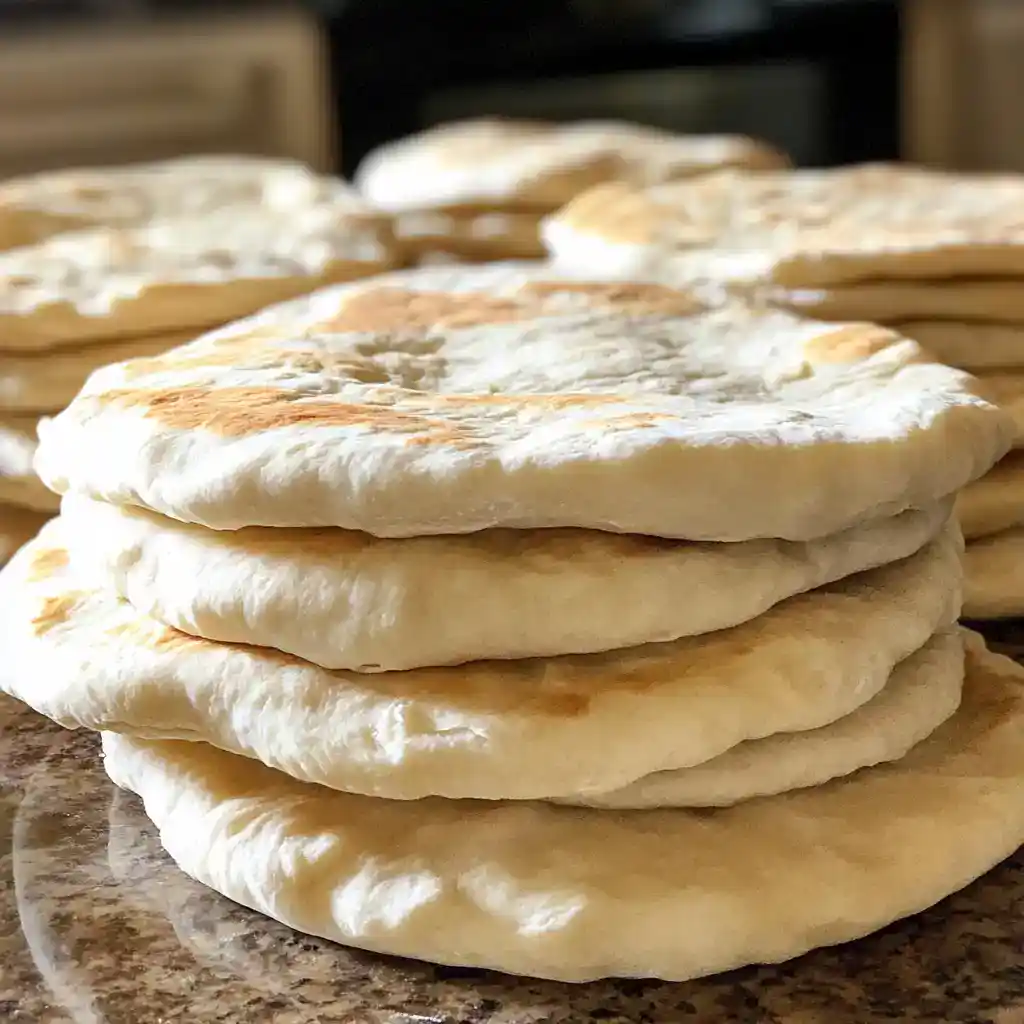
Ingredients
- 3 cups all-purpose flour (plus extra for dusting)
- 1 teaspoon salt
- 1 tablespoon granulated sugar
- 1 packet (2 1/4 teaspoons) active dry yeast
- 1 cup warm water (105-110°F, warm to the touch)
- 1 tablespoon olive oil
Instructions
- In a large mixing bowl, whisk together flour, salt, and sugar until evenly combined.
- In a small bowl, dissolve the yeast in warm water. Let it sit for about 5 minutes until it gets foamy and bubbly on top. If it doesn’t foam, your yeast is dead or your water was too hot—start over with fresh yeast and correct water temperature.
- Add the foamy yeast mixture and olive oil to the flour mixture. Mix with a wooden spoon or your hands until a shaggy dough forms.
- Turn the dough out onto a lightly floured surface and knead for 5-7 minutes until smooth, elastic, and slightly tacky but not sticky. The dough should feel soft and supple, like a soft earlobe. Don’t rush this step—proper kneading develops the gluten that allows pitas to puff.
- Place the dough in a greased bowl, turning once to coat the top with oil. Cover with a clean kitchen towel and let rise in a warm place for 1-2 hours until doubled in size. Be patient—this rise is crucial for light, airy pita.
- About 30 minutes before the dough finishes rising, preheat your oven to 475°F and place a baking sheet inside to heat up. This preheated sheet is essential for getting pitas to puff properly.
- Once doubled, punch down the dough to release air. Divide into 8 equal portions and shape each into a smooth ball. Cover with a damp towel while you work to prevent drying.
- On a lightly floured surface, roll out each ball into a circle about 1/4 inch thick and 6-7 inches in diameter. Don’t roll too thin or they won’t puff properly. Try to keep them relatively round but don’t stress about perfection.
- Working quickly to keep the oven hot, carefully open the oven and transfer 2-3 rolled pitas directly onto the hot baking sheet. Close the oven immediately to trap the heat.
- Bake for 5-7 minutes until the pitas puff up like balloons and have light golden spots. Around 3 minutes you should see them start to inflate. Don’t open the oven door during the puffing or they might deflate.
- Remove from the oven and immediately wrap in a clean kitchen towel to keep warm and soft while you bake the remaining pitas. They’ll deflate as they cool, creating the pocket.
- Serve warm or at room temperature, stuffed with your favorite fillings or torn for dipping in hummus. Store cooled pitas in a sealed bag.
Nutrition Information (Per Pita):
- Calories: 195
- Carbohydrates: 38g
- Protein: 6g
- Fat: 2g
- Fiber: 1g
- Sodium: 290mg
- Iron: 12% DV
These homemade pitas are naturally low in fat and provide energy from quality carbohydrates. They’re preservative-free with simple, wholesome ingredients.
Notes:
- Warm water should be 105-110°F—warm to the touch like a comfortable bath, not hot. Too hot kills the yeast.
- The yeast must foam and bubble when proofed. If it doesn’t, start over with fresh yeast.
- Preheating the baking sheet is essential for getting pitas to puff. Don’t skip this step.
- Oven temperature is crucial—use an oven thermometer if you suspect yours runs cool.
- Don’t open the oven door during the critical puffing phase around 3-4 minutes.
- Wrap finished pitas in a towel to keep them soft and prevent drying out.
Storage Tips:
Store completely cooled pitas in a sealed plastic bag at room temperature for 2-3 days. For longer storage, freeze in a zip-top bag for up to 3 months. Thaw at room temperature, then reheat wrapped in foil in a 350°F oven for 5-10 minutes, or in a dry skillet for 30 seconds per side. Don’t microwave to reheat—it makes them tough and rubbery.
Serving Suggestions:
- Stuffed Sandwiches: Fill with falafel, shawarma, grilled vegetables, or your favorite proteins
- Breakfast Pockets: Stuff with scrambled eggs, feta, and vegetables for breakfast
- Dipping: Tear into pieces for dipping in hummus, baba ganoush, or tzatziki
- Mini Pizzas: Split open and use as pizza bases with your favorite toppings
Mix It Up (Recipe Variations):
- Whole Wheat Pita: Replace half the all-purpose flour with whole wheat flour for heartier pitas
- Herb Pita: Add 2 tablespoons za’atar, dried oregano, or other herbs to the dough
- Garlic Pita: Brush rolled dough with garlic butter before baking
- Greek-Style Pita: Add 1 tablespoon Greek yogurt to the dough for extra-soft texture
What Makes This Recipe Special:
This homemade pita bread uses traditional Middle Eastern techniques that create the signature pocket through high-heat baking on a preheated surface. The method of rapid heating causes instant steam inside the dough, making it balloon and form the characteristic hollow center. Proper kneading and rising times develop the gluten structure needed for pitas to puff dramatically while staying soft and pliable—something commercial production can’t replicate.
