
Ever wonder why braised meat dishes at restaurants taste so rich and tender while homemade versions turn out tough and boring? I used to be intimidated by cooking lamb until I discovered this foolproof poached apple lamb recipe. Now my Sunday dinners smell like autumn and comfort, and my family actually requests this dish by name (which honestly feels like the highest compliment I’ve ever gotten in the kitchen).
Here’s the Thing About This Dish
What makes this apple lamb recipe work is the way sweet apples break down into the braising liquid and tenderize the lamb while adding this subtle fruity sweetness that balances the rich meat. Here’s what I’ve learned the hard way: most people think lamb needs complicated techniques or fancy ingredients, but slow simmering in flavorful liquid is literally all you need. When you combine lamb with apples, warm spices, and good broth, you’re creating actual depth of flavor that tastes like you spent all day in the kitchen. It’s honestly that simple—good lamb, patient simmering, and knowing when the meat is fork-tender. No culinary school required.
What You’ll Need (And My Shopping Tips)
Good boneless lamb shoulder is worth buying from a butcher instead of pre-cut cubes in plastic packages. I learned this after buying lamb three times that was mostly fat and gristle. Look for lamb shoulder with good marbling—you want some fat because it keeps the meat juicy during long cooking, but not huge chunks of pure fat. The meat should be bright red, not gray or brown. I always ask the butcher to cut it into 1.5-inch cubes because uniform pieces cook evenly.
Fresh apples should be firm and slightly tart for cooking—sweet apples turn to mush and add no flavor dimension. According to Bon Appétit’s guide to cooking apples, Granny Smith, Honeycrisp, or Braeburn apples hold up best in long-cooked dishes. Don’t cheap out on mealy Red Delicious apples—they dissolve into nothing and taste like cardboard.
Chicken broth should be good quality with actual flavor. Those bouillon cubes make everything taste like salt water, not rich broth. I keep boxes of low-sodium chicken broth in the pantry so I can control the seasoning myself. The ground cinnamon and nutmeg should smell warm and fragrant—if they smell like nothing, buy fresh spices because old spices add zero flavor.
Fresh garlic and onion create the savory base that balances the sweet apples. Don’t use pre-minced garlic in jars—it tastes sharp and chemical compared to fresh cloves. Fresh parsley for garnish adds a bright pop that cuts through all that richness at the end.
Let’s Make This Together
Start by cutting your lamb shoulder into roughly 1.5-inch cubes if the butcher didn’t do it for you. Pat them dry with paper towels—this isn’t crucial for poaching like it is for searing, but it helps the seasoning stick. Season the cubes generously with salt and pepper. Don’t be shy—lamb can handle robust seasoning and needs it to taste its best.
Peel, core, and slice your apples into thick wedges about 1/2 inch wide. Here’s where I used to mess up: I’d slice them too thin and they’d completely disappear during cooking. Thick slices hold their shape better and still contribute flavor to the broth. Chop your onion and mince your garlic while you’re at it—everything goes in one pot, which makes this incredibly easy.
Now for the fun part: in your largest pot or Dutch oven, combine the lamb cubes, sliced apples, 2 cups of chicken broth, chopped onion, minced garlic, 1 teaspoon cinnamon, and 1/2 teaspoon nutmeg. Give everything a good stir to distribute the spices. Season with additional salt and pepper to taste, keeping in mind that the liquid will reduce and concentrate as it cooks.
Bring the whole mixture to a boil over medium heat, then immediately reduce to low heat. Cover the pot with a lid and let it simmer gently for 1.5 to 2 hours. Here’s my secret: check it occasionally to make sure it’s not boiling too vigorously—you want gentle bubbles, not a rolling boil. If it’s bubbling too hard, lower the heat even more. I learned this after boiling my first batch aggressively and ending up with stringy, dry lamb instead of tender meat.
The lamb is done when it’s fork-tender and practically falls apart when you press it. This usually takes the full 2 hours, but every pot and stove is different, so start checking at 1.5 hours. Once it’s tender, remove from heat and let it rest for 5-10 minutes. The flavors will settle and the liquid will thicken slightly as it cools.
Serve hot in shallow bowls, making sure everyone gets lamb, apples, and plenty of that gorgeous cooking liquid. Garnish generously with fresh chopped parsley. This whole thing takes about 2 hours, but most of that is hands-off simmering time while you do other things. Check out my Braised Beef with Root Vegetables for another long-cooked comfort dish that uses similar techniques.
When Things Go Sideways (And They Will)
Lamb is tough and chewy? You didn’t cook it long enough or the heat was too high and boiled it. In reality, I’ve learned that lamb shoulder needs the full 2 hours at gentle heat to break down properly. If this happens, just keep simmering—it’ll eventually get tender. This is totally fixable with more time and lower heat.
Apples completely dissolved into mush? You used the wrong variety or cut them too small. Don’t panic—the dish still tastes great, it’s just more of a sauce now instead of distinct apple pieces. Every apple has its own personality, so next time use firmer varieties and cut thicker slices.
Liquid evaporated too much? Your heat was too high or you didn’t cover the pot properly. Just add more chicken broth or water 1/2 cup at a time until you have enough liquid to serve. I always keep extra broth handy now because this happened to me more than once.
Not enough flavor? You underseasoned or used old, flavorless spices. This goes from bland to delicious fast with proper seasoning, so taste the liquid halfway through cooking and adjust salt, pepper, and spices. Don’t be afraid to add more—you can always add, but you can’t take away.
When I’m Feeling Creative
Moroccan-Spiced Apple Lamb: Add 1/2 teaspoon ground cumin and a pinch of saffron to the pot for a North African twist. Around the holidays, this version makes me feel worldly and sophisticated without actually doing anything different.
Honey-Apple Lamb: Stir in 2 tablespoons of honey during the last 30 minutes of cooking for extra sweetness that caramelizes slightly. When I’m feeling fancy, I’ll add a handful of dried apricots too for more fruit complexity.
Herbed Apple Lamb: Add fresh rosemary and thyme sprigs to the pot while simmering for a more herbal, savory version. This has been a total game-changer for anyone who finds the cinnamon-apple thing too sweet—the herbs balance everything perfectly.
Root Vegetable Apple Lamb: Add chunks of carrots, parsnips, and turnips for the last hour of cooking to make it a complete one-pot meal. Fair warning: this makes way more food, so plan accordingly or have good storage containers ready.
What Makes This Recipe Special
The combination of lamb and fruit has ancient roots in British and European cuisines, where sweet-savory pairings were common in medieval and Renaissance cooking. According to Wikipedia’s guide to lamb and mutton, lamb has been a staple protein across cultures for thousands of years, often cooked with fruits like apples, apricots, and pomegranates. The poaching technique—cooking meat slowly in liquid—is one of the gentlest cooking methods that guarantees tender results even for tougher cuts like shoulder. What sets this poached apple lamb apart is its simplicity—unlike complicated French braises that require searing, deglazing, and multiple steps, this one-pot method delivers rich, complex flavors with minimal effort, proving that rustic home cooking can be just as satisfying as restaurant dishes.
Questions I Always Get
Can I make this poached apple lamb ahead of time?
Absolutely—this is one of those magical dishes that tastes even better the next day after the flavors meld together. Store it in an airtight container in the fridge for up to 4 days. Reheat gently on the stovetop, adding a splash of broth if it’s too thick. Trust me on this—I make this on Sunday and eat it all week for easy dinners.
What if I can’t find lamb shoulder for this recipe?
Lamb leg works well too, though it’s slightly leaner so watch the cooking time—it might be tender a bit faster. Lamb stew meat is usually shoulder or leg cut into cubes, so that works perfectly. Around here, we’ve discovered that even bone-in lamb shanks work beautifully, though they need closer to 2.5 hours to get fall-off-the-bone tender.
Can I use a different type of fruit instead of apples?
Pears work beautifully and have a similar texture when cooked. Dried apricots or prunes add concentrated sweetness with Middle Eastern flair. Every fruit has its own personality, so choose based on what sounds good to you—just stick with fruits that hold up to long cooking.
Is this dish too sweet for dinner?
Not at all—the apples add subtle sweetness that balances the rich, savory lamb without tasting like dessert. The onion, garlic, and broth keep it firmly in savory territory. If you’re worried, use tart apples like Granny Smith instead of sweet varieties, or reduce the cinnamon slightly.
Can I make this in a slow cooker instead of on the stovetop?
Yes! Combine everything in the slow cooker and cook on low for 6-8 hours or high for 3-4 hours until the lamb is tender. The slow cooker is actually perfect for this kind of dish because the low, even heat guarantees tender meat. I do this all the time when I want dinner ready when I get home.
What’s the best way to serve this poached apple lamb?
I serve it in shallow bowls over mashed potatoes, rice, or crusty bread to soak up the delicious cooking liquid. A simple green salad on the side cuts through the richness. Some people like it over egg noodles or polenta too—really, any starch that can absorb that gorgeous sauce works perfectly.
Before You Head to the Kitchen
I couldn’t resist sharing this because lamb shouldn’t be intimidating, and this poached apple lamb proves that slow-cooked comfort food can be simple, delicious, and way more impressive than the effort required. The best Sunday dinners are when your house smells amazing for hours and everyone’s scraping their bowls clean. You’ve got this—it’s just meat, fruit, and patience!
Print
Poached Apple Lamb
Description
This comforting poached apple lamb combines tender lamb shoulder with sweet apples, warm spices, and savory broth for a rustic one-pot meal that’s ready in 2 hours and tastes like European countryside cooking.
Prep Time: 15 minutes | Cook Time: 2 hours | Total Time: 2 hours 15 minutes | Servings: 4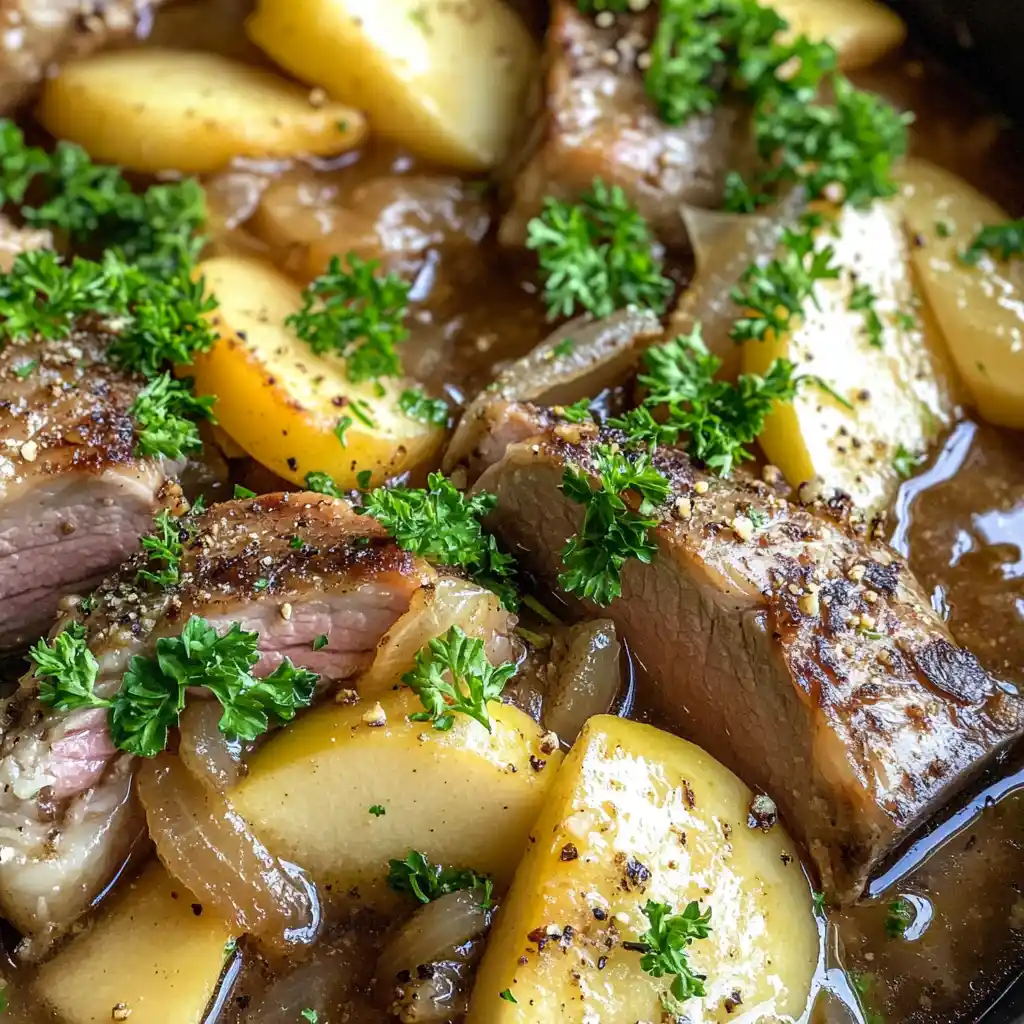
Ingredients
- 1 lb boneless lamb shoulder, cut into 1.5-inch cubes (good marbling is your friend)
- 2 medium apples, peeled, cored, and sliced into thick wedges (use firm, tart varieties)
- 2 cups chicken broth (good quality, low-sodium so you can control seasoning)
- 1 medium onion, chopped (about 1 cup)
- 2 cloves garlic, minced (fresh, not jarred)
- 1 teaspoon ground cinnamon
- 1/2 teaspoon ground nutmeg
- Salt and pepper to taste (be generous—lamb needs good seasoning)
- Fresh parsley, chopped for garnish (don’t skip this—it brightens everything)
Instructions
- Pat the lamb cubes dry with paper towels and season generously on all sides with salt and pepper. Let them sit while you prep the other ingredients.
- Peel, core, and slice your apples into thick wedges, about 1/2 inch wide. Don’t slice them too thin or they’ll completely dissolve during the long cooking time.
- In your largest pot or Dutch oven, combine the seasoned lamb cubes, sliced apples, chicken broth, chopped onion, minced garlic, ground cinnamon, and ground nutmeg. Stir everything together to distribute the spices evenly.
- Season the mixture with additional salt and pepper to taste, keeping in mind that flavors will concentrate as the liquid reduces during cooking.
- Bring the entire mixture to a boil over medium heat, stirring occasionally. This should take about 5-10 minutes depending on your stove.
- As soon as it reaches a boil, immediately reduce the heat to low. You want the gentlest simmer possible—just a few lazy bubbles breaking the surface, not a rolling boil.
- Cover the pot with a tight-fitting lid and let everything simmer gently for 1.5 to 2 hours. Check occasionally to make sure the heat isn’t too high—if it’s boiling aggressively, lower the heat even more.
- Start checking the lamb for tenderness at 1.5 hours by poking it with a fork. When it’s done, it should be so tender it practically falls apart. If it’s still tough, keep simmering and check every 15 minutes.
- Once the lamb is fork-tender and the apples have softened into the sauce, remove the pot from heat. Let it rest for 5-10 minutes—this allows the flavors to settle and the liquid to thicken slightly.
- Serve hot in shallow bowls, making sure everyone gets plenty of lamb, apples, and that gorgeous cooking liquid. Garnish generously with fresh chopped parsley for a bright pop of color and flavor.
Nutrition Information (Per Serving):
- Calories: 320
- Carbohydrates: 18g
- Protein: 28g
- Fat: 15g
- Fiber: 3g
- Sodium: 420mg
- Iron: 3.2mg (18% DV)
- Vitamin B12: 2.5mcg (104% DV)
- Zinc: 5.5mg (50% DV)
This apple lamb recipe provides excellent high-quality protein, significant iron and B12 for energy, plus fiber from apples—all while being naturally gluten-free and full of warming spices.
Notes:
- Gentle heat is crucial. Boiling too hard makes lamb stringy and tough instead of tender. Low and slow is the way to go.
- Every stove has its own personality. What’s “low” on my stove might be different on yours, so watch the bubbles and adjust accordingly.
- Don’t rush the cooking time. Lamb shoulder needs the full 2 hours to break down properly. Start checking at 1.5 hours, but be prepared to go longer if needed.
- Firm apples are essential. Soft, mealy apples turn to complete mush. Use tart varieties that hold their shape during long cooking.
- This gets better with time. The flavors deepen overnight, so don’t stress if you’re eating it the next day—it’ll be even more delicious.
Storage Tips:
Store leftover poached apple lamb in an airtight container in the fridge for up to 4 days. The dish actually tastes better the next day after the flavors meld together. Reheat gently on the stovetop over low heat, adding a splash of chicken broth or water if it’s too thick. You can freeze this for up to 3 months in freezer-safe containers—thaw in the fridge overnight and reheat gently. The apples might get a bit softer after freezing, but the flavor remains excellent.
Serving Suggestions:
- Classic Comfort: Serve over creamy mashed potatoes or buttered egg noodles to soak up the delicious cooking liquid
- Rustic Style: Serve in shallow bowls with crusty bread for dipping into the sauce
- Complete Meal: Pair with roasted Brussels sprouts or green beans for a balanced dinner
- Grain Bowl: Serve over cooked quinoa or rice pilaf for a hearty, filling meal
Mix It Up (Recipe Variations):
Moroccan-Spiced Apple Lamb: Add 1/2 teaspoon ground cumin and a pinch of saffron threads for a North African-inspired version with more complex spice notes.
Honey-Apple Lamb: Stir in 2 tablespoons honey during the last 30 minutes of cooking for extra caramelized sweetness. Add dried apricots for even more fruity complexity.
Herbed Apple Lamb: Add 2-3 sprigs fresh rosemary and thyme to the pot while simmering, then remove before serving for a more savory, herbal version.
Root Vegetable Apple Lamb: Add chunks of carrots, parsnips, and turnips for the last hour of cooking to turn this into a complete one-pot meal with vegetables.
What Makes This Recipe Special:
This poached apple lamb recipe honors centuries-old European cooking traditions where sweet fruits and savory meats were combined to create complex, satisfying dishes. The slow-cooking method is one of the most forgiving techniques in cooking—it’s nearly impossible to mess up as long as you keep the heat low and give it enough time. Unlike fancy restaurant braises that require multiple steps, this rustic one-pot approach delivers tender, flavorful lamb with minimal effort, proving that sometimes the simplest recipes are the most comforting and delicious.
