
Why is it that the most interesting pizzas are always the ones at restaurants with names you can’t pronounce and prices that make you wince? I used to think seafood pizza was strictly for fancy Italian spots until I figured out how to make this restaurant-style cod pizza at home. The first time I pulled it out of the oven my husband actually put his phone down — which in our house is the highest possible compliment. Now it’s on our regular rotation and I’ve genuinely stopped ordering pizza delivery.
Here’s the Thing About This Recipe
What makes this restaurant-style cod pizza work where other seafood pizza attempts fall flat is treating the fish with the same respect you’d give any quality topping. Cod is mild enough that it doesn’t overwhelm the other flavors, but it has enough substance that it doesn’t disappear under the cheese either. Around here, we’ve figured out that seasoning the cod separately before it goes on the pizza — rather than just laying raw fish on top and hoping for the best — is what makes the difference between a gimmicky concept and a genuinely great pie. The garlic powder, salt, and pepper form a light crust on each piece as it bakes, and that little bit of texture is everything.
What You’ll Need (And My Shopping Tips)
Fresh cod is worth the extra few minutes at the fish counter over pre-packaged fillets. Look for flesh that’s bright white with no yellowing or strong fishy smell — Atlantic cod should smell like the ocean, not a fish market at closing time. One 8 oz fillet is exactly right for a 12 oz dough base — any more and the pizza gets waterlogged as the fish releases moisture during baking.
For the pizza dough, store-bought works perfectly and there’s no shame in it (happens more than I’d like to admit that I grab it from the refrigerated section). Just make sure to let it come to room temperature for 20 to 30 minutes before rolling — cold dough fights you every step of the way and springs back the moment you put the rolling pin down.
The pizza stone makes a meaningful difference here. A preheated stone conducts heat directly into the dough base from the first second it touches it, producing that characteristic crispy restaurant-style bottom that a cold baking sheet never quite achieves. If you don’t have one, a heavy baking sheet preheated in the oven does a reasonable job — just know it won’t be quite the same.
Black olives and red onions are the right call for a seafood pizza — both are strong enough to hold their own against the cod without competing with it. Thinly sliced red onions in particular mellow significantly in the oven and lose their sharpness, becoming almost sweet by the time the cheese is melted.
Let’s Make This Together
Get the oven to 450°F with your pizza stone or baking sheet already inside — this is the most important step and the one most people skip. A cold surface going into a hot oven means a doughy, pale-bottomed pizza. Preheat that surface for at least 30 minutes.
Roll the dough on a well-floured surface to your desired thickness, keeping a small raised edge for the crust. Spread the pizza sauce in an even, thin layer, stopping short of the border.
Season the cod fillets generously on both sides with garlic powder, salt, and pepper, then cut into bite-sized pieces — roughly 1-inch chunks distribute more evenly than large pieces and cook more reliably in the short bake time. Scatter the cod pieces over the sauce first, then cover with the mozzarella. Here’s where I used to go wrong — I’d put the cheese down first and the fish on top, which meant the fish dried out and the cheese trapped steam underneath, making the middle soggy. Cheese over fish, always.
Add the olives and red onions, drizzle with olive oil, and carefully transfer to the preheated stone using a pizza peel or the back of a flat baking sheet. Bake 12 to 15 minutes until the crust is golden and the cheese is bubbling with light brown patches. Pull it out, scatter the fresh basil immediately over the hot surface, let it rest two minutes, slice, and serve.
For another creative seafood pizza to add to your rotation, check out this Shrimp Pizza from Station Recipes — a fantastic companion recipe that uses the same technique with a different protein.
If This Happens, Don’t Panic
Center is soggy? The pizza stone wasn’t hot enough, or there was too much sauce. Thin sauce and a fully preheated surface are the two biggest factors in a crispy base. If you notice it mid-bake, slide the pizza directly onto the oven rack for the last 3 minutes to crisp from below.
Cod is dry or rubbery? It overcooked, or the pieces were too small and dried out before the dough was done. Cut the cod into generous 1-inch pieces rather than tiny bits, and make sure the fish goes under the cheese — that layer of mozzarella acts as a moisture shield.
Cheese isn’t browning? Your oven runs cool, or the mozzarella was too wet (fresh mozzarella releases a lot of water — shredded low-moisture mozzarella melts and browns much better for this application). Switch to broil for the last 90 seconds if needed, but watch it constantly.
Crust burning before cheese melts? The oven rack is too low, or the stone absorbed too much heat. Move the rack up one position and reduce temperature to 425°F for the last few minutes.
Ways to Mix It Up
Mediterranean Cod Pizza: Add a handful of cherry tomatoes halved alongside the olives, swap the pizza sauce for a thin layer of hummus as the base, and finish with a crumble of feta over the hot pizza instead of basil. The flavors lean Greek and the result is outstanding.
Spicy Cod Pizza: Add 1/4 tsp of red pepper flakes over the mozzarella layer before baking and drizzle with a chili oil instead of plain olive oil. The heat works beautifully against the mild fish.
White Sauce Cod Pizza: Replace the pizza sauce with a thin layer of garlic cream sauce — mix softened cream cheese with a clove of roasted garlic and a splash of cream. The richness against the cod is indulgent and excellent.
Lemon Herb Cod Pizza: After baking, finish with a squeeze of fresh lemon juice and a scatter of fresh dill alongside the basil. The acidity brightens every flavor on the pizza and makes the cod taste even fresher.
What Makes This Recipe Special
Seafood pizza has deep roots in the coastal regions of Italy, where fishing communities have long topped flatbreads with the day’s catch alongside olive oil, local cheese, and garden herbs. The tradition traveled to Italian-American communities along the Eastern Seaboard, where cod — one of the most abundant and affordable fish in the Atlantic — became a natural pizza topping in coastal restaurants. Learn more about the history and culture of cod and how it shaped food traditions on both sides of the Atlantic. This restaurant-style cod pizza draws directly on that coastal Italian tradition, using the same simple, honest approach: great fish, good dough, quality cheese, and restraint.
Questions I Always Get
Can I use frozen cod for this restaurant-style cod pizza?
Yes — thaw it completely in the fridge overnight and pat it very dry with paper towels before seasoning. Frozen cod holds more water than fresh, and any excess moisture will steam rather than bake, making the pizza wet in the middle. Dry fish is the key step when working with frozen.
Do I need a pizza stone for restaurant-style cod pizza?
A pizza stone gives the best results — that direct, high heat from below is what creates the crispy bottom. A heavy baking sheet preheated in the oven is a decent substitute. A cold, thin baking sheet placed in a cold oven gives the worst results and is the main reason homemade pizza bases disappoint.
How do I transfer the pizza to the hot stone without burning myself?
A pizza peel dusted with cornmeal or flour is the right tool — the fine meal lets the dough slide cleanly. If you don’t have one, build the pizza on parchment paper and slide the whole sheet, paper and all, onto the stone. Pull the parchment out after 5 minutes once the dough has set.
Is this cod pizza recipe beginner-friendly?
The technique is straightforward — the biggest variables are the stone temperature and not overloading the pizza with toppings. If you’ve made homemade pizza before, this follows the same process with the addition of seasoning the fish separately first.
Can I make this restaurant-style cod pizza ahead of time?
You can prep all the components — cook and season the cod pieces, slice the vegetables, shred the cheese — up to a day ahead and refrigerate separately. Assemble and bake fresh. Pre-assembled raw pizza stored in the fridge makes the dough soggy before it ever hits the oven.
What’s the best way to reheat leftover cod pizza?
A dry skillet over medium heat for 3 to 4 minutes with a lid on is the best method — it re-crisps the base and melts the cheese without drying out the fish. The oven at 350°F for 5 minutes also works well. Avoid the microwave, which turns the crust soft and rubbery.
One Last Thing
This restaurant-style cod pizza is the kind of recipe that makes people reconsider everything they thought they knew about what goes on a pizza. The combination of mild, flaky fish with melted mozzarella, briny olives, and fresh basil on a properly crispy crust is genuinely hard to argue with. Make it once on a Friday night and it’ll become your new pizza tradition. You’ve got this.
Print
Restaurant-Style Cod pizza
Description
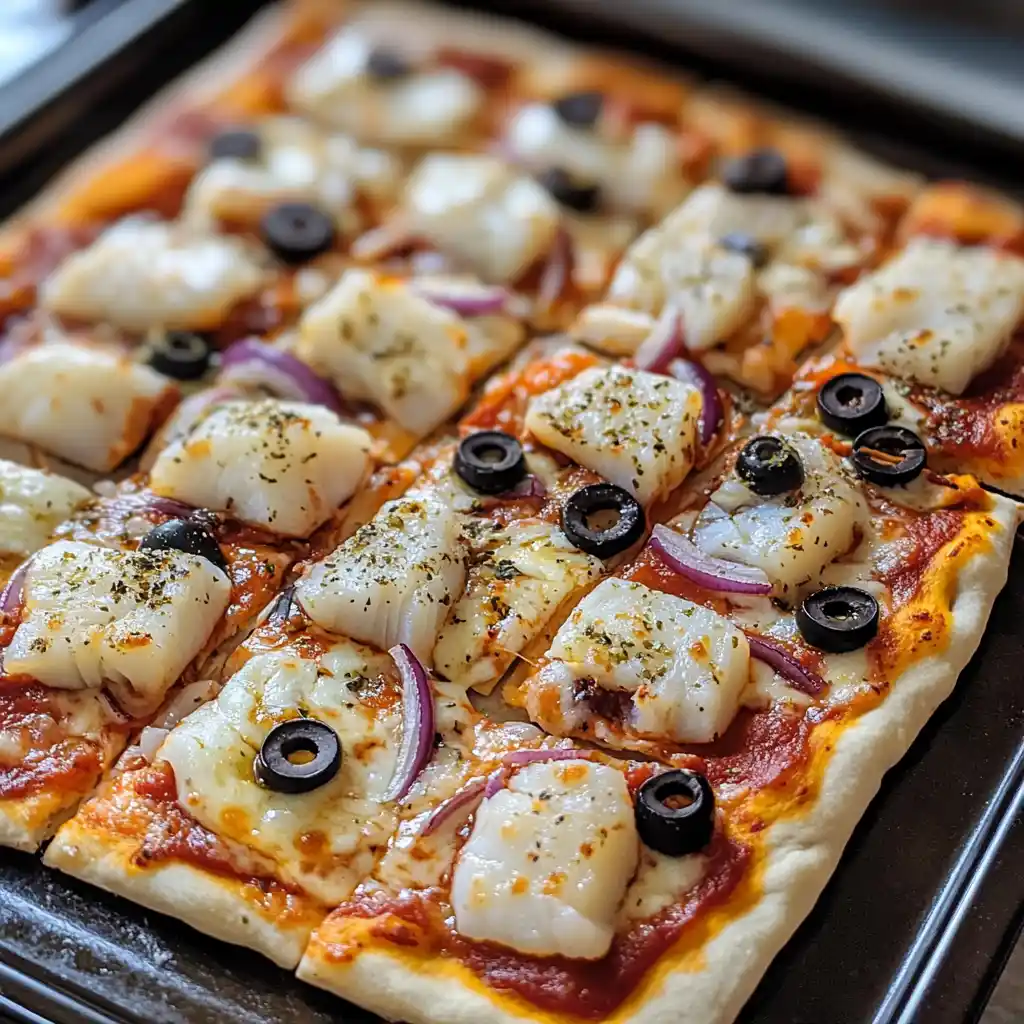
A crispy, golden restaurant-style cod pizza with seasoned fresh cod, mozzarella, black olives, red onions, and fresh basil on a boldly sauced crust — seafood pizza done exactly right.
Prep Time: 15 minutes | Cook Time: 15 minutes | Total Time: 30 minutes | Servings: 4
Ingredients
- 12 oz pizza dough, room temperature
- 8 oz fresh cod fillet
- 1/2 cup pizza sauce
- 1 cup shredded mozzarella cheese (low-moisture for best melt)
- 1/4 cup sliced black olives
- 1/4 cup sliced red onions
- 1/4 cup chopped fresh basil (add after baking)
- 1/4 tsp garlic powder
- Salt and pepper to taste
- Olive oil, for drizzling
Instructions
- Preheat the oven to 450°F (230°C) with a pizza stone or heavy baking sheet inside for at least 30 minutes.
- Roll the pizza dough on a well-floured surface to your desired thickness and shape, forming a small raised edge for the crust.
- Spread the pizza sauce in a thin, even layer over the dough, stopping about 1/2 inch from the edges.
- Season the cod fillet on both sides with garlic powder, salt, and pepper. Cut into 1-inch bite-sized pieces.
- Scatter the seasoned cod pieces evenly over the pizza sauce.
- Cover with the shredded mozzarella, then distribute the black olives and red onions evenly over the top.
- Drizzle lightly with olive oil and season with a pinch of additional salt and pepper if desired.
- Carefully transfer the pizza to the preheated stone or baking sheet. Bake for 12 to 15 minutes until the crust is golden and the cheese is bubbling and beginning to brown.
- Remove from the oven, scatter fresh basil over the hot pizza immediately, rest 2 minutes, slice, and serve hot.
Nutrition Information (Per Serving)
- Calories: 410
- Carbohydrates: 44g
- Protein: 26g
- Fat: 14g
- Fiber: 3g
- Sodium: 810mg
- Calcium: 220mg (17% DV)
- Vitamin B12: 1.2mcg (50% DV)
Note: Nutrition estimates are based on 4 servings. Values will vary based on the specific pizza dough brand and cod fillet size used.
Notes
- Always preheat the pizza stone for at least 30 minutes — this is the single most important step for a crispy restaurant-style base.
- Cod goes under the cheese, not on top. This keeps the fish moist and prevents it from drying out during the high-heat bake.
- Fresh basil always goes on after baking — heat turns it black and bitter within minutes.
- Let the dough rest at room temperature for 20 to 30 minutes before rolling — cold dough is uncooperative and won’t stretch properly.
Storage Tips
- Refrigerator: Store leftover slices in an airtight container for up to 2 days.
- Reheating: Skillet over medium heat with a lid on for 3 to 4 minutes, or oven at 350°F for 5 minutes. Avoid the microwave.
- Freezer: Not recommended with fresh fish — the cod texture degrades significantly after freezing and reheating.
- Do not store unbaked assembled pizza — the sauce will make the dough soggy before it reaches the oven.
Serving Suggestions
- A simple arugula salad with lemon dressing alongside for a complete meal
- Sliced into smaller squares and served as an appetizer or party snack
- A side of garlic butter for dipping the crust
- Paired with a sparkling water with citrus for a light, refreshing combination
Mix It Up (Recipe Variations)
Mediterranean Cod Pizza: Use hummus as the base instead of pizza sauce; finish with crumbled feta and cherry tomatoes.
Spicy Cod Pizza: Add red pepper flakes over the cheese layer; drizzle with chili oil after baking.
White Sauce Cod Pizza: Replace pizza sauce with garlic cream sauce made from cream cheese and roasted garlic.
Lemon Herb Cod Pizza: Finish with a squeeze of fresh lemon juice and fresh dill alongside the basil for a bright, coastal flavor.
What Makes This Recipe Special
The restaurant-quality result of this cod pizza comes from three deliberate choices: the high oven temperature, the preheated baking surface, and seasoning the fish as a separate step before assembly. Together, they replicate exactly what a pizzeria’s deck oven does — intense, direct heat from below that crisps the dough from the first contact, and a short enough bake time that the cod stays tender and moist beneath the cheese. It’s the kind of technique that, once you understand why it works, changes how you approach every pizza you make from this point forward.
