
Ever wonder why restaurant salsa tastes so much better than the jarred stuff from the grocery store? I used to think making authentic roasted salsa verde was complicated Mexican cooking territory until I realized it’s literally just broiling vegetables and throwing them in a blender. Now my family refuses to eat store-bought salsa, and I’m pretty sure my neighbor thinks I’m some kind of salsa genius (if only she knew I just learned to char some tomatillos and call it a day).
Here’s the Thing About This Recipe
The secret to perfect roasted salsa verde isn’t some fancy technique—it’s honestly just getting those tomatillos and jalapeños properly charred under the broiler so they develop that smoky, complex flavor. Here’s what I’ve learned the hard way: you want actual char spots, not just lightly warmed vegetables, and those tomatillos need to be nice and soft before you blend them. Around here, we’ve figured out that roasting the garlic in its peel keeps it from burning while it gets all sweet and mellow, and that fresh lime juice at the end is what makes everything pop. The cilantro adds freshness, and the whole thing comes together in about 20 minutes. It’s honestly that simple, and once you taste homemade salsa verde, you’ll never go back to the jarred stuff.
What You’ll Need (Don’t Stress About This!)
Good fresh tomatillos are worth hunting down at your grocery store or Mexican market—look for firm ones with tight-fitting husks that aren’t too sticky. I learned this after buying sad, shriveled tomatillos twice and wondering why my salsa tasted weird. Tomatillos look like little green tomatoes wrapped in papery husks, and they have this tangy, almost citrusy flavor that’s completely different from regular tomatoes.
Don’t cheap out on the jalapeños—you want fresh ones with smooth, firm skin. If you like spicy salsa, leave the seeds in; if you want it milder, remove them after roasting. A whole white onion (not yellow or red) is traditional for salsa verde because it has the right balance of sweetness and sharpness.
Fresh cilantro is a must—that dried stuff in the spice aisle just doesn’t work here. I always grab an extra bunch because my family eats this salsa on everything and I end up making double batches. Fresh lime juice (not bottled) makes such a difference—happens more than I’d like to admit that I’ve tried the bottled stuff and it just tastes flat.
Let’s Make This Together
Start by cranking your broiler to high and positioning your oven rack about 6 inches from the heat. While that’s heating up, remove the husks from your tomatillos and rinse them—they’ll be a bit sticky, which is normal. Here’s where I used to mess up: I’d forget to rinse them and wonder why my salsa had a weird texture.
Place your tomatillos, quartered onion, jalapeños, and unpeeled garlic cloves on a baking sheet. You don’t need oil or anything, just throw them on there. Slide it under the broiler for 5-7 minutes until everything’s getting nice and charred. You want to see black spots—that’s where the flavor lives. Flip everything over and broil for another 5-7 minutes on the other side.
Pull it out and let everything cool for a few minutes until you can handle it. Peel those garlic cloves—they should slip right out of their skins now. If you want a milder salsa, this is when you can cut open the jalapeños and scrape out the seeds. I usually leave about half the seeds in for a medium heat level.
Toss everything into a blender—the roasted vegetables, peeled garlic, fresh cilantro, lime juice, and a good pinch of salt. Blend until it’s as smooth or chunky as you like. I prefer mine slightly chunky, so I pulse it instead of just letting it run. Taste it and adjust the salt—you’ll probably need more than you think. If you’re looking for the perfect way to use this salsa, my Fish Tacos with Mango Slaw are absolutely transformed by a generous drizzle of this green goodness.
When Things Go Sideways (And How to Fix Them)
Salsa is too watery and thin? Your tomatillos released too much liquid, or you over-blended. In reality, I’ve learned to let it sit for 10 minutes—it’ll thicken up as the tomatillos’ natural pectin works. If it’s still too thin, add a pinch of salt which helps it gel, or strain off a little liquid.
Not enough char flavor? You didn’t broil the vegetables long enough or your broiler wasn’t hot enough. Don’t panic—next time, really let those tomatillos get dark and blistered. I wait until I see actual black spots before flipping. Some ovens’ broilers are wimpy, so you might need to go longer than 7 minutes per side.
Salsa is too spicy? You left in too many jalapeño seeds or your peppers were particularly hot. This is totally fixable—blend in an extra tomatillo or two to dilute the heat, or add a tiny bit of sugar to balance it out. I always taste a small piece of the roasted jalapeño before adding it to gauge the heat level.
Salsa tastes flat or bland? You didn’t add enough salt or lime juice. Those two ingredients are what make salsa verde sing. Keep tasting and adjusting until it pops. I usually end up adding more lime juice than the recipe calls for because I like it extra tangy.
When I’m Feeling Creative
Avocado Salsa Verde: Blend in half an avocado for a creamy, rich version that’s incredible on tacos. Around Cinco de Mayo, I’ll make this version and it’s always a hit.
Smoky Chipotle Salsa Verde: Add one canned chipotle pepper in adobo sauce for a smoky, spicy kick that’s absolutely addictive.
Roasted Garlic Salsa Verde: Use 6 cloves of garlic instead of 3 for a more robust, garlicky flavor. When I’m feeling fancy, this version shows up with carnitas and people lose their minds.
Pineapple Salsa Verde: Add 1/2 cup roasted fresh pineapple chunks for a sweet-tangy tropical twist that’s amazing with fish or shrimp.
What Makes This Recipe Special
Roasting or broiling vegetables before making salsa develops complex flavors through the Maillard reaction—those charred spots create sweetness, smokiness, and depth that you simply can’t get from raw vegetables. Tomatillos are naturally tangy and slightly acidic, and when you roast them, their tartness mellows while their natural sugars caramelize. This is why authentic Mexican salsa verde tastes so different from the raw green salsa you might find in some restaurants. The roasted garlic becomes sweet and mellow instead of sharp and pungent, and the charred jalapeños develop this smoky heat that’s way more interesting than raw pepper heat. It’s a simple technique that completely transforms humble ingredients into something restaurant-quality.
Things People Ask Me About This Recipe
Can I make this roasted salsa verde ahead of time?
Absolutely! It actually gets better after sitting in the fridge for a few hours as the flavors marry together. Store it in an airtight container for up to 5 days in the fridge, or freeze it for up to 3 months. Just give it a good stir before serving.
What if I can’t find tomatillos for this salsa verde?
Tomatillos are pretty essential for authentic salsa verde—they have a unique tangy flavor that’s hard to replicate. But in a pinch, you could use green tomatoes (the unripe kind). It won’t taste exactly the same, but it’ll still be good.
How spicy is this roasted salsa verde?
It depends on your jalapeños and whether you keep the seeds. With seeds in two jalapeños, it’s medium heat. Remove the seeds for mild, or add an extra jalapeño with seeds for spicy. I always taste a bit of the roasted pepper before adding it to gauge the heat.
Can I roast the vegetables on the grill instead of broiling?
Yes! Grilling gives even better smoky flavor. Just char them over medium-high heat, turning occasionally, until they’re blistered and softened. It’ll take about 10-15 minutes total.
Is this roasted salsa verde beginner-friendly?
Totally! If you can broil vegetables and use a blender, you’ve got this. The hardest part is waiting for things to char properly, but that’s mostly just patience, not skill.
Can I make this without cilantro?
You can, but it’ll taste different—cilantro is pretty traditional in salsa verde. If you’re one of those people for whom cilantro tastes like soap, try substituting fresh parsley or just leave it out entirely. The salsa will still be delicious, just less traditionally Mexican.
Before You Head to the Kitchen
I couldn’t resist sharing this roasted salsa verde recipe because it’s genuinely the condiment that made me realize I could make restaurant-quality Mexican food at home without any special equipment or hard-to-find ingredients. The best salsa verde nights are when I make a giant batch and we spend the week putting it on literally everything—tacos, eggs, grilled chicken, straight-up chips at midnight. Give it a try, and don’t be surprised when store-bought salsa starts tasting boring and one-dimensional in comparison.
Print
Roasted Salsa Verde
Description
Authentic roasted salsa verde with charred tomatillos, jalapeños, and garlic—smoky, tangy Mexican green salsa that’s perfect with chips, tacos, or pretty much everything.
Prep Time: 10 minutes | Cook Time: 15 minutes | Total Time: 25 minutes | Servings: 2 cups (about 8 servings)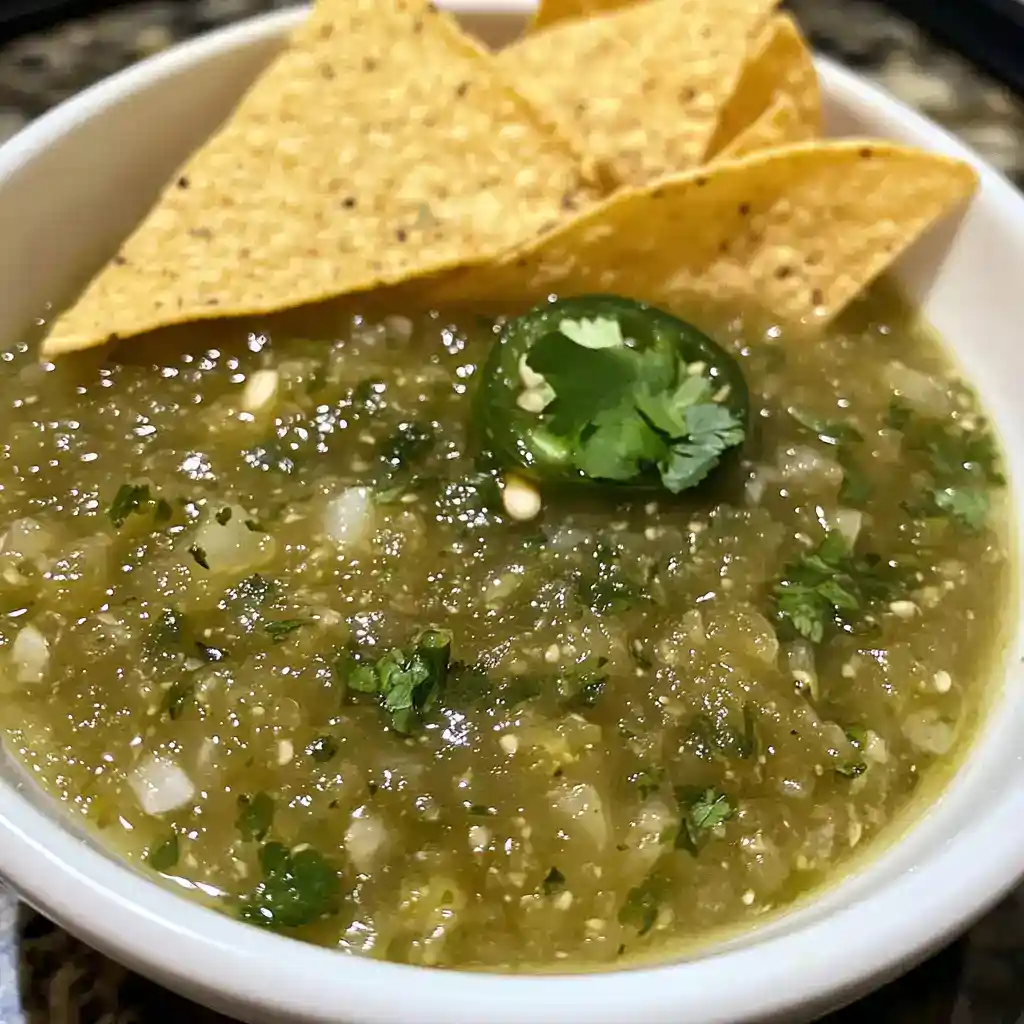
Ingredients
- 1 lb tomatillos, husks removed and rinsed (about 8–10 medium tomatillos)
- 1 white onion, peeled and quartered
- 2 jalapeños (leave seeds in for spicy, remove for mild)
- 3 cloves garlic, unpeeled (roasting in the peel keeps them from burning)
- 1/4 cup fresh cilantro, roughly chopped
- 1 lime, juiced (from an actual lime, not a bottle!)
- Salt to taste (probably more than you think—start with 1/2 teaspoon)
Instructions
- Crank your broiler to high and position the oven rack about 6 inches from the heat. While it’s heating up, remove the papery husks from your tomatillos and give them a good rinse—they’ll be sticky.
- Place the tomatillos, quartered onion, jalapeños, and unpeeled garlic cloves on a baking sheet. No oil needed, just throw them on there.
- Slide it under the broiler for 5-7 minutes until everything’s getting nice char spots—you want to see black, blistered areas. That’s where the flavor lives.
- Flip everything over and broil for another 5-7 minutes on the other side. You’re looking for softened, charred vegetables that smell amazing.
- Pull it out and let it cool for a few minutes until you can handle everything. Peel the garlic cloves—they should slip right out of their skins. If you want milder salsa, cut open the jalapeños and scrape out the seeds now.
- Toss everything into a blender—all those beautiful charred vegetables, peeled garlic, fresh cilantro, lime juice, and a good pinch of salt.
- Blend until it reaches your preferred consistency. I like mine slightly chunky, so I pulse it. Taste and adjust the salt—you’ll probably need more than you think.
- Let it sit for at least 10 minutes before serving. It’ll thicken up and the flavors will come together.
Nutrition Information (Per 1/4 cup serving):
- Calories: 25
- Carbohydrates: 5g
- Protein: 1g
- Fat: 0.5g
- Fiber: 1g
- Sodium: 150mg (varies with salt added)
- Vitamin C: 8mg (9% DV)
- Vitamin K: 6mcg (5% DV)
Tomatillos are low in calories and packed with vitamin C and antioxidants. This is basically a vegetable condiment, so pile it on without guilt.
Notes:
- Don’t skip the charring step—that’s where all the smoky flavor comes from.
- Every broiler is different, so watch your vegetables closely. Some take longer to char.
- Taste a small piece of roasted jalapeño before adding to gauge heat level.
- The salsa thickens as it sits, so don’t worry if it seems thin at first.
- If your blender is struggling, add a tablespoon or two of water to help it along.
Storage Tips:
Store in an airtight container in the fridge for up to 5 days. The flavor actually improves after a day as everything melds together. Freeze in ice cube trays or small containers for up to 3 months—perfect for adding a spoonful to soups or sauces later.
Serving Suggestions:
- With tortilla chips for the classic chips and salsa situation
- On fish or shrimp tacos for that authentic Mexican street food experience
- With scrambled eggs or breakfast burritos to start your day right
- As a marinade for chicken or pork before grilling
Mix It Up (Recipe Variations):
Creamy Avocado Salsa Verde: Blend in half a ripe avocado for a rich, creamy version that’s incredible on everything.
Smoky Chipotle Salsa Verde: Add 1 canned chipotle pepper in adobo sauce for extra smoky heat that’s dangerously addictive.
Extra-Garlicky Salsa Verde: Use 6 cloves of garlic instead of 3 for a more robust, punchy flavor.
Pineapple Salsa Verde: Roast 1/2 cup fresh pineapple chunks with the vegetables for a sweet-tangy tropical twist.
What Makes This Recipe Special:
Roasting vegetables before making salsa is a traditional Mexican technique that completely transforms their flavor through caramelization and the Maillard reaction. Those charred spots aren’t just for looks—they create complex, smoky sweetness that you can’t achieve with raw ingredients. Tomatillos, the star of salsa verde, are naturally tangy and slightly acidic, and roasting mellows that tartness while concentrating their bright, citrusy flavor. The roasted garlic becomes sweet and mellow, the jalapeños develop smoky heat, and the onions caramelize beautifully. This simple broiling step is what separates authentic, restaurant-quality salsa verde from the basic green salsa you might find in jars.
