
Ever wonder why restaurant vegetables taste so much better than homemade ones? I used to think perfectly caramelized roasted squash required some kind of chef’s secret until I discovered this foolproof recipe. Now I make this golden, sweet side dish at least twice a week, and honestly, my picky-eater kids actually request “the orange stuff” for dinner (which feels like a parenting miracle, especially since the first time I made it, I cut the pieces way too big and ended up with half-raw, half-burnt cubes that nobody would touch).
Here’s the Thing About This Recipe
What makes roasted butternut squash work so beautifully is high heat that caramelizes the natural sugars while keeping the inside tender and creamy. I learned the hard way that you can’t just toss squash in the oven at any temperature and expect magic—too low and it steams instead of roasts, too high and the outside burns before the inside cooks. This simple veggie side uses minimal seasonings so the sweet, nutty flavor of the squash really shines through. It’s honestly that simple once you understand the importance of even-sized pieces and proper spacing on the pan, and no fancy equipment needed beyond a decent knife.
What You’ll Need (And My Shopping Tips)
Good butternut squash is worth choosing carefully—look for one that feels heavy for its size with a hard, matte skin (shiny means it’s underripe). Don’t cheap out on a squash that has soft spots or looks wrinkly because it’ll taste watery and weird (happens more than I’d like to admit when I grab whatever’s on sale without checking). The neck of the squash (the long part) is easier to peel and has fewer seeds than the bulbous bottom.
Olive oil should be decent quality, but you don’t need expensive extra virgin here since you’re roasting at high heat. I always use regular olive oil or avocado oil for roasting. Fresh garlic powder and onion powder make a difference—if they’re clumped together in the jar from moisture, replace them because they’ve lost potency.
Paprika adds a subtle warmth and gorgeous color without making things spicy. I use sweet paprika, not smoked, though smoked paprika is amazing if you want a deeper flavor. Fresh parsley for garnish is optional but makes everything look restaurant-pretty. I always grab an extra squash because once people taste this, they want seconds.
For more details on selecting and preparing butternut squash, check out this guide to winter squash from Food Network.
Let’s Make This Together
Start by cranking your oven to 400°F and lining a large baking sheet with parchment paper. Here’s where I used to mess up—I’d skip the parchment thinking it didn’t matter, then spend 20 minutes scraping caramelized squash bits off the pan. Learn from my mistakes.
Now tackle that squash. Cut off the top and bottom first so it sits flat and stable—this is a safety thing because squash is hard and your knife can slip. Peel it with a sturdy vegetable peeler or sharp knife, then cut it in half lengthwise. Scoop out the seeds and stringy bits with a spoon (save those seeds to roast separately if you’re feeling ambitious). Cut the squash into roughly 1-inch cubes—this size is crucial because bigger pieces won’t cook through, and smaller pieces will burn before caramelizing.
Toss the cubed squash in a large bowl with olive oil, garlic powder, onion powder, paprika, salt, and pepper. Here’s my secret: use your hands to mix everything thoroughly so every piece gets coated. Don’t be me—I used to toss with spoons and ended up with some plain pieces and some over-seasoned ones.
Spread the seasoned squash in a single layer on your prepared baking sheet, making sure pieces aren’t touching or overlapping. This is absolutely critical—crowded squash steams instead of roasts, and you’ll end up with mushy vegetables instead of caramelized perfection. I learned this trick from restaurant cooks who always emphasize giving vegetables space to breathe.
Slide into the oven and roast for 25-30 minutes, but set a timer to flip them at the halfway point (around 12-15 minutes). Use a spatula to turn the pieces so different sides get contact with the hot pan. You want them tender when pierced with a fork and golden brown with caramelized edges.
Transfer to a serving dish, shower with fresh chopped parsley, and serve hot. For another delicious fall vegetable side that pairs perfectly with this, try these Roasted Brussels Sprouts that use similar simple seasonings.
If This Happens, Don’t Panic
Squash turned mushy instead of caramelized? Your oven wasn’t hot enough, or you overcrowded the pan. In reality, I’ve learned to use two baking sheets if I’m roasting a lot, giving everything room to roast properly. This is totally fixable next time—just spread them out more and make sure your oven is fully preheated.
Squash still hard and undercooked? Don’t panic—your pieces were cut too large, or you pulled them out too early. If this happens (and it will), just pop them back in the oven for another 5-10 minutes. Check with a fork—it should pierce easily when they’re done.
Squash stuck to the pan? You skipped the parchment paper or didn’t use enough oil. Always line your pan—it makes cleanup so much easier too, and prevents that annoying scraping situation.
Some pieces burned while others are undercooked? Your pieces weren’t uniform in size. Try to cut them all roughly the same so they cook evenly. The smaller pieces always cook faster, so either cut everything the same or pull the smaller ones out early.
When I’m Feeling Creative
Maple Cinnamon Squash: When I’m feeling fancy, I skip the savory spices and toss the squash with maple syrup, cinnamon, and a pinch of nutmeg. It’s like autumn on a plate and pairs beautifully with roasted chicken.
Spicy Roasted Squash: Add 1/2 teaspoon cayenne pepper or red pepper flakes to the seasoning mix for a kick. My husband requests this version every time because he can’t resist spicy food.
Parmesan Crusted: Around the holidays, I’ll toss the hot roasted squash with freshly grated Parmesan cheese right when it comes out of the oven. The cheese melts slightly and creates this amazing savory coating.
Herb Roasted: Use fresh herbs like thyme or rosemary instead of the spice blend for a more sophisticated flavor. This version feels fancy enough for company.
Why This Works So Well
This roasted butternut squash captures the essence of simple vegetable preparation that lets natural flavors shine. Butternut squash has been cultivated in the Americas for thousands of years, though the modern butternut variety was developed in the 1940s. What sets roasted squash apart from boiled or steamed versions is the caramelization that happens at high heat—the natural sugars in the squash brown and develop complex, sweet flavors that steaming can’t achieve. The technique of cutting uniform pieces and roasting in a single layer ensures even cooking and maximum caramelization. The nutritional benefits of winter squash include exceptional amounts of vitamin A, fiber, and potassium, making this both a delicious and genuinely healthy side dish.
Things People Ask Me About This Recipe
Can I make this roasted squash ahead of time?
You can prep the cubed squash up to a day ahead and store it in the fridge, but roasting is best done right before serving. That said, leftovers reheat pretty well in a 350°F oven for about 10 minutes. The texture won’t be quite as perfect as fresh, but it’s still tasty.
What if I can’t find butternut squash?
Use acorn squash, delicata squash, or even sweet potatoes cut into cubes. The cooking time and technique stay the same. I rotate through different squash varieties all fall and winter using this exact method.
Can I use pre-cut butternut squash?
Absolutely! Those packages of pre-cut squash from the produce section are a huge time-saver, though they cost more. Just make sure the pieces are roughly uniform in size, and cut any really large ones down so everything cooks evenly.
Is this recipe beginner-friendly?
Totally. If you can cut vegetables and toss them with oil, you’ve got this. The hardest part is peeling and cutting the raw squash, which gets easier with practice. A sharp knife and a stable cutting board make all the difference.
How do I know when the squash is done?
It should be fork-tender—meaning a fork pierces it easily—and have golden-brown, caramelized edges. If you’re unsure, taste a piece. It should be creamy inside and slightly sweet, not crunchy or bland.
What’s the best way to peel butternut squash?
Use a sturdy vegetable peeler or a sharp knife. Cut off the ends first so it sits flat, then work in downward strokes. Some people microwave the whole squash for 2-3 minutes to soften the skin slightly first, which makes peeling easier.
Why I Had to Share This
I couldn’t resist sharing this because roasted squash shouldn’t be intimidating, and it’s honestly one of the easiest ways to get vegetables on the table that everyone actually enjoys. The best dinner nights are when you pull this golden, caramelized squash from the oven and even the veggie-resistant people reach for seconds. You’ve totally got this.
Print
Roasted Squash
Description
Golden, caramelized cubes of butternut squash seasoned with simple spices and roasted to perfection—this easy roasted squash is the ultimate fall side dish that’s healthy, delicious, and satisfying.
Prep Time: 15 minutes | Cook Time: 30 minutes | Total Time: 45 minutes | Servings: 4-6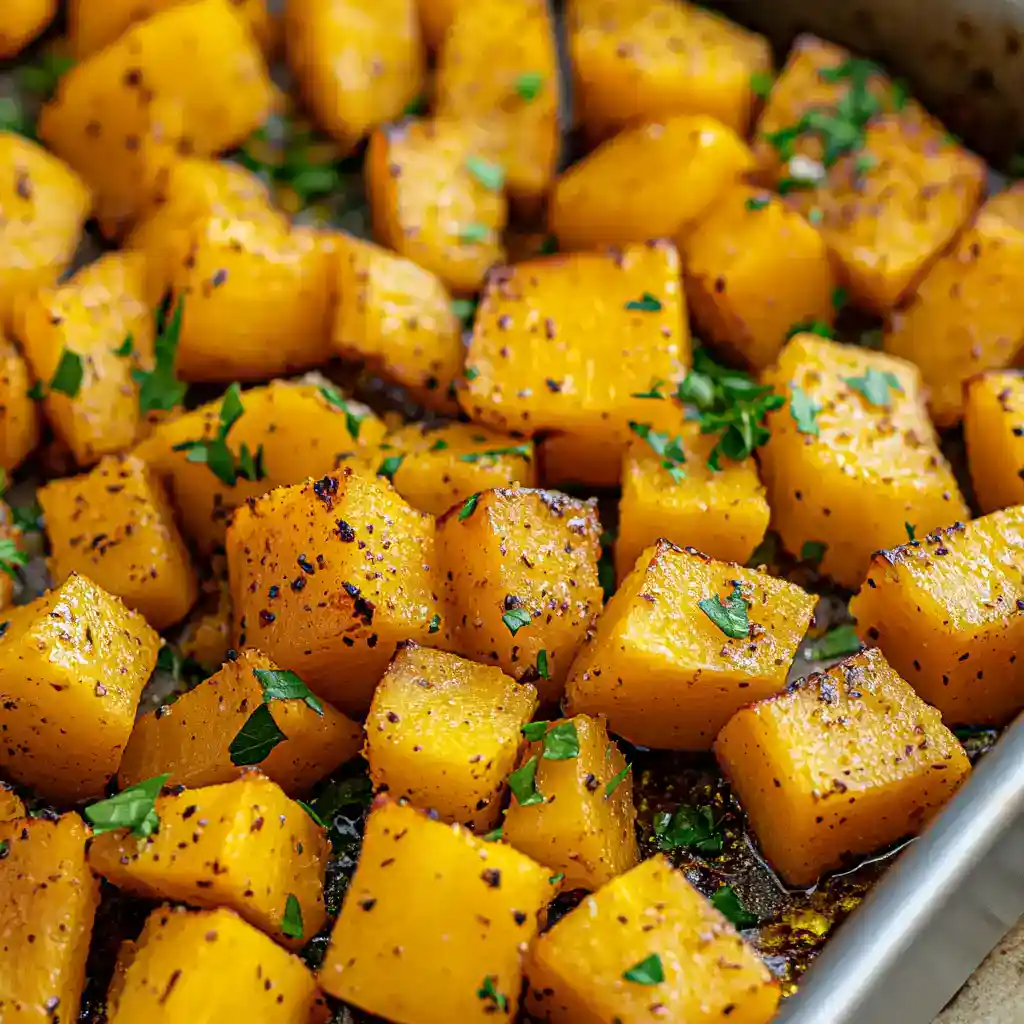
Ingredients
- 1 medium butternut squash (about 2–3 lbs), peeled, seeded, and cubed into 1-inch pieces
- 2 tablespoons olive oil (or avocado oil)
- 1 teaspoon garlic powder
- 1 teaspoon onion powder
- 1/2 teaspoon paprika (sweet, not smoked)
- 1/2 teaspoon salt (start with this and add more to taste)
- 1/4 teaspoon black pepper
- Fresh parsley, chopped for garnish (optional but pretty)
Instructions
- Crank your oven to 400°F and line a large baking sheet with parchment paper. Don’t skip this step or you’ll be scraping caramelized bits off the pan later.
- Prep your squash: Cut off the top and bottom so it sits flat. Use a sturdy vegetable peeler or sharp knife to remove the skin, working in downward strokes. Cut the squash in half lengthwise and scoop out the seeds and stringy bits with a spoon.
- Cut the squash into roughly 1-inch cubes. Try to keep them uniform in size so they cook evenly—this matters more than you’d think.
- Toss the cubed squash in a large bowl with olive oil, garlic powder, onion powder, paprika, salt, and pepper. Use your hands to mix everything thoroughly so every piece gets coated with the seasoning. Don’t be shy about getting in there.
- Spread the seasoned squash in a single layer on your prepared baking sheet, making sure pieces aren’t touching or overlapping. Give them breathing room—crowded squash steams instead of roasts, and you want that caramelized goodness.
- Slide into the preheated oven and roast for 25-30 minutes total. Set a timer for 12-15 minutes to flip them at the halfway point. Use a spatula to turn the pieces so different sides get contact with the hot pan.
- The squash is done when it’s fork-tender and golden brown with caramelized edges. Some pieces might have darker spots—that’s the delicious caramelization you’re after.
- Transfer to a serving dish and sprinkle with fresh chopped parsley if you have it. Serve hot as a side dish that’ll make everyone forget they’re eating vegetables.
Nutrition Information (Per Serving):
- Calories: 110
- Carbohydrates: 20g
- Protein: 2g
- Fat: 5g
- Fiber: 3g
- Sodium: 200mg
- Vitamin A: 240% DV
- Vitamin C: 35% DV
- Potassium: 15% DV
- Magnesium: 10% DV
This roasted squash provides exceptional vitamin A for eye health and immune function, plus fiber and potassium. It’s naturally low in calories while being satisfying and nutrient-dense.
Notes:
- Cut pieces roughly the same size (about 1-inch cubes) so they cook evenly. Bigger pieces won’t cook through, smaller ones will burn.
- Don’t crowd the pan—use two baking sheets if you’re roasting a lot. Vegetables need space to caramelize properly.
- Every oven runs differently, so start checking at 25 minutes. You want fork-tender squash with golden-brown edges.
- The hardest part is peeling and cutting the raw squash. A sharp knife makes this much safer and easier.
- Fresh parsley is optional but adds a nice color contrast and fresh flavor.
Storage Tips:
Store leftover roasted squash in an airtight container in the refrigerator for up to 5 days. Reheat in a 350°F oven for about 10 minutes to restore some of the texture, or microwave for 1-2 minutes though it won’t be as crispy. The squash tastes great cold in salads too. Don’t freeze roasted squash—it gets mushy and weird when thawed.
Serving Suggestions:
- Classic Side: Serve alongside roasted chicken, grilled steak, or baked fish
- Grain Bowl: Toss with quinoa, chickpeas, and greens for a healthy lunch bowl
- Salad Addition: Add to mixed greens with pecans, goat cheese, and balsamic vinaigrette
- Pasta Mix-In: Toss with pasta, sage, and brown butter for an easy fall dinner
Mix It Up (Recipe Variations):
- Maple Cinnamon Squash: Skip savory spices and toss with maple syrup, cinnamon, and nutmeg for a sweet version
- Spicy Roasted: Add 1/2 teaspoon cayenne pepper or red pepper flakes to the seasoning for heat
- Parmesan Crusted: Toss hot roasted squash with freshly grated Parmesan cheese right out of the oven
- Herb Roasted: Use fresh thyme or rosemary instead of the spice blend for a sophisticated flavor
What Makes This Recipe Special:
This roasted butternut squash uses high-heat roasting to caramelize the natural sugars in the squash, creating complex, sweet flavors that steaming or boiling can’t achieve. The technique of cutting uniform pieces and roasting in a single layer ensures even cooking and maximum caramelization on all sides. The simple seasoning lets the squash’s natural sweet, nutty flavor shine while adding just enough savory depth to make it irresistible.
