
Ever wonder why fresh spring rolls at Vietnamese restaurants taste so much more vibrant and satisfying than the ones you attempt at home? I used to think creating those beautiful, translucent rolls required some kind of professional rolling technique until I discovered this foolproof seasonal spring rolls recipe. Now my family devours these colorful, herb-packed rolls at every gathering, and I’m pretty sure my friends think I’ve been secretly training at a Vietnamese cooking school (if only they knew I literally just soak rice paper and pile on fresh ingredients—the whole thing takes 20 minutes and looks like edible art that belongs in a food magazine).
Here’s the Thing About These Spring Rolls
What makes these seasonal spring rolls work is the generous amount of fresh herbs inside—you’re getting mint, basil, and cilantro all at once, which creates a complexity that makes each bite taste like spring in the most literal sense. I learned the hard way that skimping on herbs gives you bland, uninspiring rolls that taste like a sad salad wrapped in plastic. The rice noodles provide satisfying substance, the avocado adds creamy richness, and the colorful vegetables bring crunch that contrasts beautifully with the soft wrapper. It’s honestly that simple—fresh ingredients, proper rolling technique, and good peanut sauce.
What You’ll Need (And My Shopping Tips)
Good rice paper wrappers are your foundation here—look for wrappers that are completely intact with no cracks or broken pieces. Don’t be me—I used to grab whatever brand was cheapest without checking for damage, and ended up with torn, unusable wrappers three times before I figured out that quality and intact packaging matters enormously. Look for wrappers that are bright white and completely round (happens more than I’d like to admit that I forget to check packages for broken pieces before buying).
The fresh herbs matter more than anything else in this recipe. I always buy herbs the day I plan to make these because wilted herbs taste bitter and look terrible inside clear wrappers. For the rice noodles, thin vermicelli works best—cook them according to package directions, then rinse with cold water to stop cooking. A perfectly ripe avocado that gives gently when pressed is essential—underripe avocado is flavorless and hard. The cucumber should be seedless or English cucumber for less water content. Good peanut sauce for dipping is non-negotiable—homemade is best but store-bought works when you’re short on time.
Let’s Make This Together
Start by cooking your rice noodles and preparing all your vegetables and herbs before you start rolling—this is called mise en place and it makes the rolling process smooth and enjoyable instead of stressful. Here’s where I used to mess up: I’d start rolling before everything was ready and end up with soggy wrappers waiting while I frantically sliced vegetables.
Set up your rolling station with a large bowl of warm water, your clean work surface, and all your prepared ingredients within arm’s reach. Here’s my secret: the water should be warm but not hot—too hot makes the wrappers too soft and tear-prone, too cold and they stay stiff and crack.
Dip one rice paper wrapper into the warm water for just a few seconds—about 5-7 seconds. The wrapper should feel slightly soft but still have some firmness when you lay it on your surface. Here’s the crucial technique that changed everything for me: it will continue softening on your work surface, so pull it out while it’s still slightly firmer than you want. Just like my Vietnamese pho, patience and attention to timing makes all the difference.
Lay the wrapper flat and place your fillings in the lower third of the wrapper, not the center—a small handful of noodles first as your base, then carrots, cucumber, bell pepper, avocado, and finally your herbs on top. Here’s my secret for beautiful rolls: place the prettiest ingredients against the wrapper at the bottom so they show through the translucent paper.
Fold the bottom edge up over the filling, fold in both sides firmly, then roll forward tightly and steadily. I learned this rolling technique from a Vietnamese cooking class I took years ago—consistent, firm pressure creates tight rolls that hold together instead of falling apart when you bite in.
If This Happens, Don’t Panic
Wrapper tearing when you try to roll? You probably soaked it too long or overfilled it. In reality, I’ve learned that less filling is more—you can always dip in peanut sauce but you can’t unstuff a roll. If the wrapper is sticking to your work surface (and it will if you don’t work somewhat quickly), don’t panic—just peel it up gently and keep rolling. A damp work surface helps prevent sticking.
Roll falling apart when you cut or pick it up? You probably didn’t roll tightly enough or the wrapper was too soft before rolling. I always apply firm, consistent pressure throughout the entire roll now. If the avocado is browning before you finish making all the rolls, just squeeze a little lime juice over it to prevent oxidation—happens to everyone when making large batches.
Ways to Mix It Up
When I’m feeling fancy, I’ll make Mango and Shrimp Spring Rolls by adding sliced ripe mango and cooked shrimp for a more substantial, tropical version. Around summer, I’ll do a Peach and Basil Version with sliced fresh peaches, Thai basil, and a ginger-lime dipping sauce.
For Rainbow Spring Rolls, I sometimes arrange the vegetables in color order—purple cabbage, orange carrots, yellow bell pepper, green cucumber, and red bell pepper—for a stunning visual effect. My favorite lazy variation is the Simple Avocado and Herb Rolls—skip the noodles when I’m out and just fill with avocado and herbs for a lighter, lower-carb version.
What Makes This Recipe Special
These seasonal spring rolls draw from the Vietnamese tradition of gỏi cuốn—fresh, unfried spring rolls that celebrate raw ingredients in their purest form. What sets these apart from fried spring rolls is the complete transparency of rice paper wrappers, which showcases the beautiful colors and textures of the ingredients inside. The combination of cooling fresh herbs like mint, basil, and cilantro with crunchy vegetables and creamy avocado creates a dish that’s simultaneously light and satisfying, proving that the most beautiful food often requires no cooking at all—just quality, seasonal ingredients assembled thoughtfully.
Things People Ask Me About This Recipe
Can I make these seasonal spring rolls ahead of time?
You can make them up to 2 hours ahead—cover with a damp paper towel and plastic wrap to prevent drying. Don’t refrigerate for more than a few hours or the wrappers become tough and chewy.
What if my rice paper wrappers keep tearing?
Make sure your water is warm not hot, don’t soak too long (5-7 seconds maximum), and don’t overfill. Each brand of rice paper behaves slightly differently so there’s a small learning curve.
Are these seasonal spring rolls filling enough for a meal?
Two to three rolls per person with peanut sauce makes a satisfying light meal. Add extra noodles and avocado if you want more substance, or serve alongside soup for a complete dinner.
Can I substitute different vegetables based on what’s seasonal?
Absolutely! These are called seasonal spring rolls for a reason—use whatever looks best at your market. Mango, thinly sliced beets, shredded purple cabbage, or blanched asparagus all work beautifully.
Are these seasonal spring rolls beginner-friendly?
Your first roll probably won’t be pretty—and that’s completely normal. The technique clicks after 2-3 rolls and by the end of the batch you’ll be rolling like a pro.
Why does my peanut sauce taste flat?
Store-bought peanut sauce often needs brightening with fresh lime juice and a pinch of salt. If making homemade, the key is balancing salty, sweet, sour, and spicy elements.
Why I Had to Share This
I couldn’t resist sharing these seasonal spring rolls because they’ve become my go-to for impressing guests with minimal effort—nothing gets more gasps per minute of preparation than a platter of these colorful, gorgeous rolls. The best gatherings are when your food looks like art, tastes fresh and vibrant, and you can make it together with guests as a fun activity—these spring rolls check all those boxes.
Print
Seasonal Spring Rolls
Description
Fresh, vibrant seasonal spring rolls with herbs, avocado, and peanut sauce—ready in just 20 minutes for a stunning appetizer or light meal that looks professionally made.
Prep Time: 20 minutes | Total Time: 20 minutes | Servings: 4 (2 rolls per person)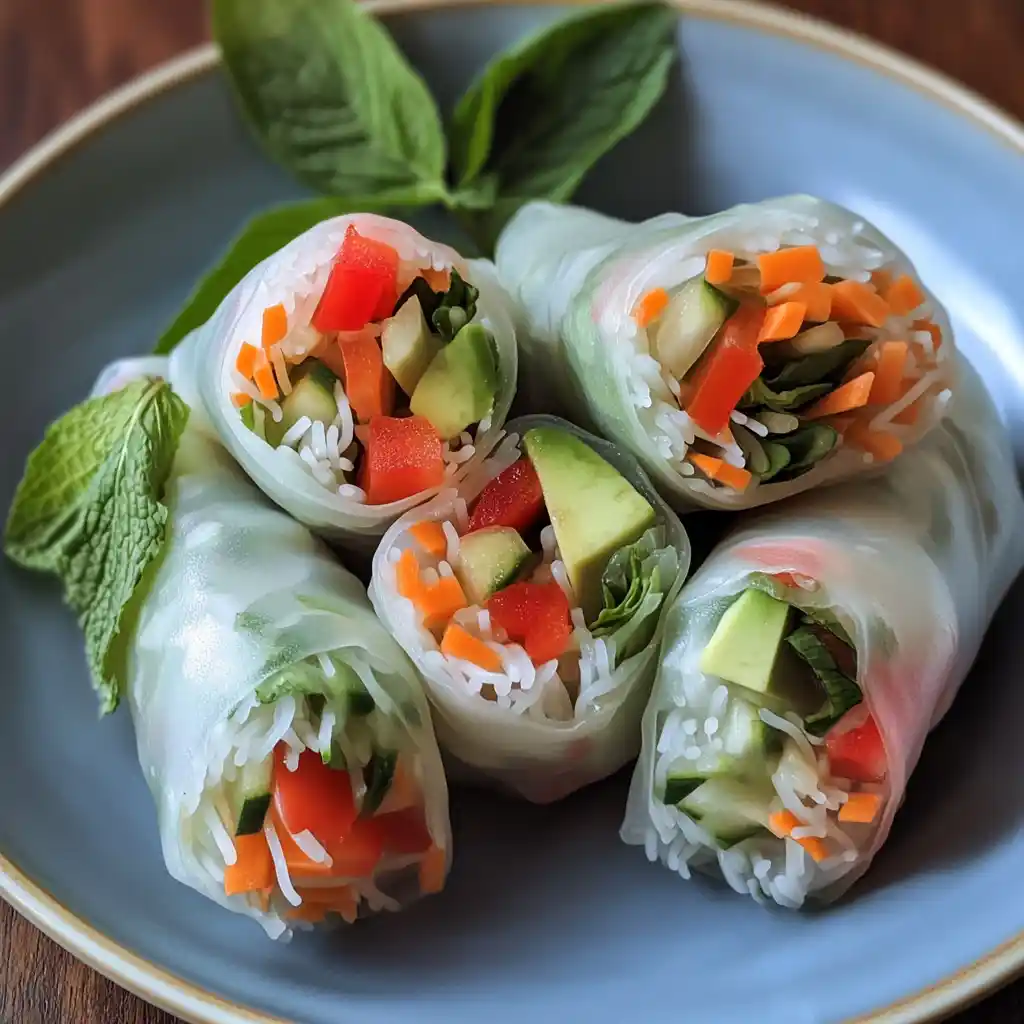
Ingredients
- 8 rice paper wrappers (check for intact, uncracked wrappers)
- 2 cups cooked rice noodles (thin vermicelli—rinse with cold water after cooking)
- 1 cup shredded carrots (pre-shredded works fine here)
- 1 cucumber, julienned (seedless or English for less water)
- 1 red bell pepper, thinly sliced
- 1 avocado, sliced (ripe but not mushy)
- 1 cup fresh mint leaves (no wilting or yellowing)
- 1 cup fresh basil leaves (Thai basil is especially good here)
- 1 cup fresh cilantro leaves (skip if you’re in the cilantro-hates-me camp)
- Peanut sauce for dipping (homemade or good quality store-bought)
Instructions
- Prepare all your fillings before you start rolling—cook and cool rice noodles, julienne cucumber, slice bell pepper and avocado, wash and dry herbs. Set up your rolling station with everything within arm’s reach.
- Fill a large shallow bowl or baking dish with warm (not hot) water. Dip one rice paper wrapper for exactly 5-7 seconds—it should feel slightly softened but still have some firmness. It will continue softening on your work surface.
- Lay the wrapper flat on a clean, slightly damp work surface. In the lower third of the wrapper (not the center), place a small handful of rice noodles first as your base layer.
- Layer on carrots, cucumber, bell pepper, and avocado. Place the prettiest vegetable pieces against the bottom edge of the wrapper where they’ll show through the translucent paper. Top with a generous handful of mixed mint, basil, and cilantro leaves.
- Fold the bottom edge up firmly over the filling. Fold in both sides tightly to seal the ends. Roll forward with firm, consistent pressure until completely sealed. The wrapper should be snug around the filling.
- Place finished rolls seam-side down on a plate. Cover with a damp paper towel while you complete the remaining rolls to prevent drying out.
- Serve immediately with peanut sauce for dipping. Slice diagonally in half to show off the beautiful cross-section, or serve whole for the most impressive presentation!
Nutrition Information (Per Serving – 2 rolls):
- Calories: 285
- Carbohydrates: 42g
- Protein: 6g
- Fat: 10g
- Fiber: 7g
- Sodium: 180mg
- Vitamin C: 85% DV
- Vitamin A: 110% DV
- Vitamin K: 60% DV
- Folate: 25% DV
These rolls deliver exceptional vitamin A and C from colorful vegetables and herbs, plus healthy fats from avocado for a genuinely nutritious light meal.
Notes:
- Seriously, prep everything before you start rolling or you’ll end up with soggy wrappers waiting
- Don’t soak wrappers too long—they continue softening on your work surface after you remove them
- Less filling is more—overstuffed rolls always tear and fall apart
- Place prettiest ingredients against the bottom edge so they show through the wrapper
- Work somewhat quickly once the wrapper is out of the water—it gets stickier as it softens
Storage Tips:
- Best eaten immediately after assembling
- Store up to 2 hours covered with damp paper towel and plastic wrap at room temperature
- Refrigerating makes wrappers tough and chewy—avoid if possible
- Keep peanut sauce separate until serving
Serving Suggestions:
- Party Platter: Arrange on a platter with peanut sauce in the center for stunning presentation
- Interactive Dinner: Set up a rolling station and let guests assemble their own
- Light Lunch: Serve 3 rolls per person with peanut soup alongside
- Appetizer Course: Serve 1-2 rolls per person before a larger Asian-inspired meal
Mix It Up (Recipe Variations):
- Mango and Shrimp Spring Rolls: Add sliced mango and cooked shrimp for tropical indulgence
- Peach and Basil Version: Use fresh peaches with Thai basil and ginger-lime dipping sauce
- Rainbow Spring Rolls: Arrange vegetables in color order for a visually stunning effect
- Simple Avocado and Herb Rolls: Skip noodles for a lighter, lower-carb version
What Makes This Recipe Special:
These seasonal spring rolls celebrate the Vietnamese tradition of gỏi cuốn—fresh, unfried rolls that showcase raw ingredients in their most vibrant, unmanipulated form. The translucent rice paper wrapper does what no other food vessel can—it puts the beauty of the ingredients on full display, making these as visually stunning as they are delicious. The generous combination of three different fresh herbs creates aromatic complexity that makes each bite genuinely exciting, while the avocado provides the richness that makes these feel satisfying rather than simply light. This recipe proves that some of the most impressive food requires no heat at all—just quality seasonal ingredients and the confidence to let them speak for themselves.
