
Ever wonder why some slow cooker beef turns out tough and chewy while other batches are melt-in-your-mouth tender? I used to think making slow-cooked beef with green beans was foolproof until I discovered that meat quality, proper searing, and timing for adding vegetables make all the difference. Now my family devours this savory, fork-tender stew on busy weeknights, and I’m pretty sure my neighbors follow their noses to my door when this is cooking (if only they knew how many batches I made with gray, boiled-tasting meat before learning that browning first is non-negotiable).
Here’s the Thing About This Recipe
What makes this slow-cooked beef with green beans work is using the right cut of beef (chuck or stew meat with good marbling), browning it first to develop flavor, and adding the green beans at the end so they don’t turn to olive-green mush. I learned the hard way that you can’t just dump everything in the slow cooker and walk away—a few extra minutes of prep transforms this from bland to restaurant-quality. This comfort food classic brings together tender beef in a rich, savory sauce with crisp-tender green beans for a complete meal. It’s honestly that simple: good meat, proper browning, strategic timing for vegetables, and patience to let the slow cooker work its magic.
What You’ll Need (And My Shopping Tips
Good beef stew meat is worth seeking out—look for chuck roast cut into cubes or pre-cut stew meat with visible marbling and fat (I learned this after buying lean meat three times and ending up with dry, tough beef). You’ll need 1.5 pounds, which feeds 4-6 people generously.
For the vegetables, grab fresh green beans (look for bright green, crisp beans that snap when you bend them), a medium onion, and fresh garlic. Don’t cheap out on limp, yellowing green beans from the discount bin—they’ll turn to mush even if you add them at the end (happens more than I’d like to admit when I’m trying to save money).
For the sauce base, you’ll need beef broth (I prefer low-sodium to control salt), soy sauce (adds umami depth), Worcestershire sauce (for that savory complexity), and dried thyme. The combination creates a rich, deeply flavored sauce that coats everything beautifully.
For thickening, you’ll need cornstarch and water to make a slurry at the end. This is what transforms thin cooking liquid into a proper gravy-like sauce.
Salt and pepper round out the seasoning. If you’re curious about why slow cooking transforms tough cuts of meat into tender perfection, Wikipedia has interesting information about how low, moist heat breaks down collagen into gelatin.
Let’s Make This Together
Start by trimming your green beans—snap off the stem ends and cut them into 2-3 inch pieces if they’re very long. Set them aside; they’ll go in much later.
Here’s the step most recipes skip but shouldn’t: pat your beef cubes dry with paper towels (wet meat won’t brown properly) and season generously with salt and pepper. Heat a large skillet over medium-high heat with a tablespoon of oil, then brown the beef in batches—don’t crowd the pan or it’ll steam instead of sear. You want nice golden-brown crusty spots on at least two sides of each cube. This takes about 6-8 minutes total. I learned this game-changing technique from a chef friend who explained that browning creates hundreds of flavor compounds through the Maillard reaction that you simply can’t get from boiling meat in liquid.
Transfer the browned beef to your slow cooker. Add the chopped onion, minced garlic, beef broth, soy sauce, Worcestershire sauce, dried thyme, and a bit more salt (start with 1/2 teaspoon) and pepper (about 1/4 teaspoon). Give everything a stir to combine.
Cover and cook on LOW for 6-8 hours or on HIGH for 3-4 hours. Here’s my secret: I prefer the low-and-slow method because it gives the collagen more time to break down into silky gelatin that makes the sauce rich and the meat incredibly tender. The beef should be fork-tender—you should be able to pull it apart easily with a fork.
About 30-40 minutes before serving, add your trimmed green beans to the slow cooker. Nestle them into the liquid so they’re mostly submerged. Cover and continue cooking. This timing ensures they’re tender but still bright green and with a slight bite—not the army-green mush that happens when you add them at the beginning. Trust me on this timing; I learned it after ruining several batches with overcooked vegetables.
In a small bowl, mix the cornstarch with 2 tablespoons of cold water to create a smooth slurry (make sure there are no lumps). Stir this slurry into the slow cooker during the last 30 minutes of cooking and switch to HIGH if you were on LOW. This thickens the sauce into a proper gravy that coats the meat and beans beautifully instead of being thin and watery.
Taste and adjust seasoning—you’ll probably need more salt and maybe a splash more soy sauce or Worcestershire for depth. The sauce should be savory, slightly salty, and rich with beef flavor. If you’re looking for another slow cooker beef recipe, try this Slow Cooker Beef Stew that uses similar techniques.
Serve hot over cooked rice (the sauce soaks into the rice beautifully), mashed potatoes, or even egg noodles. The tender beef, crisp-tender green beans, and rich gravy create the perfect comfort food combination.
If This Happens, Don’t Panic
Beef turned out tough and chewy? You didn’t cook it long enough or you used too lean a cut. In reality, I’ve learned that beef stew meat needs at least 6 hours on low to become tender—it gets tough before it gets tender, so don’t panic at the 3-hour mark. Also, make sure you’re using chuck or well-marbled stew meat, not lean cuts.
Green beans turned to olive-green mush? You added them too early. Next time, add them only in the last 30-40 minutes of cooking. If this happens, there’s not much to fix except remembering the timing for next batch.
Sauce is too thin and watery? You didn’t use enough cornstarch slurry or didn’t let it cook long enough after adding it. Just mix up another tablespoon of cornstarch with water and add it, cooking on high for another 15-20 minutes. Don’t panic—this is totally fixable.
Tastes bland despite all the seasonings? You need way more salt than you think, and possibly more soy sauce and Worcestershire. Slow-cooked food needs aggressive seasoning. I always taste at the end and add salt in stages until the flavors really pop.
When I’m Feeling Creative
Red Wine Beef and Green Beans: When I want something richer, I’ll replace 1/2 cup of the beef broth with red wine for deeper, more complex flavor. Around special dinners, this becomes my elevated version.
Asian-Inspired Beef: Add a tablespoon of hoisin sauce and a teaspoon of sesame oil to the sauce, and use snap peas instead of green beans for a different flavor profile.
Mushroom Beef with Green Beans: Add 8 ounces of sliced mushrooms along with the onions for extra umami and meaty texture—absolutely delicious.
Spicy Beef Stew: Add a teaspoon of red pepper flakes or a diced jalapeño to the slow cooker for heat lovers who want some kick.
What Makes This Recipe Special
This slow-cooked beef with green beans represents classic American comfort food that has evolved with slow cooker technology to make tender, flavorful meals accessible to busy home cooks. Slow cooking tough, collagen-rich cuts of beef like chuck is based on science—the low, moist heat (around 200°F) breaks down tough collagen into gelatin over several hours, transforming chewy meat into fork-tender bites while simultaneously enriching the cooking liquid into a luscious sauce. What makes this recipe work is understanding that not all ingredients benefit from 8 hours of cooking—the beef needs that time, but green beans added at the beginning would turn into gray, mushy, overcooked vegetables. By adding them in the last 30-40 minutes, they become tender while retaining their vibrant color and slight crisp texture. The browning step at the beginning isn’t just for color—it’s about flavor development through the Maillard reaction, where proteins and sugars react under high heat to create hundreds of savory flavor compounds. The combination of beef broth, soy sauce, and Worcestershire sauce creates deep umami flavor (the savory “fifth taste”) that makes this incredibly satisfying. The cornstarch slurry at the end transforms thin cooking liquid into a proper sauce that clings to the meat and vegetables instead of pooling in the bottom of the bowl. The history of slow cookers shows they revolutionized home cooking in the 1970s by making it possible for working families to come home to hot, home-cooked meals, and this recipe embodies that promise perfectly.
Things People Ask Me About This Recipe
Do I really need to brown the beef first, or can I skip that step?
Browning is highly recommended but not technically required. However, it adds so much flavor through the Maillard reaction that skipping it means you’ll have bland, boiled-tasting meat instead of rich, deeply flavored beef. The 10 minutes of extra effort is worth it.
Can I add the green beans at the beginning with everything else?
You can, but they’ll turn olive-green and mushy. Fresh green beans only need 30-40 minutes of cooking to become tender. If you must add them early, use frozen green beans which hold up slightly better, but fresh added at the end is really best.
What’s the best cut of beef for slow cooking?
Chuck roast (cut into cubes) is ideal—it has good marbling and connective tissue that breaks down into tender, flavorful meat. Pre-cut “stew meat” works if it’s well-marbled. Avoid lean cuts like sirloin or round which will be tough and dry.
Can I cook this on high for less time instead of low all day?
Yes! 3-4 hours on high works, though I prefer 6-8 hours on low for more tender results. The longer, slower cooking gives collagen more time to break down into gelatin.
How do I store and reheat leftovers?
Store in an airtight container in the fridge for up to 4 days. The beef continues absorbing the sauce and gets even more flavorful. Reheat gently on the stovetop or in the microwave. This also freezes well for up to 3 months.
Can I use a different vegetable instead of green beans?
Absolutely! Carrots and potatoes can go in from the beginning since they take longer to cook. Peas, snap peas, or broccoli should be added in the last 30 minutes like the green beans.
One Last Thing
I couldn’t resist sharing this slow-cooked beef with green beans because it’s the recipe that taught me slow cookers aren’t just “dump and go”—a few smart techniques transform them from convenient to genuinely delicious. The best slow cooker nights are when you come home after a long day, the house smells incredible, and dinner is already done and waiting. You don’t need to babysit this dish or have advanced skills—just good meat, proper browning, strategic timing, and the patience to let time work its magic.
Print
Slow-Cooked Beef with Green Beans
Description
This hearty slow-cooked beef with green beans features fork-tender beef stew meat in a rich, savory sauce with crisp-tender green beans added at the end—proving that slow cooker meals can be both convenient and truly delicious with proper technique.
Prep Time: 15 minutes | Cook Time: 6-8 hours (low) or 3-4 hours (high) | Total Time: 6 hours 15 minutes – 8 hours 15 minutes | Servings: 4-6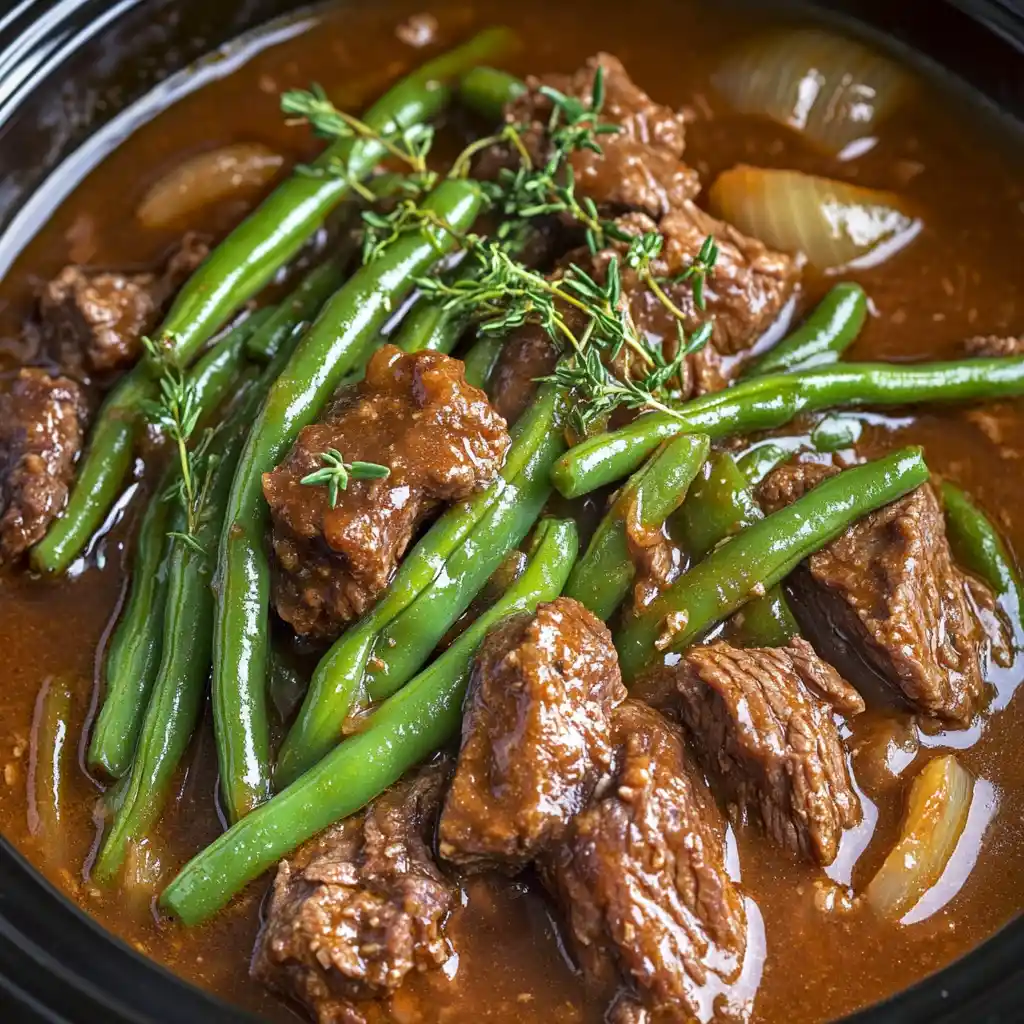
Ingredients
For the Beef:
- 1.5 lbs beef stew meat, cubed (chuck roast cut into 1.5-inch cubes—look for good marbling)
- 1 tbsp vegetable oil (for browning)
- Salt and pepper (for seasoning beef before browning)
For the Stew:
- 2 cups fresh green beans, trimmed and cut into 2–3 inch pieces
- 1 medium onion, chopped
- 3 cloves garlic, minced (fresh only—makes a difference)
- 1 cup beef broth (low-sodium preferred so you control the salt)
- 2 tbsp soy sauce (adds umami depth)
- 1 tbsp Worcestershire sauce (for savory complexity)
- 1 tsp dried thyme
- Salt and pepper to taste (start with 1/2 tsp salt, 1/4 tsp pepper)
For Thickening:
- 2 tbsp cornstarch
- 2 tbsp cold water
Instructions
- Pat beef cubes dry with paper towels and season generously with salt and pepper. Heat 1 tablespoon oil in a large skillet over medium-high heat. Brown beef in batches (don’t crowd the pan) for 6-8 minutes total, getting nice golden-brown crusty spots on at least two sides. This browning creates flavor you can’t get from boiling.
- Transfer browned beef to your slow cooker. Add the chopped onion, minced garlic, beef broth, soy sauce, Worcestershire sauce, dried thyme, salt (1/2 teaspoon), and pepper (1/4 teaspoon). Stir to combine everything.
- Cover and cook on LOW for 6-8 hours or on HIGH for 3-4 hours. The beef should be fork-tender—you should be able to pull it apart easily with a fork. I prefer low-and-slow for most tender results.
- About 30-40 minutes before serving, add the trimmed green beans to the slow cooker. Nestle them into the liquid so they’re mostly submerged. Cover and continue cooking. This timing ensures they’re tender but still bright green with a slight bite.
- In a small bowl, mix the cornstarch with 2 tablespoons cold water to create a smooth slurry (make sure there are no lumps). Stir this into the slow cooker during the last 30 minutes and switch to HIGH if you were on LOW. This thickens the sauce into proper gravy.
- Taste and adjust seasoning—you’ll probably need more salt, maybe more soy sauce or Worcestershire for depth. The sauce should be savory, slightly salty, and rich with beef flavor.
- Serve hot over cooked rice, mashed potatoes, or egg noodles. The tender beef, crisp-tender green beans, and rich gravy create perfect comfort food.
Nutrition Information (Per Serving):
- Calories: 320
- Carbohydrates: 12g
- Protein: 38g
- Fat: 13g
- Fiber: 3g
- Sodium: 680mg
- Iron: 25% DV
- Vitamin C: 15% DV
- Zinc: 35% DV
This slow-cooked beef provides high-quality protein, iron, and zinc, while green beans add fiber, vitamins, and minerals.
Notes:
- Browning the beef first is highly recommended—it adds immense flavor through the Maillard reaction.
- Use well-marbled chuck or stew meat, not lean cuts which will be tough and dry.
- Add green beans only in the last 30-40 minutes or they’ll turn olive-green and mushy.
- The beef needs at least 6 hours on low to become fork-tender—it gets tough before it gets tender.
- Every slow cooker runs differently, so adjust timing based on your specific appliance.
- The cornstarch slurry transforms thin liquid into proper gravy that coats everything beautifully.
Storage Tips:
Store cooled beef and green beans in an airtight container in the fridge for up to 4 days. The beef continues absorbing the sauce and becomes even more flavorful as it sits—leftovers are often better than the first serving. Reheat gently on the stovetop over medium-low heat with a splash of broth if needed, or microwave in 1-minute intervals, stirring between. This freezes beautifully for up to 3 months—thaw overnight in the fridge before reheating. The green beans may be slightly softer after freezing, but the beef and sauce hold up perfectly.
Serving Suggestions:
- Classic Comfort: Over fluffy white rice or creamy mashed potatoes
- Rustic Style: With crusty bread for soaking up the gravy and a simple salad
- Complete Meal: Over egg noodles with roasted carrots on the side
- Low-Carb Option: Over cauliflower rice or mashed cauliflower for lighter version
Mix It Up (Recipe Variations):
Red Wine Beef and Green Beans: Replace 1/2 cup beef broth with red wine for deeper, more complex flavor—perfect for special dinners.
Asian-Inspired Beef: Add 1 tablespoon hoisin sauce and 1 teaspoon sesame oil, use snap peas instead of green beans for different flavor profile.
Mushroom Beef with Green Beans: Add 8 oz sliced mushrooms with the onions for extra umami and meaty texture.
Spicy Beef Stew: Add 1 teaspoon red pepper flakes or a diced jalapeño for heat lovers who want kick.
What Makes This Recipe Special:
This slow-cooked beef with green beans showcases how understanding food science transforms slow cooker meals from convenient to genuinely delicious. The low, moist heat breaks down tough collagen into gelatin over hours, while browning first creates Maillard reaction flavor compounds. Adding green beans strategically at the end preserves their color and texture—proving not all ingredients benefit from 8 hours of cooking.
