
Have you ever tried making black beans from scratch and ended up with something that tasted like cardboard? I used to think canned beans were the only option until I discovered this foolproof slow-cooked black beans recipe. Now my family devours these hearty black beans with Brussels sprouts at least twice a week, and my meat-loving brother actually asks for seconds (if only he knew how ridiculously simple this vegetarian meal is).
Here’s the Thing About This Recipe
The secret to authentic slow-cooked black beans isn’t some fancy spice blend—it’s honestly that simple. What makes this approach work is the long, slow simmer that lets the beans soak up all that smoky paprika and cumin while the Brussels sprouts add this unexpected earthy sweetness. I learned the hard way that rushing beans never works. Around here, we’ve figured out that low and slow transforms dried beans into something creamy and flavorful without any effort. No fancy tricks needed, just throw everything in the slow cooker before work.
What You’ll Need (And My Shopping Tips)
Good dried black beans are worth buying in bulk—I always keep a couple bags in my pantry because they’re so versatile. Don’t cheap out by buying the dusty bag that’s been sitting on the shelf forever; fresher beans cook more evenly. I learned this after dealing with beans that took forever to soften (happens more than I’d like to admit).
Brussels sprouts are the surprising star here. They get tender and sweet in the slow cooker, nothing like those sad boiled ones from childhood. Look for firm, bright green sprouts that feel heavy for their size. The bell pepper needs to be fresh, and I usually go with red or orange because they add natural sweetness that balances the earthiness of the beans.
For spices, cumin and smoked paprika are non-negotiable—that’s where all the depth comes from. I always use smoked paprika, not regular, because it gives everything this amazing campfire flavor without actual smoke. Fresh cilantro at the end? Game-changer. If you’re one of those people who thinks cilantro tastes like soap, use fresh parsley instead.
Let’s Make This Together
Start by rinsing those dried black beans really well in a colander. Here’s where I used to mess up—I’d skip this step and wonder why my beans tasted dusty. Give them a good rinse until the water runs clear, then dump them into your slow cooker.
Now for the fun part—pile in the Brussels sprouts (trimmed and halved), diced onion, minced garlic, and diced bell pepper. Add that can of diced tomatoes with all the juice. Don’t drain it—that tomato liquid adds so much flavor.
Pour in your vegetable broth, then sprinkle in the cumin and smoked paprika. Here’s my secret: I add a generous pinch of salt and several grinds of black pepper right at the start. Some people say to salt beans at the end, but I’ve never had issues, and everything tastes better seasoned from the beginning.
Give everything a good stir to make sure the spices aren’t sitting in clumps. Pop the lid on and set your slow cooker to low. Here’s the trick I learned from my neighbor who makes beans weekly: cook them for 8 hours and don’t peek. Every time you lift that lid, you lose heat and add cooking time.
After 8 hours, taste and adjust seasoning. I usually add more salt here because beans need more than you think. Shower everything with fresh chopped cilantro and serve hot. Check out similar slow-cooker bean recipes when you want to mix things up.
When Things Go Sideways (And They Will)
Beans still hard after 8 hours? This happens with old beans or if your slow cooker runs cool. In reality, I’ve learned that some beans need 9-10 hours. Don’t panic—just keep cooking and check every 30 minutes. This slow-cooked black beans recipe is totally fixable with a bit more time.
Too much liquid at the end? This happens sometimes depending on your slow cooker. Just leave the lid off for the last 30 minutes to let some moisture evaporate, or mash some of the beans against the side of the pot to thicken everything up.
Brussels sprouts turned to mush? You might have cut them too small or your slow cooker runs hot. Next time, leave them in bigger pieces or add them halfway through cooking. The beans are still delicious even if the sprouts are soft.
When I’m Feeling Creative
Cuban-Style Black Beans: When I want something different, I add a bay leaf, a splash of apple cider vinegar at the end, and serve over rice. Classic and comforting.
Spicy Chipotle Black Beans: For serious heat, I add a chopped chipotle pepper in adobo sauce with the other ingredients. Fair warning—this one has major kick.
Mediterranean Black Beans: Sometimes I skip the cumin and add Italian herbs, sun-dried tomatoes, and kalamata olives instead. Totally different vibe but equally good.
Tex-Mex Bowl: I pile these beans over brown rice with avocado, salsa, and a squeeze of lime. Perfect for meal prep.
What Makes This Recipe Special
This recipe draws from Latin American cooking traditions where beans are slowly simmered until creamy. The slow cooker adapts this beautifully for modern life. I learned from Cuban cuisine that black beans are a staple cooked low and slow with aromatics and spices. What sets this apart is adding Brussels sprouts—not traditional, but they add texture and nutrients while soaking up all those smoky flavors. The combination of cumin and smoked paprika creates depth without overwhelming the beans’ natural earthiness.
Things People Ask Me About This Recipe
Can I use canned black beans instead of dried?
You can, but you’ll miss out on the best part—dried beans soak up way more flavor during that long cook. If you’re in a pinch, use four 15-oz cans of drained beans, reduce the broth to 2 cups, and cook on low for just 3-4 hours.
Do I need to soak the black beans overnight?
Nope! That’s the beauty of the slow cooker method. The long, gentle cooking softens them perfectly without pre-soaking. It’s one less step to remember, which is why I love this recipe for busy weeks.
Is this slow-cooked black beans recipe vegan?
Absolutely! As written, it’s completely plant-based and packed with protein from the beans. Just make sure your vegetable broth is vegan—some brands sneak in chicken stock.
Can I freeze these black beans?
One hundred percent yes. Let them cool completely, then freeze in portions for up to 3 months. I reheat them from frozen on the stovetop with a splash of water or broth. Perfect for quick lunches.
What if I don’t like Brussels sprouts?
No problem—swap them for kale, spinach, or diced sweet potato. Add heartier veggies at the start; add greens in the last hour. The beans are the star, so customize the vegetables to your taste.
How do I know when the black beans are done?
They should be tender enough to mash easily between your fingers but still hold their shape. If they’re falling apart completely, you’ve gone too long. If they’re chalky or hard in the center, keep cooking.
Before You Head to the Kitchen
I couldn’t resist sharing this slow-cooked black beans recipe because it proves that healthy, satisfying meals don’t require fancy ingredients or technique. The best black bean nights are when I come home after a long day to dinner that’s ready and smells incredible.
Print
Slow-Cooked Black Beans with Brussels Sprouts
Description
These hearty slow-cooked black beans with Brussels sprouts deliver smoky, flavorful comfort food that’s completely plant-based—perfect for meal prep or feeding a crowd without any fuss.
Prep Time: 15 minutes | Cook Time: 8 hours | Total Time: 8 hours 15 minutes | Servings: 6-8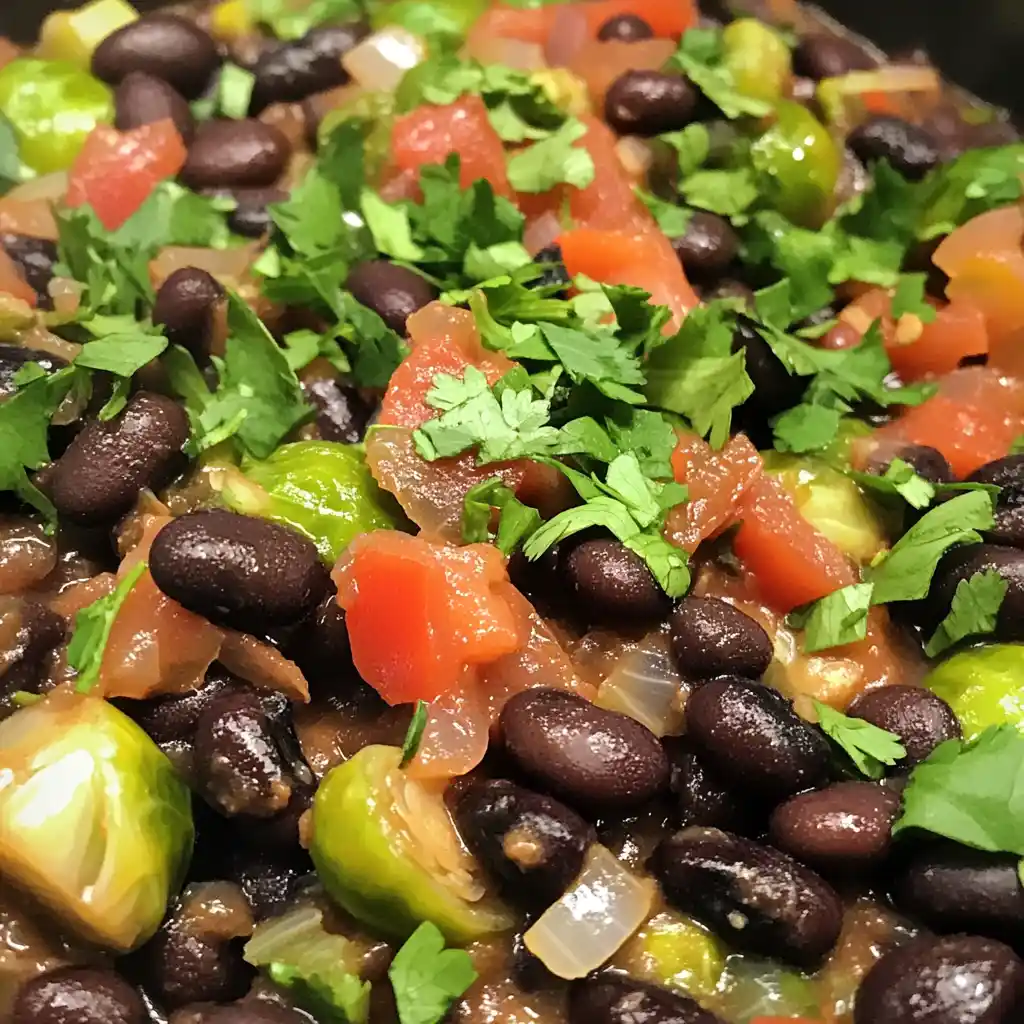
Ingredients
- 16 oz dried black beans (about 2 cups—look for beans that aren’t dusty or cracked)
- 1 lb Brussels sprouts, trimmed and halved (fresh and firm, not yellowing)
- 1 onion, diced (yellow or white works great)
- 4 cloves garlic, minced (fresh only—this is where the flavor starts)
- 1 bell pepper, diced (red or orange add nice sweetness)
- 1 can (14.5 oz) diced tomatoes (with juice—don’t drain it)
- 4 cups vegetable broth (good quality makes a difference)
- 1 tbsp cumin (the earthy backbone of this dish)
- 1 tsp smoked paprika (not regular—smoked is essential for that depth)
- Salt and pepper to taste (be generous—beans need seasoning)
- Fresh cilantro, chopped, for garnish (or parsley if you’re in the cilantro-tastes-like-soap club)
Instructions
- Rinse those dried black beans really well in a colander until the water runs clear. This removes any dust or debris and gives you cleaner-tasting beans. Dump them into your slow cooker.
- Add the Brussels sprouts, diced onion, minced garlic, diced bell pepper, the entire can of diced tomatoes (juice and all), vegetable broth, cumin, and smoked paprika to the slow cooker. Season generously with salt and pepper right from the start.
- Give everything a really good stir to distribute the spices evenly. You don’t want cumin clumps at the bottom. Make sure the beans are mostly submerged in liquid.
- Pop the lid on and set your slow cooker to low. Cook for 8 hours without peeking. Seriously, resist the urge to check—every lid lift adds 15-20 minutes to cooking time.
- After 8 hours, taste a bean to check for doneness. They should be tender and creamy, not chalky. Adjust seasoning—you’ll probably need more salt. Beans are notorious salt sponges.
- Serve hot with a generous shower of fresh chopped cilantro. That bright, fresh finish makes everything pop.
Nutrition Information (Per Serving):
- Calories: 245
- Carbohydrates: 45g
- Protein: 14g
- Fat: 2g
- Fiber: 13g
- Sodium: 520mg
- Iron: 25% DV
- Folate: 35% DV
- Potassium: 18% DV
Black beans are nutrition powerhouses—packed with plant-based protein, fiber, and essential minerals like iron and folate. Combined with Brussels sprouts’ vitamins K and C, this is a genuinely healthy meal that actually tastes good.
Notes:
- Really rinse those beans. It makes a difference in taste and removes any debris from processing.
- Don’t skip the smoked paprika. Regular paprika won’t give you that same depth. Smoked paprika is what makes this special.
- Old beans take longer to cook. If your beans have been sitting in the pantry for over a year, they might need 9-10 hours. Fresher beans cook faster.
- Every slow cooker is different. Start checking at 7 hours if yours runs hot. Some need the full 8-9 hours if they run cool.
- Fresh cilantro matters. It adds brightness that transforms the dish. Dried cilantro is sad and doesn’t do much.
Storage Tips:
These beans get better with time. Store in an airtight container in the fridge for up to 5 days. The flavors deepen overnight, making leftovers even better than day one. Freeze in portions for up to 3 months—I use quart-size freezer bags and lay them flat for easy stacking. Reheat from frozen on the stovetop with a splash of broth or water, stirring occasionally. Don’t microwave from frozen—it heats unevenly and makes the beans mushy.
Serving Suggestions:
Over Rice or Quinoa: Serve these beans over fluffy rice or quinoa to soak up all that flavorful broth.
As Burrito Filling: These make incredible burrito filling. Add avocado, salsa, and cheese (or keep it vegan).
With Cornbread: Warm cornbread alongside is pure comfort food perfection.
On Tostadas: Pile them on crispy tostadas with shredded lettuce, tomatoes, and a squeeze of lime.
Mix It Up (Recipe Variations):
Cuban-Style Black Beans: Add 2 bay leaves and a splash of apple cider vinegar at the end. Serve over white rice with plantains on the side.
Spicy Chipotle Version: Add 1-2 chopped chipotle peppers in adobo sauce for smoky heat that’ll clear your sinuses.
Mediterranean Black Beans: Skip cumin and add Italian seasoning, sun-dried tomatoes, and kalamata olives. Serve with crusty bread.
Tex-Mex Bowl: Top with avocado, salsa, shredded cheese, sour cream, and crushed tortilla chips for a loaded bowl situation.
Gluten-Free/Vegan: This recipe is naturally both! Just verify your vegetable broth is gluten-free if that’s a concern.
What Makes This Recipe Special:
This slow-cooker method adapts traditional Latin American bean-cooking techniques for modern convenience. Dried beans slowly simmered with aromatics and spices develop a creamy texture and deep flavor impossible to achieve with canned beans. The Brussels sprouts add an unexpected twist—they become tender and sweet while absorbing the smoky cumin flavors, creating textural interest and boosting nutrition. It’s hands-off cooking that delivers restaurant-quality results.
