
Ever wonder why some plant-based slow cooker meals turn out mushy and bland while others have layers of flavor and satisfying texture? I used to think making slow-cooked seitan with cauliflower meant accepting a one-note dish until I discovered that building flavor with aromatics and spices transforms everything. Now my family requests this smoky, hearty stew on busy weeknights, and I’m pretty sure my meat-eating friends don’t even realize they’re eating wheat gluten and vegetables (if only they knew how many batches I made that turned into flavorless mush before learning that seitan needs different timing than meat).
Here’s the Thing About This Recipe
What makes this slow-cooked seitan with cauliflower work is treating seitan differently than you would meat—it doesn’t need to become tender since it already is, so it’s added for flavor absorption rather than transformation. I learned the hard way that cooking seitan for 8 hours turns it spongy and weird; it just needs to soak up the delicious sauce you’ve built around it. This plant-based comfort dish brings together meaty seitan with cauliflower that becomes melt-in-your-mouth tender, all simmered in a smoky, spiced tomato sauce. It’s honestly that simple: quality seitan, proper cooking time, layers of spice, and cauliflower that breaks down into creamy tenderness.
What You’ll Need (And My Shopping Tips)
Good seitan is worth seeking out at health food stores or Asian markets—look for brands with firm, meaty texture, not spongy or rubbery (I learned this after buying weird-textured seitan three times and ending up with something unpleasant). You’ll need 16 ounces, which you’ll slice into strips. If you can find “chicken-style” seitan, it works great for this recipe.
For the vegetables, grab one head of cauliflower (look for tight, white florets with no brown spots), a medium onion, and fresh garlic. Don’t cheap out on pre-minced garlic from a jar—fresh garlic develops better flavor over long cooking (happens more than I’d like to admit when I take shortcuts).
For the sauce base, you’ll need canned diced tomatoes (fire-roasted if you can find them for extra depth), vegetable broth, smoked paprika (this is key for that deep, smoky flavor), ground cumin, and chili powder. These warm spices create layers of flavor that develop beautifully over hours of cooking.
Salt, pepper, and fresh parsley for garnish round out the ingredients. If you’re curious about seitan and why it’s become such a popular meat alternative, Wikipedia has fascinating information about this wheat protein that’s been used in Asian Buddhist cuisine for over 1,000 years.
Let’s Make This Together
Start by slicing your seitan into strips—roughly 1/2 inch thick and 2-3 inches long works well. The strips should be substantial enough to have presence but not so large they’re awkward to eat. Here’s where I used to mess up: I’d leave them in huge chunks and they’d dominate every bite instead of integrating with the cauliflower.
Cut your cauliflower into florets, roughly bite-sized pieces about 1-2 inches. Try to make them relatively uniform so they cook evenly. The cauliflower will shrink and become very tender over the long cooking time.
Dice your onion and mince your garlic. The aromatics are crucial for building the flavor base, so don’t skip these even though it’s tempting to throw everything in without prep.
In your slow cooker, combine the sliced seitan, cauliflower florets, diced onion, minced garlic, canned diced tomatoes (with their juices—don’t drain), vegetable broth, smoked paprika, cumin, chili powder, salt (I start with 1 teaspoon), and pepper (about 1/2 teaspoon).
Stir everything well to ensure all the ingredients are evenly mixed and the spices are distributed throughout. The seitan and cauliflower should be submerged in the liquid—if they’re not, add a splash more broth or water.
Cover your slow cooker and here’s the crucial timing decision: cook on LOW for 6-8 hours or on HIGH for 3-4 hours. Here’s my secret that I learned from a vegan cooking mentor: unlike meat which gets tender with long cooking, seitan is already tender. I actually prefer the shorter cooking time (3-4 hours on high or 6 hours on low) to prevent the seitan from becoming too soft and spongy. The cauliflower is the component that needs time to become melt-in-your-mouth tender.
After the cooking time, check the cauliflower—it should be very tender, almost falling apart when you press it with a spoon. The sauce should have thickened slightly from the cauliflower breaking down and releasing its starches. Trust me on this one; properly cooked cauliflower in this dish practically dissolves into the sauce, creating incredible creaminess.
Taste and adjust seasoning—you’ll probably need more salt and maybe a pinch more smoked paprika or cumin. The flavors should be warm, smoky, and slightly spicy with depth from the tomatoes and aromatics. If you’re looking for another plant-based slow cooker recipe, try this Slow Cooker Lentil Curry that uses similar hands-off techniques.
Serve hot in bowls, garnished with fresh chopped parsley for that pop of green and fresh flavor. This is delicious over rice, quinoa, or with crusty bread for soaking up the sauce.
If This Happens, Don’t Panic
Seitan turned spongy and weird-textured? You cooked it too long. In reality, I’ve learned that 6 hours on low or 3-4 hours on high is plenty—seitan doesn’t need to “tenderize” like meat does. Next time, use the shorter cooking time.
Cauliflower is still too firm after cooking time? Your slow cooker runs cool or your florets were too large. Just keep cooking in 30-minute increments until tender. Every slow cooker has its own personality and timing varies.
Dish tastes bland despite the spices? You need way more salt than you think, and possibly more smoked paprika for depth. Slow-cooked food needs generous seasoning. Also, make sure you used smoked paprika specifically—regular paprika won’t give that depth.
Too much liquid and it’s soupy instead of stew-like? You can remove the lid for the last 30-60 minutes of cooking to let excess liquid evaporate, or serve it over rice/grains that will absorb the liquid. Some slow cookers retain more moisture than others.
When I’m Feeling Creative
Coconut Curry Seitan: When I want something richer, I’ll swap half the vegetable broth for coconut milk and add curry powder instead of the smoked paprika and cumin. Around cold winter nights, this becomes my comfort food version.
Mediterranean Seitan Stew: Add kalamata olives, capers, and oregano instead of the smoky spices for a completely different flavor profile that’s equally satisfying.
Spicy Seitan and Cauliflower: Increase the chili powder and add diced jalapeños or a pinch of cayenne for serious heat lovers.
Veggie-Loaded Version: Add diced bell peppers, zucchini, and chickpeas for an even heartier, more vegetable-forward stew.
What Makes This Recipe Special
This slow-cooked seitan with cauliflower represents the evolution of plant-based cooking from “meat substitute dishes” to recipes that celebrate plant proteins on their own merits. Seitan has been a staple in East Asian Buddhist vegetarian cuisine for over a millennium, particularly in Chinese and Japanese temple cooking where monks needed high-protein foods that aligned with their values. What makes this recipe work is understanding that seitan isn’t meat and shouldn’t be treated the same way—it doesn’t need hours of braising to become tender because it already is. Instead, the slow cooking is for the cauliflower (which becomes incredibly creamy and tender) and for developing the complex sauce that the seitan absorbs. The combination of smoked paprika, cumin, and tomatoes creates a flavor profile reminiscent of Spanish or North African stews, showing how plant-based proteins can work in various culinary traditions. Cauliflower’s transformation in slow cooking is remarkable—it goes from firm and somewhat bland to melt-in-your-mouth tender with a sweet, nutty flavor that complements the chewy seitan perfectly. The beauty of this dish is its versatility: it works as a hearty stew on its own, over grains, or even as a taco filling. The history of seitan shows its cultural significance in vegetarian Buddhist cooking, where it’s been refined into an art form over centuries.
Things People Ask Me About This Recipe
Can I cook this slow-cooked seitan with cauliflower on high for faster results?
Yes! 3-4 hours on high works great. I actually prefer this timing because it prevents the seitan from becoming overly soft. The cauliflower still gets tender and the flavors develop beautifully.
What if I can’t find seitan at my grocery store?
Check health food stores, Asian markets (look for “wheat gluten” or “mock duck”), or order online. You can also make your own from vital wheat gluten flour, though that’s a separate project. In a pinch, extra-firm tofu works but will give a different texture.
Is this recipe gluten-free?
No—seitan is pure wheat gluten, so it’s absolutely not gluten-free. For a gluten-free version, substitute extra-firm tofu or tempeh, though you’ll get different texture and flavor.
Can I add other vegetables to this stew?
Absolutely! Bell peppers, zucchini, carrots, and potatoes all work well. Just consider their cooking times—harder vegetables like carrots and potatoes can go in from the start, while softer ones like zucchini should be added in the last 1-2 hours.
Why does my cauliflower completely fall apart?
That’s actually ideal for this recipe! The cauliflower breaking down creates creaminess in the sauce and incredible texture. If you prefer more distinct florets, use larger pieces or add the cauliflower halfway through cooking.
Can I freeze the leftovers?
Yes! This freezes well for up to 3 months. Thaw overnight in the fridge and reheat on the stovetop or in the microwave. The texture holds up surprisingly well when frozen and reheated.
One Last Thing
I couldn’t resist sharing this slow-cooked seitan with cauliflower because it’s the recipe that taught me plant-based cooking isn’t about replicating meat—it’s about celebrating plant proteins with techniques that work for them. The best slow cooker nights are when you come home after a long day to a house that smells incredible and dinner is already done. You don’t need to babysit this dish or have advanced cooking skills—just good ingredients, proper timing, and the patience to let the slow cooker work its magic.
Print
Slow-Cooked Seitan with Cauliflower
Description
This hearty slow-cooked seitan with cauliflower combines meaty wheat gluten strips with melt-in-your-mouth tender cauliflower in a smoky, spiced tomato sauce for a plant-based comfort dish that’s perfect for hands-off weeknight cooking.
Prep Time: 15 minutes | Cook Time: 3-4 hours (high) or 6-8 hours (low) | Total Time: 3 hours 15 minutes – 8 hours 15 minutes | Servings: 6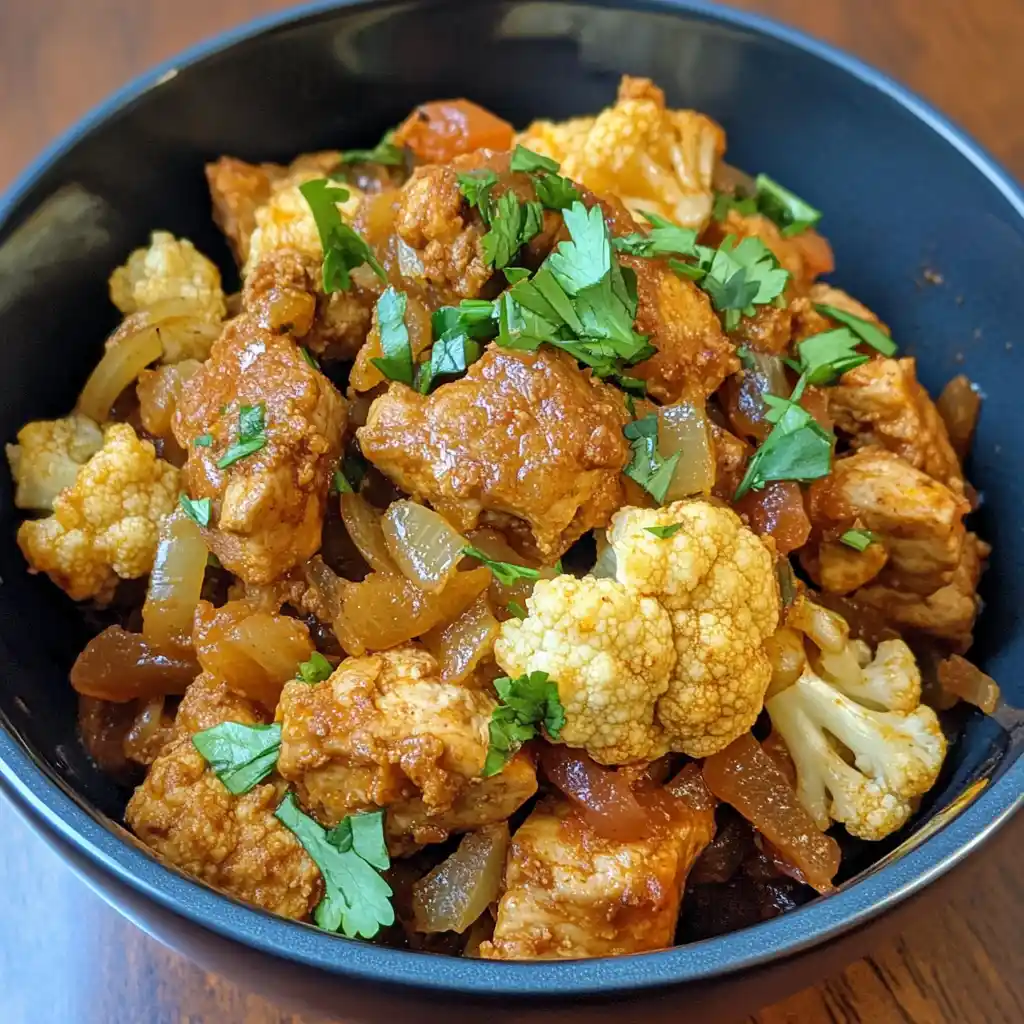
Ingredients
For the Stew:
- 16 oz seitan, sliced into strips (look for firm, meaty texture—”chicken-style” works great)
- 1 head cauliflower, cut into florets (about 4–5 cups—roughly bite-sized, 1–2 inches)
- 1 medium onion, diced
- 3 cloves garlic, minced (fresh only—makes a difference over long cooking)
- 1 can (14 oz) diced tomatoes with juices (fire-roasted for extra depth if available)
- 1 cup vegetable broth (low-sodium so you control the salt)
- 1 tsp smoked paprika (key for that deep, smoky flavor—don’t use regular)
- 1 tsp ground cumin
- 1/2 tsp chili powder (adjust for heat preference)
- Salt and pepper, to taste (start with 1 tsp salt, 1/2 tsp pepper)
For Garnish:
- Fresh parsley, chopped (adds color and fresh flavor)
Instructions
- Slice your seitan into strips roughly 1/2 inch thick and 2-3 inches long. They should be substantial but not so large they dominate every bite.
- Cut the cauliflower into florets, roughly bite-sized pieces about 1-2 inches. Try to make them relatively uniform for even cooking—they’ll shrink and become very tender.
- Dice your onion and mince your garlic. Don’t skip the prep even though it’s tempting—aromatics are crucial for building flavor.
- In your slow cooker, combine the sliced seitan, cauliflower florets, diced onion, minced garlic, canned diced tomatoes with their juices, vegetable broth, smoked paprika, cumin, chili powder, salt, and pepper.
- Stir everything well to ensure all ingredients are evenly mixed and the spices are distributed throughout. The seitan and cauliflower should be mostly submerged in liquid—add a splash more broth if needed.
- Cover and cook on LOW for 6-8 hours or on HIGH for 3-4 hours. I prefer the shorter time (3-4 hours high or 6 hours low) to prevent seitan from becoming too soft—unlike meat, seitan doesn’t need to tenderize.
- After cooking, check the cauliflower—it should be very tender, almost falling apart when pressed with a spoon. The sauce should have thickened slightly from the cauliflower breaking down.
- Taste and adjust seasoning—you’ll probably need more salt and maybe more smoked paprika or cumin. The flavors should be warm, smoky, and slightly spicy with depth from tomatoes and aromatics.
- Serve hot in bowls, garnished with fresh chopped parsley. Delicious over rice, quinoa, or with crusty bread for soaking up the sauce.
Nutrition Information (Per Serving):
- Calories: 195
- Carbohydrates: 18g
- Protein: 24g
- Fat: 3g
- Fiber: 5g
- Sodium: 580mg
- Iron: 20% DV
- Vitamin C: 90% DV
Seitan is incredibly high in protein (about 75% protein by weight), while cauliflower provides vitamin C and fiber, making this a nutritionally balanced plant-based meal.
Notes:
- Use smoked paprika specifically—regular paprika won’t give that depth of flavor.
- I prefer shorter cooking time (3-4 hours high or 6 hours low) to prevent seitan from becoming spongy.
- The cauliflower breaking down completely is ideal—it creates creaminess in the sauce.
- Every slow cooker runs differently, so adjust timing based on your specific appliance.
- Fresh garlic develops better flavor over long cooking than jarred garlic.
- Taste and adjust seasoning at the end—slow-cooked food needs generous salt.
Storage Tips:
Store cooled leftovers in an airtight container in the fridge for up to 5 days. The flavors actually deepen and improve after a day or two as everything melds together. Reheat gently on the stovetop over medium-low heat with a splash of water or broth if it’s thickened too much, or microwave in 1-minute intervals, stirring between. This freezes beautifully for up to 3 months—thaw overnight in the fridge before reheating. The texture holds up surprisingly well when frozen and reheated.
Serving Suggestions:
- Bowl Style: Over rice, quinoa, or farro with the sauce spooned over everything
- Stew Style: In deep bowls with crusty bread for dipping and soaking up the sauce
- Taco Filling: Spoon into tortillas with avocado and cilantro for plant-based tacos
- Meal Prep: Portion into containers with grains for easy grab-and-go lunches all week
Mix It Up (Recipe Variations):
Coconut Curry Seitan: Swap half the vegetable broth for coconut milk and add curry powder instead of smoked paprika and cumin for rich, creamy comfort.
Mediterranean Seitan Stew: Add kalamata olives, capers, and oregano instead of smoky spices for a completely different flavor profile.
Spicy Seitan and Cauliflower: Increase chili powder and add diced jalapeños or cayenne for heat lovers.
Veggie-Loaded Version: Add diced bell peppers, zucchini, and chickpeas for an even heartier, more vegetable-forward stew.
What Makes This Recipe Special:
This slow-cooked seitan with cauliflower celebrates plant proteins on their own merits rather than treating them as meat substitutes. Understanding that seitan doesn’t need hours of braising to tenderize (it already is tender) prevents the texture issues that plague many seitan recipes. The cauliflower’s transformation into creamy tenderness and the developing sauce are the real slow cooking beneficiaries, while seitan absorbs all those smoky, spiced flavors.
