
Why does it feel like the most comforting meals are always the ones that take the longest to make — until you figure out a slow cooker? I used to spend Sunday afternoons babysitting braises on the stovetop, stirring every twenty minutes, convinced that was the price of good beef. Then I made this slow-cooked steak with cabbage for the first time, walked out the door at 8am, and came home eight hours later to a kitchen that smelled so good my kids were waiting by the front door. I’ve barely touched my stovetop on weekdays since.
Here’s the Thing About This Recipe
What makes this slow-cooked steak with cabbage work where other slow cooker beef recipes feel flat is the sear before the cook. That two-minute step of browning the beef in a hot skillet before it ever goes into the slow cooker creates a depth of flavor that hours of slow cooking alone can’t replicate. Around here, we’ve figured out that the Worcestershire sauce is doing quiet, essential work in the background — it rounds out the soy sauce’s saltiness and adds a subtle complexity to the broth that makes people ask what’s in it without being able to identify it. The cabbage soaks up all of that savory braising liquid and turns silky and sweet by the time it’s done. It’s honestly that simple.
What You’ll Need (And My Shopping Tips)
For slow-cooked steak with cabbage, you actually want a tougher, more affordable cut rather than something expensive. Beef chuck — including chuck steak, round steak, or sirloin tip — has the connective tissue and marbling that breaks down into tender, flavorful meat over long, low cooking. I learned this after buying ribeye for a slow cooker recipe once and ending up with something stringy and oddly mushy. Save the good steaks for the grill. Budget cuts are made for the slow cooker.
For the cabbage, a firm head of green cabbage is exactly what you want — it holds its structure through the long cook time better than savoy or napa cabbage, which go too soft. Chop it into 2-inch chunks rather than thin shreds so it still has some texture at the end. I grab a medium head and use the whole thing; it wilts down significantly in the slow cooker and what looks like too much raw cabbage becomes exactly the right amount (happens more than I’d like to admit that I’ve gone too conservative and ended up with more beef than vegetables).
Worcestershire sauce — don’t skip it. I’ve made this recipe without it when I ran out, and it tasted noticeably flat in a way I couldn’t put my finger on until I figured out what was missing. It’s one of those ingredients that you can’t identify when it’s present but very much notice when it’s gone.
Let’s Make This Together
Season the sliced beef generously with salt and pepper. Heat olive oil in a large skillet over medium-high heat and sear the beef in batches until browned on all sides — about 1 to 2 minutes per side. Don’t crowd the pan; crowded beef steams instead of sears. Here’s where I used to try to rush everything into the pan at once and wonder why nothing browned. Work in batches and it goes faster than you’d expect.
Transfer the seared beef to the slow cooker. Add the chopped cabbage, sliced onions, and minced garlic on top and around the beef.
In a bowl, whisk together the beef broth, soy sauce, Worcestershire sauce, and dried thyme, then pour the whole mixture over everything in the slow cooker. Set to low, cover, and walk away for 6 to 8 hours. The smell when you walk back in is genuinely one of the great rewards of slow cooking.
Taste the broth before serving and adjust salt and pepper as needed — the soy sauce adds saltiness, so check before adding any more.
If you love slow-cooked beef and want to try a variation with earthy mushrooms instead of cabbage, check out this Slow-Cooked Steak with Mushrooms from Station Recipes — another deeply satisfying slow cooker beef recipe that follows the same effortless approach.
If This Happens, Don’t Panic
Beef is tough after 6 hours? The cut was too lean, or 6 hours wasn’t quite enough. Lean cuts like top round can take the full 8 hours, and on some slow cookers “low” runs cooler than others. Give it another hour and check again — properly braised beef should pull apart easily with a fork.
Broth tastes too salty? The soy sauce contribution varies by brand. If it’s too salty, add a splash more plain beef broth to dilute, or a pinch of sugar to balance. Taste before seasoning at the end rather than adding salt automatically.
Cabbage is completely dissolved? It was cut too thin or cooked too long. For 6 to 8 hours of slow cooking, 2-inch chunks hold up much better than thin shreds. Green cabbage is also more resilient than other varieties — stick with green for this recipe.
Liquid seems like a lot? That’s normal — the cabbage releases water during cooking and adds to the broth volume. If you want a thicker consistency, remove the lid for the last 30 minutes to let some moisture evaporate, or stir in a cornstarch slurry (1 tbsp cornstarch mixed with 2 tbsp cold water) in the last 20 minutes.
Ways to Mix It Up
Spicy Steak and Cabbage: Add 1 tsp red pepper flakes and a tablespoon of gochujang paste to the braising liquid. The Korean-inspired heat level transforms the whole dish and works beautifully with the cabbage.
Herb-Loaded Steak and Cabbage: Add a bay leaf and a sprig of fresh rosemary to the slow cooker along with the thyme. Pull them out before serving. The additional herbs add a more complex, aromatic quality to the broth.
Tomato Steak and Cabbage: Add one 14 oz can of diced tomatoes to the braising liquid alongside the broth. The acidity brightens the whole dish and the tomatoes become wonderfully concentrated by the time it’s done.
Root Vegetable Steak and Cabbage: Add two medium carrots and two potatoes, cut into 1-inch chunks, to the slow cooker with the cabbage. The result is a complete one-pot meal with no sides needed.
What Makes This Recipe Special
Slow-braised beef with cabbage is one of the foundational dishes of Eastern European and Northern European peasant cooking — a tradition born from making the most of inexpensive, tough cuts and abundant winter vegetables over long, low heat. From Irish beef and cabbage to Polish bigos to German Rinderbraten, the pairing of braised beef with cabbage runs through centuries of cold-weather cooking. Learn more about the history of beef as a culinary staple across world food cultures. This slow-cooked steak with cabbage recipe honors that tradition while updating it for the modern slow cooker — the same long, low technique, the same deeply satisfying result, with far less active time in the kitchen.
Questions I Always Get
What’s the best cut of beef for slow-cooked steak with cabbage?
Chuck steak is the gold standard — it has enough connective tissue and intramuscular fat to stay moist and become fork-tender over 6 to 8 hours. Round steak and sirloin tip both work well too. Avoid lean cuts like flank steak or tenderloin, which become dry and stringy rather than tender with long slow cooking.
Can I skip the searing step for this slow-cooked steak and cabbage?
You can, but the flavor will be noticeably less developed. Searing creates the Maillard reaction, which produces hundreds of flavor compounds that slow cooking alone can’t replicate. It adds about 10 minutes to your morning prep and makes a meaningful difference to the finished dish — it’s worth it.
Can I cook this on high instead of low?
Yes — cooking on high reduces the time to about 3 to 4 hours. The result is good but not quite as tender as the low and slow version. The connective tissue benefits most from the longer, gentler cook time, so low and slow is the better approach when you have the time.
How do I know when the slow-cooked steak with cabbage is done?
The beef should pull apart easily with two forks with no resistance. The cabbage should be completely soft and tender, not crunchy. If the beef still feels tough or chewy, give it another hour on low — it’s not done yet.
Can I make this slow-cooked steak recipe ahead of time?
It’s actually better the next day — the flavors deepen and meld overnight. Cool completely before refrigerating in an airtight container. Reheat gently on the stovetop over low heat or in the microwave with a splash of broth to loosen the sauce.
What sides go best with slow-cooked steak and cabbage?
Crusty bread for soaking up the braising liquid is the most natural pairing. Mashed potatoes, egg noodles, or white rice also work beautifully. The broth is so flavorful that any starch you serve alongside becomes the highlight of the plate.
One Last Thing
This slow-cooked steak with cabbage is the kind of recipe that makes slow cooking feel like cheating — in the best possible way. You do ten minutes of work in the morning, leave the house, and come back to a complete, deeply satisfying dinner that tastes like it took all day. Because it did. You just weren’t there for any of it. That’s the whole deal, and it never stops being great. You’ve got this.
Print
Slow-Cooked Steak with Cabbage
Description
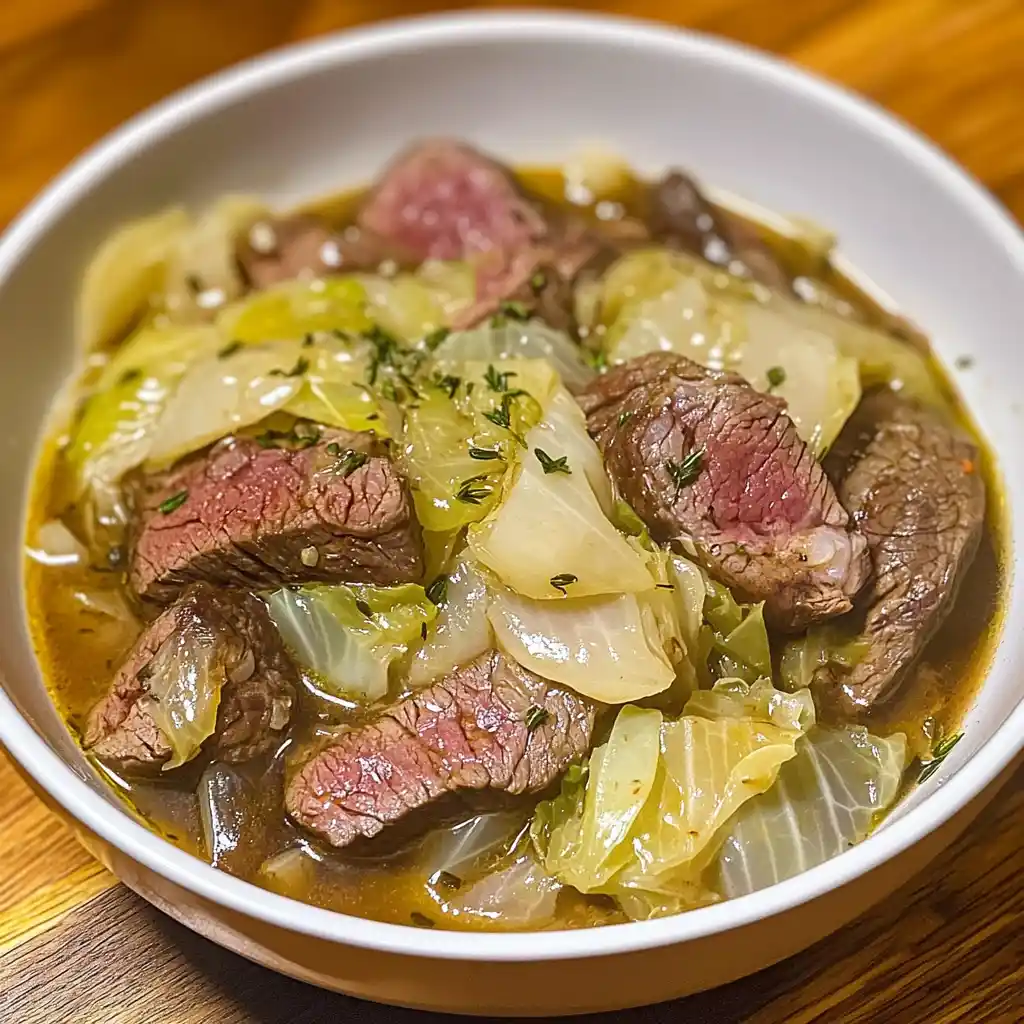
Fork-tender slow-cooked steak with cabbage, onions, and garlic in a savory soy-Worcestershire broth — a deeply satisfying one-pot meal that builds all day while you’re away.
Prep Time: 15 minutes | Cook Time: 6–8 hours | Total Time: 6 hours 15 minutes | Servings: 4
Ingredients
- 1.5 lbs beef steak (chuck steak or round steak), thinly sliced
- 1 head green cabbage, chopped into 2-inch chunks
- 2 onions, sliced
- 3 cloves garlic, minced
- 2 cups beef broth
- 2 tbsp soy sauce
- 1 tbsp Worcestershire sauce
- 1 tsp dried thyme
- Salt and pepper to taste
- 2 tbsp olive oil
Instructions
- Season the sliced beef generously with salt and pepper on both sides.
- Heat olive oil in a large skillet over medium-high heat. Sear the beef in batches until browned on all sides, about 1 to 2 minutes per side. Do not crowd the pan.
- Transfer the seared beef to the slow cooker. Add the chopped cabbage, sliced onions, and minced garlic on top.
- In a bowl, whisk together the beef broth, soy sauce, Worcestershire sauce, and dried thyme. Pour the mixture evenly over the beef and vegetables.
- Cover and cook on low for 6 to 8 hours until the beef is fork-tender and the cabbage is soft.
- Taste the broth and adjust salt and pepper as needed before serving.
- Serve hot directly from the slow cooker, ladling the braising liquid over each portion.
Nutrition Information (Per Serving)
- Calories: 340
- Carbohydrates: 16g
- Protein: 36g
- Fat: 14g
- Fiber: 5g
- Sodium: 780mg
- Iron: 4.2mg (23% DV)
- Vitamin C: 55mg (61% DV)
Note: Nutrition estimates are based on 4 servings. Values will vary based on the specific beef cut and cabbage size used.
Notes
- Don’t skip the sear — 10 minutes of browning in the morning adds a significant layer of flavor that long slow cooking alone cannot replicate.
- Cut the cabbage into 2-inch chunks, not thin shreds — it wilts considerably during the long cook and thin pieces will dissolve entirely.
- Taste the broth before adding salt at the end; the soy sauce contributes a meaningful amount of sodium.
- For a thicker sauce, stir in a cornstarch slurry (1 tbsp cornstarch mixed with 2 tbsp cold water) in the last 20 minutes of cooking.
Storage Tips
- Refrigerator: Store in an airtight container for up to 4 days. The flavor improves overnight.
- Reheating: Warm on the stovetop over low heat with a splash of broth, or microwave with a damp paper towel over the top to retain moisture.
- Freezer: Freeze in portion-sized containers for up to 3 months. Thaw overnight in the fridge before reheating.
- This dish freezes particularly well because the long-braised beef holds its texture after thawing better than most proteins.
Serving Suggestions
- Ladled over mashed potatoes or egg noodles with crusty bread alongside to soak up the broth
- Served over steamed white rice for a simple, complete weeknight meal
- With a simple green salad dressed with vinaigrette to balance the richness of the braise
- Paired with roasted root vegetables for a full cold-weather comfort food spread
Mix It Up (Recipe Variations)
Spicy: Add red pepper flakes and gochujang paste to the braising liquid for a Korean-inspired heat.
Herb-Loaded: Add a bay leaf and fresh rosemary alongside the thyme; remove before serving.
Tomato: Add one 14 oz can of diced tomatoes to the braising liquid for brightness and body.
Root Vegetable: Add chunks of carrot and potato to the slow cooker for a complete one-pot meal with no sides needed.
What Makes This Recipe Special
The combination of searing before slow cooking and the Worcestershire-soy braising liquid is what separates this slow-cooked steak with cabbage from a one-note dump-and-go recipe. The sear locks in the beef’s natural juices and builds a layer of flavor that carries through every hour of slow cooking. The Worcestershire adds a complexity that pure soy sauce alone can’t achieve — a depth that makes the broth taste like it has far more going on than its short ingredient list suggests. The cabbage, slow-cooked in that liquid for hours, absorbs all of it and becomes something completely different from raw cabbage: sweet, silky, and deeply savory all at once.
