
Have you ever wanted to try cooking with ancient grains but felt overwhelmed by all those health food ingredients that seem too complicated for weeknight dinners? I used to think farro was just another trendy grain I’d never figure out until my Spanish exchange student cooked me this incredible Spanish Zucchini Farro using her grandmother’s sofrito technique, and I realized that this nutty, chewy grain is basically foolproof when cooked like a risotto. Now this colorful one-pot wonder is my go-to when I want something that feels virtuous but tastes indulgent, and honestly, my family requests it so often that I buy farro in bulk now (which makes me feel like some kind of sophisticated cook even though this is literally just vegetables and grains simmered together).
Here’s What Makes This Work
The secret to this Spanish Zucchini Farro is how layering the spices—regular paprika, cumin, and smoked paprika—creates that distinctly Spanish flavor profile that makes vegetables and grains taste like something you’d order at a tapas bar. I learned the hard way that toasting the farro with the vegetables and spices before adding liquid matters because it develops nutty depth and helps the grains absorb flavor. Here’s the thing about this recipe: farro is incredibly forgiving compared to rice—you can’t really overcook it into mush because those ancient grains hold their texture beautifully. It’s honestly that simple—sauté your vegetables, bloom your spices, add farro and tomatoes, then let everything simmer until the grains are tender and chewy. No fancy tricks needed, just good olive oil, fresh vegetables, and the patience to let time transform simple ingredients into something special. The result is something that looks impressive, tastes complex, and happens to be incredibly healthy.
What You’ll Need (And My Shopping Tips)
Good farro is worth seeking out at health food stores or well-stocked grocery stores—look for semi-pearled or pearled farro which cooks faster than whole farro. Don’t cheap out on ancient farro that’s been sitting in bulk bins forever because old grains take longer to cook and taste stale. I learned this after wrestling with farro that never got tender even after an hour of cooking (not my finest kitchen moment).
For the zucchini, look for medium-sized ones that are firm and heavy for their size with glossy skin. Don’t use those baseball bat-sized zucchinis from late summer that are full of seeds and watery. The bell peppers should be crisp, heavy, and glossy—using both red and yellow creates gorgeous color, but any combination works. A good yellow or white onion that’s firm and heavy, and fresh garlic cloves that aren’t sprouting.
Canned diced tomatoes should be good quality—San Marzano or fire-roasted add extra depth. The spice trio is crucial: regular paprika, ground cumin, and smoked paprika (also called pimentón). If your spices smell like dust instead of being aromatic and potent, replace them because they’re doing nothing for this dish. Quality vegetable broth makes a difference—use something that tastes good on its own, not that weird chemical-tasting stuff.
Good olive oil is essential in Spanish cooking—you want something fruity and peppery that adds flavor. Fresh parsley for garnish isn’t optional; it adds brightness and makes everything look professional. I always grab extra zucchini and bell peppers because I inevitably snack on them while prepping (happens more than I’d like to admit).
Let’s Make This Together
Start by heating a good glug of olive oil (about 2-3 tablespoons) in your largest pot or Dutch oven over medium heat. Add the diced onion and cook for about 3-4 minutes until it turns translucent and starts to soften. Here’s where I used to mess up: I’d try to rush it on high heat, but medium heat gives the onion time to sweeten properly without burning.
Add your diced zucchini and both bell peppers to the pot. Cook everything together for about 5 minutes, stirring occasionally, until the vegetables start to soften and get a little color on the edges. Don’t be afraid to let them sit for a minute between stirs—a little caramelization adds flavor. Just like my Spanish friend taught me when I was learning to make proper sofrito, you want to build flavors layer by layer rather than just boiling everything together.
Stir in the minced garlic, paprika, cumin, and smoked paprika. Cook for another minute, stirring constantly, until the spices are incredibly fragrant and coat all the vegetables. This blooming step is crucial—it wakes up the spices and creates that deep Spanish flavor base.
Now add the uncooked farro directly to the pot and stir everything together for about 2 minutes. You want the farro toasted slightly and coated in all those spices and vegetable flavors. This step ensures the grains will absorb maximum flavor during cooking.
Pour in the canned diced tomatoes with all their juices, followed by the vegetable broth. Season with salt (I use about 1½ teaspoons to start) and black pepper (about ½ teaspoon). Give everything a good stir and bring it to a simmer. Once it’s bubbling, reduce the heat to low, cover the pot with a tight-fitting lid, and let it simmer gently for about 30-35 minutes.
Check it after 25 minutes—the farro should be tender but still have a pleasant chew (like al dente pasta), and most of the liquid should be absorbed. If there’s still a lot of liquid, take the lid off and let it cook uncovered for another 5 minutes. If it looks dry before the farro is tender, add a splash more broth or water. Similar to this Mediterranean Quinoa Pilaf, the key is balancing grain texture with the right amount of liquid.
Taste and adjust seasoning—it probably needs more salt than you think because grains absorb a lot. Serve hot in bowls, garnished generously with fresh chopped parsley. A drizzle of good olive oil on top makes it even better.
When Things Go Sideways (And They Will)
Farro stayed hard and crunchy even after 35 minutes? Your farro was probably whole grain (not semi-pearled) which takes longer, or your simmer was too gentle. In reality, I’ve learned to check the package—whole farro needs 45-60 minutes of cooking time. If this happens (and it will), just keep cooking with the lid off, adding liquid as needed until the grains are tender.
Spanish Zucchini Farro came out mushy and overcooked? You probably used too much liquid or cooked it too long. This is frustrating but it still tastes good—just serve it more like a thick stew than a grain pilaf. Don’t panic if some vegetables broke down—that’s actually traditional in Spanish rice dishes where the vegetables melt into the base.
Everything tasting bland and boring? You probably didn’t use enough salt and spices, or your spices are old and flavorless. The fix is tasting aggressively and adjusting—Spanish food is bold and aromatic, not subtle. If your dish is watery and soupy, you added too much broth or didn’t let it simmer long enough. Take the lid off and let it reduce until it reaches the consistency you want. Fresh lemon juice squeezed over the top at the end can also brighten everything up if it tastes flat.
Ways to Mix It Up
When I’m feeling fancy, I’ll add chickpeas in the last 10 minutes for Protein-Packed Spanish Farro that’s even more substantial. Around summer, I make a Grilled Vegetable Version by grilling the zucchini and peppers first, then stirring them in at the end for smoky depth. For Seafood Spanish Farro, I add shrimp in the last 5 minutes of cooking for a paella-inspired dish. The Spicy Version includes diced jalapeños and extra smoked paprika for serious heat lovers who want that kick.
Why This Recipe Works So Well
This Spanish Zucchini Farro represents the beautiful way Spanish cuisine embraces grains, vegetables, and bold spices to create dishes that are both nourishing and exciting. While farro originated in the Mediterranean and Middle East thousands of years ago, its nutty flavor and chewy texture work perfectly with Spanish cooking techniques and seasonings. The method of building flavor through sofrito (sautéed aromatics), then simmering grains in seasoned liquid, mirrors how Spanish cooks make rice dishes like paella or arroz. What sets this apart is how farro holds its texture better than rice, creating a more substantial, satisfying dish that doesn’t get mushy or sticky. The combination of regular paprika, cumin, and smoked paprika creates layers of warmth and depth that make vegetables taste exciting rather than virtuous. It’s a complete meal in one pot—whole grains, vegetables, and bold flavors—that proves healthy food can be deeply satisfying and full of personality.
Things People Ask Me About This Recipe
Can I make this Spanish Zucchini Farro ahead of time?
Absolutely! This actually tastes better the next day after the flavors have melded. Make it, cool completely, and store in the fridge for up to 5 days. The farro will continue to absorb liquid as it sits, so you might need to add a splash of broth or water when reheating. I often make a big batch on Sunday for easy lunches all week.
What if I can’t find farro?
Barley, wheat berries, or even brown rice work as substitutes with similar cooking times. Quinoa cooks much faster (15-20 minutes), so adjust accordingly. The texture will be different, but you’ll still get that hearty, satisfying quality. I’ve made this with barley when I ran out of farro and it was delicious.
Can I use other vegetables instead of zucchini?
Definitely! Eggplant, mushrooms, green beans, or artichoke hearts all work beautifully with these Spanish flavors. Just adjust cooking times based on the vegetable—harder vegetables like carrots need more time to soften. I’ve made this with whatever vegetables I had on hand and it’s always been great.
Is this Spanish Zucchini Farro vegan and gluten-free?
It’s naturally vegan as long as you use vegetable broth! However, farro contains gluten since it’s a wheat grain. For gluten-free, substitute with brown rice, wild rice, or certified gluten-free oats. The cooking method stays the same, just adjust liquid ratios per package directions.
How do I store and reheat leftovers?
Store in an airtight container in the fridge for up to 5 days. Reheat gently on the stovetop with a splash of broth or water, or in the microwave, stirring occasionally. This also freezes beautifully for up to 3 months—thaw overnight in the fridge before reheating. The grains hold up remarkably well.
What’s the best way to serve this?
I love serving this in shallow bowls as a main course, but it also works as a side dish alongside grilled fish or chicken. Top with a fried egg for breakfast-for-dinner vibes. Some people like adding a dollop of Greek yogurt on top for creaminess, which is delicious. A squeeze of lemon juice at the table brightens everything up.
One Last Thing
I couldn’t resist sharing this Spanish Zucchini Farro because it proves that healthy grain bowls don’t have to be boring or taste like cardboard. The best weeknights are when I make a big pot of this colorful dish, and everyone crowds around the stove asking “what smells so good?” while those warm Spanish spices fill the whole house.
Print
Spanish Zucchini Farro
Description
This vibrant Spanish Zucchini Farro combines nutty ancient grains with colorful vegetables and warm spices for a healthy one-pot meal that tastes like something from a tapas bar.
Prep Time: 15 minutes | Cook Time: 40 minutes | Total Time: 55 minutes | Servings: 6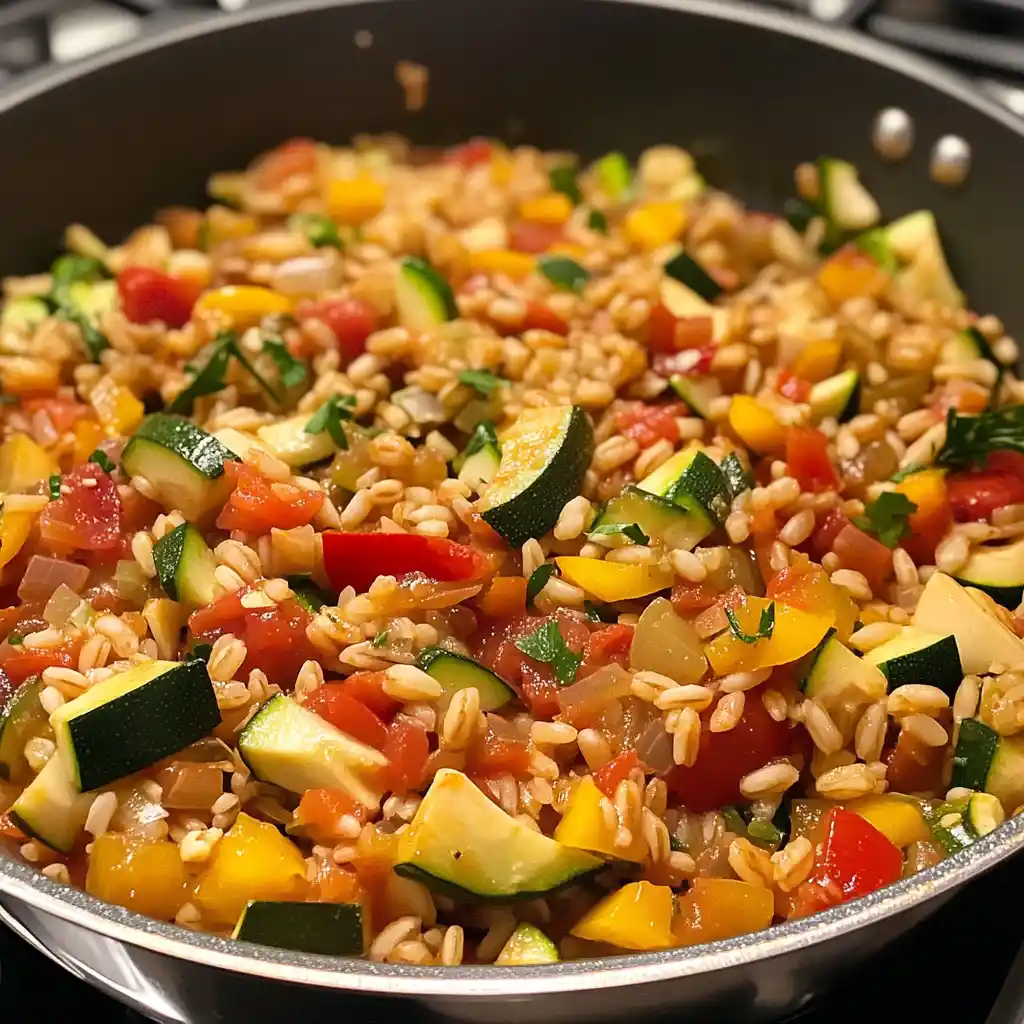
Ingredients
- 2 cups farro, uncooked (semi-pearled or pearled)
- 2 medium zucchinis, diced into ½-inch pieces
- 1 red bell pepper, diced
- 1 yellow bell pepper, diced (or use 2 red peppers)
- 1 large onion, diced (about 1½ cups)
- 2 cloves garlic, minced (fresh, not jarred)
- 1 can (14 oz) diced tomatoes with juices
- 1 teaspoon paprika
- ½ teaspoon ground cumin
- ½ teaspoon smoked paprika (pimentón if you can find it)
- 1½ teaspoons salt, or to taste
- ½ teaspoon black pepper
- 3 cups vegetable broth (good quality that tastes good on its own)
- 2–3 tablespoons olive oil (good Spanish olive oil if possible)
- Fresh parsley, chopped for garnish (don’t skip this!)
Instructions
- Heat 2-3 tablespoons olive oil in your largest pot or Dutch oven over medium heat. Add the diced onion and cook for 3-4 minutes until translucent and softened.
- Add the diced zucchini and both bell peppers to the pot. Cook for about 5 minutes, stirring occasionally, until the vegetables start to soften and get a little color. Let them sit between stirs for caramelization.
- Stir in the minced garlic, paprika, cumin, and smoked paprika. Cook for another minute, stirring constantly, until incredibly fragrant. This blooming step is crucial for flavor.
- Add the uncooked farro directly to the pot and stir everything together for about 2 minutes. You want the farro toasted slightly and coated in all those spices.
- Pour in the canned diced tomatoes with all their juices, followed by the vegetable broth. Season with salt and black pepper. Give everything a good stir and bring to a simmer.
- Once bubbling, reduce the heat to low, cover the pot with a tight-fitting lid, and let it simmer gently for 30-35 minutes. Check after 25 minutes—the farro should be tender but still have a pleasant chew, and most liquid should be absorbed.
- If there’s still a lot of liquid, take the lid off and cook for another 5 minutes. If it looks dry before the farro is tender, add a splash more broth or water.
- Taste and adjust seasoning—it probably needs more salt than you think. Serve hot in bowls, garnished generously with fresh chopped parsley. A drizzle of good olive oil on top makes it even better.
Nutrition Information (Per Serving):
- Calories: 295
- Carbohydrates: 54g
- Protein: 10g
- Fat: 6g
- Fiber: 9g
- Sodium: 680mg
- Iron: 15% DV
- Vitamin C: 95% DV
- Vitamin A: 35% DV
Farro provides whole grain fiber and protein, while colorful vegetables contribute vitamins and antioxidants.
Notes:
- Use semi-pearled or pearled farro for faster cooking (30-35 minutes)
- Whole farro takes 45-60 minutes—check your package
- Fresh, potent spices make all the difference in this dish
- The farro should be tender but still have a pleasant chew
- Don’t skip toasting the farro with spices before adding liquid
- This continues to absorb liquid as it sits
Storage Tips:
Store in an airtight container in the refrigerator for up to 5 days. The farro will continue to absorb liquid, so add a splash of broth or water when reheating. Reheat gently on the stovetop or in the microwave, stirring frequently. Freeze in portions for up to 3 months in freezer-safe containers. Thaw overnight in the fridge and reheat with a bit of added liquid. This actually tastes better the next day after flavors meld.
Serving Suggestions:
- Main Course: Serve in shallow bowls as a complete vegetarian meal
- Side Dish: Pair alongside grilled fish, chicken, or lamb
- Breakfast Bowl: Top with a fried egg for a savory breakfast
- With Yogurt: Add a dollop of Greek yogurt or labneh for creaminess
Mix It Up (Recipe Variations):
Protein-Packed Spanish Farro: Add 1 can drained chickpeas in the last 10 minutes for extra protein and heartiness
Grilled Vegetable Version: Grill the zucchini and peppers first, then stir them in at the end for smoky depth
Seafood Spanish Farro: Add 1 lb shrimp in the last 5 minutes of cooking for a paella-inspired dish
Spicy Version: Add diced jalapeños and extra smoked paprika for heat lovers who want that kick
What Makes This Recipe Special:
This Spanish Zucchini Farro honors Spanish cooking techniques—building flavor through sofrito and simmering grains in seasoned liquid—while using ancient farro that holds texture beautifully. The combination of paprika, cumin, and smoked paprika creates layers of warmth that transform vegetables and grains into something bold and satisfying. It’s proof that healthy whole grains can be exciting and full of personality.
