
Ever wonder why some vegetable salads taste like you’re eating a pile of raw produce while others are bright, flavorful, and actually enjoyable? I used to think making spring bean salad meant just tossing raw vegetables together until I discovered that blanching transforms everything. Now my family devours this crisp, colorful salad at every spring gathering, and I’m pretty sure my neighbors think I’m some kind of vegetable whisperer (if only they knew how many times I served mushy, overcooked beans before learning the ice bath trick).
Here’s the Thing About This Recipe
What makes this spring bean salad work is the blanching technique—briefly cooking the beans and snap peas in boiling water, then shocking them in ice water to stop the cooking. I learned the hard way that you can’t just serve these vegetables raw (they’re tough and grassy) or fully cooked (they turn mushy and army-green). Blanching gives you that perfect crisp-tender texture and vibrant color that screams “spring.” This seasonal salad brings together multiple bean varieties with creamy feta, bright lemon, and fresh dill for a dish that celebrates the best of spring produce. It’s honestly that simple: good timing on the blanching, an ice bath to stop cooking, and a bright dressing that doesn’t drown the vegetables.
What You’ll Need (And My Shopping Tips)
Good fresh green beans are worth seeking out at farmers markets or the freshest section of your grocery store—look for beans that snap crisply when you bend them, with no brown spots or limpness (I learned this after buying sad, bendy beans three times and wondering why my salad had no crunch). You’ll need 8 ounces, which is about 2 cups once trimmed.
For color and variety, grab yellow wax beans (they’re just like green beans but golden yellow—adds gorgeous color) and snap peas. The snap peas should be bright green with taut pods that snap cleanly. You’ll need 8 ounces of each. Don’t cheap out on limp, yellowing snap peas from the discount bin (happens more than I’d like to admit when I’m trying to save money).
For flavor and texture contrast, you’ll need a red onion (thinly sliced—the raw bite adds sharpness), cherry tomatoes (halved for juicy bursts), crumbled feta cheese (the good stuff, not the pre-crumbled sawdust), and fresh dill. Dill is essential for that springtime flavor—dried dill just doesn’t cut it here.
For the dressing, grab good quality olive oil, fresh lemon juice (not bottled—it matters), salt, and pepper. The dressing is purposefully simple to let the vegetables shine.
If you’re curious about the nutritional benefits of eating seasonal produce, Wikipedia has interesting information about why spring vegetables are nutritional powerhouses.
Let’s Make This Together
Start by bringing a large pot of salted water to a rolling boil—use enough water that the vegetables can move freely, and salt it generously (it should taste like the ocean). While the water heats, prepare a large bowl of ice water and set it next to the stove. This ice bath is crucial for stopping the cooking process instantly.
Trim your green beans, yellow wax beans, and snap peas by snapping off the stem ends. For the beans, cut them in half so they’re easier to eat. Here’s where I used to mess up: I’d leave them whole and they’d be awkward in the salad. Uniformly sized pieces cook evenly and are easier to eat.
Once your water is at a rolling boil, add the green beans and yellow wax beans first (they take slightly longer than snap peas). Set a timer for 2 minutes, then add the snap peas and cook for an additional 1 minute, for 3 minutes total cooking time. You want crisp-tender—still with a slight crunch when you bite them, not soft and mushy.
Immediately drain the vegetables in a colander and plunge them into the ice bath. Here’s my secret: let them sit in the ice water for about 2-3 minutes until completely cooled, swirling them around occasionally. This step stops the cooking instantly and sets that gorgeous bright green and yellow color. I learned this trick from a chef friend who taught me that shocking vegetables is the key to restaurant-quality salads.
Drain the cooled vegetables thoroughly and pat them dry with clean kitchen towels or paper towels. Excess water will dilute your dressing and make the salad watery, so get them as dry as possible.
In a large mixing bowl, combine the blanched and dried beans and snap peas with the thinly sliced red onion, halved cherry tomatoes, crumbled feta cheese, and chopped fresh dill. Toss gently to distribute everything evenly.
In a small bowl, whisk together the olive oil, fresh lemon juice, salt (I start with 1/2 teaspoon), and pepper (about 1/4 teaspoon) to make the dressing. Taste it—it should be bright and slightly acidic since it’s dressing a lot of vegetables.
Drizzle the dressing over the salad and toss gently with your hands or salad tongs to coat all the ingredients without bruising the vegetables or mashing the tomatoes. The feta should get slightly creamy and coat everything lightly.
Taste and adjust seasoning—you’ll probably need more salt and maybe a squeeze more lemon juice. Don’t be shy; vegetables need generous seasoning to taste their best. If you’re looking for another spring vegetable recipe, try this Asparagus and Pea Risotto that celebrates similar seasonal produce.
Chill the salad in the refrigerator for at least 30 minutes before serving. This allows the flavors to meld and the onion to mellow slightly in the acidic dressing. I learned from experience that this salad actually tastes better after sitting for a bit—the dressing penetrates the vegetables and everything marries together beautifully.
Serve cold as a side dish for grilled meats or fish, or as a light lunch on its own. This keeps well for 1-2 days in the fridge, though the vegetables will soften slightly over time.
When Things Go Sideways (And They Will)
Beans turned mushy and overcooked? You blanched them too long or didn’t shock them in ice water quickly enough. In reality, I’ve learned to set a timer and have that ice bath ready before the vegetables even go into the pot. Timing is everything.
Vegetables lost their bright color and turned dull olive green? You didn’t shock them properly in ice water, or you let them sit too long before cooling. The ice bath sets the chlorophyll and preserves that gorgeous color. This is fixable for next time with proper technique.
Salad tastes bland despite the dressing? You need way more salt than you think. Vegetables, especially blanched ones, absorb a lot of seasoning. Also, the feta should be salty and tangy—if yours is mild, add more or choose a different brand next time.
Too watery and the dressing won’t stick? The vegetables weren’t dried properly after blanching. If this happens, drain off the excess liquid and toss with a bit more olive oil and lemon juice. Don’t panic—just pat them drier next time.
Ways to Mix It Up
Herby Spring Bean Salad: When I’m feeling fancy, I’ll add fresh mint and basil along with the dill for a more complex herb profile that’s incredible. Around early summer, this becomes my herb garden showcase version.
Nutty Bean Salad: Add 1/4 cup toasted sliced almonds or pine nuts for extra crunch and richness—the nuts add a lovely textural contrast.
Mediterranean Bean Salad: Swap the feta for crumbled goat cheese and add kalamata olives and sun-dried tomatoes for a more Mediterranean vibe.
Warm Spring Bean Salad: Skip the chilling step and serve this warm or at room temperature immediately after tossing with the dressing—perfect for cool spring evenings.
What Makes This Recipe Special
This spring bean salad represents the celebration of seasonal eating at its finest—using vegetables that are at their peak in late spring and early summer when they’re sweetest, most tender, and most nutritious. The technique of blanching vegetables for salads is fundamental to professional cooking but often skipped in home kitchens, where people either serve raw vegetables that are too tough or fully cooked ones that are too soft. Blanching hits that perfect middle ground: tender enough to be pleasant but still with enough structure to have presence and crunch. The ice bath (shocking) is equally important—it stops the cooking instantly and sets the bright color by halting the enzymes that would otherwise turn green vegetables a dull olive color. What makes this particular salad special is the combination of three different legumes—green beans, yellow wax beans, and snap peas—each contributing slightly different textures and flavors while creating a visually stunning dish. The Mediterranean-inspired dressing with lemon, olive oil, and feta is classic for a reason: it’s bright and light enough to let the vegetables shine while adding enough richness and tang to make them crave-worthy. Fresh dill is traditional with beans in many cuisines and adds that distinctive springtime flavor that dried herbs can’t replicate. The history of green beans shows they’re native to the Americas but have been cultivated and enjoyed worldwide for centuries, with each culture developing its own preparation methods.
Things People Ask Me About This Recipe
Can I use frozen beans instead of fresh for this spring bean salad?
You can, but the texture won’t be as good—frozen beans are already blanched before freezing, so they’ll be softer. If using frozen, just thaw them, skip the blanching step, and toss with the other ingredients. Fresh is really better for this recipe.
How do I know when the beans are perfectly blanched?
They should be bright in color and tender enough to bite through easily but still have a slight crunch—not soft or bendy. Taste one after 2-3 minutes to check. It’s better to slightly undercook than overcook.
Can I make this spring bean salad ahead for a party?
Yes! You can blanch the beans up to a day ahead and store them in the fridge, then assemble the salad a few hours before serving. The salad actually tastes better after sitting for 30 minutes to a few hours as the flavors meld.
What if I can’t find yellow wax beans?
Just use all green beans, or substitute with edamame or lima beans for variety. The yellow wax beans are primarily for color, so the salad will taste fine without them—just less visually striking.
Can I make this dairy-free?
Absolutely! Just omit the feta or substitute with a dairy-free feta alternative. The salad is still delicious without cheese—you might want to add a bit more salt and acid to compensate for the tangy feta.
Why does my salad get watery after sitting in the fridge?
The salt in the dressing draws moisture out of the tomatoes and vegetables over time. This is normal—just drain off the excess liquid before serving and give it a toss. You can also add the tomatoes right before serving to minimize this.
One Last Thing
I couldn’t resist sharing this spring bean salad because it’s the recipe that taught me the power of proper technique transforming simple ingredients. The best spring salad moments are when someone who claims to hate vegetables takes a bite and says “wait, these beans are actually good!” You don’t need fancy ingredients or complicated preparation—just fresh seasonal produce, proper blanching technique, and the patience to let flavors meld in the fridge.
Print
Spring Bean Salad
Description
This vibrant spring bean salad showcases perfectly blanched green beans, yellow wax beans, and snap peas tossed with tangy feta, fresh dill, and a bright lemon dressing for a colorful side dish that celebrates the best of spring produce with restaurant-quality technique.
Prep Time: 15 minutes | Cook Time: 3 minutes | Chill Time: 30 minutes | Total Time: 48 minutes | Servings: 6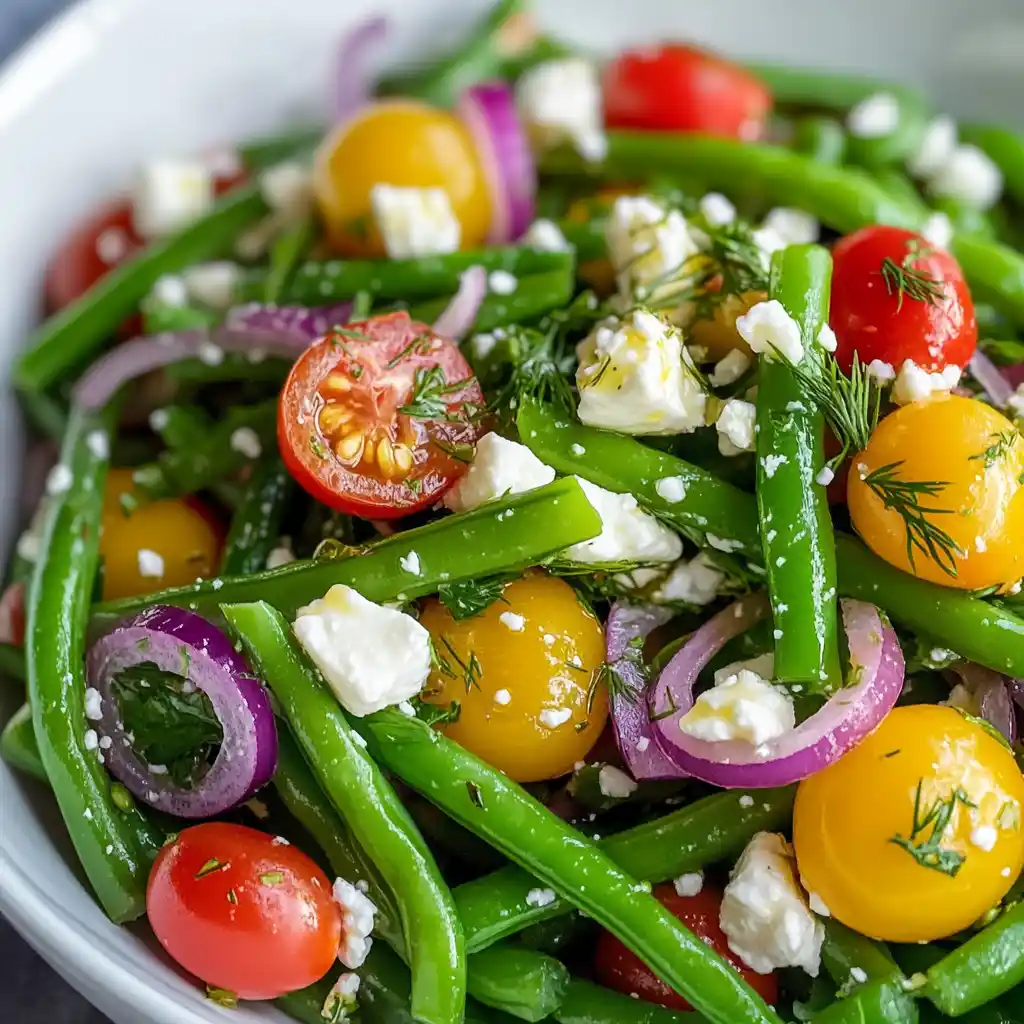
Ingredients
For the Salad:
- 8 oz green beans, trimmed and halved (look for beans that snap crisply)
- 8 oz yellow wax beans, trimmed and halved (adds gorgeous golden color)
- 8 oz snap peas, trimmed (remove the string if tough)
- 1/4 cup red onion, thinly sliced (the raw bite adds sharpness)
- 1/4 cup cherry tomatoes, halved (about 8–10 tomatoes)
- 1/4 cup feta cheese, crumbled (get the good stuff, not pre-crumbled)
- 2 tbsp fresh dill, chopped (dried won’t cut it here)
For the Dressing:
- 2 tbsp olive oil (good quality—it matters)
- 1 tbsp fresh lemon juice (about 1/2 lemon—bottled won’t give the same brightness)
- Salt and pepper to taste (start with 1/2 tsp salt, 1/4 tsp pepper)
Instructions
- Bring a large pot of salted water to a rolling boil (salt it generously—it should taste like the ocean). While water heats, prepare a large bowl of ice water and set it next to the stove.
- Trim the green beans, yellow wax beans, and snap peas by snapping off stem ends. Cut the beans in half for easier eating. Make pieces uniform in size for even cooking.
- Once water is at a rolling boil, add the green beans and yellow wax beans first. Set a timer for 2 minutes, then add the snap peas and cook for an additional 1 minute (3 minutes total). You want crisp-tender—still with a slight crunch, not soft and mushy.
- Immediately drain the vegetables in a colander and plunge them into the ice bath. Let them sit for 2-3 minutes until completely cooled, swirling occasionally. This stops cooking instantly and sets that gorgeous bright color.
- Drain the cooled vegetables thoroughly and pat them dry with clean kitchen towels or paper towels—get them as dry as possible or the dressing will be diluted.
- In a large mixing bowl, combine the blanched and dried beans and snap peas with the thinly sliced red onion, halved cherry tomatoes, crumbled feta cheese, and chopped fresh dill. Toss gently to distribute evenly.
- In a small bowl, whisk together the olive oil, fresh lemon juice, salt, and pepper. Taste the dressing—it should be bright and slightly acidic.
- Drizzle the dressing over the salad and toss gently with your hands or salad tongs to coat all ingredients without bruising vegetables or mashing tomatoes.
- Taste and adjust seasoning—you’ll probably need more salt and maybe more lemon juice. Vegetables need generous seasoning to shine.
- Chill the salad in the refrigerator for at least 30 minutes before serving. This allows flavors to meld and the onion to mellow slightly in the acidic dressing.
- Serve cold as a side dish or light lunch. Keeps well for 1-2 days in the fridge, though vegetables will soften slightly over time.
Nutrition Information (Per Serving):
- Calories: 95
- Carbohydrates: 9g
- Protein: 4g
- Fat: 6g
- Fiber: 3g
- Sodium: 180mg
- Vitamin C: 40% DV
- Vitamin K: 35% DV
- Folate: 15% DV
This spring bean salad provides exceptional vitamin C and K from fresh vegetables, plus protein and calcium from feta, making it nutritious and delicious.
Notes:
- Use enough water that vegetables can move freely, and salt it generously—it seasons from the inside.
- Set a timer for blanching—timing is crucial. Better to slightly undercook than overcook.
- The ice bath is non-negotiable—it stops cooking instantly and sets the bright color.
- Dry vegetables thoroughly after shocking or the dressing will be watery.
- Fresh dill makes a huge difference—dried herb can’t replicate that springtime flavor.
- The salad tastes better after chilling for 30 minutes as flavors meld.
Storage Tips:
Store in an airtight container in the refrigerator for up to 2 days. The vegetables will soften slightly over time, and the tomatoes may release liquid—just drain off excess liquid before serving and give it a toss. The salad is best within 24 hours when the vegetables are at peak crispness. Don’t freeze this—the texture of blanched vegetables gets mushy and unpleasant when thawed. If making ahead, you can blanch the beans up to a day early and store separately, then assemble a few hours before serving.
Serving Suggestions:
- BBQ Side Dish: Serve alongside grilled chicken, steak, or fish for a fresh vegetable component
- Light Lunch: Enjoy on its own with crusty bread for a satisfying vegetarian meal
- Potluck Star: Double the recipe and bring in a large bowl—everyone loves fresh spring vegetables
- Picnic Perfect: Pack in a cooler for outdoor dining—travels well and tastes great cold
Mix It Up (Recipe Variations):
Herby Spring Bean Salad: Add 1 tablespoon each of fresh chopped mint and basil along with the dill for a more complex herb profile.
Nutty Bean Salad: Toss in 1/4 cup toasted sliced almonds or pine nuts for extra crunch and richness.
Mediterranean Bean Salad: Swap feta for crumbled goat cheese and add kalamata olives and sun-dried tomatoes for deeper Mediterranean flavors.
Warm Spring Bean Salad: Skip the chilling step and serve warm or at room temperature immediately after tossing for cool spring evenings.
What Makes This Recipe Special:
This spring bean salad showcases professional blanching technique that transforms tough raw vegetables into perfectly crisp-tender bites with vibrant color. The ice bath stops cooking instantly and sets the chlorophyll for that restaurant-quality bright green. The combination of three legumes creates visual interest and varied textures, while the Mediterranean-inspired dressing remains light enough to let seasonal vegetables shine.
