
Ever wonder why restaurant lobster tastes so luxurious while homemade versions seem intimidating and complicated? I used to think cooking lobster at home was reserved for trained chefs until I discovered this foolproof spring braised lobster recipe. Now my family requests this for special occasions, and my dinner guests genuinely think I went to culinary school (if only they knew I used to overcook lobster tails into rubber bands before learning this gentle braising method).
Here’s the Thing About This Recipe
What makes this spring braised lobster work is the genius of oven-braising, which keeps the meat incredibly tender and juicy instead of turning it tough and chewy like overcooking so easily does. The secret to authentic restaurant-quality lobster isn’t complicated techniques or expensive equipment—it’s all about gentle heat with bright lemon, aromatic garlic, and sweet cherry tomatoes that create a light sauce perfect for spring. I learned the hard way that high heat dries out lobster in minutes, but braising in a flavorful liquid? Here’s what I’ve learned: it’s nearly foolproof and gives you perfectly tender lobster every single time. It’s honestly that simple, and no fancy tricks needed to make this taste like you spent a fortune at a coastal restaurant.
What You’ll Need (And My Shopping Tips)
Good fresh or frozen lobster tails are worth seeking out—look for cold-water lobster tails that are about 5-6 ounces each, which is the perfect portion size. Don’t cheap out on warm-water lobster tails; they’re mushier and don’t have that sweet, firm texture we want. I always grab an extra tail because someone inevitably wants more, and these spring braised lobster tails are the kind of special dinner people remember (happens more than I’d like to admit that I underestimate how impressive this dish is).
If buying frozen lobster tails (which is totally fine), thaw them in the fridge overnight—never at room temperature or in hot water. For the cherry tomatoes, pick ones that are firm and smell sweet. The shallot adds a milder, sweeter onion flavor than regular onions, and it’s worth hunting down in the produce section. I learned this after using regular onions three times and missing that subtle sweetness.
Fresh parsley is non-negotiable for that bright, fresh finish—dried parsley just doesn’t bring the same pop of color and flavor. Good olive oil matters here since you’re using it to build the flavor base. For the lemon, pick one that feels heavy for its size, which means it’s juicy. The chicken broth creates a light braising liquid that doesn’t overpower the delicate lobster flavor.
Let’s Make This Together
Start by preheating your oven to 375°F—this moderate temperature is perfect for gentle braising. Heat that olive oil in a large oven-safe skillet over medium heat. Once it’s shimmering, add your minced garlic and finely chopped shallot, and sauté for about 2 minutes until they’re fragrant and the shallot turns translucent. Here’s where I used to mess up: burning the garlic by having the heat too high, which makes everything bitter.
Now for the fun part: place those lobster tails in the skillet shell-side down. This protects the delicate meat while giving the shells a nice sear. Cook them for 2-3 minutes until the shells turn bright red and the meat starts to firm up slightly. Don’t be me—I used to flip them too early and the meat would stick to the pan.
Pour in that chicken broth and lemon juice, and season everything with salt and pepper. The liquid should come about halfway up the lobster tails—not covering them completely. Scatter those halved cherry tomatoes around the lobster tails in the pan. Here’s my secret: the tomatoes will burst slightly while braising, creating a naturally sweet sauce that’s absolutely incredible. Around here, we’ve figured out that this method is way more forgiving than grilling or boiling lobster.
Cover the skillet tightly with aluminum foil and carefully transfer it to your preheated oven. Braise for 15-20 minutes, checking at the 15-minute mark. I learned this trick from my neighbor who worked in a seafood restaurant—lobster is done when the meat is opaque all the way through and registers 140°F on an instant-read thermometer. The timing depends on the exact size of your tails, so every batch might vary slightly.
Once they’re perfect, carefully remove the skillet from the oven (use oven mitts—that handle is screaming hot). Sprinkle generously with fresh chopped parsley and serve these beauties immediately, drizzling those delicious pan juices over everything. If you’re making this as part of a special dinner, check out this Garlic Butter Green Beans that pairs beautifully with lobster.
If This Happens, Don’t Panic
Lobster turned out rubbery and overcooked? You probably braised it too long or your oven runs hot. In reality, I’ve learned to check at 12 minutes if using smaller tails, and always use a thermometer—140°F is perfect. If this happens (and it might until you get to know your oven), just remember the timing for next time because you can’t undo overcooked seafood.
Sauce is too thin and watery? This is totally fixable—after removing the lobster, place the skillet on the stovetop over high heat and reduce the liquid for 2-3 minutes until it thickens slightly. I always check the sauce consistency now because every oven evaporates liquid differently.
Everything tastes bland despite the lemon and garlic? Don’t panic, just add more lemon juice and a pinch of salt after cooking. Every lemon has different acidity, so trust your taste buds. If your spring braised lobster needs more punch, a small pat of butter stirred into the pan juices right before serving adds richness and depth.
Ways to Mix It Up
When I’m feeling fancy, I’ll make White Wine Braised Lobster by replacing half the chicken broth with dry white wine for a more sophisticated flavor that’s absolutely restaurant-worthy. Around special occasions, I’ll switch it up with Herb Butter Lobster by adding 2 tablespoons of butter and fresh tarragon to the braising liquid for extra richness.
For a Spicy Spring Lobster version, add a pinch of red pepper flakes with the garlic and shallot for subtle heat that complements the sweet lobster beautifully. If you want a Mediterranean Style option, add halved kalamata olives and capers in the last 5 minutes of braising for briny, complex flavors.
What Makes This Recipe Special
This spring braised lobster recipe works because it respects the delicate nature of lobster meat by using gentle oven heat that keeps it tender instead of the aggressive stovetop methods that so easily overcook it. The technique of braising seafood is borrowed from French cooking traditions, where cooking in flavorful liquid creates incredibly moist, tender results. What sets this apart from other lobster recipes is how approachable it makes luxury seafood—the oven does most of the work while you relax. According to lobster cooking methods, braising is one of the gentlest ways to prepare this crustacean, preventing the tough, rubbery texture that results from high-heat cooking.
Things People Ask Me About This Recipe
Can I make this spring braised lobster ahead of time?
Lobster is really best served immediately after cooking for optimal texture and flavor. You can prep all your ingredients ahead—mince the garlic, chop the shallot and tomatoes—but the actual cooking should happen right before serving since it only takes about 25 minutes total.
What if I can’t find lobster tails?
You could use large shrimp (jumbo or colossal size) with the same method, reducing the braising time to about 8-10 minutes. The flavor profile works beautifully with any delicate seafood, though lobster is definitely the star here.
Can I use frozen lobster tails?
Absolutely! Just make sure they’re completely thawed in the refrigerator overnight before cooking. Pat them dry before adding to the skillet. Frozen tails actually work great for this recipe since the gentle braising keeps them tender.
Is this spring braised lobster beginner-friendly?
Yes! If you can sauté aromatics and transfer a pan to the oven, you’ve got this. The braising method is much more forgiving than grilling or boiling, which require perfect timing. Even beginners can nail this recipe.
How do I know when lobster is perfectly done?
The meat should be opaque all the way through (no translucent parts) and register 140°F on an instant-read thermometer inserted into the thickest part. The texture should be firm but still tender, not rubbery.
What should I serve with this lobster?
Keep sides simple and elegant—garlic butter green beans, rice pilaf, roasted asparagus, or a light spring salad. Crusty bread is essential for soaking up those incredible pan juices.
Before You Head to the Kitchen
I couldn’t resist sharing this spring braised lobster recipe because it’s completely transformed how I think about cooking special seafood at home. The best celebration dinners are when everyone’s savoring tender, flavorful lobster and you’re actually present at the table instead of stressed in the kitchen. Trust me on this one—master this gentle, elegant spring braised lobster, and you’ll have a go-to recipe for impressing anyone on any special occasion.
Print
Spring Braised Lobster
Description
Tender lobster tails braised with lemon, garlic, and sweet cherry tomatoes create this elegant spring braised lobster that tastes like it came from a five-star restaurant.
Prep Time: 10 minutes | Cook Time: 25 minutes | Total Time: 35 minutes | Servings: 2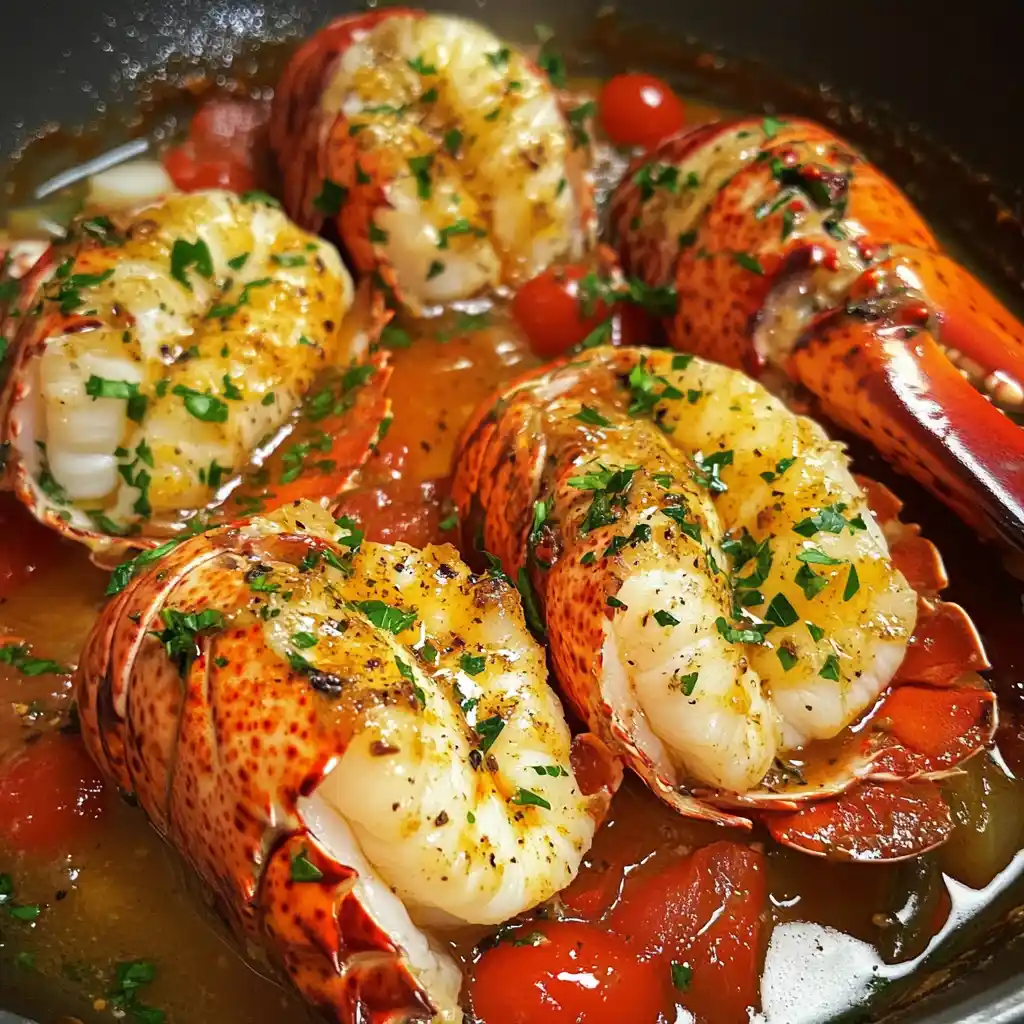
Ingredients
- 2 lobster tails, 5 oz each (fresh or completely thawed frozen)
- 2 tbsp olive oil (use good quality for best flavor)
- 1/2 cup chicken broth (or seafood stock if you have it)
- 1 lemon, juiced (should yield about 3 tablespoons)
- 2 cloves garlic, minced (fresh is essential here)
- 1 shallot, finely chopped (about 2 tablespoons)
- 1/2 cup cherry tomatoes, halved (look for sweet, ripe ones)
- 1/4 cup fresh parsley, chopped (plus extra for garnish)
- Salt and pepper to taste (start with 1/2 tsp salt, 1/4 tsp pepper)
Instructions
- Preheat your oven to 375°F—this moderate temperature is perfect for gentle braising that keeps lobster tender.
- Heat that olive oil in a large oven-safe skillet over medium heat until it’s shimmering. Add your minced garlic and finely chopped shallot, and sauté for about 2 minutes until fragrant and the shallot turns translucent. Don’t let the garlic brown.
- Place those lobster tails in the skillet shell-side down to protect the delicate meat. Cook for 2-3 minutes until the shells turn bright red and you can see the meat starting to firm up slightly.
- Pour in the chicken broth and lemon juice around the lobster tails—the liquid should come about halfway up the sides. Season everything with salt and pepper, being conservative since you can adjust later.
- Scatter those halved cherry tomatoes around the lobster tails in the pan. They’ll burst slightly while cooking and create a naturally sweet sauce.
- Cover the skillet tightly with aluminum foil and carefully transfer it to your preheated oven. Braise for 15-20 minutes, checking at the 15-minute mark with an instant-read thermometer—lobster is done at 140°F.
- Carefully remove the skillet from the oven using oven mitts (that handle is dangerously hot). Remove the foil and sprinkle generously with fresh chopped parsley.
- Serve these spring braised lobster tails immediately on warm plates, drizzling those delicious garlicky pan juices over everything. Provide crusty bread for soaking up every drop of sauce.
Nutrition Information (Per Serving):
- Calories: 245
- Carbohydrates: 8g
- Protein: 28g
- Fat: 11g
- Fiber: 1g
- Sodium: 740mg
- Vitamin C: 45% DV
- Selenium: 90% DV
- Vitamin B12: 25% DV
- Zinc: 20% DV
This spring braised lobster provides excellent lean protein and is remarkably rich in selenium and vitamin B12, making it both luxurious and nutritious.
Notes:
- Seriously, don’t overcook—lobster goes from perfect to rubbery in just a few minutes, so use a thermometer
- Every oven runs differently, so check at 15 minutes and adjust timing accordingly
- If lobster tails are larger than 5-6 oz, add 3-5 minutes to the braising time
- The pan juices are liquid gold—don’t skip drizzling them over everything
Storage Tips:
This dish is best enjoyed immediately after cooking for optimal texture and flavor. If you have leftovers, store the lobster meat (removed from shells) in an airtight container with the pan juices for up to 1 day in the fridge. Reheat very gently in the microwave at 50% power for 20-30 seconds maximum, or the meat will toughen. Don’t freeze cooked lobster—it becomes rubbery and loses its delicate, sweet flavor completely.
Serving Suggestions:
- Elegant Dinner: Serve over creamy risotto or lemon herb rice with roasted asparagus for a complete restaurant-quality meal
- Pasta Night: Toss the lobster meat and pan juices with angel hair pasta for a simple, luxurious spring pasta dish
- Light Spring Plate: Pair with a crisp arugula salad dressed simply with lemon vinaigrette to keep the focus on the lobster
- Special Occasion: Serve with drawn butter on the side, garlic bread, and your best white wine for an unforgettable celebration dinner
Mix It Up (Recipe Variations):
White Wine Braised Lobster: Replace half the chicken broth with dry white wine (like Sauvignon Blanc) for a more sophisticated, complex flavor that’s incredibly restaurant-worthy.
Herb Butter Lobster: Add 2 tablespoons of butter and 1 tablespoon fresh tarragon to the braising liquid for extra richness and an elegant French twist.
Spicy Spring Lobster: Add a pinch of red pepper flakes with the garlic and shallot for subtle heat that complements rather than overpowers the sweet lobster.
Mediterranean Style: Add 2 tablespoons halved kalamata olives and 1 tablespoon capers during the last 5 minutes of braising for briny, complex flavors.
What Makes This Recipe Special:
This spring braised lobster proves that luxury seafood can be approachable and nearly foolproof at home. While most lobster recipes rely on precise timing and high-heat methods that easily overcook this delicate crustacean, braising in a flavorful liquid creates a safety net that delivers consistently tender results. The combination of bright lemon, aromatic garlic and shallot, and sweet cherry tomatoes creates a light, spring-appropriate sauce that enhances rather than masks the natural sweetness of lobster. This gentle oven method respects the delicate nature of lobster meat while building layers of complementary flavors.
