
Ever wonder why some roasted potato recipes promise crispy exteriors but deliver sad, soggy disappointments instead? I used to think I was cursed with roasted potatoes until I figured out this foolproof spring roasted potatoes recipe. Now my family fights over the last crispy baby potato on the sheet pan, and my kids actually request vegetables for dinner (if only they knew I accidentally burned these three times before getting the timing just right).
Here’s the Thing About This Recipe
What makes this spring roasted potatoes dish work is the genius combination of bright, fresh flavors with that irresistible golden-brown crispiness we all crave. The secret to authentic spring flavors isn’t fancy herbs or expensive ingredients—it’s all about timing and that fresh parsley-lemon finish that gets tossed on right at the end. I learned the hard way that adding citrus too early turns everything mushy, but waiting until after roasting? Pure magic. It’s honestly that simple, and no fancy tricks needed to make these baby potatoes taste like they came from a restaurant kitchen.
What You’ll Need (And My Shopping Tips)
Good baby potatoes are worth hunting down at your local farmer’s market or grocery store—look for firm ones about the size of golf balls. I always grab an extra pound because someone inevitably wants more, and these disappear faster than I can make them. Don’t cheap out on the olive oil here; it’s what creates that gorgeous crispy exterior we’re after.
Fresh parsley makes all the difference (I learned this after using dried parsley three times and wondering why mine tasted flat). Grab a bunch from the produce section—it’s usually less than two dollars and brings that vibrant spring flavor to life. For the lemon, pick one that feels heavy for its size, which means it’s juicy (happens more than I’d like to admit that I grab a sad, dry lemon). The paprika adds a subtle smokiness without overwhelming the fresh spring vibes.
Let’s Make This Together
Start by cranking your oven to 400°F—this temperature is the sweet spot for crispy potatoes without burning. Here’s where I used to mess up: I’d skip halving the potatoes evenly, and then some would be perfect while others were still hard. Take the extra minute to cut them roughly the same size.
Toss those halved baby potatoes with olive oil and all your dry seasonings in a big bowl. Don’t be shy here—get your hands in there and make sure every potato piece gets coated. Now for the fun part: spread them in a single layer on your baking sheet. This is critical—crowding them creates steam instead of that crispy texture we want. I learned this trick from my neighbor, who’s basically a potato wizard.
Slide the pan into the oven and set a timer for 15 minutes. When it goes off, give them a good stir (I use a spatula to flip them so all sides get crispy). Around here, we’ve figured out that stirring halfway through is non-negotiable. Let them roast another 15-20 minutes until they’re golden brown and tender when you poke them with a fork. While they’re finishing up, mix your chopped parsley, lemon zest, and lemon juice in a small bowl—just like spring garden harvests taught us to keep fresh ingredients separate until the last moment.
Here’s my secret: the moment those potatoes come out of the oven, drizzle that bright parsley-lemon mixture over the top and toss gently. The heat releases all those fresh aromatics, and suddenly your kitchen smells like springtime. If you’re making these alongside grilled chicken or fish, check out this Perfect Lemon Herb Chicken that pairs beautifully.
If This Happens, Don’t Panic
Potatoes turned out mushy instead of crispy? You probably crowded the pan or skipped the halfway stir. In reality, I’ve learned to use two baking sheets if I’m doubling the recipe—it’s worth the extra cleanup. If your spring roasted potatoes look pale and sad after 35 minutes, don’t panic, just crank the heat to 425°F for the last 5 minutes and watch them closely.
Lemon mixture made everything soggy? This is totally fixable—you added it too early or used too much lemon juice. I always check early now because every oven runs differently, so trust your eyes more than the timer. If the potatoes aren’t browning, your oven might run cool, or there’s too much moisture on the potatoes. Pat them dry with paper towels before tossing with oil next time.
Ways to Mix It Up
When I’m feeling fancy, I’ll make Garlic Spring Potatoes by tossing in 4 minced garlic cloves during the last 10 minutes of roasting. Around the holidays, I’ll switch it up with Rosemary Roasted Potatoes using fresh rosemary instead of parsley for a more earthy vibe.
For a Spicy Spring Potato version, add 1/2 teaspoon of red pepper flakes with the other seasonings—my teenagers request this one constantly. If you want a Vegan Spring Potato option, this recipe already is plant-based, which makes it perfect for mixed gatherings where dietary preferences vary.
What Makes This Recipe Special
This spring roasted potatoes recipe works because it respects the natural flavor of baby potatoes while adding just enough seasoning to make them crave-worthy. The technique of adding fresh herbs and citrus at the end is actually borrowed from Mediterranean cooking traditions, where finishing dishes with bright, fresh ingredients preserves their vibrant flavors. What sets this apart from other roasted potato recipes is that perfect balance—crispy on the outside, creamy on the inside, with that burst of springtime freshness that makes these feel light despite being roasted. According to culinary traditions, roasting vegetables at high heat caramelizes their natural sugars while the lemon finish cuts through any heaviness.
Things People Ask Me About This Recipe
Can I make these spring roasted potatoes ahead of time?
Honestly, these are best fresh from the oven when they’re at peak crispiness. But if you need to prep ahead, you can cut and season the potatoes up to 4 hours early, then roast them right before serving. Reheating makes them lose that crispy exterior we love.
What if I can’t find baby potatoes?
Regular russet or Yukon gold potatoes work fine—just cut them into 1-inch chunks so they cook evenly. I’ve done this plenty of times when baby potatoes are expensive or out of season, and nobody notices the difference in taste.
Can I freeze these roasted potatoes?
Don’t freeze this one—the texture turns weird and grainy when thawed. These spring roasted potatoes are meant to be enjoyed fresh, and they rarely last long enough to worry about storage anyway.
Is this spring roasted potatoes recipe beginner-friendly?
Absolutely! If you can toss vegetables in oil and set a timer, you can make these. The hardest part is remembering to stir them halfway through, and even if you forget, they’ll still taste good.
What’s the best way to store leftovers?
Keep them in an airtight container in the fridge for up to 3 days. Microwaving turns them into rubber, so reheat them in a 375°F oven for about 10 minutes to crisp them back up.
How do I get the potatoes extra crispy?
Make sure they’re completely dry before tossing with oil, use enough oil to coat them well, and don’t crowd the pan. That’s the trifecta of crispy roasted potatoes.
Before You Head to the Kitchen
I couldn’t resist sharing this spring roasted potatoes recipe because it’s become our go-to side dish for everything from weeknight dinners to Easter celebrations. The best potato nights are when everyone’s reaching for seconds and the pan comes out of the oven completely clean. Trust me on this one—once you nail these crispy, lemony spring roasted potatoes, you’ll never go back to boring boiled potatoes again.
Print
Spring Roasted Potatoes
Description
Crispy golden baby potatoes tossed with bright lemon and fresh parsley make these spring roasted potatoes the perfect side dish that feels like sunshine on a plate.
Prep Time: 10 minutes | Cook Time: 35 minutes | Total Time: 45 minutes | Servings: 6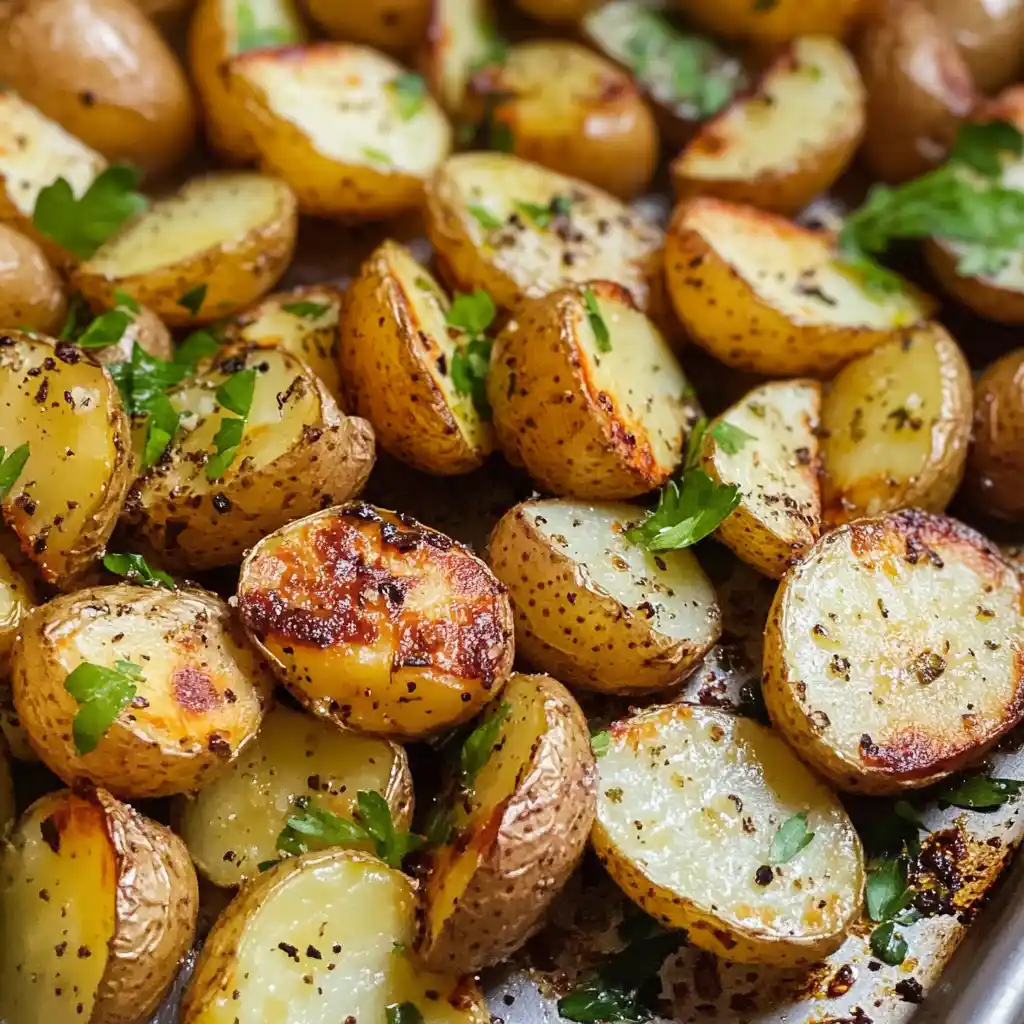
Ingredients
- 2 lbs baby potatoes, halved (if they’re bigger than golf balls, quarter them)
- 2 tbsp olive oil (don’t skimp—this creates the crispy exterior)
- 1 tsp garlic powder
- 1 tsp onion powder
- 1 tsp paprika
- 1/2 tsp salt (or to taste)
- 1/4 tsp black pepper
- 1/4 cup fresh parsley, chopped (dried just doesn’t cut it here)
- 1 lemon, zested
- 1 tbsp lemon juice (from that same lemon)
Instructions
- Crank your oven to 400°F and grab a large baking sheet—no need to grease it if you’re using enough oil on the potatoes.
- Toss those halved baby potatoes in a large bowl with olive oil, garlic powder, onion powder, paprika, salt, and black pepper until every piece is coated. Get your hands in there if needed.
- Spread the seasoned potatoes in a single layer on your baking sheet—don’t crowd them or they’ll steam instead of crisp up, and nobody wants sad soggy potatoes.
- Slide the pan into the oven and roast for about 15 minutes, then give them a good stir with a spatula so all sides get that golden treatment. Roast another 15-20 minutes until they’re tender when poked with a fork and beautifully browned.
- While the potatoes finish roasting, mix your chopped parsley, lemon zest, and lemon juice in a small bowl—this bright mixture is what makes these taste like spring.
- The moment those potatoes come out of the oven, drizzle the parsley-lemon mixture over the top and toss gently to coat. The residual heat will release all those fresh flavors.
- Transfer to a serving dish and serve hot while they’re still crispy—if you can wait that long before everyone starts sneaking bites.
Nutrition Information (Per Serving):
- Calories: 165
- Carbohydrates: 28g
- Protein: 3g
- Fat: 5g
- Fiber: 3g
- Sodium: 210mg
- Vitamin C: 35% DV (thanks to those potatoes and lemon!)
- Potassium: 620mg
These spring roasted potatoes provide a good source of vitamin C and potassium while staying relatively light for a comfort food side dish.
Notes:
- Seriously, don’t skip drying those potatoes if they’re wet from washing—excess moisture prevents crisping
- Every oven runs differently, so trust your eyes more than the timer after 30 minutes
- If your potatoes aren’t browning nicely, bump the heat to 425°F for the last 5 minutes
- Using a rimmed baking sheet prevents oil from dripping into your oven
Storage Tips:
Keep leftovers in an airtight container in the fridge for up to 3 days. Don’t freeze these—the texture gets weird and mealy. Microwaving turns them into rubber, so reheat in a 375°F oven for 10 minutes to bring back some crispiness.
Serving Suggestions:
- With Grilled Proteins: Perfect alongside grilled chicken, salmon, or steak for a complete spring meal
- Easter Dinner: Makes a beautiful lighter alternative to heavy mashed potatoes for holiday spreads
- Brunch Addition: Serve with scrambled eggs and fresh fruit for a hearty weekend breakfast
- Mediterranean Plate: Pair with hummus, tzatziki, and fresh vegetables for a vegetarian feast
Mix It Up (Recipe Variations):
Garlic Lover’s Potatoes: Add 4 cloves of minced garlic during the last 10 minutes of roasting for an extra punch of flavor without burning the garlic.
Herb Garden Potatoes: Swap the parsley for a mix of fresh dill, chives, and mint for a different spring herb profile that pairs beautifully with lamb.
Spicy Spring Potatoes: Toss in 1/2 teaspoon red pepper flakes with the other seasonings for a kick that complements the bright lemon finish.
Dairy-Free Parmesan Style: After roasting, sprinkle with nutritional yeast for a cheesy flavor that keeps these vegan-friendly.
What Makes This Recipe Special:
These spring roasted potatoes capture the essence of spring cooking—taking simple, quality ingredients and letting their natural flavors shine through. The technique of finishing with fresh herbs and citrus rather than cooking them ensures you get that vibrant, just-picked taste that makes these feel special without requiring any fancy culinary skills.
