
Ever wonder why smoothie shop drinks taste so much better than the ones you make at home? I used to think you needed fancy blenders and secret ingredients to make a perfect strawberry mango smoothie until I discovered this ridiculously simple recipe. Now my kids request this healthy fruit smoothie every single morning, and I’m pretty sure my gym buddies think I’m spending a fortune at juice bars (if only they knew this costs less than $2 per serving).
Here’s the Thing About This Recipe
What makes this mango strawberry smoothie work is using frozen fruit and the right ratio of liquid to fruit—that’s literally the secret to thick, creamy smoothies instead of watery juice. Most people add too much liquid or use all fresh fruit, then wonder why their smoothie is thin and icy. The secret to authentic smoothie shop texture isn’t expensive equipment—it’s all about balancing frozen and fresh ingredients with just enough yogurt for creaminess. It’s honestly that simple, no professional blender required.
What You’ll Need (And My Shopping Tips)
Good strawberries and mango are the foundation here—for the best flavor and texture, use frozen fruit or freeze fresh fruit yourself. I learned this after making watery, flavorless smoothies twice with room-temperature fruit. Frozen fruit creates that thick, frosty texture while keeping everything cold without diluting the flavor with tons of ice. Around here, we’ve discovered that buying frozen fruit in bulk bags is way cheaper than fresh and actually tastes better since it’s picked at peak ripeness.
Quality frozen fruit makes all the difference. According to Bon Appétit’s guide to smoothies, frozen fruit is often superior to fresh because it’s flash-frozen at peak ripeness. If you’re using fresh strawberries and mango, freeze them for at least 2 hours before blending.
For the yogurt, plain is best because you control the sweetness with honey. Greek yogurt makes it extra thick and creamy, but regular yogurt works fine too. I always use whole milk for richness, but any milk works—almond milk, oat milk, coconut milk, whatever you prefer (happens more than I’d like to admit when I run out of dairy milk). The honey adds natural sweetness without that artificial taste, but you can adjust the amount based on how sweet your fruit is. Don’t skip tasting before serving—sometimes the fruit is sweet enough on its own.
Let’s Make This Together
Start by tossing your strawberries, chopped mango, plain yogurt, milk, and honey into your blender. Here’s where I used to mess up—I’d add the ice first and everything would get stuck. Always put the liquid and soft ingredients at the bottom, near the blades.
Blend everything on high speed until it’s completely smooth and creamy, about 30-45 seconds depending on your blender. You want zero chunks and a uniform pink-orange color that looks like a tropical sunset. If it’s not blending smoothly, stop the blender and stir everything with a spoon to help it along.
Now for the fun part—add your ice cubes and blend again until the smoothie reaches your desired consistency. Here’s my secret that I learned from working at a smoothie shop in college: start with just 4-5 ice cubes and add more if needed. You can always add more ice to thicken it, but you can’t remove it once it’s blended. Blend for another 20-30 seconds until the ice is completely crushed and incorporated.
The smoothie should be thick enough to drink through a straw but not so thick you need a spoon. If it’s too thick, add a splash more milk and blend again. Too thin? Add a couple more ice cubes or a handful of frozen berries. Pour your strawberry mango smoothie into tall glasses and serve immediately while it’s frosty and perfect. This pairs great with this Acai Bowl from the collection when you want a complete breakfast spread.
If This Happens, Don’t Panic
Smoothie turned out too watery? You probably used all fresh fruit instead of frozen, or added too much liquid. This is totally fixable—add more frozen fruit or a handful of ice cubes and blend again until thick. I always keep extra frozen berries in the freezer for this exact reason.
Smoothie too thick to blend or drink? Don’t panic, just add milk a tablespoon at a time and blend until it reaches the right consistency. If this happens (and it will if you go overboard with frozen fruit), a little liquid solves everything. You want it thick but drinkable.
Tastes too tart or not sweet enough? Next time add more honey, or try adding a frozen banana for natural sweetness. If it’s already made, just drizzle a little honey on top and stir it in. I always taste mine before serving and adjust the sweetness.
When I’m Feeling Creative
Tropical Mango Smoothie: Add half a cup of frozen pineapple along with the mango and strawberries. Use coconut milk instead of regular milk. Around summer when I’m craving beach vibes, this version is perfect.
Protein-Packed Smoothie: Add a scoop of vanilla protein powder and a tablespoon of peanut butter for a post-workout recovery drink. My gym routine includes this version every morning.
Green Strawberry Mango Smoothie: Throw in a handful of fresh spinach or kale before blending. You won’t taste it, but you’ll get extra nutrients. The fruit completely masks the vegetable flavor.
Creamy Coconut Smoothie: Use coconut yogurt instead of plain yogurt and add a tablespoon of shredded coconut. Top with toasted coconut flakes for extra tropical flavor.
What Makes This Recipe Special
Smoothies became popular in the 1960s health food movement, but the concept of blended fruit drinks dates back centuries across many cultures. According to Wikipedia’s entry on smoothies, the modern smoothie as we know it took off in the 1990s with chains like Jamba Juice popularizing thick, fruit-based blended drinks. What sets this strawberry mango smoothie apart is the combination of strawberries and mango—both fruits are naturally sweet and complement each other perfectly, creating a balanced flavor that’s neither too tart nor too bland. The yogurt adds probiotics and creaminess while keeping the sugar content reasonable compared to juice-based smoothies. This is the kind of smoothie that makes you feel healthy and satisfied without tasting like punishment.
Things People Ask Me About This Recipe
Can I make this mango strawberry smoothie ahead of time?
Not really—smoothies are best fresh because they separate and the texture changes as they sit. But you can prep smoothie packs by portioning out the fruit in freezer bags, then just dump a bag in the blender with yogurt, milk, and honey when you’re ready. Takes 2 minutes to blend.
What if I don’t have frozen fruit for this healthy fruit smoothie?
Use fresh fruit and increase the ice to at least 1 cup to get that thick, frosty texture. Or freeze your fresh fruit for a couple hours before blending. Fresh fruit at room temperature makes thin, watery smoothies.
Can I use a different type of milk?
Absolutely! Almond milk, oat milk, coconut milk, soy milk—they all work great. Use whatever you prefer or have on hand. Non-dairy milks make this completely dairy-free if you also use dairy-free yogurt.
How can I make this smoothie thicker?
Add more frozen fruit, use less liquid, or throw in half a frozen banana. You can also use Greek yogurt instead of regular yogurt—it’s thicker and creamier. Ice also thickens it, but too much dilutes the flavor.
Is this strawberry mango smoothie actually healthy?
Super healthy! Real fruit, protein and probiotics from yogurt, natural sweetness from honey. No added sugars or preservatives. Each serving has about 180 calories with vitamins, fiber, and protein. Way healthier than juice or store-bought smoothies.
What’s the best blender to use for smoothies?
Any decent blender works, but more powerful ones (like Vitamix or Ninja) make smoother results faster. I use a mid-range blender and it works fine—just takes an extra 10-15 seconds of blending. The key is starting with liquid at the bottom.
Before You Head to the Kitchen
I couldn’t resist sharing this strawberry mango smoothie recipe because it’s saved me so much money on expensive smoothie shop runs and tastes fresher than anything you can buy. The best mornings are when I blend up a batch of these, pour them into travel cups, and everyone heads out the door with a nutritious breakfast. Give this a try and you’ll never waste money on overpriced smoothies again!
Print
Strawberry Mango Smoothie
Description
Sweet, creamy, and tropical—this healthy fruit smoothie tastes like summer in a glass and takes just 5 minutes to make.
Prep Time: 5 minutes | Cook Time: 0 minutes | Total Time: 5 minutes | Servings: 2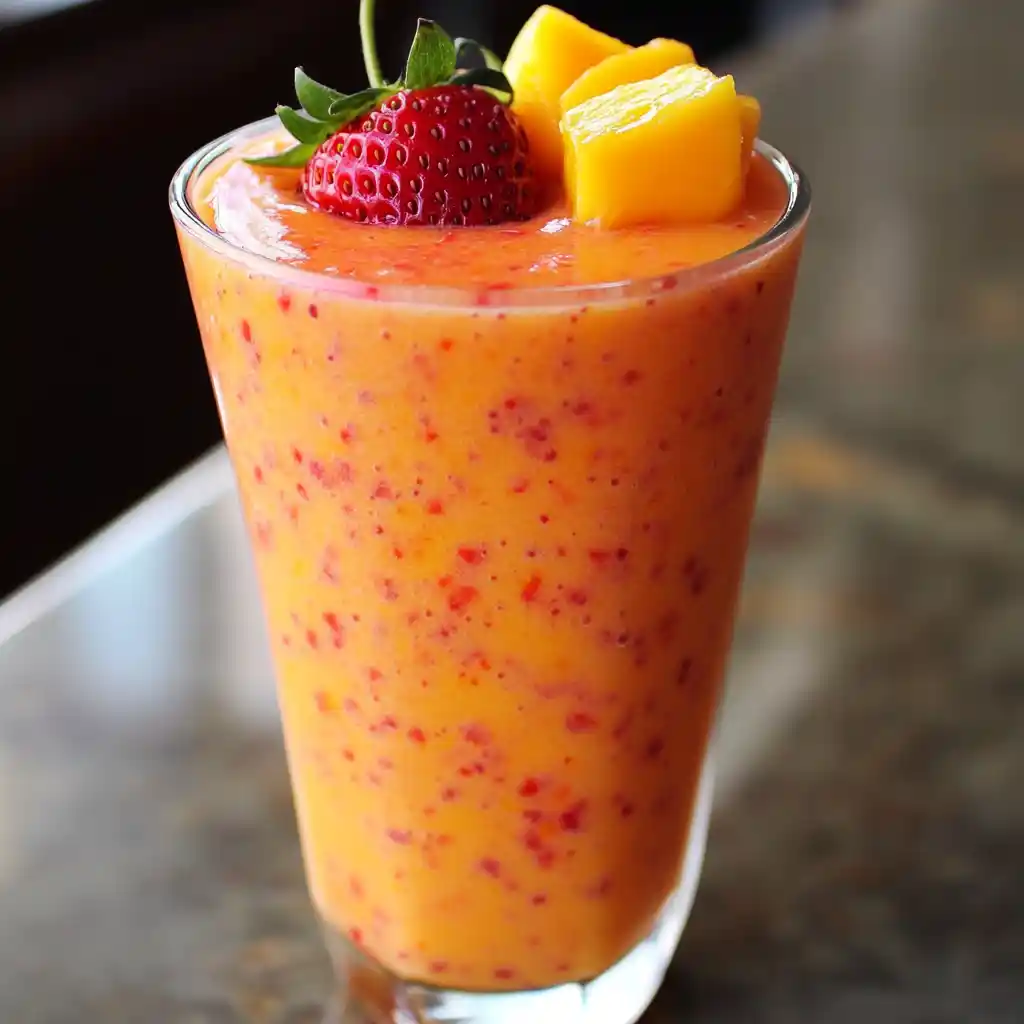
Ingredients
- 1 cup strawberries, hulled (frozen works best for thick texture)
- 1 cup chopped mango (frozen is ideal—fresh works if you add more ice)
- ½ cup plain yogurt (Greek yogurt makes it extra thick and creamy)
- ½ cup milk (any kind—dairy, almond, oat, coconut all work)
- 1 tbsp honey (adjust based on how sweet your fruit is)
- 4–6 ice cubes (more if using fresh fruit, less if using all frozen)
Instructions
- lace the strawberries, chopped mango, plain yogurt, milk, and honey in your blender. Put the liquid ingredients at the bottom near the blades so everything blends smoothly. Don’t add ice yet.
- Blend on high speed until completely smooth and creamy, about 30-45 seconds. You want zero chunks and a uniform color. If your blender is struggling, stop and stir everything with a spoon to help it along. Every blender has its own personality.
- Now add your ice cubes to the blender. Start with 4-5 cubes—you can always add more but you can’t take them out. Blend again until the ice is completely crushed and the smoothie reaches your desired consistency, another 20-30 seconds.
- Check the thickness—it should be thick enough to drink through a straw but not so thick you need a spoon. Too thick? Add a splash more milk and blend briefly. Too thin? Add a couple more ice cubes or a handful of frozen berries and blend again.
- Pour your strawberry mango smoothie into tall glasses and serve immediately while it’s frosty and perfect. Don’t let it sit or it’ll separate and lose that amazing texture!
Nutrition Information (Per Serving):
- Calories: 180
- Carbohydrates: 36g
- Protein: 6g
- Fat: 3g
- Fiber: 4g
- Sodium: 65mg
- Sugar: 28g (all natural from fruit and honey)
- Vitamin C: 120% DV (both fruits are loaded with this)
- Calcium: 15% DV (from the yogurt and milk)
This healthy fruit smoothie packs serious nutrition with real fruit, protein, and probiotics—no added sugars or weird ingredients like store-bought versions.
Notes:
- Use frozen fruit for the best thick, creamy texture. Fresh fruit makes watery smoothies unless you add lots of ice.
- Put liquid ingredients at the bottom of the blender, near the blades. This helps everything blend smoothly.
- Taste before serving and adjust sweetness. Sometimes the fruit is sweet enough without honey.
- Don’t add too much ice at once. Start with less and add more if needed—you can’t remove it once blended.
- Serve immediately. Smoothies separate and get watery as they sit.
- If using all fresh fruit, freeze it for at least 2 hours first, or add 1 cup ice cubes.
Storage Tips:
- These are best consumed immediately for optimal texture and flavor.
- If you must store, keep in an airtight container in the fridge for up to 24 hours. Give it a good shake before drinking.
- Smoothies separate as they sit—totally normal, just stir or shake before drinking.
- Prep smoothie packs by portioning fruit into freezer bags. When ready, dump in blender with yogurt and milk.
- Don’t freeze completed smoothies—they get icy and weird when thawed.
Serving Suggestions:
- For Breakfast: Serve with granola sprinkled on top or a slice of whole grain toast for a complete meal.
- Post-Workout: Drink within 30 minutes after exercise for quick protein and natural sugars to aid recovery.
- As a Snack: Pour into small cups for a healthy afternoon snack that satisfies sweet cravings.
- Smoothie Bowl: Make it extra thick, pour into a bowl, and top with granola, coconut flakes, and fresh fruit.
Mix It Up (Recipe Variations):
Tropical Mango Smoothie: Add ½ cup frozen pineapple along with the mango and strawberries. Use coconut milk instead of regular milk for ultimate tropical vibes. Top with toasted coconut flakes.
Protein-Packed Smoothie: Add a scoop of vanilla protein powder and 1 tablespoon peanut butter before blending. Makes this a complete meal replacement with 20+ grams of protein.
Green Strawberry Mango Smoothie: Add a handful of fresh spinach or kale before blending. You won’t taste it at all, but you’ll get extra vitamins and minerals. The fruit completely masks the vegetable flavor.
Creamy Coconut Smoothie: Use coconut yogurt instead of plain yogurt and add 1 tablespoon shredded coconut. Use coconut milk for the liquid. Finish with toasted coconut flakes on top for extra tropical flavor.
What Makes This Recipe Special:
This smoothie combines two complementary fruits—sweet mango and slightly tart strawberries—for balanced flavor without needing tons of added sugar. The yogurt provides creaminess and beneficial probiotics while adding protein to make this more filling than a juice-based drink. Using frozen fruit creates that signature thick, frosty texture of premium smoothie shops without requiring an expensive high-powered blender. It’s proof that healthy can taste indulgent.
